
How Long Does a Game of Hong Kong Mahjong Take?
Last updated: Nov 23, 2026
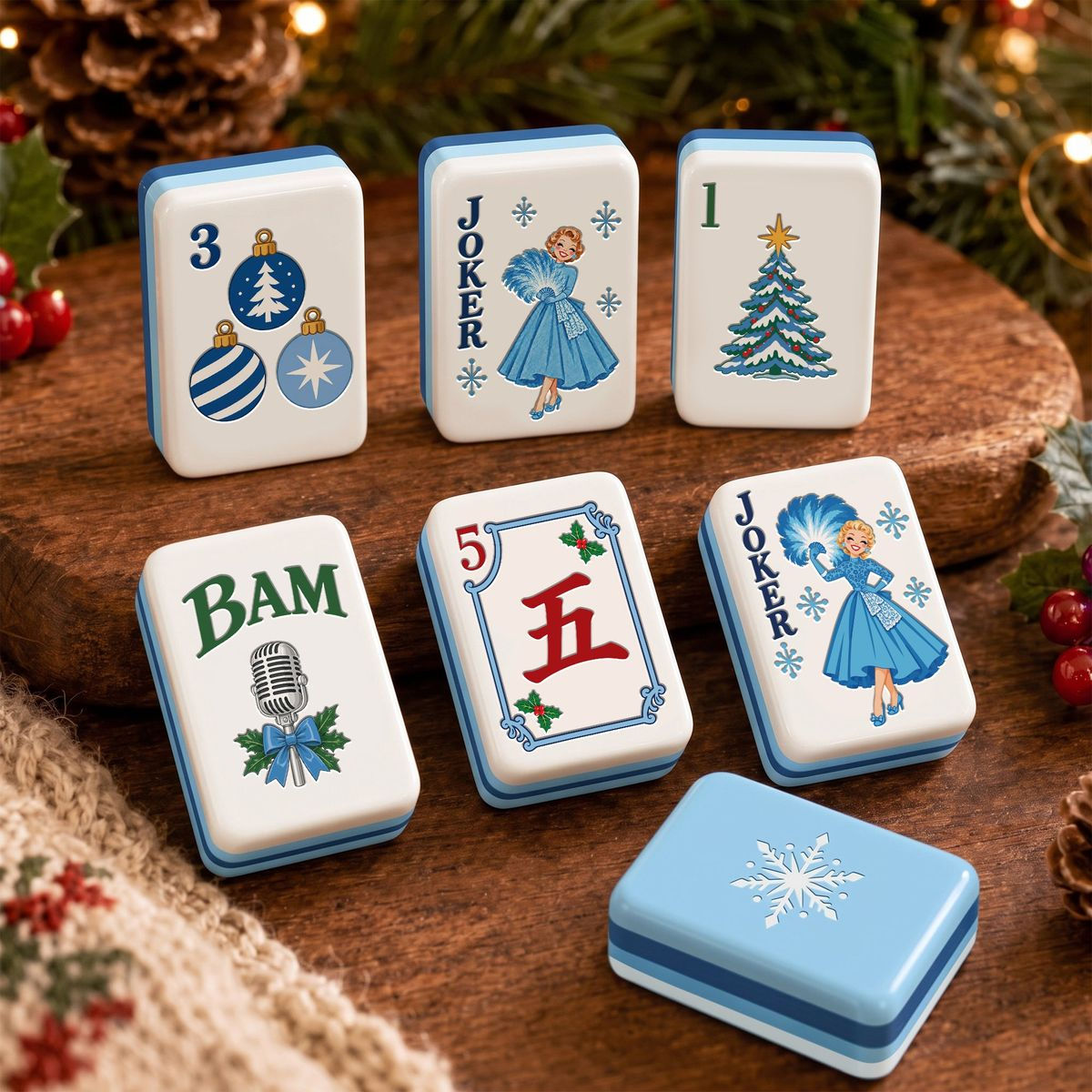
Hong Kong mahjong is significantly faster than American mahjong. A single round lasts 15–30 minutes depending on player skill and tile luck; a complete game (usually three to four rounds) runs 60–90 minutes. Unlike American mahjong, where hands are built in secret and only exposed to claim victory, Hong Kong play is continuous: every player calls chows (three consecutive numbers), pungs (three identical tiles), and kongs (four identical tiles) the moment they can use a discard, then immediately discards. This constant flow eliminates long dead stretches. The speed also depends on how many players are learning—beginners add 10–20 minutes per game. If you're hosting regular games, a best-selling mahjong set with acrylic tiles and a smooth mat lets tiles slide faster and reduces fumbling.
A single round of Hong Kong mahjong runs faster than you'd expect if you've only played American mahjong. The game feels constant: someone draws, someone calls, someone discards. No Charleston before each hand. No waiting for 14 players to pass tiles three times. No checking against a card to see if your hand is even legal. It's real-time, reactive play.
Most casual games we host finish one round in 15–30 minutes, depending on whether players are new to the variant or practiced. The wide range comes down to two big variables: live calls and dead turns. In Hong Kong play, if you discard a tile someone can use, they call it immediately. If nobody calls it, play moves to the next player. There's no stack of unwanted discards building up like in some variants. The wall shrinks steadily and faster.
How is a Hong Kong round different from an American one in terms of timing?
American mahjong has built-in delays: a 14-tile hand takes time to conceive and arrange; the Charleston alone runs 5–10 minutes with four players; dead discards pile up before someone can claim them; and players often study the NMJL card to check if their exposure is even valid. A Hong Kong player draws, assesses immediately, and either melds or discards—often in under five seconds.
The core difference: American mahjong is turn-based and secretive; Hong Kong is continuous and transparent. One player's long thinking turn in American play blocks the whole table. In Hong Kong, if East (the dealer) is slow, West just waits a moment, then keeps moving. The tiles keep flowing.

What factors actually slow a Hong Kong game down?
Three things kill speed: new players learning the call rules, dead tiles on the discard heap, and bad luck. If someone doesn't know which melds are legal, every discard becomes a question. If the tiles run cold and no one can complete a hand for three rounds, you burn 20 minutes on one awful hand. And tile luck is real—if the tiles you need are stuck in the wall or other players' hands, your turn cycle lengthens.
Experience reduces delays dramatically. A table of four players who've played 20+ games together will complete a round in 18–20 minutes. A table with two beginners? Expect 25–35 minutes and cheerful pauses to confirm a rule. The gap is real but not punishing if your group expects it.
Why does Hong Kong mahjong pace feel faster even when the total time is similar?
The illusion of speed comes from constant action at the table. In American mahjong, after you discard, you might sit quiet for 30 seconds while others arrange tiles and pass them around. In Hong Kong, discard—call or pass—draw—next player. You are never truly idle. Psychologically, active play feels shorter than wait time, even if the clock says otherwise.
Also, Hong Kong rounds end more decisively. Someone wins (or the wall empties and everyone loses), the tiles scatter, and the next hand begins. American rounds often drag because a hand might not be playable, so you pass it and start fresh—which feels like a restart tax on your time.
How many rounds does a typical Hong Kong game include?
Most casual groups play three rounds, which takes 45–90 minutes total including small breaks. Some play four rounds (60–120 minutes), and weekend tournaments often run six or eight. Three rounds is the sweet spot: enough to let luck even out, short enough that a losing player doesn't feel robbed by one cold hand.
If you're hosting at home, three rounds is the default length—roughly 1.5 hours with snacks and chat included. That fits neatly into an evening without eating into dinner or sleep.
What's the fastest way to keep a Hong Kong game moving at table?
Clear your tiles as you discard. Slow discard stacks lose games. Second, call immediately when a tile hits the discard pile—don't mull it. Third, agree on the winning hand before play starts so there's no debate when someone claims victory. Fourth, use a smooth mat and acrylic tiles so players aren't hunting through wooden tiles with high friction. Friction and friction-like hesitation add up. Fifth, have someone act as a quick scorekeeper instead of stopping to add up points after each hand.
We've cut 10 minutes off our game-night average just by using acrylic tiles on a mahjong mat designed for smooth play instead of a bare table. Tiles slide, stacks move, discards clear. It sounds silly, but tiles stuck to a cloth or table surface genuinely slow the mental game.
🀄 Shop best-selling mahjong sets →

What if you're playing with fewer than four players?
Two- or three-player Hong Kong mahjong runs faster per hand because fewer discards cycle through the wall, and fewer players mean fewer turns. However, 2- and 3-player rules vary widely by region. Some groups remove tiles from play; others use dead walls. Expect a round to run 12–22 minutes with three players and 10–18 with two—but the total game time shrinks because fewer rounds are typically played (often two instead of three).
Common timing mistakes to avoid
Don't house-rule the call window. Some new players let someone call a discard 10 seconds after it's been thrown. That kills the flow and creates conflict. Call or don't call in the moment; if you miss it, you miss it. Enforcing this sounds harsh but speeds the game dramatically.
Don't wait for the slower player to arrange every meld before starting your turn. Watch the wall, keep mentally ready, and move as soon it's legal. Paralysis by perfectionism costs 15 minutes per session.
Don't allow mid-hand scoring debates. Agree on the point system before hand one. Hong Kong variants have multiple scoring systems (some count fan differently, some use different multipliers). Pick one and stick to it.
Don't leave slow tiles in play. Wooden tiles on a bare table or tiles with worn surfaces create friction—literally. Every discard takes 0.5 seconds longer. Over 50 discards a round, that's 25 seconds wasted. Acrylic tiles on a smooth mat eliminate this friction entirely.
Scenario | Typical Round Time | Full Game (3 rounds) | Key Variable |
Four experienced players, acrylic tiles, good mat | 15–18 min | 50–60 min | Tile luck & weather (cold runs extend play) |
Four casual players, wooden tiles, bare table | 20–25 min | 70–80 min | Friction, hesitation, rule questions |
Two beginners + two experienced players | 25–35 min | 90–110 min | Learning curve on calls & melds |
Three players, two-player variant | 12–20 min | 36–60 min | Fewer turns, faster wall depletion |
🎁 See our most-loved mahjong sets & accessories →
What you'll need to keep Hong Kong games moving
If you're hosting weekly games, invest in smooth, acrylic tiles that don't stick to felt, and a dedicated mahjong mat with a scoring area printed on it—so you're not redrawing lines or fumbling with a pen. A mahjong mat built for quick play saves 5–10 minutes per session and removes friction (literally). If your tiles live in a cloth bag between games, you'll spend 2–3 minutes every session hunting and arranging tiles. A case or travel bag designed for mahjong keeps tiles sorted and ready to shuffle onto the mat in seconds.
For scoring, either use a printed mat with scoring boxes or ask one player to track points on paper—no phone calculations mid-round. Written scores are faster than mental math at speed.
Before you buy: what to check
Tile material matters. Acrylic tiles are faster on felt and mats than wood or bamboo. If you play weekly, the speed advantage pays for itself in time saved over a season.
Mat size and thickness. A thin cloth mat wrinkles and slows tile movement. A proper mahjong mat with padding costs a bit more but is standard in tournament and serious home play.
Storage. If you're storing a set for more than two weeks between sessions, use a protective case or bag to prevent tiles from warping or shifting. Warped tiles jam when played, adding 1–2 seconds per draw.
✨ Find your Mahstead set — free US shipping →

FAQ
Does Hong Kong mahjong always take less time than American mahjong?
No—full games are similar (60–90 min), but individual rounds are much faster (15–30 min vs. 20–35 min for American). Hong Kong's speed comes from constant action, not fewer hands. American mahjong has built-in pauses (Charleston, tile arrangement, card checking) that Hong Kong skips entirely.
Why do some Hong Kong games I've played feel slower than American?
Usually because players are learning the call rules or the table allows slow thinking time before melds. Experienced players enforce "call now or pass"—eliminating delays. Wooden tiles on bare tables also genuinely slow movement. Acrylic tiles on a mat cut 10+ minutes per game.
If I'm teaching beginners, how long should I plan for?
Plan for 40–50 minutes per round the first session, 30–40 the second, and 20–30 by the fourth. Beginners slow tiles down while learning which melds are legal. Once the rules click, pace normalizes. Don't rush them—the learning is the point.
Can you speed up Hong Kong mahjong by removing tiles or changing the wall?
Yes, some regional variants remove the simpler tiles (e.g., all 1s) to reduce the wall and end rounds faster. But this changes the game materially—not recommended unless your group agrees beforehand and practices the variant consistently.
What's the fastest way to end a cold, tile-locked hand?
Most groups play until the wall depletes or someone wins. If a hand is genuinely frozen (no one winning after 20+ min), declare it dead and start fresh. Some rule books allow a "pass" after a set number of turns. Agree on this rule before play to avoid mid-game disputes that cost time.
Does tile quality actually affect how fast a game feels?
Yes—materially. Smooth acrylic tiles on a proper mat create visible, psychological momentum. Tiles move faster, stacks clear cleanly, and the visual pace feels tighter. Conversely, tiles that stick or chip create micro-delays and frustration. Over 50+ discards, quality matters a lot.


View More
View More
View More
