
American Mahjong Strategy: Win More Games With Tile Control
Last updated: Nov 23, 2026
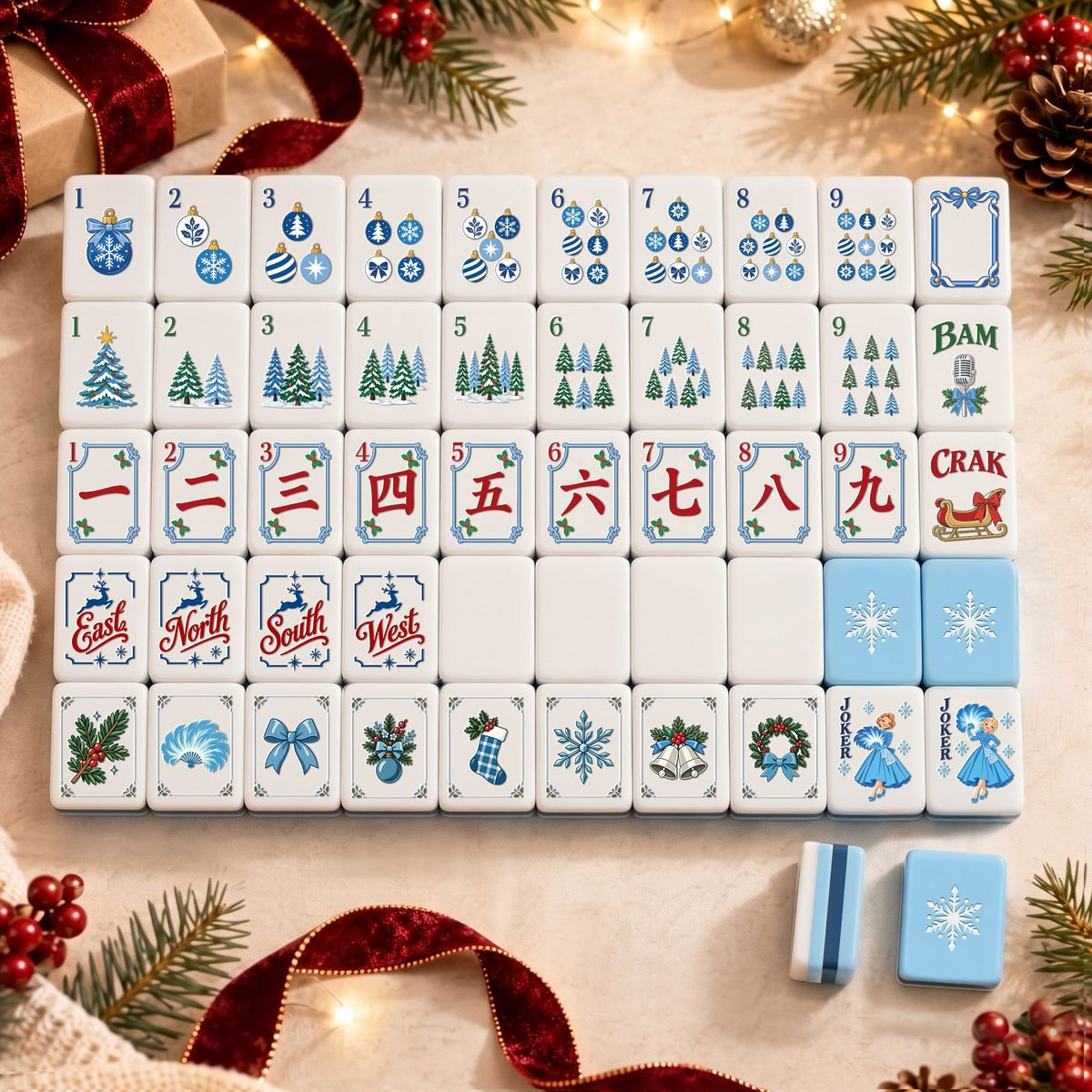
American mahjong strategy revolves around three pillars: reading the card accurately to identify viable hands before committing tiles, controlling the discard pile by tracking what's been thrown and playing safe, and timing your claims—when to pung, when to wait, when to go dead. Unlike push-rummy variants, American mahjong requires you to commit to one hand per game drawn from that year's League card, which means poor hand selection costs you immediately. Start by mastering dead-tile recognition: if three Bams have been discarded, any hand requiring the fourth is mathematically dead. Study the card's sections (like pairs, honors, mixed) before the Charleston; use the first pass to signal your strength; and always calculate whether claiming a discard moves you closer to "ready" (one tile away from winning). Mahstead's best-selling mahjong sets come with tile-weight that lets you feel every claim—this matters during live play when fatigue sets in and touch feedback keeps you sharp. 🀄 Shop best-selling mahjong sets →
How do you pick a winnable hand before play starts?
The hand selection phase—during the Charleston—is where strategy begins, not where it ends. Before any tiles touch the wall, study the current year's League card and note which patterns appear most frequently and require the fewest dangerous tiles. A hand built on common Bams and honor pairs beats a hand needing three specific Craks and a dragon, because outliers get discarded early and force you into dead zones. Track what your opponents signal during passes: if East passes three greens, greens are likely available; if West holds back honors, honor-heavy hands may narrow. Choose patterns with flexibility—hands that can win via multiple tile combinations absorb bad draws better than rigid sequences. Write down your top three choices before the wall builds; this forces commitment and prevents panic switching mid-game.

What's the safest way to manage your discard pile?
Every tile you throw tells opponents your hand and telegraphs danger zones. Discard in a recognizable order: first play what opponents have already shown (safe tiles), then pair-breakers if you're not ready, then your hand's hardest-to-use suits. Never discard randomly; each throw should answer a question you've asked the board. If the wall is slow (few claims), opponents are far from ready—discard your rare tiles before they become prizes. If claims fly, tighten up: throw only what's been triple-discarded or matches discards from earlier rounds. Organize your rack by suit and number; racks with pushers let you slide tiles smoothly without fumbling, which keeps your mind on strategy instead of mechanics. The player who discards last controls the game psychologically; stay calm, stay organized, stay ready.
When should you claim a pung, and when should you pass?
Claiming a discard speeds your hand but also exposes your pattern to all players, triggering defensive play and harder discards. Claim a pung only if: (1) the tile moves you closer to "ready," (2) the discard won't appear naturally later, or (3) you're already exposed enough that secrecy is pointless. Pass if claiming forces you into a dead zone or if the discard benefits you unadded—sometimes a thrown tile is more valuable as a signal than as your third tile. Early game? Pass most pungs and build quietly. Mid-game and the wall shrinks? Claim aggressively to lock in progress before others close windows. If you've already claimed twice, a third pung often triggers dangerous discards from opponents who now know your suit—weigh that cost. The best players claim last: they wait for other players to commit, then claim only when the math is clear.
How do you spot dead hands and bail early?
A dead hand is one where the remaining tiles cannot complete any pattern on your chosen hand from the card. Track every discard; when a hand requires two Dot 5s and three have been thrown, you're done. Check deadness at three points: after your first turn, after the first long wall set (20–25 tiles called), and before you claim a pung. Keep a mental or written tally by suit and rank; acrylic tiles with clear numbering (like those in our best-selling sets) make this faster in real play. If you're at 50% deadness and someone hasn't claimed, stay quiet; if you're at 75% dead and the wall is half-gone, declare it and reshuffle. Admitting deadness saves emotional energy for the next game—and Table morale improves when players accept math over denial.
What's the edge in managing the joker count and wall flow?
American mahjong uses eight jokers in 152 tiles; this means roughly 5% of drawn tiles are wild. High-joker environments (fewer natural matches, more substitutes claimed) favor cautious play: jokers hide in other players' racks, so don't assume your hand will get lucky. Track where jokers appear; if two have been used in pungs and three more claimed but not exposed, five jokers are "out of play," shrinking odds for the remaining hands. When the wall nears half-exposed and few jokers have moved, aggressive play works because jokers are likely still in the wall—claim exposed pungs, push for ready hands, assume luck will arrive. Use the pillar guide on how jokers work to refresh your assumptions each game; joker behavior changes the entire pace. Count wall tiles before every turn; knowing whether 20 or 40 draws remain fundamentally changes your claim logic.

Strategy Comparison: Aggressive vs. Conservative Play
Approach | Best In | Tile Signals | Risk | Payoff |
Aggressive (claim early, push hard) | Wall < 40 tiles left; 2+ exposed hands; you're ready before any opponent | Multiple pungs claimed; suits open; hand pattern clear | Others gang up on discards; exposed patterns die fast | Win before luck runs out; control tempo |
Conservative (pass claims, wait quietly) | Wall > 80 tiles; you're far from ready; opponents haven't committed | Few claims; suits hidden; minimal signals | Miss opportunities; others win while you're building | Study opponents; spot dead hands early |
Mixed (adapt each turn) | Most games; changing wall speed; varies by opponent skill | Claim when math clears; pass when exposed; signal strategically | Requires real-time calculation; exhausting over long nights | Best win rate for steady players; table respect |
🎁 See our most-loved mahjong sets & accessories →
Real mistakes that wreck otherwise solid strategy
Misreading the card. Every year the League card layout shifts; sections move, patterns swap. Spend five minutes before the Charleston studying this year's card. Know where the pairs section lives, where two-character hands begin, which flowers or dragons anchor each section. Skipping this burns turns while you flip and search.
Claiming without counting jokers. If you need a pung and a joker sits in that discard, claiming it uses your wild card now—it won't help later. Before you claim, ask: "Could I use this joker better elsewhere?"
Playing too many hands simultaneously. Beginners hold three or four possible patterns in mind and waver between them. Stop. Pick one from the card, commit the Charleston flow to it, and switch only if deadness forces a reset. Divided focus kills timing.
Ignoring discard order. Throw in reverse number order, then reverse suit order, or follow another system you choose. Chaos in your discard line leaks information and wastes mental energy tracking your own history.
Staying in a dead hand for pride. The game ends when someone wins or all 152 tiles are drawn. Staying alive in a dead hand means you're not trying for the next game. Fold, fold loud, reshuffle and reset.
What to check before you buy a set for strategy-focused play
Tile weight and finish: Smoother tiles glide faster; heavier tiles feel intentional. Both aid concentration during long strategy sequences. Read product details for material (acrylic, bone, bamboo).
Rack and pusher quality: A sticky or uneven pusher breaks rhythm and distracts you mid-turn. Test the feel if possible; smooth glide keeps your mind on the board, not the mechanics.
Mat size and markings: A full-size mat (40"+ width) gives each player clear space to organize racks and discards separately. Line markings help you scan the discard pile quickly without moving your head.
Lighting and tile contrast: Matte-finish tiles reduce glare during evening games; acrylic catches light differently than bone. Check sample photos under typical home lighting (not studio lighting).
Joker and blank counts: Standard play uses 152 tiles + 8 jokers. Confirm your set includes these before ordering; custom sets sometimes vary.
✨ Find your Mahstead set — free US shipping →
Our pick: Sets built for long, strategic games
If you're hosting weekly strategy-focused sessions, invest in a set with quality racks and pushers—these reduce hand strain and keep tiles aligned so you scan them faster. Pair it with a sized mat that lets all four players organize discards in distinct rows; clarity wins games. For storage between sessions, protective bags and cases keep tiles pristine and prevent corner chips that degrade playability over months.

FAQ
How do I know if I'm playing a hand-reading level above luck?
You're calculating joker odds, tracking three-tile deadness, and adjusting claims based on wall depth before each turn. Luck players react after tiles appear; strategy players predict them.
Should I ever switch hands mid-game after the Charleston?
Only if deadness forces you (three+ tiles of your hand have been discarded and you can't pivot). Switching costs tempo. One committed hand beats five half-built ones.
Why do some players track discards on paper during a game?
Fast walls or high-skill tables often move so quickly that memory fails. Paper lets you check: "Have three Bam 7s been thrown?" without slowing play by asking. Illegal in tournaments; legal in home games.
Can I practice strategy alone, or only at a table?
Study the card and practice hand spotting alone; play solitaire draws to test your decision-making. Real strategy emerges against four opponents whose discard patterns change every game. Practice solo, play live to refine.
How many games does it take before strategy beats luck?
Over 10 games, luck averages out. Over 50 games, strategy compounds—good hand selection and discard timing create a measurable edge. Consistent winners play this way: committed, calculated, patient.


View More
View More
View More
