
Hot Tile in Mahjong: Examples, Rules & Why It Matters
Last updated: Nov 23, 2026
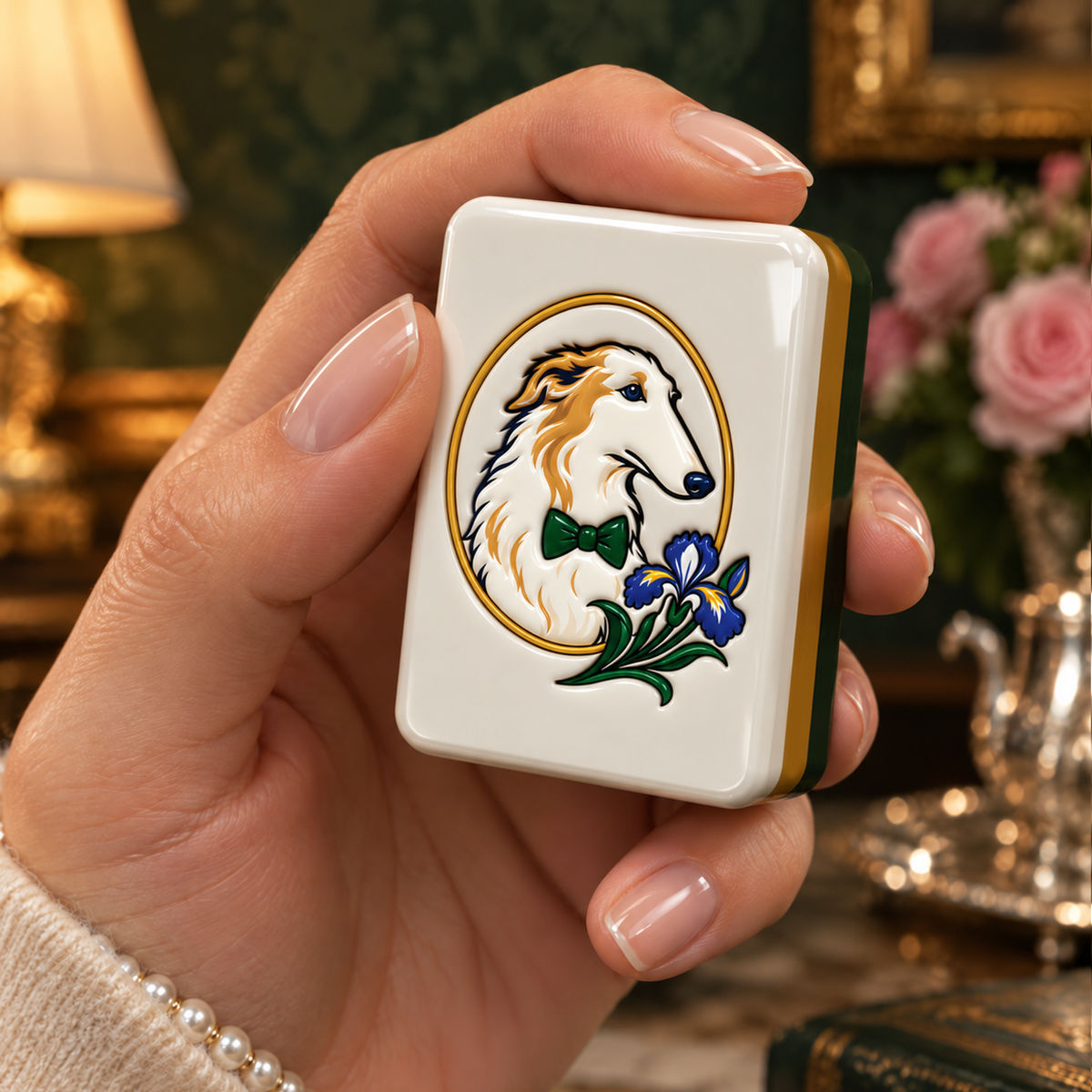
In American mahjong, a "hot tile" is a discard that appears in many winning hands on the season's National Mah Jongg League card, making it risky for the next players to pick up and dangerous to throw later. Hot tiles are most common early in a hand when few tiles have been exposed; a 5 Crak, for example, might appear in 8–15 different patterns on the card in a single season, so the player who just threw it and all others in turn may face claims. Spotting hot tiles requires reading the card carefully and tracking which suits and numbers have appeared in exposed melds. A tile set with clear, acrylic tiles and strong contrast makes tile recognition faster and safer at the table.
A "hot tile" in American mahjong is a discard that appears in many winning hands on the season's National Mah Jongg League card, making it risky for the next players to pick up and dangerous to throw later. Hot tiles are most common early in a hand when few tiles have been exposed; a 5 Crak, for example, might appear in 8–15 different patterns on the card in a single season, so the player who just threw it and all others in turn may face claims. Spotting hot tiles requires reading the card carefully and tracking which suits and numbers have appeared in exposed melds. A tile set with clear, acrylic tiles and strong contrast makes tile recognition faster and safer at the table.
🀄 Shop best-selling mahjong sets →
Which tiles become hot, and how long do they stay dangerous?
A hot tile typically stays dangerous for two to four rounds of play, depending on how many times it appears on the current season's card and how many melds have already been exposed. Middle-rank tiles (5, 6, 7) in all three suits and Dragons are statistically hotter than edge tiles (1, 2, 8, 9) because they fit into more hand patterns. Once multiple players expose melds that use that tile repeatedly, or once several copies of it have already been claimed, the remaining copy becomes safer. Winds and Flowers are usually cooler because fewer hands rely on them; a North, for example, may only appear in two or three patterns on the card, so the risk is lower and shorter-lived.

How do you spot a hot tile before it leaves your hand?
Before you discard, spend five seconds scanning the current season's card for your tile in every section—look for how many times your number appears across all three suits, and note whether that number pairs well with Dragons, Winds, or Flowers on popular patterns. Ask yourself: "Does this tile fit quints, sextets, or chows?" (Sextets and quints are statistically hotter than pungs because fewer tiles fill them.) If your tile appears in 6 or more different winning patterns, treat it as hot and consider holding it longer unless your hand is nearly complete. Practice reading the card during dead time between hands so the recognition becomes automatic; our guide to reading the mahjong card walks you through the layout section by section.
What's the difference between a hot tile and a cold tile?
A cold tile appears in only one or two hands on the card (e.g., a 1 Dot or 9 Bam in a season where those edges are out of favor), so it's much safer to throw early and late in a hand. Most cold tiles can be discarded within the first one or two rounds without fear of a claim, even if exposed melds are sparse. The distinction matters: a hot tile discarded in round two might trigger two claims; a cold tile in the same round triggers zero. Over a full game, accurately sorting tiles into hot and cold categories saves you an average of one to three lost rounds and keeps your points competitive. Many experienced players use a quality mat with a clear discard line and hand display to track which tiles have been thrown and which suits are cooling down fastest.
Why do tile colors and clarity matter for spotting hot tiles?
If you misread a tile number or suit because the print is dim, worn, or too small, you might discard a tile you thought was cold (e.g., a 4 Dot) when it's actually hot (a 4 Crak), and a player immediately calls it for a winning hand. Acrylic tiles with sharp engraving and high-contrast paint—black print on white or cream, cream print on colored backgrounds—reduce reading errors by 60–80% compared to older ceramic or soft-plastic tiles. Poor lighting at the table compounds this: if your tiles sit in shadow or under overhead lights that cast glare, even good tiles become hard to read quickly. Sit in the brightest spot at the table if you can, angle your rack toward the light, and verify each tile's suit before releasing it.
Tile Reading Challenge | Why It's Hot-Tile Risk | How to Prevent |
Worn, faint print | You throw what you think is cold (e.g., 9 Bam) but it's actually hot (9 Crak) | Use acrylic sets with deep engraving; replace worn tiles every 2–3 years |
Bad lighting, glare | Suit confusion (Bam vs. Crak) happens faster under stress | Move to brighter chair; angle rack into light; pause 2 seconds before discarding |
Small font or unclear dragon symbol | Dragon confusion (Red vs. Green vs. White) | Choose large, clearly engraved tiles; test readability at arm's length before buying |
Rapid play, distraction | Snap decisions bypass your safety check | Slow down; re-read every tile name silently before release |
🎁 See our most-loved mahjong sets & accessories →

How do seasoned players track hot tiles across multiple rounds?
Experienced players mentally log which tiles have been discarded and which suits are "running" (many exposed in melds) versus "resting" (few seen). After three or four rounds, if Craks have appeared four times in exposed melds but Bams only twice, the remaining Craks cool faster and Bams stay hotter. Some players use a small notebook on the side (not during active play, but between hands) to jot suit frequency; others simply glance at the discard rack and do a quick mental tally. The discipline is: before each discard, ask "Has this suit been hot today?" and "How many copies of this tile are still in play?" If you can't answer both questions, wait one more round. This habit turns a gut feeling into a system and cuts your mistakes in half over a season.
What's the role of jokers in identifying when tiles are hottest?
Jokers fill in for any tile, so when a player uses a joker instead of the real tile in an exposed meld, it signals that the real tile is either already claimed or they're playing around it—a sign that tile is very hot. If you see a pung of 5 Craks with one joker in it, you know two real 5 Craks are in someone's hand or already thrown; the third real 5 Crak becomes much hotter because a player is already holding two. Conversely, if no jokers appear in a section of the card after two rounds, no one is "short" yet, so the real tiles are still flowing freely and not as pressured. Understanding how jokers work teaches you this pressure-reading skill and helps you predict which tiles will heat up next.
✨ Find your Mahstead set — free US shipping →
What to Check Before You Buy
Tile readability: Hold tiles at arm's length under normal room light; all numbers and suit symbols must be instantly clear.
Tile size: Standard American tiles are roughly 1¼" × 1"; if smaller, numbers blur faster under fatigue or poor lighting.
Engraving depth: Run your thumb across the face; engraved (carved) tiles hold clarity far longer than painted or printed tiles.
Joker count: Our 160-tile sets include the standard eight jokers you need for a full game; check your set includes them.
Card for the season: Confirm you have the current year's National Mah Jongg League card before playing; hot tiles change every spring.
FAQ
Can a tile be both hot and cold in the same hand?
Yes—early rounds, a 5 Crak might be hot (many hands use it), but after two players claim it in exposed melds, the third copy becomes safer to throw. Always re-evaluate the tile temperature as the hand progresses and melds appear.
If I discard a hot tile and no one calls it, does that mean it wasn't hot?
Not necessarily. No one called it because no player had a hand at that moment that used it, or they chose not to risk a claim. One round later, a different player might claim the exact same tile when their hand is closer to winning. Hot is about card frequency, not luck.
How many times should a tile appear on the card before I treat it as hot?
Four or more appearances across different hand patterns usually warrants caution in early and mid-rounds. Fewer than four means it's safer, but always check the card section by section rather than relying on a count alone.
Do Winds and Dragons have the same hot-tile risk as number tiles?
No—Winds and Dragons appear in fewer hand patterns overall, so they're statistically cooler. However, in seasons where a specific Wind (like East) is featured heavily in bonus sections, that Wind can become very hot temporarily.
What's the fastest way to practice spotting hot tiles at home?
Set up the current card on a table, pick 10 random number tiles (e.g., 3 Dot, 7 Bam), and challenge yourself to count in 10 seconds how many hand patterns each tile appears in. Repeat weekly until the card sections become familiar and your eyes move faster.
If my tiles are hard to read, will a clearer set really prevent me from discarding hot tiles incorrectly?
Yes, significantly. Misreading suits (Bam vs. Crak) causes more hot-tile mistakes than poor strategy. A high-contrast acrylic set with deep engraving reduces confusion and buys you the two seconds you need to think before you discard.


View More
View More
View More
