
Harbin Mahjong Rules: Chinese variant play guide
Last updated: Nov 23, 2026
Harbin mahjong is a Chinese regional variant originating in Harbin, Heilongjiang Province, played with 108 tiles (the core suit + honor set of standard Chinese mahjong, without flowers or seasons). Games use four players, a dealer system, and melds called pung (3 identical tiles), kong (4 identical), chow (three consecutive numbered tiles in one suit), and eye (pair). Unlike American mahjong—which has no chow calls and uses 152 tiles with 8 jokers from the National Mah Jongg League card annually—Harbin employs standard Chinese mahjong tiles where chows are central to valid hands. Winning requires a complete hand of four melds plus a pair; scoring depends on concealment, type of meld, and bonus patterns. Rounds last 15–30 minutes per hand, and the game emphasizes speed and reading opponents' discards. Most players transition to Harbin from Hong Kong or Riichi variants; American players find the chow-heavy structure and absence of a reference card most disorienting.
Harbin mahjong sits at the crossroads of classical Chinese play and regional modernization. It's faster than some variants, more rigid than others, and a gateway into northeastern Chinese gaming culture. Here's what sets it apart and how to play it correctly.
What tiles does Harbin mahjong use?
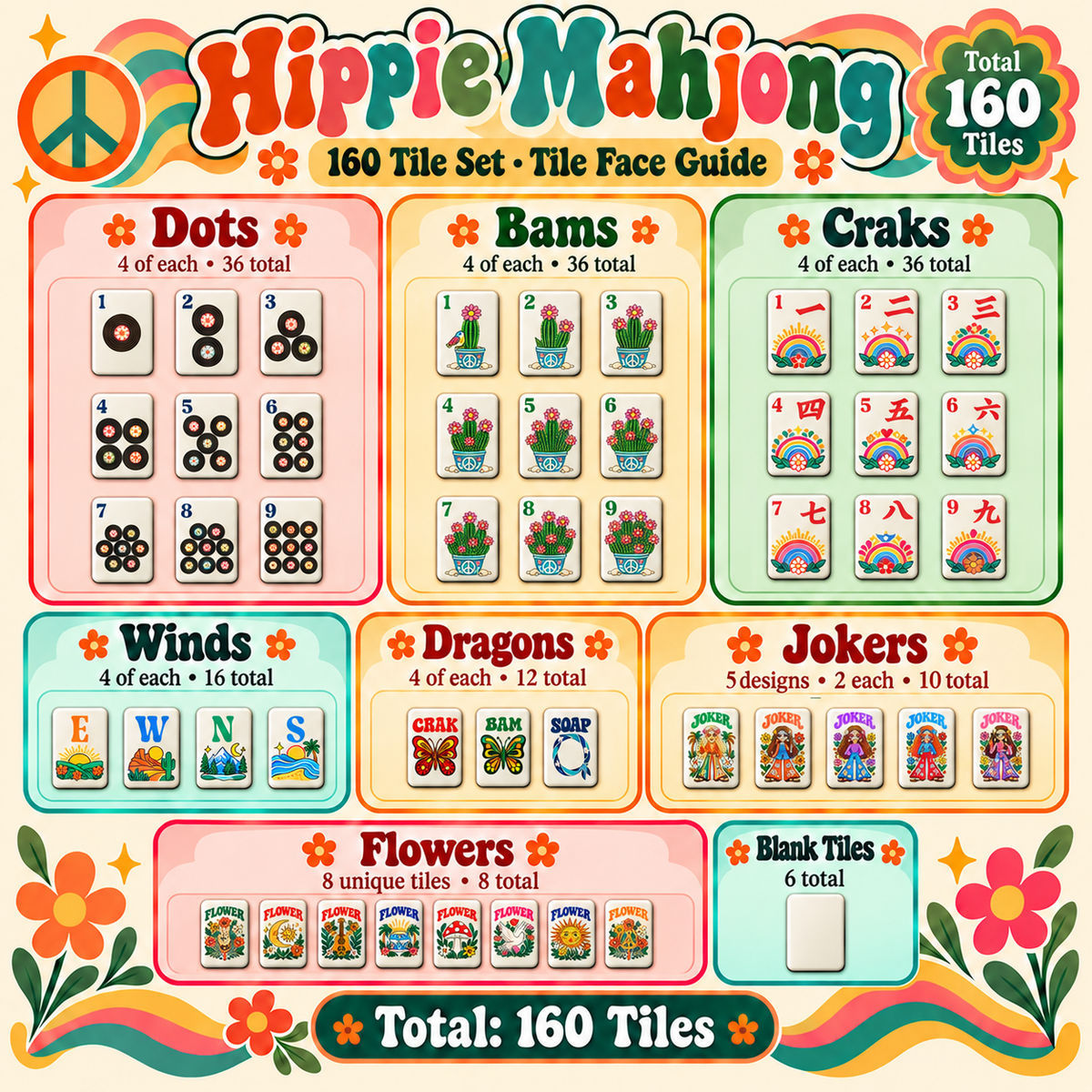
Harbin mahjong uses the standard 108-tile Chinese set: three numbered suits (Bams, Craks, Dots) numbered 1–9, four copies of each tile, plus 16 honor tiles (four winds and four dragons). No flowers, seasons, or jokers. If you've played American mahjong with its best-selling mahjong sets, you'll notice Harbin strips away the ornament and joker flexibility—everything is deterministic. The tile distribution is fixed: 36 tiles per numbered suit (108 ÷ 3), four of every honor. Each player draws 13 tiles at game start; the dealer draws 14. A live wall holds remaining tiles; the dead wall (usually 14 tiles at the end) prevents players from computing exact probabilities late-game.

How do melds and chows work in Harbin?
Harbin requires four melds plus a pair to win. Melds are pung (three identical), kong (four identical), or chow (three consecutive tiles in one suit, e.g. 2–3–4 Craks, then 5–6–7 Craks in another meld). Chows are called during play and exposed on the table. A pung or kong can be concealed (hand-only, bonus points) or exposed. You cannot chow honor tiles (winds and dragons); only numbered suits form chows. When another player discards, you can call chow only if it completes your set and you're next in turn order (clockwise), or call pung/kong before any discard passes. This turn-order rule prevents "skip" calls—a major difference from American mahjong, where no chows exist and order is strict. Many Harbin players misread chow priority; clarify it before every session with new players.
What makes a winning hand in Harbin?
A Harbin win requires a complete hand: four melds (any mix of pung, kong, chow) plus a pair, all 14 tiles. The pair can be any two identical tiles (honor or numbered). Unlike American mahjong, where hands are locked to the yearly card and rely on specific patterns, Harbin allows any valid combination—so long as melds are legal and concealment bonuses apply. If you win off your own draw (self-drawn win), you earn bonus points. If you win off a discard, you call hu or win. A concealed kong drawn from the live wall triggers bonus scoring before your next turn. The scoring system varies by region: Harbin typically uses a point-per-meld base, multipliers for concealment and special patterns (all melds identical suit, all pungs, mixed terminals), and settlement among all three other players or the discarder alone, depending on house rules. Always agree on scoring before the first hand.
How does dealer rotation work?
In Harbin, one player is dealer (庄, zhuang) for a round. The dealer draws 14 tiles; others draw 13. After the hand concludes—either someone wins or a draw (wall empty, no one can win)—the dealer seat rotates. Typically, if the dealer wins, the same person remains dealer; if non-dealer wins or the hand draws, dealer rotates clockwise to the next player. Some groups use four rotations per round (each player as dealer once) before settling and reshuffling for the next round. This rotation is central to scoring: dealer wins pay out at a higher rate or collect from all three opponents. New players from American mahjong often miss this; American play has no dealer role. Clarify rotation rules and payout direction before play.

What are common mistakes and house-rule traps?
Mistake | Why it stalls play | How to fix it |
Calling chow out of turn | Turn order breach; hand becomes invalid | Confirm discarder and next player before each discard |
Mixing Harbin with Hong Kong scoring | Different multipliers and bonus melds | Lock a region (Harbin standard) and note all bonus patterns in writing |
Forgetting dead wall | Wall miscalculation leads to false wall-empty draws | Set aside exactly 14 tiles before game start; do not touch them |
Confusing concealed kong with pung | Concealed kong triggers bonus; pung does not | Draw for concealed kong from live wall, not from hand |
Allowing joker/blank tiles | Harbin is deterministic; no jokers exist | Use only the 108-tile set; set aside spares before play |
Harbin players often house-rule point multipliers without recording them, causing disputes hours later. Before every new group or location, ask: "What's your local Harbin rule for 1 Han 1 Fu? All melds of one suit? Self-drawn bonus?" Write it down. Disagreement over regional variants (Harbin vs. Jilin vs. standard Chinese) is the fastest way to lose a friend.
🀄 Shop best-selling mahjong sets →
How does Harbin differ from American and other Chinese variants?
American mahjong uses 152 tiles + 8 jokers, one hand per year from the National Mah Jongg League card, no chows, and a structured naming system for hands. Harbin uses 108 tiles, chows are primary melds, and hands are open-ended. Hong Kong mahjong also uses 108 tiles and chows but differs from Harbin in discard order, bonus calculation, and winning tile rules—Hong Kong allows a discard win or self-drawn win in most hands, whereas Harbin sometimes restricts based on concealment. Riichi (Japanese mahjong) uses the same 108-tile base but adds tsumo (self-drawn) vs. ron (discard win) distinctions and a rigid yaku (winning pattern) system similar to American card constraints. Taiwanese mahjong adds flowers and seasons, increasing complexity. If you're migrating from American play, focus first on accepting chows as normal and learning your local Harbin bonus rules; if you're coming from Hong Kong or Riichi, Harbin's turn-order chow rules and dealer rotation will be your main hurdle. Test yourself with a single hand in slow play before joining a cash table.
🎁 See our most-loved mahjong sets & accessories →
What equipment do you need to play Harbin?
A standard 108-tile Chinese mahjong set, four players, a flat table, and ideally a mahjong mat to protect tiles and mark the play area. Mahjong racks with pushers help organize your hand and speed play—especially critical in Harbin, where fast melds and calls are expected. Dice (two) determine dealer and starting wall position. A tile holder or small tray near your mat keeps discards in rows (usually four per row) so all players can read the discard pile for strategic play. For traveling to a game venue or club, a padded bag or case protects your tiles and transport. Many American players moving to Harbin retain their 152-tile Western sets; these cannot be used for Harbin, so you'll need to acquire a 108-tile Chinese set. Harbin sets are widely available; ensure the box clearly states "108 tiles" and includes wind/dragon tiles.
✨ Find your Mahstead set — free US shipping →
What to check before you buy a Harbin-compatible set
Tile count: Confirm 108 tiles (not 136 or 144). Harbin requires exactly 108.
Tile quality: Acrylic or bamboo/bone. Acrylic is durable for frequent play; check for smooth edges and readable engravings after shuffling.
Completeness: Verify all four winds, four dragons, all numbered suits 1–9 in three colors/suits.
Case or bag: Does it include storage? If you'll transport the set weekly, a padded travel bag or carrying case is essential and often sold separately.
Spare tiles: Chinese 108-tile sets usually include a few spare tiles (blank or duplicate); ensure spares are clearly marked and never mixed into the 108-tile play set.
Before your first Harbin session, lay out all 108 tiles, count them, and verify no duplicates or missing ranks. A single missing tile invalidates play.

FAQ
Can I play Harbin with an American 152-tile mahjong set?
No. American sets include jokers, flowers, and extra tiles; Harbin requires exactly 108 tiles with no jokers. You need a dedicated Chinese 108-tile set to play Harbin correctly.
What's the difference between a Harbin chow and an American chow?
American mahjong has no chows; melds are only pungs (3 identical), kongs (4 identical), quints (5), and sextets (6). Harbin chows are three consecutive numbered tiles in one suit and are called during play when an opponent discards. This is the single biggest rule shift for American players.
How long does a Harbin mahjong game last?
One hand typically lasts 15–30 minutes depending on speed and skill. A full round (one player as dealer for four hands) runs 1–2 hours. A full match (often 2–4 rounds) can run 3–6 hours with breaks.
Do Harbin house rules vary by city or region?
Yes. Harbin, Jilin, Liaoning, and other northeastern provinces each have local variants in scoring multipliers, bonus patterns, and discard rules. Always confirm your table's specific rules in writing before play to avoid disputes.
What happens if no one wins and the wall is empty?
The hand is a draw (pinghu or pass). Dealer either remains dealer (if house rule) or rotates to the next player. No one scores; a new hand begins immediately.
Is Harbin harder than American mahjong for beginners?
Different, not harder. American play requires memorizing one year's pattern card; Harbin requires learning chow logic, hand combinations, and local scoring. Most American players find Harbin faster but less strategic at first because you're reacting to discards rather than building off a fixed card. ---


View More
View More
View More
