
Fourth of July Mahjong Tournament Format: Setup & Rules
Last updated: Nov 23, 2026
A Fourth of July mahjong tournament brings competitive spirit and summer fun to the table. We'll walk you through round-robin and ladder formats, scoring methods, and how to prep your tiles and mats for all-day play.
What's the Most Popular Tournament Format for Home Games?
Round-robin tournaments work best for groups of 4–8 players rotating at a single or paired tables. Each player competes in a fixed number of games (often three or four), sitting out or playing as substitute on bye rounds. Winner is determined by highest total points or most wins across all games. This format is simple to schedule and guarantees everyone plays the same number of hands.
🀄 Shop best-selling mahjong sets →

How Do You Run a Ladder or Bracket Tournament?
A ladder tournament stacks players by ranking at tournament start. Winners move up one spot, losers move down; players stay in lanes or tables until shuffle time (every 2–3 rounds). Bracket tournaments seat four players per game, then reshuffle winners and runners-up into new games like a playoff tree. Ladder formats take longer but feel more competitive. Brackets are faster and suit casual play. Both keep energy high because outcomes matter for seeding.
What Scoring System Works Best Over Multiple Games?
Most home tournaments use two methods. Points-based: total all hand scores from every game you played; highest aggregate wins. Win-based: track games won, losses, and ties; most wins takes the prize. Points-based is fairer if tile luck varies wildly; win-based is simpler to track on paper and suits tournaments with time pressure. Some tables use a hybrid: one point per win, plus half-points for high hand (not the winner's hand). Choose one rule before the day begins and post it visibly.
How Many Sets and Mats Do You Need?
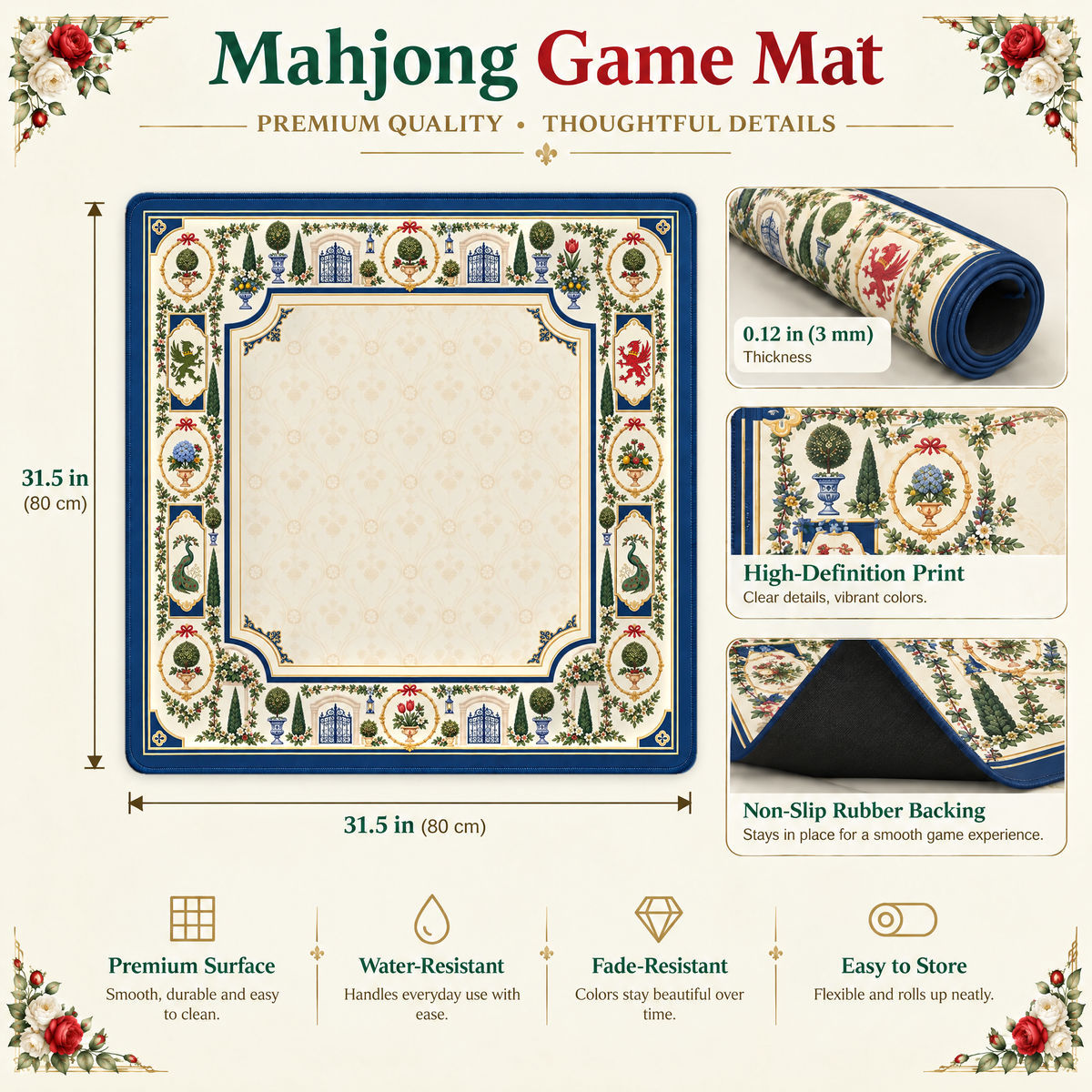
For a 12-player tournament with 3 tables running simultaneously, you need four complete American mahjong sets—one per table. Most players bring a set or two; collect them early and assign one per table. Mats are essential for speed and durability: protective play surfaces stop tiles sliding and reduce wear on acrylic edges. A 36" × 36" mat fits one four-player game; if you're running a large event, buy four mats or rotate a single mat between tables during breaks. Racks with pushers speed up tile arrangement and reduce fumbling—highly recommended for tournament play where every minute counts.

What Are Common Mistakes to Avoid?
Mistake | What Goes Wrong | How to Prevent It |
Mixed tile sets | Tiles differ in weight/size; players notice mid-hand | Use identical sets (same brand/design) at all tables |
No posted rules | Players argue about scoring or rotation | Write format, scoring, and rotation on a whiteboard before play starts |
Shuffling & dealing takes too long | Games run 2 hours instead of 45 min | Use racks pre-filled; assign one dealer per table |
No clear bye/rotation schedule | Confusion, players sit idle, hard feelings | Print a rotation chart listing round 1, 2, 3, etc. with names |
Tiles dirty or mixed with last night's game | Missing jokers, bent tiles, slow draws | Audit all tiles the day before; separate sets in labeled bags |
Jokers used inconsistently | Some tables allow jokers in pairs, others don't | Read the rule aloud before round 1: "No jokers in singles or pairs, anywhere." |
🎁 See our most-loved mahjong sets & accessories →
How to Organize Rotation and Track Results?
Write a rotation schedule on a large whiteboard or poster board the morning of your tournament. List players, round number, and which table they're at. After each game, record the winner and high hand score on the same sheet. This prevents disputes and keeps energy moving. Use a simple spreadsheet or printed bracket as backup. For round-robin with 8 players, expect 2 simultaneous games per round and 4 rounds total (each player gets 4 hands). For 12 players, run 3 tables with rotating byes. Update the board visibly after each round so players know their next opponent and standing.
What Equipment Makes Tournament Play Smoother?
Mahjong mats protect tiles and reduce noise—critical for multiple tables playing near each other. Racks with pushers let players hold and display their hand without fumbling; this saves 5–10 minutes per game. A timer (phone works fine) keeps rounds on schedule. Labeled bags and cases keep sets organized and prevent mid-tournament discovery that a set is incomplete. For a patriotic July 4th vibe, consider sets with engraved designs that reflect the holiday spirit—they're conversation starters and make the day feel special. Buy or borrow a set of standard dice to ensure consistent draws; inconsistent dice slow down the tile draw phase.
✨ Find your Mahstead set — free US shipping →
What to Check Before You Buy or Borrow Sets
Tile count: Every set must have 152 tiles and 8 jokers. Missing even one joker ruins a game.
Identical design: All sets at the tournament should look the same (same acrylic color, same font, same tile size). Mixed designs are confusing and slow play.
Condition: Inspect for cracks, missing numbers, or bent tiles. A single damaged tile stops a table cold.
Case or bag: Transport matters. Sets in a travel bag arrive intact; loose sets in a shoebox arrive damaged.
Racks included: If racks aren't included, borrow or buy them separately. Tournament play without racks takes 30% longer.
Mats & surface: At least one mat per table. Bare wood or laminate causes tiles to slide and slide during the draw.
FAQ
Can I run a tournament with 6 or 10 players?
Yes. Six players: two tables of three (use 2 and 3 player rules) or rotate four at one table with two byes per round. Ten players: five tables of two (not standard), or run round-robin with 3 tables and rotating byes. Odd numbers are trickier but workable; post the schedule clearly.
How long should each game take?
45–60 minutes with experienced players using racks and a mат. Beginners or slow drawers may run 90 minutes. Plan 15 minutes between rounds for shuffling, scoring, and rotation.
What if someone wins every game—is that fair?
Yes. The best player often wins most hands in American mahjong because tile luck and strategy matter equally. If you want to reduce the skill gap, offer a "most improved" or "best hand" prize alongside the tournament winner prize.
Do I need the current year's National Mah Jongg League card?
Yes. Every hand must come from the 2026 card (issued spring 2026). Hands from old or mixed cards are invalid. Print one card per table or project it on a screen.
Should I charge entry fees or keep it casual?
Casual (no fees) works for friends. Small entry fees ($5–$10 per person) create a prize pool and add competitive spirit. Use fees only to cover snacks or donate to charity—never pocket the money as the organizer.
What's the best prize mix?
First place (trophy or small gift), high hand (gift card or snack), most wins (ribbon or bragging rights), and "best sport" (for someone who stayed upbeat). Spread joy; tournament mahjong is about connection, not just winning.


View More
View More
View More
