
American Mah Jongg Winning Hands: Read the Card & Call Your Win
Last updated: Nov 23, 2026
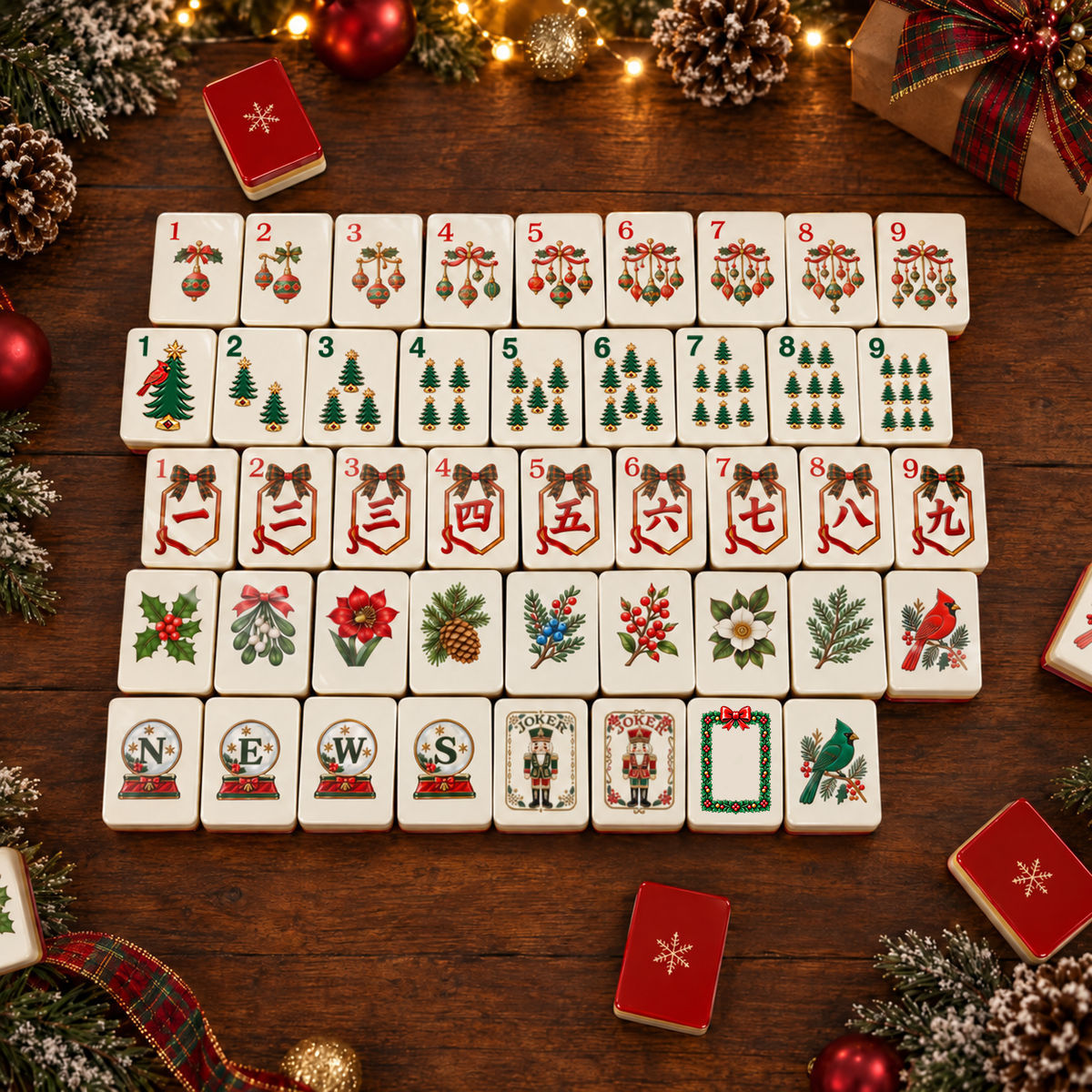
A winning hand in American mahjong contains exactly 14 tiles that match a single pattern on the current year's card (issued every spring). You announce "mah jongg" and expose your hand for verification. The hand must use only tiles from the current game, arranged into exposed melds (pungs, kongs, quints, or sextets—never sequences or single tiles as melds) plus a pair, unless the pattern specifies otherwise. Jokers can substitute for any tile except in a pair or single-tile position. You win when you pick or are passed a tile that completes your pattern; if no one calls your exposed hand as dead, you immediately declare your win, score points based on the hand's difficulty, and the round ends. The National Mah Jongg League card is the only source of legal hands—improvised or off-card patterns do not win. Mahstead's best-selling acrylic sets come with spare tiles so you can practice building hands before sitting down to play. 🀄 Shop best-selling mahjong sets →
How do you know if your hand is actually a winning hand?
Every legal American mahjong win must appear on the National Mah Jongg League card for that year. The card is divided into sections by suit combination (Bams, Craks, Dots, Winds, Dragons, Flowers) and further by pattern type (like two-colored melds or all one suit). Your job: match your 14 tiles to one printed pattern. If you cannot find your arrangement on the card, it is not a winning hand—no matter how neat it looks.
The card is color-coded and numbered for quick reference during play. When you think you have mah jongg, you call it aloud and expose your entire hand on the table so others can verify it against the card. If someone disputes your win or you've made an error, the hand is typically dead and play resumes. This verification step is not optional—it's the foundation of American mahjong's integrity.

What role do jokers play in a winning hand?
Jokers are wildcards that can replace any tile except in a pair (the two-tile combo required in most hands) or when a pattern specifies a "jokerless" section. A single tile by itself in a meld cannot be a joker either. For example, if your pattern calls for a pung of 3 Dots and a kong of Red Dragons, you could use two jokers to complete the kong (so three Red Dragons + two jokers = a legal four-tile exposed kong), but you cannot use a joker for one of the pair tiles.
Jokers are visible in your melds because you exposed them when you declared that meld as complete. Some hands use zero jokers; others may use five or six, depending on what you drew and what the pattern allows. Understanding joker placement is critical—many players accidentally place a joker where it breaks the hand's legality, costing them the win. During play, jokers sit openly in your racks so all players know where they are.
Which hands score highest, and does it matter for winning?
The card ranks hands by difficulty: Simple (one suit, few restrictions), two-color, mixed, all terminals, all honors, and special hands like "consecutive pungs" or "quint pungs" score progressively higher points. However, scoring does not determine whether you win—any hand on the card wins. A simple one-suit pung hand beats a beginner just as decisively as an all-honors hand. New players often wait for high-scoring hands and lose opportunities; experienced players snap up simple wins whenever they draw them.
Your table can agree before the game whether you score the hand or simply count it as a win (some casual games just tally wins without points). American mahjong scoring is optional for winning legitimacy but mandatory if you're playing for a tally. The real prize is calling mah jongg first.
What mistakes disqualify a hand and how do you avoid them?
Common disqualifiers:
Pairing a joker (jokers cannot be in the pair).
Using a sequence (1-2-3) where a pung (three identical) or kong (four identical) was required—American mahjong has no sequences in exposed melds.
Missing or misplacing a tile in your arrangement.
Calling a hand not on the card (even if it looks "right").
Exposing a meld prematurely and then trying to change it (once exposed, it's locked).
Drawing your winning tile but placing it in the wrong hand location, confusing the call.
How to avoid these:
Before calling mah jongg, lay all 14 tiles flat on the table or rack in their final positions.
Point to each meld and verify it aloud (e.g., "Three 5 Craks, four 1 Bams with two jokers, one Red Dragon, two 8 Dots…").
Locate that exact pattern on the card using the section index.
Only then call "mah jongg."
If you are unsure, do not call—ask the group to pause while you search the card. False claims waste time and can incur penalties depending on house rules.
How does the card layout help you find your hand faster?
The National Mah Jongg League card is organized by suit-pair combination and then by number of melds and joker usage. For instance, one section covers "All Bams" (only Bam tiles, Flowers, and Jokers). Within that section, patterns are listed by hand length: two melds, three melds, four melds, five melds. Some have jokers; some are jokerless. Learning to scan sections saves you precious seconds.
Many players memorize the card's broad structure over a season. Others keep the card flat on a small stand or holder during play. Our groups rotate the card holder so everyone can glance at it without disrupting play. If you are hosting, a durable mahjong mat with a card slot keeps the current card visible and the tiles organized. Beginners benefit from printing the card or using the League's digital version on a tablet—anything that lets you look up patterns under game pressure without panicking.
Scenario | What You Call | Why It Works or Fails |
You have three 2 Dots, three 4 Craks, two 6 Bams, and five jokers. You arrange the jokers as the fourth and fifth of a kong. | Not mah jongg—five jokers is illegal (max ~6 total per hand, but pattern dependent). | Jokers are not tiles; they only fill exposed melds. You cannot have five jokers in one position. |
You have two 3 Bams (pair), three 5 Bams, four 7 Bams, three Winds, and one joker. Joker is in the pair. | Dead—joker in pair. Not mah jongg. | Pairs must be identical tiles. Jokers never pair. |
You have two 1 Bams, three 2 Bams, three 3 Bams, three Winds, three Dragons, one joker (substituting for a second Dragon). Card shows this exact pattern in the "All Bams" section. | Mah jongg. Win. | The pattern is on the card; tiles match; no joker in pair; exposed melds are all pungs or kongs. |
You have the same tiles but the card shows the pattern in "Mixed" section, not "All Bams." | Check the card again. If the pattern is only in "Mixed," you misread the suits. Not mah jongg. | Sections are strict. You must use the exact suit combination the card lists. |

How does calling mah jongg work in real-time?
When you draw a tile and it completes your pattern, you immediately announce "Mah jongg!" loudly so all players hear it. Do not touch the table, do not pause—speak first. Then lay out your hand on the table or your rack so others can verify it against the card. The player who threw the tile (if you are claiming their discard) is responsible for checking the hand, along with the player who acted before you.
If the hand is valid, congratulations—you win that round. If someone spots an error, the hand is declared dead, and you cannot win that round. Play resumes from the current discard or the game ends, depending on house rules. If you draw your winning tile yourself (not from a discard), it is called a "self-draw win" and may carry a higher score in some groups.
🎁 See our most-loved mahjong sets & accessories →
What to check before you buy a set or host a game
Card accuracy: Always use the current year's National Mah Jongg League card. Outdated cards have different patterns and can cause disputes.
Tile count: Verify your set has 152 playable tiles and 8 jokers. Mahstead's 160-tile sets include spare tiles so replacements are on hand.
Joker visibility: Your jokers should be visually distinct (often red or marked). Players must instantly recognize which tiles are jokers during play.
Racks and pushers: If players are using tile racks, confirm they hold tiles upright and include pushers to move tiles forward cleanly when you meld.
Lighting: Ensure your table has good overhead light so tiles can be read quickly. Dim tables lead to misreads and disputes.
Card placement: Use a card holder or stand so the current year's card is accessible without rotating the game board.
✨ Find your Mahstead set — free US shipping →
When should you meld and when should you wait?
You expose a meld (pung, kong, quint, or sextet) on your rack as soon as it is complete and matches a section of your target hand on the card. Exposing helps you remember your progress and shows other players you are working toward a win, which can alter their discard strategy (they may be less likely to throw tiles you need).
However, exposing also locks you into a pattern: once a meld is exposed, you cannot remove it or change its tiles mid-game (except to add jokers to a kong later). If you expose a pung of 5 Dots and later realize your best winning hand needs only two 5 Dots paired, you are stuck. Experienced players often hold melds concealed in their racks until they are confident they will use them.
Beginners should expose early to build confidence and track their hand visually. As you improve, you can hold back melds strategically, keeping your options open longer. The key is knowing your card patterns well enough to commit when it is safe.
Our pick: Sets and mats for winning-hand practice
If you are learning to identify and call winning hands, a practice set lets you build hands at your own pace before joining a live game. Our best-selling acrylic sets come with clear, durable tiles that are easy to read under any lighting. Pair a set with a mahjong mat featuring a card slot—you can lay out your hand and reference the current year's card without fumbling.
For groups that host regularly, racks with pushers keep tiles organized and visible so all players can spot your melds and verify patterns quickly. Clean tile visibility reduces errors and disputes when someone calls mah jongg.

FAQ
Can I win a hand that uses a sequence like 1-2-3 Bams?
No. American mahjong allows no sequences in exposed melds. You may only expose pungs (three identical), kongs (four identical), quints (five), or sextets (six). If a pattern on the card shows 1-2-3, it is phrased differently—check the card carefully.
What happens if I call mah jongg but someone finds an error?
Your hand is declared dead. You cannot win that round, and play typically resumes (unless house rules say the round ends). Most groups allow one verification pause before calling; after that, false calls may incur a penalty.
Can I use a joker to replace a tile in the pair?
No. The pair must be two identical tiles with no jokers. This is a core American mahjong rule.
Do I have to expose melds before I call mah jongg?
You must expose all melds and the pair when you call. Some melds may have been exposed during play; others are revealed when you announce your win. The entire 14-tile hand must be on the table and verifiable against the card.
What if the card shows my hand in two different sections?
A hand belongs to only one section. Verify which suit combination your tiles actually use (e.g., all Bams or mixed Bams and Craks). If your tiles fit two patterns, both are legal—call mah jongg and name the one you see first. The verifying players will confirm the match.
How many jokers can I use in a single hand?
The limit depends on the pattern. Most hands allow up to 4–6 jokers; a few patterns specify "no jokers" or "one joker maximum." Check the card before calling.
If I draw my winning tile from the wall myself (not from a discard), does it count?
Yes. A self-draw win (也called a "live" win in some variants) is valid and is often scored higher than winning off a discard, depending on house rules.
Can I call mah jongg on a tile someone just threw if I was not ready before they threw it?
Yes, as long as you call before the next player picks a tile. If the next player has already drawn, the discarded tile is no longer available.


View More
View More
View More
