
Exposed Hand in Mahjong Examples: Rules & Calls
Last updated: Nov 23, 2026
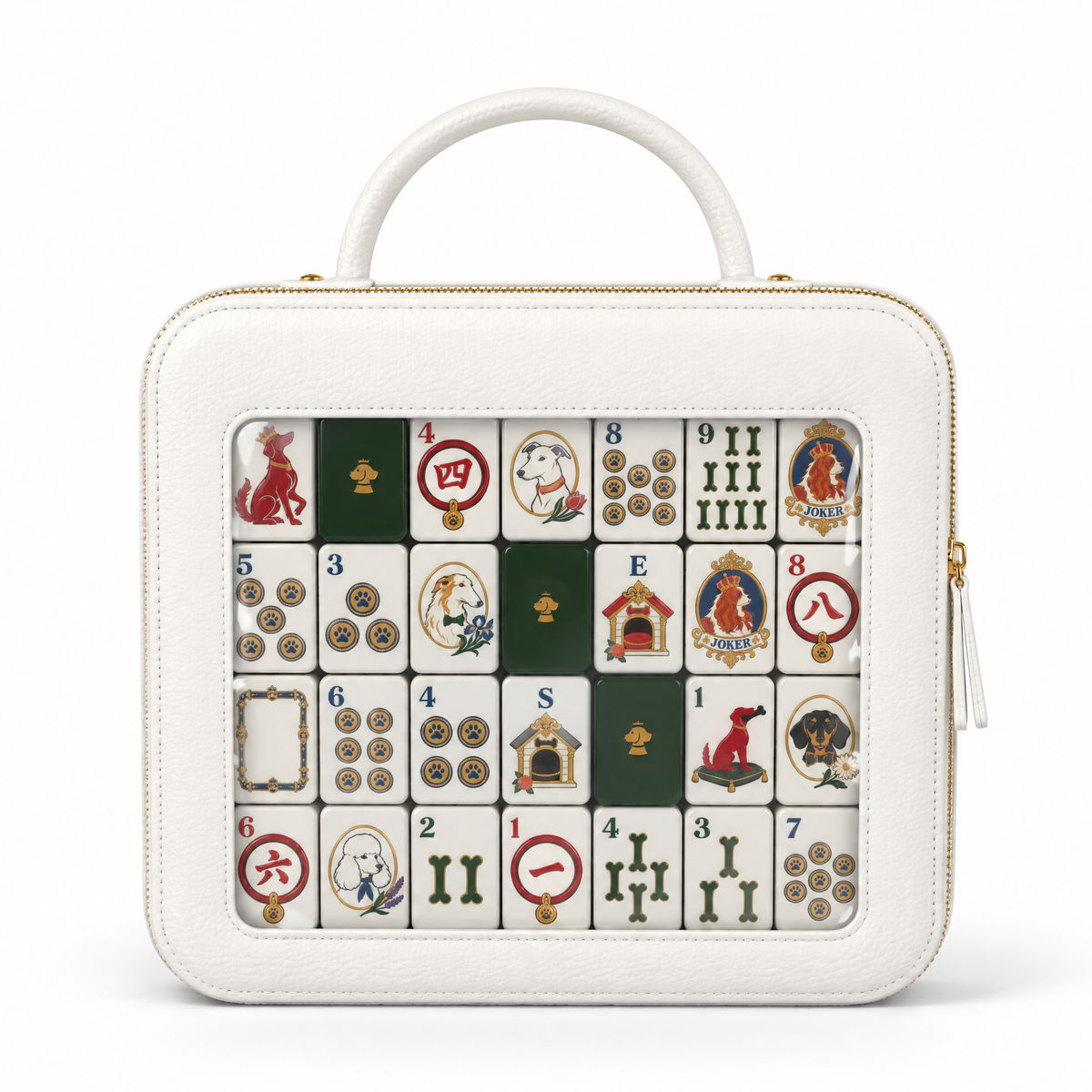
An exposed hand in American mahjong means showing a combination of identical tiles faceup on the table to claim them when another player discards one you need. You may expose a pung (three identical tiles), kong (four), quint (five), or sextet (six of the same tile)—but never a pair or a single tile, and never a chow (sequence like 1-2-3). Jokers can substitute for missing tiles in any exposed combination except pairs. You call an exposure by saying "pung," "kong," "quint," or "sextet," then place the tiles on the table and draw a replacement from the wall. American mahjong rules let you interrupt the normal discard order to claim an exposure if it helps your hand toward the current year's National Mah Jongg League card. The goal is to fill your 14-tile hand (or 13 if you go out on a discard) with one valid pattern before anyone else.
What tiles can you expose, and what can't you?
In American mahjong, you expose only identical tiles in groups of 3, 4, 5, or 6. A pung is three of the same tile (three 5 Dots, for example). A kong is four of the same tile. A quint is five, and a sextet is six. You can never expose a pair (two tiles), a single tile, or a sequence (like 1 Bam, 2 Bam, 3 Bam). Jokers work as wildcards in exposed combinations—if you have two 7 Craks and a joker, you can expose that as a pung of 7 Craks. But jokers cannot form a pair and cannot be used alone. This rule separates American mahjong sharply from Chinese or Hong Kong variants, which allow calling chows and pungs differently. Learn more about American mahjong rules.

How do you call and place an exposed hand?
When another player discards a tile you need to complete a valid exposure, say the name aloud: "Pung," "Kong," "Quint," or "Sextet." Immediately stop play and arrange your two hidden tiles plus the discard (or your three hidden tiles plus joker plus discard, etc.) on the table in front of you, faceup. Then draw one tile from the wall to replace it—this draw becomes your new 14th tile. If you had a kong hidden in your hand before the exposure, you are allowed to expose it when someone discards the matching tile, but you cannot call a single tile or a pair, no matter how badly you need it. Place exposed tiles on your side of the mat so everyone can see them clearly. Some players keep exposed tiles in a row; others group them by type. The key is visibility.
When should you expose versus hold back?
Expose a combination only if it's part of a valid hand on the current year's card. Many new players expose reflexively; this is a mistake. Just because you can expose a pung does not mean you should. Ask yourself: "Is this pung (or kong) listed on the card in a pattern I'm actually chasing?" If the answer is no, hold the tiles closed. Exposing commits you to a path and signals your strategy to the table. Experienced players watch who exposes what to infer hand direction. For example, if you expose two kongs of Winds early, everyone knows you're likely building a hand with Dragons and Winds, and they adjust their discards accordingly. The safest rule: expose only when you are confident the combination is part of your target pattern and when doing so doesn't give opponents a clear roadmap to block you. If you have a choice between a winning hand with no exposures and one with two exposures, the hidden hand is often safer because no one sees it coming.
What happens if you expose the wrong tiles?
If you call and expose a combination that is not on the current year's National Mah Jongg League card, you cannot use those tiles to go out. Your hand is dead—you stay in play but cannot win that round. This is the harshest penalty in American mahjong, so triple-check before you call. Verify both that the tiles you're claiming are actually identical (three 6 Dots, not a 6 Dot, 6 Crak, and 6 Bam) and that the pattern appears on the card in the section you're building. Some newer players confuse a dragon with a wind or mix Bams and Craks. Keep the card within arm's reach and glance at it before you expose. If your hand is dead, you discard normally until the round ends and someone else goes out. You do not score. There is no "take back"; once the tiles are on the table and you've drawn your replacement, the exposure is locked. Understand how to read the card correctly.
How do jokers work in exposed combinations?
Jokers are wildcards and can replace any single tile in a pung, kong, quint, or sextet. If you hold two 8 Bams and the 8 Bam is discarded, you can expose three identical 8 Bams. But if you hold one 8 Bam and one joker, and the 8 Bam is discarded, you can also call "pung" and expose your joker plus the two 8 Bams (one hidden, one from the discard). Jokers cannot be used in a pair—you cannot go out with a pair of jokers as your final pair. Jokers also cannot be used as a single tile. If you need one more 5 Crak to go out and the 5 Crak is not on the board, you cannot use a joker. Jokers only work in groups of 3+. Using jokers wisely is an advanced skill; beginners often waste them on low-value exposures when they should save them for the final hand. Read the full jokers guide.
Real-play exposure examples: what does this look like in a game?
Example 1: Simple Pung You hold 3 Dots, 3 Dots, 4 Craks, Red Dragon, Red Dragon, 2 Bams, and five other tiles. West discards a 3 Dot. You say "Pung," place your two 3 Dots and the discarded 3 Dot on the table, and draw a new tile. Your hand is now 14 tiles with one pung exposed and visible to everyone.
Example 2: Kong with a Joker You have 9 Crak, 9 Crak, Joker (standing in for a third 9 Crak) hidden in your hand. North discards a 9 Crak. You can call "Kong" (four of a kind) by showing your two real 9 Craks, your joker, and the 9 Crak from the discard. This is a powerful move because a kong is worth more points than a pung if the pattern is on the card.
Example 3: The Hold-Back Decision You have East Wind, East Wind, East Wind (a pung). The card shows a pattern with three Winds and one Dragon, but you are building a different pattern with one Wind, three Bams, and Flowers. You hold the pung closed. Do not expose it just because you have it. Wait until you are certain it's part of your winning hand.
Example 4: Dead Hand from a Bad Exposure You have 1 Bam, 2 Bam, 3 Bam (accidentally thinking 1 Bam is the same as 1 Dot). You call "Pung" on another 1 Bam discard. You now have 1 Bam, 1 Bam, 1 Bam, 1 Dot on the table. The referee (or the table) challenges: "Those are not three identical tiles." Your hand is dead. You can only draw and discard for the rest of the round.
Exposure Type | Count | Jokers Allowed? | Can You Go Out With It? | Common Mistake |
Pair | 2 identical | Never | Never (not allowed at all) | Trying to expose a pair to close a hand |
Pung | 3 identical | Yes (1 joker) | Yes, if on card | Exposing a pung not on your target pattern |
Kong | 4 identical | Yes (up to 1) | Yes, if on card | Calling "Kong" when you only have 3 identical + 1 joker + discard |
Quint | 5 identical | Yes (up to 1) | Yes, if on card | Mistaking 5 of one suit for 5 of another |
Sextet | 6 identical | Yes (up to 1) | Yes, if on card | Rarely seen; requires 6 identical tiles on the card |
🀄 Shop best-selling mahjong sets →
Should you memorize which exposures go where on your mat?
No universal rule exists, but clarity is non-negotiable. Arrange exposed tiles so every player can see exactly what you have: count the tiles, verify the suit, and check that they're identical. Some players line exposures left to right; others stack them. The only rule is: faceup on your side of the mat, not mixed with your closed hand. When you draw a replacement tile, keep it in your closed hand (or on your rack), not with the exposure. This prevents confusion about which is the newest draw and which was part of the exposure. If you use a rack with pushers, push your closed hand to one side and place exposures on the mat in front of the rack. Neatness prevents disputes and keeps the game flowing.
🎁 See our most-loved mahjong sets & accessories →
What to check before you buy or play with a set
Before you host a game with a new set, verify you have all 152 playing tiles (36 per suit for Bams, Craks, Dots; 16 Winds; 12 Dragons; 8 Flowers; 8 Jokers). Lay them all out and count. Check that tiles are clearly marked—suit symbols and numbers should be sharp and easy to read from across the table, especially if you play under standard lighting. If tiles are dull, chipped, or hard to distinguish, you'll waste time on verification and disputes. Test your jokers: make sure they are clearly labeled "joker" or marked distinctly so no one mistakes them for a blank or a real tile. Store your set in a protective bag or case to prevent chips and fading. A well-maintained set lasts decades and makes every exposure call instant and confident.
✨ Find your Mahstead set — free US shipping →
FAQ
Can you expose a sequence like 1-2-3 in American mahjong?
No. American mahjong allows only identical-tile exposures: pungs (three), kongs (four), quints (five), and sextets (six). Sequences are not allowed in American play. This is a core rule difference from Chinese and Hong Kong mahjong variants.
What happens if you accidentally expose the wrong suit (e.g., three 6 Dots instead of three 6 Craks)?
Your hand is dead. You cannot use those tiles to win. You remain in play but can only draw and discard until someone else goes out. Always verify the suit before you call an exposure.
Can a joker be used to complete a pair?
No. Jokers cannot be used in pairs and cannot stand alone. A pair must be two identical real tiles (two 5 Bams, two White Dragons, etc.). Jokers work only in groups of three or more identical tiles.
If you expose a pung, do you have to keep it exposed for the whole round?
Yes. Once you expose tiles and draw your replacement, those tiles remain faceup on your side of the mat for the entire round. You cannot fold them back into your hand or hide them.
What's the difference between a kong call and a quint call?
A kong is four identical tiles; a quint is five identical tiles. Both appear on the National Mah Jongg League card in different patterns. Check your target patterns to see whether you need a four-tile or five-tile combination, then call the appropriate exposure.
Can you refuse to expose a tile if another player discards it?
Yes. You are never forced to expose. If another player discards a tile that completes a pung or kong in your hand, you can choose to let it pass and stay in the normal rotation. This is a legal strategic choice.


View More
View More
View More
