
Easiest Mahjong Rules for Empty Nesters
Last updated: Nov 23, 2026
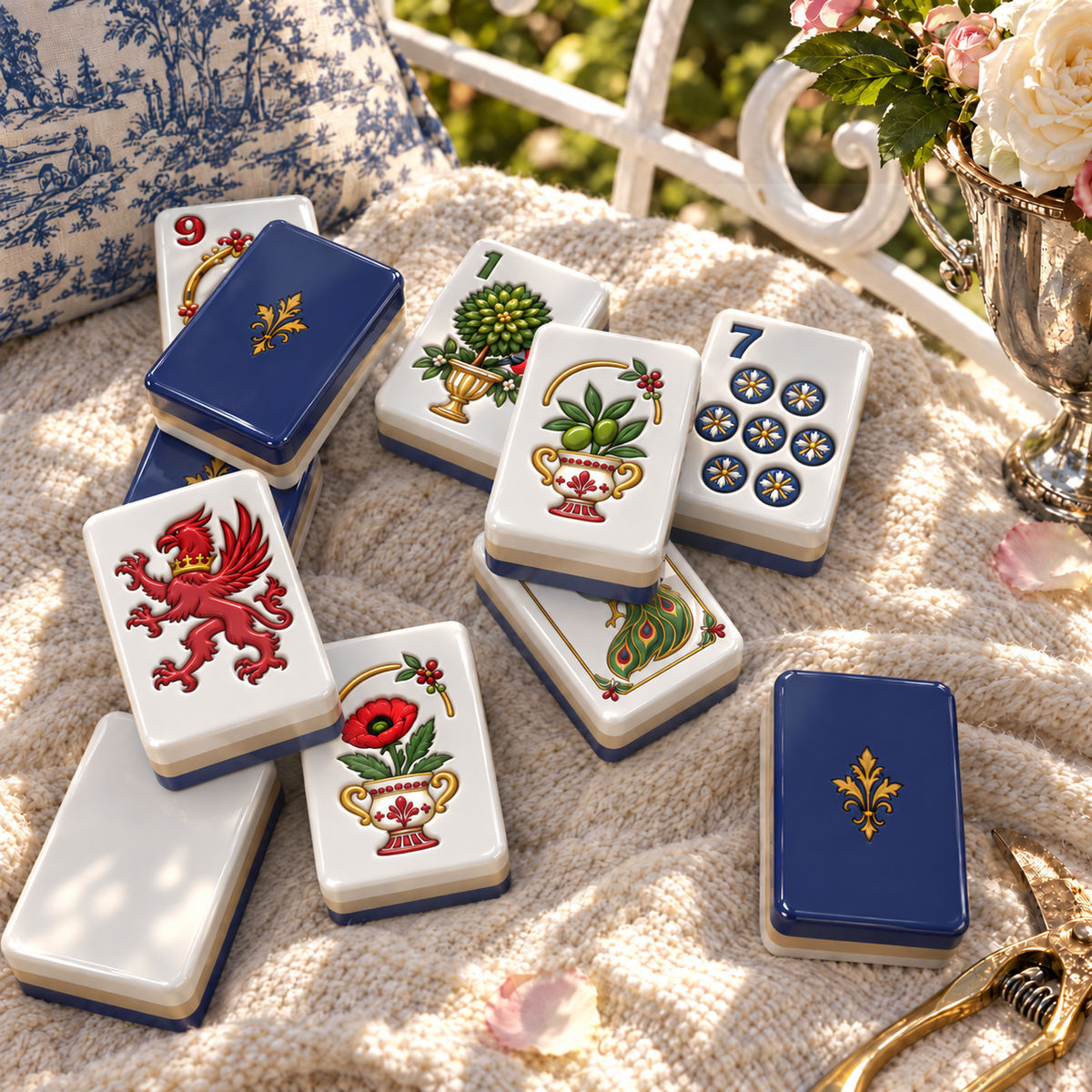
American mahjong uses 152 tiles in three suits (Bams, Craks, Dots numbered 1–9 with four copies each), plus winds, dragons, flowers, and jokers. A complete game has four players, takes 60–90 minutes per hand, and requires only that you match the current year's National Mah Jongg League card to win. You don't need to memorize complex sequences—just learn pungs (three identical tiles), kongs (four identical), and how jokers act as wildcards. The hardest part isn't the rules; it's resisting the urge to pick up the rule book mid-game.
What's the first thing I need to do before play even starts?
The Charleston is the tile-passing ritual that begins every game. Each player receives 13 tiles, then players pass tiles in three rounds (right, across, left) before the East player draws one more to make 14. This randomizes your hand and sets the tone—you're not stuck with whatever you drew. It takes about three minutes total. After Charleston, you'll begin reading the card and building toward a winning hand. No Charleston? You're playing wrong. We've seen confusion here trip up newcomers more than any rule itself.
🀄 Shop best-selling mahjong sets →

How do I know what tiles go together legally?
Every legal hand comes from the current year's National Mah Jongg League card—a printed reference listing hundreds of valid combinations. You can't invent hands or use patterns from other years. The card groups hands by type: pungs (three identical tiles), kongs (four identical), pairs, flowers, quints (five in a row), and sextets (six in a row). Jokers can substitute for any tile except in pairs or single tiles—that's the rule that catches everyone. One worked example: if your card shows "3 Bams pung, 2 Craks kong, 5–9 Dots quint, 1 Bam pair," you need exactly those tiles. Spot one tile that doesn't match? Not a valid hand. Read the card section-by-section rather than scanning—it trains your eye faster.
Which tiles can I show on the table, and which stay hidden?
American mahjong lets you expose pungs, kongs, quints, and sextets only—never chows or short runs like you'd see in other variants. When you complete one of these on your turn, you call it out loud ("pung!" or "kong!") and lay it face-up in front of you so all players see it. Everything else stays in your hand, hidden. Jokers in exposed sets are visible too, which is why they're so powerful—everyone knows where the wildcards went. If you accidentally show a pair early, you've signaled weakness and lost the advantage of surprise. American mahjong rules are strict here because exposure forces other players to adapt their strategy. You can't take it back.
What happens when someone calls your discard?
When you throw a tile, any player can "call" it if that tile completes their pung, kong, quint, or sextset and gets them closer to winning. If someone calls, you stop playing immediately—they take the tile, expose the set, and play continues from them (not you). This is why discard order matters: throw tiles early that match the card less often, or that appeared in other players' exposed sets. You can also call a tile to win outright (we call this "mahjong"); if you do, you reveal your whole hand, score points, and the hand ends. New players often discard carelessly and hand wins to the player on their right. Pause before throwing. The fastest games are won by players who discard strategically, not quickly.

How do I actually win, and what's the score?
To win, you need 14 tiles on the table (or in hand) that match a single line from the current year's League card. You call "mahjong!" and reveal your hand. Points depend on the hand's pattern—some combinations are worth 30 points, others 50 or even more. The National Mah Jongg League card lists scoring next to each hand pattern; you read it as you play. Don't memorize all scores; just learn the five or six hands your group plays most. After one player wins, scores are tallied, winds rotate (East becomes South, South becomes West, etc.), and you shuffle for the next hand. Most groups play to 500 points total or a set number of hands, then the winner buys coffee.
Scenario | What Happens | Who Plays Next |
You call a discard to complete a pung | Expose the set; play passes to you | You discard; others respond |
Someone else calls your discard | They take it, expose their set, play passes to them | They discard; others respond |
You draw a tile that completes your hand | Call "mahjong!" and reveal all 14 tiles | Hand ends; scores tally; reshuffle |
You draw a tile; it doesn't help | Discard one tile face-up; play passes left | Next player draws; cycle repeats |
🎁 See our most-loved mahjong sets & accessories →
What trips up most new empty nesters, and how do we avoid it?
Three mistakes dominate newcomers' first month:
Forgetting the card is law, not intuition. A hand that looks good (six Craks in a row, for example) isn't valid if the card doesn't list it. Always cross-check before calling mahjong. Calling a non-existent hand ends your turn and embarrasses you.
Misusing jokers. Jokers can't sit as single tiles or pairs. Many beginners try to use a joker as the winning pair or the last single tile—illegal. This burns hands and frustrates the table.
Discarding the same suit twice in a row. If you throw a Dot, then another Dot, savvy players know you're weak in Dots and will hold them. Vary your discards so opponents can't read your hand early.
Playing too fast. Rushing leads to illegal calls and misread cards. Pause. Breathe. Winning comes from strategy, not speed.
Start with a beginner-friendly guide and play at least three hands before you judge the game. By the fourth hand, the rules click and the fun begins.
What about tile quality and table setup?
Acrylic tiles with clear engraving last longer than bamboo replicas and won't fade in sunlight if you host on a porch. Get a set from our best-selling collection with a matching mat so tiles don't slide off the edge. A mat also hides the table underneath—fewer visual distractions help you focus on reads. If four friends are coming to your home, a mat sized for standard card tables (usually around 36 by 36 inches) is the sweet spot. Racks with pushers are optional but let you organize your hand faster and hide tiles from your neighbor's view. Over time, a quality set becomes the centerpiece of your weekly ritual—friends will ask if they can bring theirs next week because they love how yours feels.
✨ Find your Mahstead set — free US shipping →
What to check before you buy
Set size: Confirm the set has 160 tiles (152 playing tiles plus spares). American mahjong always plays with exactly 152.
Clarity: Acrylic tiles should have sharp, legible engravings. If numbers blur, misreads happen mid-game.
Mat fit: Measure your table before ordering a mat. Standard tables are 36×36 inches; check the mat dimensions match.
Travel plans: If you host at friends' homes, a padded bag keeps tiles safe. A soft carrying case takes up less space than a rigid case.
Year's card: Before your first game, buy or print the current year's National Mah Jongg League card. Games without the card aren't legal.

FAQ
Is American mahjong harder than bridge or poker?
No. American mahjong has fewer rules than poker, no bluffing, and the card does the memorization for you. Most players grasp the basics in one afternoon.
Can I play mahjong with only three people?
Not standard four-player American mahjong—the game's math breaks. Some groups play three-player or two-player variants, but check local house rules first. Two and three-player mahjong exists but requires rule adjustments.
Do I have to use a mat and racks, or is a regular table enough?
A regular table works, but a mat prevents tiles from sliding, and racks hide your hand from neighbors' eyes—a big advantage. They're not required; they're smart if you play weekly.
What if I can't find a local group to play with?
Check your community center, library, synagogue, or country club—most host mahjong nights. Online groups exist too, though in-person is easier to learn. Meetup boards and community Facebook groups often list game times.
How long does one hand take, and can we play just one hand or do we have to commit to four hours?
One hand takes 45–90 minutes depending on table speed and luck. Most groups play 2–4 hands in an evening, so you can stop after one if life calls.
Are there other mahjong games like Chinese or Hong Kong mahjong I should know about?
Yes, but they're different games with different rules, tiles, and scoring. American mahjong is the simplest entry point for beginners in North America. Master American first if you're new; other variants reward that foundation.


View More
View More
View More
