
Garden Mahjong Cake Ideas for Tile Game Lovers
Last updated: Nov 23, 2026
Garden mahjong cakes work best when they echo the colors and symbols from your tiles—think Bam greens, Dot whites, and Crak reds paired with floral patterns, water motifs, or bamboo imagery. A single-tier round cake (8–10 inches) feeds four players comfortably and offers a large surface for fondant tile art, hand-painted dragons, or edible images of your best-selling mahjong sets. Timing matters: order two weeks ahead if using a custom baker, or go fondant-free with fresh berries and a printed tile topper the morning of. Cost varies by baker and complexity, but garden themes typically cost less than photorealistic designs because florals are forgiving. Avoid cramming too many tile details—a few well-placed Dots and Dragons photograph better and taste less of regret than a sugar-overloaded flat surface.
What garden colors work best with mahjong tile themes?
The National Mah Jongg League card and traditional American mahjong sets use four core colors: green (Bams), red (Craks), white or cream (Dots), and black or dark gray (winds and dragons). Layer these with garden tones—sage, moss, pale pink, cream, terracotta, and gold—for a natural look that doesn't feel kitschy. Bam greens pair beautifully with sage-green buttercream or matcha ganache; Crak reds shine with red roses, peonies, or ombré pink-to-red frosting; Dot whites work with ivory, champagne, or pale pistachio bases. Add gold leaf or edible luster dust along the edges to echo the finish of acrylic tiles. The result feels cohesive rather than chaotic—the cake looks like it belongs at your mahjong table, not in a generic garden tea party.

How do you design a fondant tile decoration for the cake top?
Start with a sketch: draw a single large tile (roughly 3 × 3 inches) or a small hand of five tiles fanned across the top. Use your own set as a reference—engraved American mahjong sets often have crisp, legible characters that photograph well. Roll fondant to ¼-inch thickness, cut out tile shapes (square or rounded), and hand-paint or stamp the character using food-grade markers or edible ink pens. If you're not an artist, print a high-contrast image of your tiles on edible paper and apply it directly to fondant. For tile detailing, use a toothpick to score grout lines, or brush on a darker shade of fondant dust to mimic the shadow between stacked tiles. Pro tip: fondant tiles dry out; apply them 12–24 hours before serving if the cake will sit in a warm room. If humidity is high, skip fondant entirely and go with buttercream piping or a sugar-paper topper.
Approach | Best for | Effort | Why it works |
Hand-painted fondant tiles | Instagram-worthy hosting | 4–6 hours | Fully custom, textures echo real tile sheen |
Edible paper transfer + fondant base | Photo-quality detail | 2–3 hours | Sharp images, no freehand skill needed |
Buttercream piping (dots, characters) | Casual game nights | 30–45 min | Fresh look, tastes better, forgiving errors |
Fresh berry "tile" mosaic | Hot-weather games | 15 min | No sugar overload, garden aesthetic, chill time |
Printed sugar-paper tile topper | Quick hosting | 5 min | Affordable, no baking skill, reusable decor |
🀄 Shop best-selling mahjong sets →
Should you match the cake décor to your acrylic mahjong tiles?
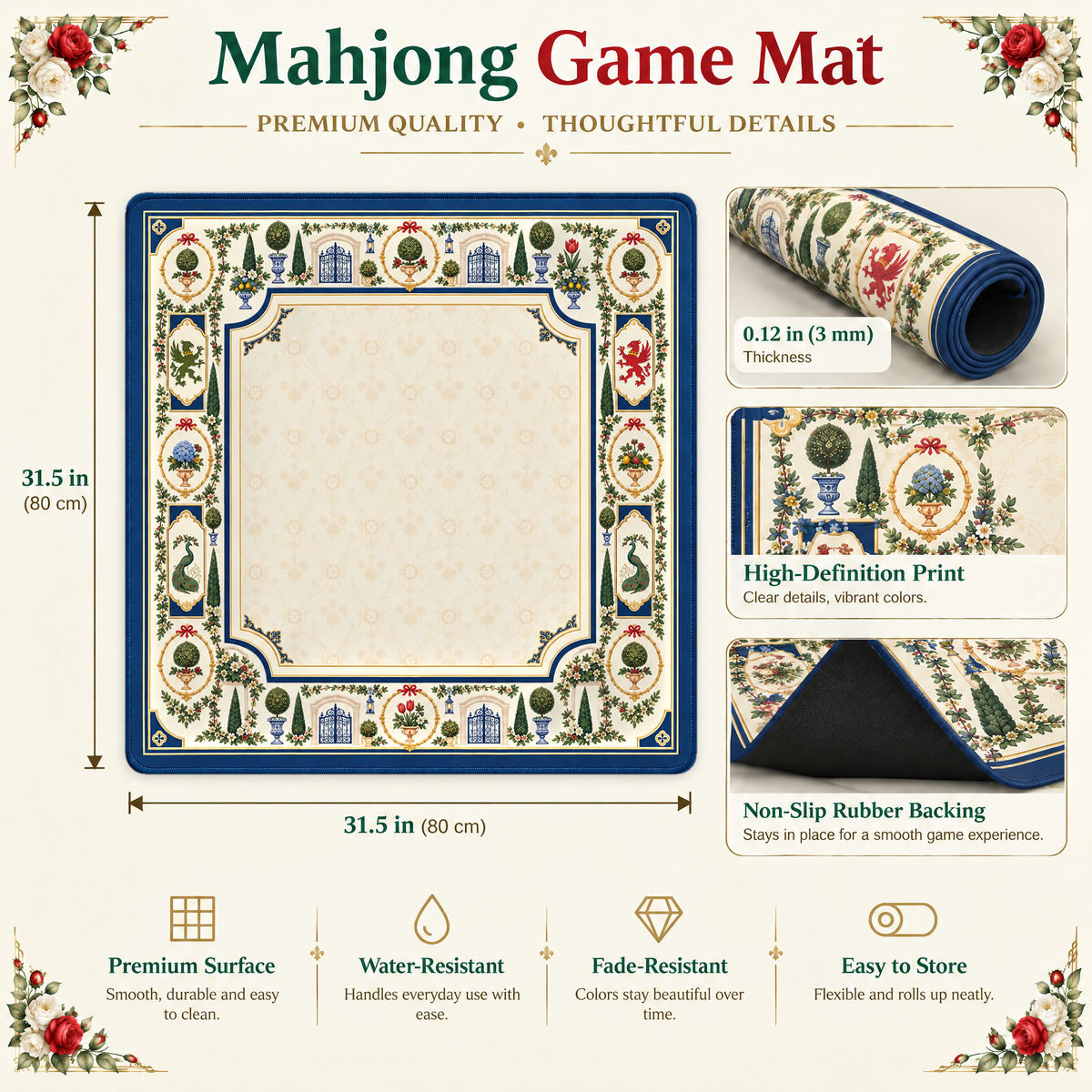
Yes—if your tiles are engraved, translucent, or feature metallic finishes, let them guide your cake design. Acrylic tiles in jewel tones (deep greens, rich reds, cream with gold edges) translate beautifully to hand-tinted buttercream or metallic dust finishes. If your set includes custom engravings, photograph one tile close-up and give it to your baker alongside a color swatch or paint chip. For a cohesive table, consider your mahjong mat too—a natural linen or green felt mat pairs with sage-and-cream cakes; a burgundy mat works with deeper reds and golds. Consistency matters more than perfection: if your tiles are simple classic green and red, a simple garden cake (green leaves, red blooms, cream base) will feel intentional and elegant. Over-decorating a cake with every tile variant defeats the purpose—pick one focal element (a single dragon, a pung of Dots, a bamboo motif) and repeat it subtly across the design.

What are easy DIY garden cake decorating ideas if you skip the bakery?
Box cake plus buttercream is your friend. Make or buy a plain vanilla or chocolate cake, frost it with pale green, cream, or soft pink buttercream, then layer on: fresh edible flowers (pansies, violets, rose petals—check with your grocer or farmer's market for pesticide-free sources), small pieces of fresh fruit (berries, thin apple slices, kiwi), and dry goods like toasted nuts or coconut flakes for texture. Use a piping bag to add dots, stems, or scribbles in contrasting colors. For a mahjong twist without fondant, cut simple tile shapes from sugar paper or cardstock, hand-write or print a Dot, Bam, Crak, or Dragon character on each, and arrange them in a corner or along the edge—they peel right off before serving. Another route: buy a sheet cake from your grocer and top it with a custom printed image on edible paper (design it yourself or ask a graphic designer to mock up three tiles and a garden border). The cake itself never has to be fancy; the topper is where the personality lives. This approach also works if you're hosting outside—no fondant wilting, no icing melting into a puddle under the sun.
🎁 See our most-loved mahjong sets & accessories →
How do you keep the cake fresh while playing mahjong for hours?
Timing is everything. Serve cake after the game ends—mahjong sessions can run three to four hours, and a frosted cake left on the table in open air, near snacks and drinks, will dry out, sweat, or get knocked over. If you must have cake on the table from the start (for aesthetic reasons or because it's someone's birthday), cover it with a clear cake dome or even a large bowl and refrigerate it; uncover it 15 minutes before serving. Keep the cake box or a backup sheet in the kitchen, ready to slice and plate. For outdoor garden-themed games, timing is more critical—heat and humidity accelerate fondant weeping and buttercream softening. Bake or decorate no more than 6–8 hours before guests arrive. If your event is mid-afternoon in summer, consider serving cake indoors or in the shade, and pair it with iced water or lemonade to refresh players between rounds. Carry the cake to the table only after hands finish being laid—when everyone's ready for a break, you're ready to bring it out.
✨ Find your Mahstead set — free US shipping →
What to check before you buy or bake
Baker lead time: Contact custom cake makers at least two weeks ahead; seasonal demand (spring, summer, holidays) fills their schedules faster. Ask if they've worked with mahjong or Asian-inspired themes before—if not, bring printed tile images.
Tile color references: Bring a photo of your best-selling mahjong sets or an actual tile to your first consultation. Paint-chip samples from a hardware store help too.
Serving size: One cake feeds four players with a modest slice each. For eight players (two games), order two smaller cakes or one 9 × 13-inch sheet.
Dietary needs: Confirm with guests before ordering—offer vegan, gluten-free, or nut-free versions upfront, or have a simple alternative ready (fresh fruit plate, store-bought cookies).
Storage and transport: If you're decorating yourself or picking up from a baker, avoid placing the cake in a hot car for more than 15 minutes. Invest in a sturdy box with a flat, level base.
Backup plan: If a baker falls through or your DIY attempt goes sideways, you can always swap the cake for a charcuterie board and save cake delivery for the next game. Your guests came for tiles and friendship, not sugar.
FAQ
Can I order a mahjong-shaped cake instead of a tile-decorated round cake?
Yes—many custom bakers create square or tile-shaped cakes. Expect longer lead times and potentially higher pricing. For simpler execution, stick with a round or rectangular cake and add mahjong décor on top; it photographs just as well and costs less.
What if the baker has never heard of mahjong?
Bring visual references: close-up photos of your tiles, a printed image of the National Mah Jongg League card (general patterns only), and color swatches. Show them how the game is played in 30 seconds—most bakers are excited by the challenge and will research floral garden aesthetics to match. Alternatively, choose a local baker with Asian-fusion or traditional Chinese pastry experience; they'll likely understand tile imagery and botanical symbolism.
Should the cake taste like the garden theme—floral flavors, matcha, etc.?
Not required. A standard vanilla, chocolate, or lemon cake with garden decoration is perfectly elegant. If you want thematic flavor, matcha, lavender, or rose are common baker options. Avoid anything too experimental that might clash with post-game palates; keep it approachable.
How far in advance can I decorate the cake?
Fondant tiles and edible flowers: 24 hours maximum before serving. Buttercream and fresh fruit: 6–8 hours. Plain unfrosted cake: up to three days, refrigerated. Assemble and decorate no earlier than the morning of your event unless you're freezing components.
Can I reuse a mahjong cake topper or tile decoration at the next game?
If you used sugar paper or cardstock tiles, absolutely—they last indefinitely. Fondant tiles harden and become brittle; if kept dry, they last weeks but aren't meant for reuse. Buttercream piping doesn't travel; it's fresh per cake.
Is a garden cake theme only for spring and summer games?
No—winter garden themes (frost, evergreen, bare branches, berries) and autumn gardens (leaves, pumpkins, golds) work year-round. Garden imagery translates across seasons; adjust your color palette and flora to match the time of year.
Should I mention the cake theme when I invite guests?
Yes—a simple line ("We're doing a garden mahjong theme; feel free to wear green or floral") sets expectations and lets guests coordinate outfits or bring complementary snacks. It also signals that you've put thought into hosting, which raises the overall vibe of game night.


View More
View More
View More
