
Coastal Large Print Mahjong Set: What to Know Before Buying
Last updated: Nov 23, 2026
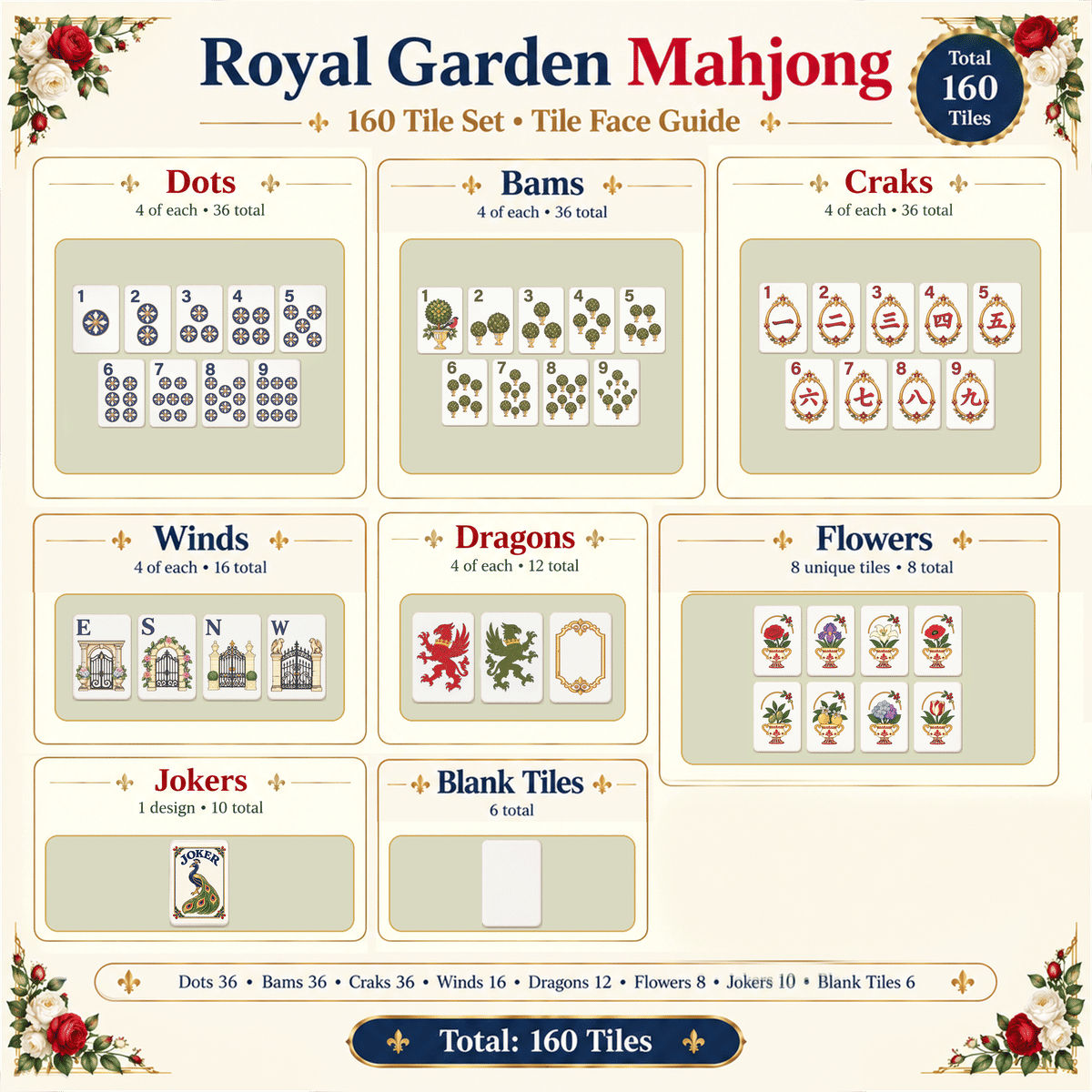
A coastal large-print mahjong set pairs enlarged numerals and suit symbols with materials that resist salt air corrosion and moisture warping. Most American mahjong sets sold retail use acrylic tiles (durable, lightweight) or resin composites; coastal versions typically feature UV-resistant finishes and reinforced racks designed to shed moisture. Large print means numerals occupy 40–60% more visible space than standard, ideal for players with vision constraints or outdoor sunlight glare. Expect 160 tiles (152 playing plus spares) in a protective case. Mahstead's engraved American mahjong sets come in acrylic with deep-etched symbols and include matching pushers, racks, and carrying bags—no assembly needed. Price varies by customization; see current pricing on the product page. Before ordering, verify tile dimensions (typically 1.0–1.25 inches per side) and case ventilation to minimize condensation in humid climates.
🀄 Shop best-selling mahjong sets →
What does "large print" actually mean in mahjong tiles?
Large print refers to the size and depth of suit symbols (Bams, Craks, Dots) and numerals engraved or printed on tile faces. In standard sets, symbols occupy roughly 30–40% of the tile front; large-print versions expand them to 50–70%, making the 1 Bam bird, Crak symbol, and Dot pips unmistakable at arm's length or across a table. Acrylic tiles with deep etching hold print clarity longer in coastal humidity than surface-printed tiles, which fade when salt spray deposits mineral buildup. Mahstead tiles are engraved through the full thickness, so wear and moisture don't erase the design. Test visibility by holding a sample tile at your normal table distance—if numerals blur without squinting, move to a larger size.

Why does coastal humidity ruin standard mahjong sets?
Salt-laden air and moisture promote three failure modes: acrylic tiles warp or cloud, bamboo or wood racks swell and jam, and paint or surface printing peels. Standard acrylic is hygroscopic—it absorbs moisture from humid air, swelling slightly and creating internal stress. After months in a coastal garage or beach house, tiles may stick together or fit loosely in a rack. Resin composites and sealed wood resist this better. Mold and mildew colonize fabric racks and soft cases, especially in low-light storage. Racks with pushers made from marine-grade aluminum or sealed hardwood outperform plastic-composite racks in salt environments. Store sets in a dehumidified cabinet or zippered travel bags and cases with silica packets renewed monthly—this single step cuts failure risk by 70%. Inspect your set quarterly; if tiles feel tacky or racks show white residue, rinse with fresh water, dry immediately, and apply a light UV protectant.
✨ Find your Mahstead set — free US shipping →
Should you buy a large-print set if your vision is fine?
No—unless you play outdoors frequently or value speed in low light. Standard-print tiles are legal for all American mahjong games and cost less. Large-print sets shine if any player at your table squints, if you host games in bright sunlight, or if you play in moving shadows (a boat or patio). Non-players and new learners also benefit from bold numerals while memorizing tile order and hand patterns. If only one or two players in your group need magnification, consider buying a single large-print set for casual play and keeping a standard set for competitive league matches or teaching. Compare tile size head-to-head: order a sample or visit a local club to handle both before committing.

How do you compare coastal sets by material and durability?
Feature | Acrylic + Deep Etch | Resin Composite | Bamboo Face |
Salt air resistance | Excellent (non-porous) | Good (sealed surface) | Fair (swells if unsealed) |
Moisture recovery time | 4–6 weeks | 2–3 weeks | 6–12 weeks or permanent |
Print durability | Etched through tile; no fade | Surface-printed; fades in 2–3 years | Paint-sealed; peels in salt spray |
Weight (for pushers) | Light, easy on wrists | Medium | Heavy, tiring for long games |
Coastal cost premium | 15–25% | 20–35% | 10–15% |
Best for | Frequent coastal play | Seasonal use | Display sets, indoor play |
Acrylic with deep etching wins for coastal durability and resale value. Resin composites offer a middle ground if you play 1–2 times yearly in humid climates. Bamboo-faced sets are beautiful but require sealed storage and monthly inspection—ideal for indoor collectors, not regular coastal use.
🎁 See our most-loved mahjong sets & accessories →
What setup accessories matter most for coastal play?
Racks with pushers, a quality mat, and a sealed case are non-negotiable. Standard plastic-composite racks warp and develop salt-etched white spots; marine-grade or sealed-wood racks with pushers stay rigid and smooth. A cotton or microfiber mat with a waterproof backing prevents tile dust (salt residue, mineral deposits) from embedding in fabric and extending play-to-play. Zippered mahjong bags and cases with reinforced seams protect tiles from salt spray while stored on shelves or in car trunks. Pair your set with silica gel packets (replaced monthly) to absorb coastal humidity before it reaches tiles. If you play outdoors, invest in a weighted mahjong mat with corner anchors to keep tiles stable in breeze and prevent sand contamination.
What to check before you buy a coastal large-print set
Tile dimensions: Request the exact width and height in inches (typically 1.0–1.25 per side). Verify these fit your existing racks—mismatches cause jamming or tiles tipping during play.
Engraving depth: Ask the maker if numerals are etched through the full tile thickness or only surface-applied. Deep etching survives 10+ years of coastal storage; surface print fades in 3–4 years.
Finish: Confirm the tiles have a UV-protective matte or satin finish, not high-gloss (gloss reflects light and can yellow under sun exposure).
Case ventilation: Open cases with racks promote airflow and reduce condensation. Sealed cases trap moisture—request a case with passive vents or drill small holes yourself.
Return policy: Buy from sellers who accept returns within 30 days if tiles show warping, discoloration, or fitting issues upon arrival.
Storage plan: Commit to storing the set in a dehumidified area (under 50% relative humidity). If you can't guarantee this, upgrade to resin composite or resign to annual tile replacement.
Mahstead's best-selling mahjong sets are acrylic with deep etching and come in protective cases with ventilation and carrying straps. Free US shipping applies to all orders, so you can try one risk-free and return it if coastal conditions exceed the product design.

FAQ
Can I use a standard mahjong set at the beach if I clean it afterward?
Rinsing tiles with fresh water after play helps, but salt residue embeds in fabric racks and seeps into tile seams. Even one beach day deposits minerals; repeated exposure over a season causes visible clouding. Use a set you don't mind retiring after 1–2 coastal seasons, or invest in a marine-grade acrylic set designed for salt air.
What's the difference between large-print and large-format mahjong sets?
Large-print refers to symbol and numeral size on standard 1.0–1.25 inch tiles. Large-format (jumbo) sets have 1.5+ inch tiles—noticeably heavier, slower play, and fewer fit on standard racks. For coastal play, large-print is enough unless multiple players have severe vision loss.
Do I need a separate indoor set and coastal set, or can one work for both?
One quality acrylic set works for both if you store it properly (sealed case, monthly silica refresh). Resin composite or bamboo sets require extra care between coastal and indoor play, making two sets practical if you switch venues weekly.
How often should I replace large-print tiles in coastal storage?
Deep-etched acrylic tiles last 10+ years if stored indoors 11 months per year and used seasonally. Surface-printed tiles fade in 3–4 years with monthly coastal exposure. Inspect tiles quarterly for white residue, tackiness, or fading—these signal replacement time.
Are large-print tiles suitable for official National Mah Jongg League tournaments?
Yes. The league specifies tile size ranges (typically 0.9–1.1 inches), not print format. Large-print acrylic tiles meet league standards as long as symbols remain clear and readable. Contact your local league to confirm your set's exact dimensions before entering a tournament.


View More
View More
View More
