
Chow Mahjong Meaning and Points: American Rules Explained
Last updated: Nov 23, 2026
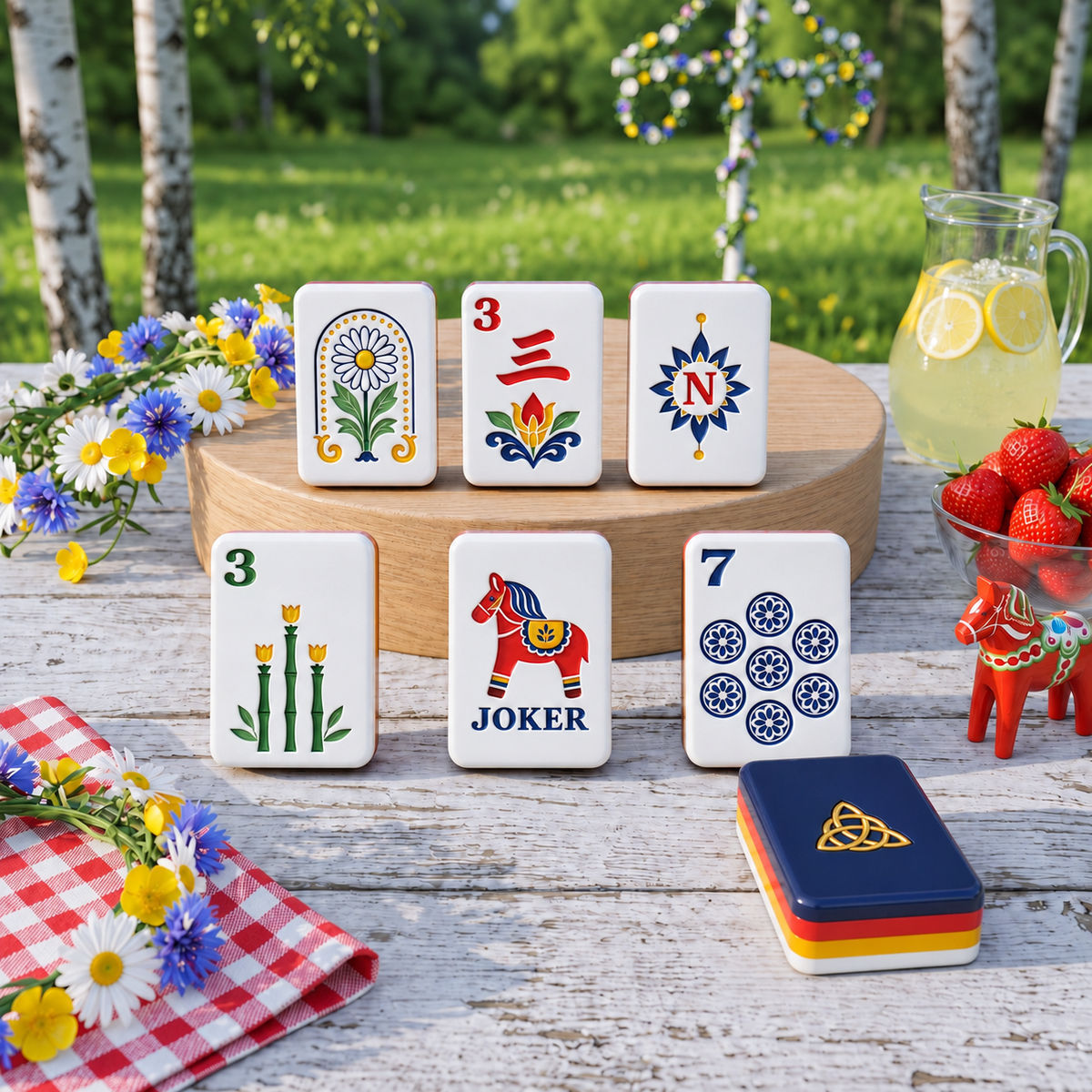
In American mahjong, chows (sequences of three consecutive numbers in the same suit) do not exist and cannot be played. American hands are built only from pungs (three identical tiles), kongs (four identical), quints (five), sextets (six), and pairs—all straight copies of the same number and suit. Chinese, Hong Kong, and Riichi variants all use chows as core components, but American mahjong deliberately excluded them to simplify play and focus on honor tiles, joker strategy, and the official National Mah Jongg League card patterns. If you're new to American mahjong, understanding this rule difference is essential: you cannot call or expose a sequence, and hands from the current year's card will only show pung-like groupings. This fundamental shift changes strategy, tile management, and scoring entirely.
🀄 Shop best-selling mahjong sets →
Why doesn't American mahjong have chows?
When American players standardized the game in the 1920s and 1930s, they intentionally removed sequences to reduce complexity and speed up play. Chows require careful counting and introduce ambiguity about which tiles are "in play" during a sequence call. By restricting valid melds to pungs, kongs, and honor combinations, American mahjong became more strategic around joker use, tile retention, and pattern recognition from the official card. The National Mah Jongg League, which publishes the yearly play card, has never added chows back. This design choice also means every American hand pattern is visually and mechanically simpler to verify at the table—no disputes about sequence validity or overlapping calls.

What counts as a valid meld in American mahjong instead?
American melds come in six types, and every legal hand must use only these:
Pung: three identical tiles (e.g., three 5 Dots).
Kong: four identical tiles (e.g., four Red Dragons).
Quint: five identical tiles (same suit and number).
Sextet: six identical tiles.
Pair: two identical tiles (only one pair per winning hand).
Honor combinations: winds and dragons arranged as the card specifies, never as sequences.
Jokers can substitute for any tile within a meld except in a pair or as a single uncalled tile. If you're reading how to read the mahjong card, you'll see these patterns listed by section; each hand shows which melds and joker positions are legal. This strict structure means the game rewards memory, speed, and the ability to spot card patterns quickly.
How do other mahjong variants use chows differently?
Variant | Chow Rule | Why It Matters | Play Speed | Deck Size |
American | Chows forbidden; pungs only | Card-based, pattern-focused | Fast | 152 tiles + 8 jokers |
Chinese | Chows required in most hands; bonus for all-chow patterns | Sequences create tile flow and planning depth | Medium | 144 tiles, no jokers |
Hong Kong | Chows allowed; complex call/exposure rules | More melds open; riskier discards | Medium–slow | 144 tiles, no jokers |
Riichi (Japanese) | Chows (called "shuntsu") required; scoring by fan/minipoints | Tight hand-building and strict waits | Slow | 136 tiles, no jokers |
Taiwanese | Chows allowed; scoring combines sequences and honor tiles | Hybrid strategy; joker use varies | Medium | 144 tiles; jokers optional |
Chinese and Hong Kong players often find American mahjong jarring at first because the absence of sequences removes a core skill layer—long-term tile planning around runs. American players, by contrast, may feel overwhelmed when introduced to chows because suddenly a tile can belong in multiple sequences, and called melds stay on the table exposed and locked.
What hands score highest if not through chows?
Scoring in American mahjong depends entirely on the current year's National Mah Jongg League card. Every pattern shown on the card has a points value, from simple hands worth a few points to rare, complex patterns worth 50 or more. Unlike Chinese variants (where all-chow hands or all-honor hands earn named bonuses), American scoring is fixed by card design each spring. High-scoring hands typically feature:
Multiple kongs or quints (rare tile repetition).
Specific honor tile (wind or dragon) arrangements.
Joker placements in difficult positions.
Mixed suit patterns with specific number combinations.
American mahjong scoring is published and unchanging within a season; there is no hidden bonus calculation. A hand is either on the card at a stated point value, or it is not playable. This removes negotiation and keeps games fast and fair.

Common mistakes when switching from chow variants to American mahjong
Mistake 1: Trying to build sequences. You'll instinctively hold tiles like 3–4–5 of the same suit, expecting to form a chow later. In American mahjong, this tie-up wastes precious draws. Only hold tiles that match the current card patterns in your hand or in patterns you're building toward.
Mistake 2: Exposing melds incorrectly. You cannot call or expose a sequence under any circumstances. If you're holding three 5 Craks in your hand, you must expose all three at once as a pung; you cannot keep one private and add to it later. Once a pung or kong is exposed, it is locked on the table in that exact form.
Mistake 3: Forgetting the card is law. The card is not a suggestion. If a hand is not shown on the current year's card, it is not a legal win, no matter how "correct" it looks. Always verify your winning combination against the card before declaring.
Mistake 4: Misusing jokers in sequences. American jokers cannot appear in a pair, cannot be the only tile in a call, and cannot represent a tile in a sequence (because sequences don't exist). Jokers go only in pungs, kongs, quints, and sextets to replace a missing identical tile.
Mistake 5: Confusing honor tiles with number suits. Winds and Dragons cannot form chows; they follow the card's exact specifications. A hand calling for "East Wind pung" means three East tiles exactly, never a "run" of winds.
🎁 See our most-loved mahjong sets & accessories →
The shift from chow thinking to American tile strategy
Players from chow variants must retrain pattern recognition. In Chinese mahjong, a good hand develops over many turns as you build sequences and keep flexibility. American mahjong rewards speed and memory: you scan the card before your turn, recognize patterns you're building, and either commit to a single hand or pivot to a second option quickly. This is why mahjong for beginners in American games emphasizes knowing the card section names and keeping your racks organized. Your racks and tiles must be easy to read at a glance.
Since there are no hidden sequences to build, every tile you retain is either part of a named pattern or dead weight. This forces discipline: you discard tiles that don't feed your declared hand or one backup hand almost immediately. Experienced players often narrow to a single target within the first 4–5 discards and stay locked there. It is rare to see a successful American game shift hands mid-play; the card patterns are too specific.
What you'll need to play American mahjong correctly
If you're hosting regular games or learning with a group, invest in a clear setup. Our best-selling mahjong sets are built for durability and readability—acrylic tiles with crisp, large suit symbols are far easier to scan than bone-and-bamboo sets when you're learning to spot card patterns. A mahjong mat organizes your melds and racks so no one misreads a pattern, and mahjong racks with pushers keep your hand secure so you don't accidentally expose a tile before you're ready. Add a travel bag if you rotate between friends' homes weekly; tiles and mats survive better in a dedicated case than loose in a board-game box.
Beginners often start with borrowed sets from other players. If you're committing to regular American mahjong, having your own set prevents confusion over tile condition (worn tiles are harder to read) and lets you practice tile recognition at your own table.
✨ Find your Mahstead set — free US shipping →
What to check before you buy your first American mahjong set
Tile count: American mahjong uses exactly 152 playing tiles plus 8 jokers in every game. A 160-tile set contains spares; those spares are never added to play—they're backups for lost or damaged tiles.
Suit clarity: Confirm Bams, Craks, and Dots are visually distinct. Acrylic sets with printed graphics outperform older bamboo sets where symbols wear down after years of weekend games.
Rack quality: Racks should hold exactly 13 tiles upright without tilting. A pusher (the small stick included with many racks) makes it easy to slide one tile up to signal a draw without exposing your full hand.
Card accuracy: Your set should include the current year's National Mah Jongg League card. Cards change every spring; using an old card will cost you games because hand patterns shift annually.
Joker design: Check that jokers are visually obvious—either a different color, symbol, or clear label. When you expose a meld with a joker, the table must instantly see which tile is the substitute.

FAQ
Can I play a 3-4-5 sequence in American mahjong if I substitute tiles with jokers?
No. Chows—including joker-substituted sequences—are forbidden in American mahjong. Jokers only substitute for missing identical tiles in pungs, kongs, quints, or sextets. If a pattern is not on the card, it is not a legal meld.
What if I accidentally call a sequence before I realize the rule?
Stop immediately and correct your hand. Call the dealer or the table's designated scorer. In friendly games, you can replay the turn; in league play, an illegal meld may result in a penalty hand or sitting out the rest of the round. Prevention is easier: memorize "no sequences" before your first game.
Do different regions of the US play chows in American mahjong?
No. American mahjong is standardized nationwide by the National Mah Jongg League. Every legal American game uses the same rules: no chows, card-based patterns, 152 playing tiles. If someone tells you their local group allows sequences, they are playing a house variant, not official American mahjong.
If I learned Chinese or Hong Kong mahjong first, how long does it take to switch to American rules?
Most experienced players adapt within 2–3 game sessions once they understand the card. The hardest part is breaking the habit of holding potential sequences. Focusing on one card pattern per turn and discarding unmatched tiles faster than you did in chow variants speeds the adjustment significantly.
Why did the National Mah Jongg League choose to exclude chows when the game was standardized?
Chows add complexity, require more player skill to manage, and increase the time per hand. Removing them allowed more players to compete fairly and sped up casual play. The trade-off is that American mahjong emphasizes memory and pattern recognition over long-term sequence planning—a deliberate design choice that worked for decades.
Is there a penalty if I build a meld that looks like a chow but call it something else?
There is no such thing as "a meld that looks like a chow" in American mahjong because melds are only pungs, kongs, quints, sextets, and pairs. A pung is three identical tiles; a 3-4-5 is not three identical tiles and therefore cannot be called in any form. It is an illegal meld, not a variation.


View More
View More
View More
