
Chinoiserie Large Print Mahjong Set: Design & Buy Guide
Last updated: Nov 23, 2026
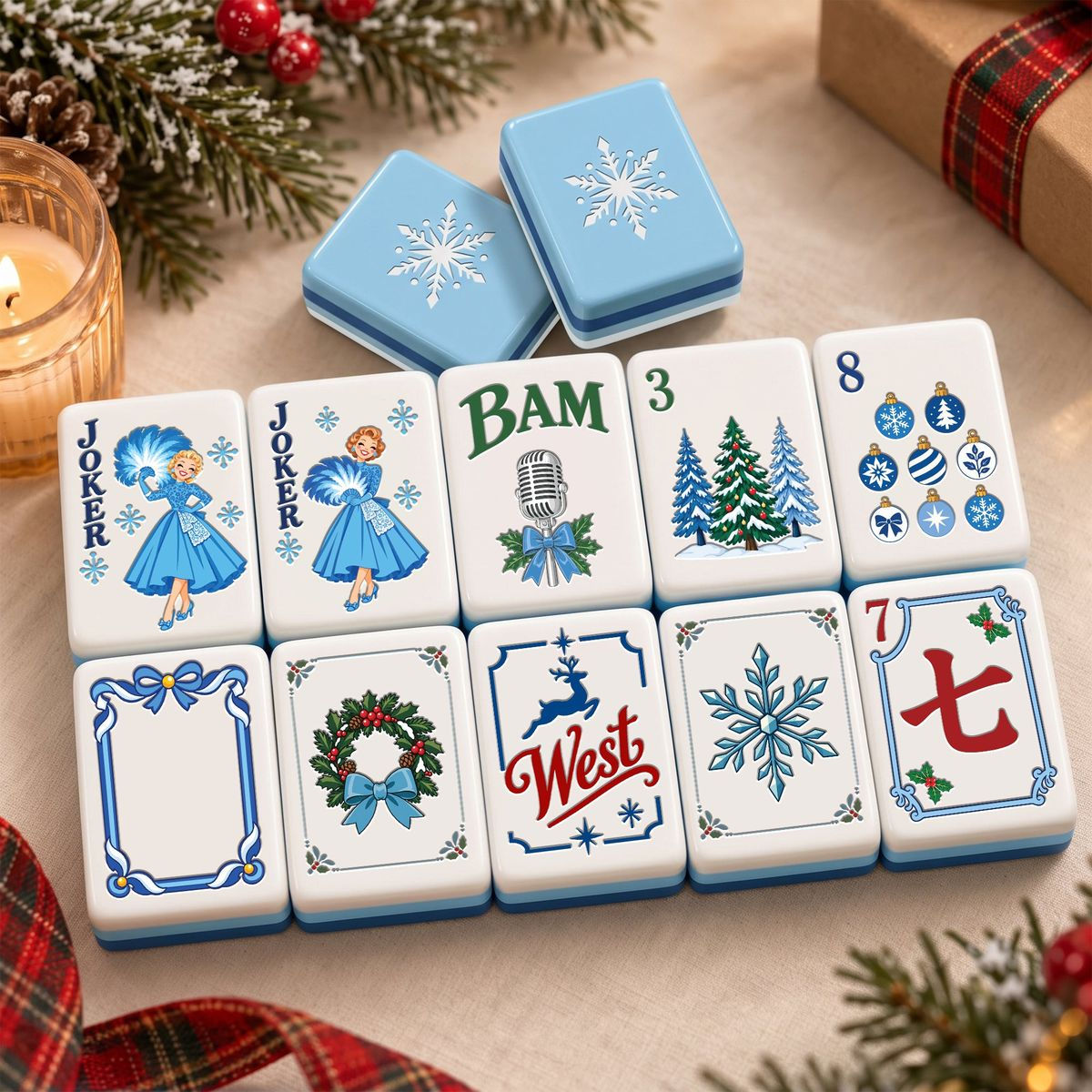
A chinoiserie large-print mahjong set features decorative Asian-inspired motifs—pagodas, chrysanthemums, jade patterns—printed prominently on acrylic tile faces in 1–2 sizes larger than standard. The design serves both function and style: symbols remain easy to read during fast play, while the ornamental background elevates the table. These sets contain the full 152 playing tiles plus 8 jokers (packaged as 160-tile sets) with identical tile backs and a matching carrycase, mat, or rack included in many configurations. Players typically order from custom design catalogs; Mahstead offers engraved American mahjong sets with art-forward options. Large print works best for experienced players hosting formal games or anyone with vision sensitivity; beginners benefit equally from the clarity. Expect acrylic construction for durability, and verify tile weight, rack compatibility, and case fit before checkout.
Why does large print matter in American mahjong?
During a fast-paced game, you're scanning tiles on your rack and the table simultaneously while the timer ticks. Standard-size symbols (roughly 0.75 inches) can blur together, especially under poor lighting or after several hands. Large print—typically 1–1.5 inches—slows that cognitive load. You read Bams, Craks, and Dots instantly, spot jokers without second-guessing, and verify wind tiles before declaring. Chinoiserie designs add visual separation: a jade swirl behind the 3 Crak looks nothing like a bamboo frame around the 2 Bam. The human eye separates ornament faster than it parses tiny numerals.
🀄 Shop best-selling mahjong sets →

How do large-print designs differ from standard tile layouts?
Standard American mahjong tiles show a clean, minimal face: the suit symbol (stick, coin, or dot) and the number 1–9. Characters are centered, monochrome, fit into roughly 40% of the tile face. Chinoiserie large-print variants expand the symbol to 60–75% of the face and add borders, background washes, or illustrative frames. A 5 Dot becomes a large circle ringed by a chrysanthemum pattern; a North Wind carries a pagoda silhouette. The tile back remains uniform (usually a solid color or traditional pattern), so no player gains advantage. Readability improves, but so does aesthetic cohesion—the set feels intentional rather than purely functional. Weight and thickness stay consistent with standard acrylic (around 0.18–0.25 inches), so racks and cases fit without modification.
Which players choose large-print sets?
Player Type | Who It's For | Why Large Print Works |
Experienced host | Weekly game leader (30+ years play) | Faster tile identification; guests read clearly; games run smooth |
Vision-sensitive | 50+ players; presbyopia or astigmatism | Reduces eye strain; no magnifiers needed; confidence returns |
Formal collector | Special occasion, display, gifting | Art investment; chinoiserie aesthetic matches décor; memorable purchase |
Beginner with support | New player + attentive table | Shorter learning curve; symbols memorable; confidence builds |
Tournament prep | Intermediate player training | Matches competition card speed without tile-reading friction |
Large-print sets rarely appeal to speed-focused competitive players (who prefer lightweight, minimal designs) or casual groups playing once yearly (where aesthetics matter less than availability).
What should you check before ordering a chinoiserie set?
Tile weight and material. Acrylic tiles range from lightweight (0.25 oz per tile) to heavy (0.4+ oz). Heavier tiles feel substantial but tire your hand during longer games. Check product specs or ask: "What does a single tile weigh?" Mahstead's best-selling mahjong sets list material and approximate weight.
Rack and pusher compatibility. Large-print tiles fit standard racks (bamboo, acrylic, or wood) only if tile thickness stays normal (0.18–0.25 inches). Some ornate designs add depth. Confirm: "Will these tiles sit flush in a standard American rack?" Our racks with pushers guide shows compatible combinations.
Tile back uniformity. All tile backs must be identical—no variations in color, pattern, or finish—or players can identify tiles during the live wall draw. Verify a photo of 10 random tile backs before purchase.
Case and mat fit. A carrycase must hold 160 tiles (152 + 8 jokers) snugly without jamming. If you own a beloved mahjong mat, test the set's tile height and width against existing tile grooves or dividers.
Design reversibility. Chinoiserie motifs should not obscure the suit symbol or number. Hold a product photo at arm's length: can you still identify the tile in 2 seconds? If not, the design prioritizes art over function.
Production lead time. Custom engraved sets often require 2–4 weeks. Confirm before ordering if you need the set for a specific date.
Price and bundling. Large-print sets cost more than standard designs due to custom printing and design labor. See current price on the product page and compare bundle options (set alone vs. set + case + mat).

Comparing large-print sets: aesthetic vs. practical trade-offs
Aspect | Heavy Ornament | Moderate Ornament | Minimal Ornament |
Print coverage | 70%+ of tile face | 50–60% | 30–40% |
Readability speed | 2–3 seconds | 1–2 seconds | <1 second |
Visual appeal | High; statement piece | Strong; balanced | Clean; timeless |
Table uniformity | All tiles feel cohesive | Mixed—some ornate, some plain | Consistent, neutral |
Beginner learning | Easier symbol ID | Medium ease | Steeper curve |
Cost | Highest | Mid-range | Standard |
Formal game feel | Very formal; special occasion | Semi-formal; weekly play | Casual or competitive |
Choose heavy ornament if: You host monthly formal games, own a collection space, or prioritize aesthetic over speed. Choose moderate if: You play weekly, want clarity without fussiness, and need a versatile look. Choose minimal if: You play competitively, switch sets often, or prefer classic utility.
🎁 See our most-loved mahjong sets & accessories →
Why do players bundle large-print sets with mats and cases?
A chinoiserie set is an investment—visually, financially, emotionally. Bundling it with a matching mahjong mat and a travel bag creates a cohesive package: the set looks intentional from setup through storage. A mat with coordinating colors or patterns frames the set, making tile reading even easier (contrast between mat and tile improves focus). A quality case protects acrylic tiles from cracks and UV fade (chinoiserie prints can yellow if exposed to direct sunlight for months). For formal hosts, bundling signals care: guests sense the table is prepared, the experience is premium. For collectors, it's insurance—a complete, archive-quality system. Check whether your chosen travel bag option fits the tile dimensions before buying.
Are there regional or seasonal variants of chinoiserie designs?
Yes. Spring collections often feature cherry blossoms and peony motifs; autumn editions show maple leaves, cranes, or harvest themes. Winter designs (including Christmas mahjong sets) blend chinoiserie with festive gold or silver accents. Summer collections lean toward lotus, water, and jade. These seasonal versions aren't purely aesthetic—they serve practical sorting. If you own multiple sets, a spring set's cherry blossom backing distinguishes it instantly from a winter gold version. Some players collect one seasonal set per year; others choose a year-round design (like a classic pagoda or bamboo motif) that transcends seasons. Check new mahjong arrivals regularly if you follow seasonal releases.
What to check before you buy
Tile weight. Confirm grams per tile or ounces per set. Heavier tiles (0.35+ oz) feel premium but tire hands; lighter tiles (0.25–0.3 oz) suit longer games.
Print durability. Ask if the chinoiserie design is UV-treated or sealed. Unprotected prints fade in 6–12 months under regular play.
Uniformity across all 152 tiles. Request photos of at least 20 random tiles to verify consistency. Slight color variation is normal; major differences signal production issues.
Carrycase security. Ensure tiles don't rattle inside the case. Loose tiles crack faster than snug ones.
Rack fit. Measure your existing racks' width and depth; confirm the set's tile dimensions match (standard is 1.0–1.1 inches wide, 0.8–0.9 inches deep).
Return or exchange policy. Know what happens if tiles arrive chipped or colors differ from the photo.
✨ Find your Mahstead set — free US shipping →

FAQ
Can I use a large-print chinoiserie set with the National Mah Jongg League card?
Yes. Large print doesn't change the suit, number, or wind/dragon face—only the visual presentation. The card's hand layouts (pungs, kongs, quints, pairs, jokers) read identically. Your hand is still valid; play proceeds normally.
Do large-print tiles fit into standard bamboo racks?
Almost always, if tile thickness stays under 0.26 inches. Measure your rack's tile slot depth and confirm the set's thickness before ordering. Heavy ornament designs occasionally run thicker; check product specs or contact the seller.
How long does a chinoiserie design last before fading?
Acrylic tiles with sealed or UV-treated prints typically last 3–5 years of weekly play under normal indoor lighting. Unprotected designs fade in 12–18 months. Store sets in cases away from direct sunlight to extend life.
What's the price difference between large-print and standard sets?
Large-print custom designs typically cost 20–40% more than standard designs due to custom printing and engraving labor. See current price on the product page for specific comparisons.
Can I mix large-print tiles from two different sets without confusion?
Only if both sets have identical backs. If one set's back is red and another's is blue, you'll immediately spot mixed tiles. Keep sets separate, or order a single large-print set for consistent play.


View More
View More
View More
