
Best Mahjong Table: Buying Guide & Comparison
Last updated: Nov 23, 2026
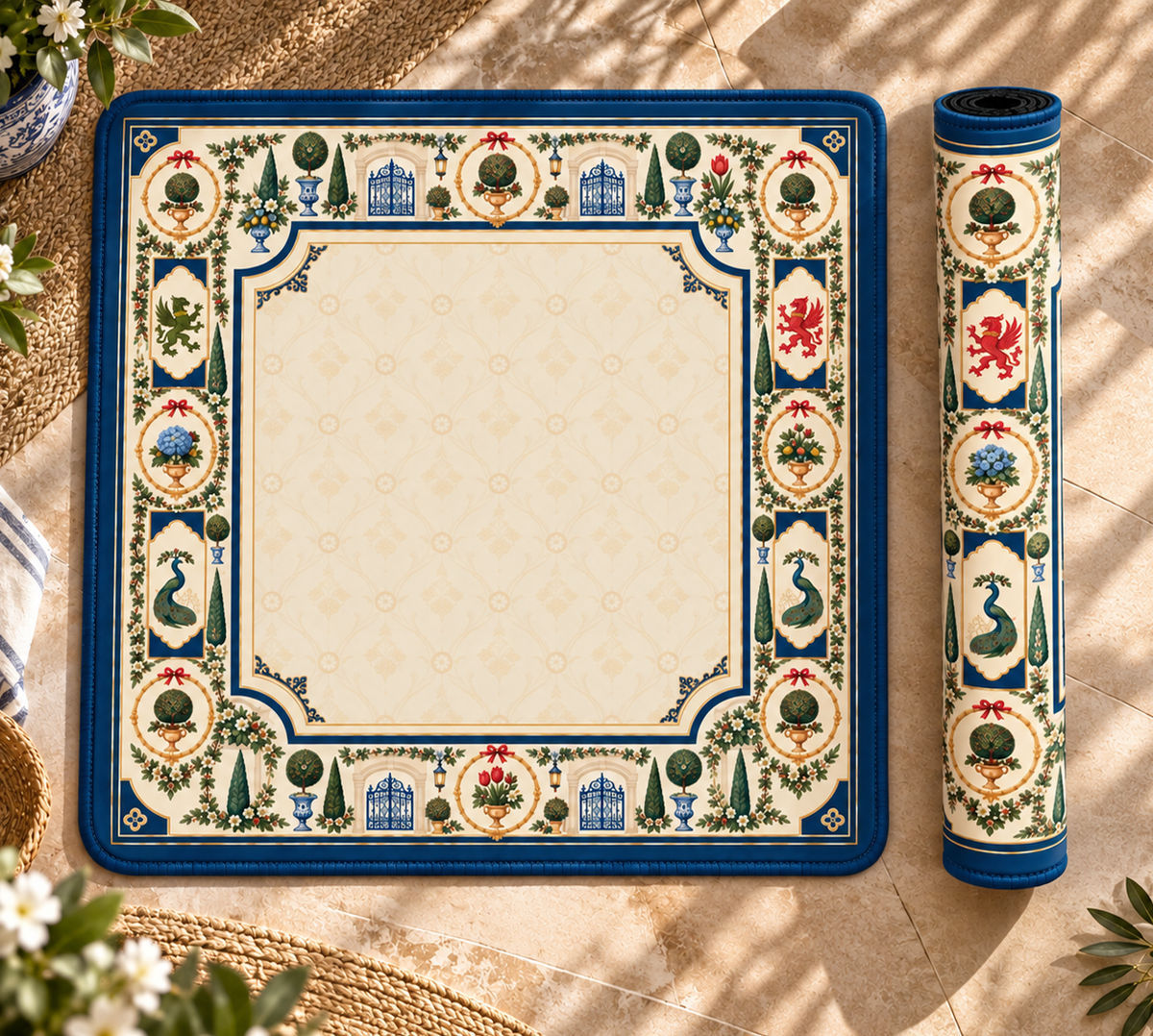
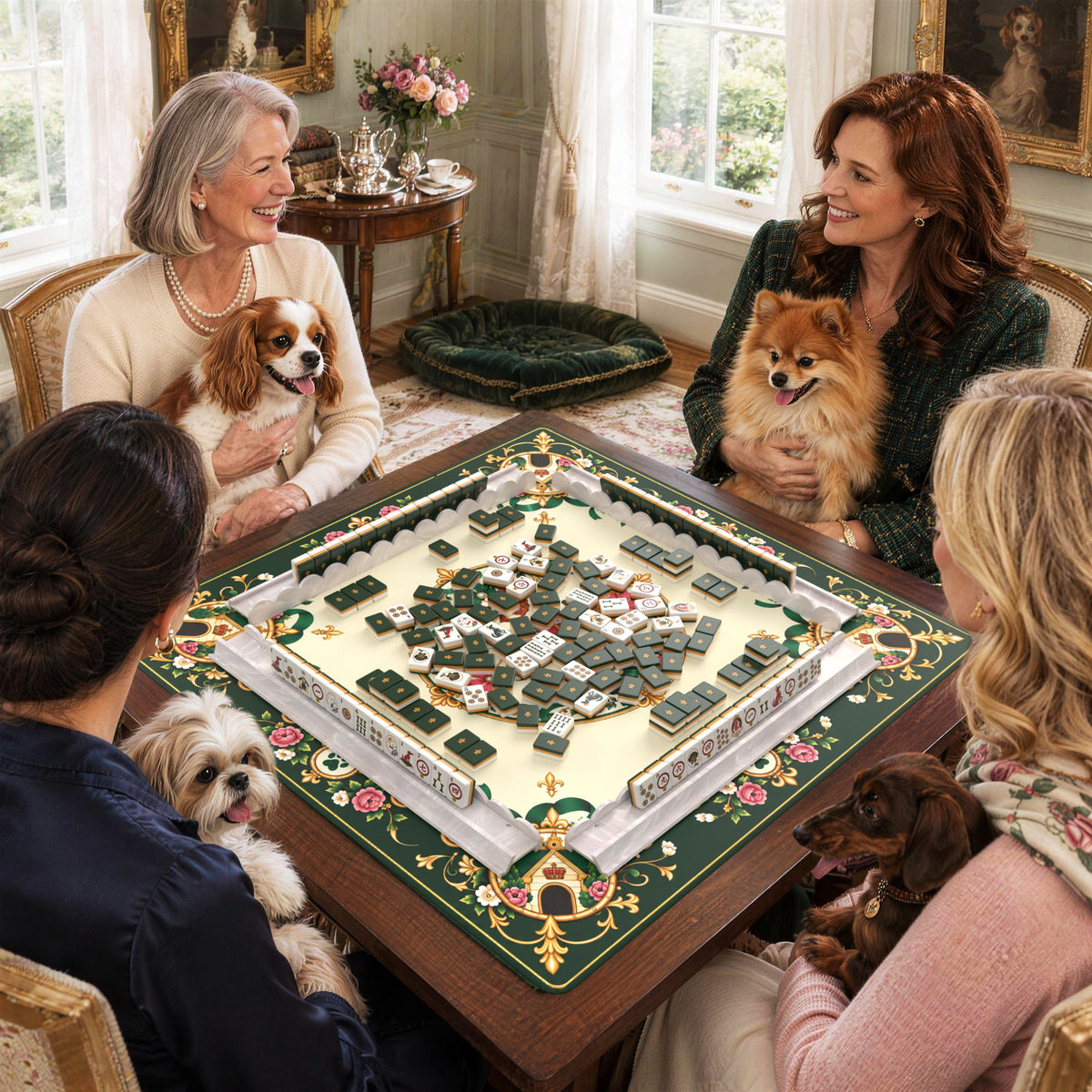
When we say "best mahjong table," we mean the surface where your weekly game comes alive. For American mahjong, you need a stable playing surface large enough for four players, 152 tiles, racks, and room to draw. Options range from a dedicated mahjong table with built-in wells and cup holders to a simple felt mat draped over your dining table. A quality mat or purpose-built table keeps tiles visible, noise down, and the game moving without tile-creep or accidental flips. Most players in our games choose between a fitted mat (portability, easy storage) or a permanent table (luxury, durability). Mahstead's mahjong mats are designed for exactly this job—cushioned, sized for standard play, and easy to pack away. Your choice depends on how often you host, how much space you have, and whether you want to move your setup or keep it ready year-round.
What's the difference between a mahjong table and a mat?
A dedicated mahjong table is a permanent piece of furniture with a recessed playing surface, often cup holders, and sometimes built-in storage. A mahjong mat is a fabric or padded surface you place on any table—dining, card table, or folding surface. Mats are portable, affordable, and easy to store; tables are luxurious, built to last, and always ready. Most of us who host weekly games start with a mat because it lets us host without committing to a furniture purchase.
🀄 Shop best-selling mahjong sets →
How big should your playing surface be?
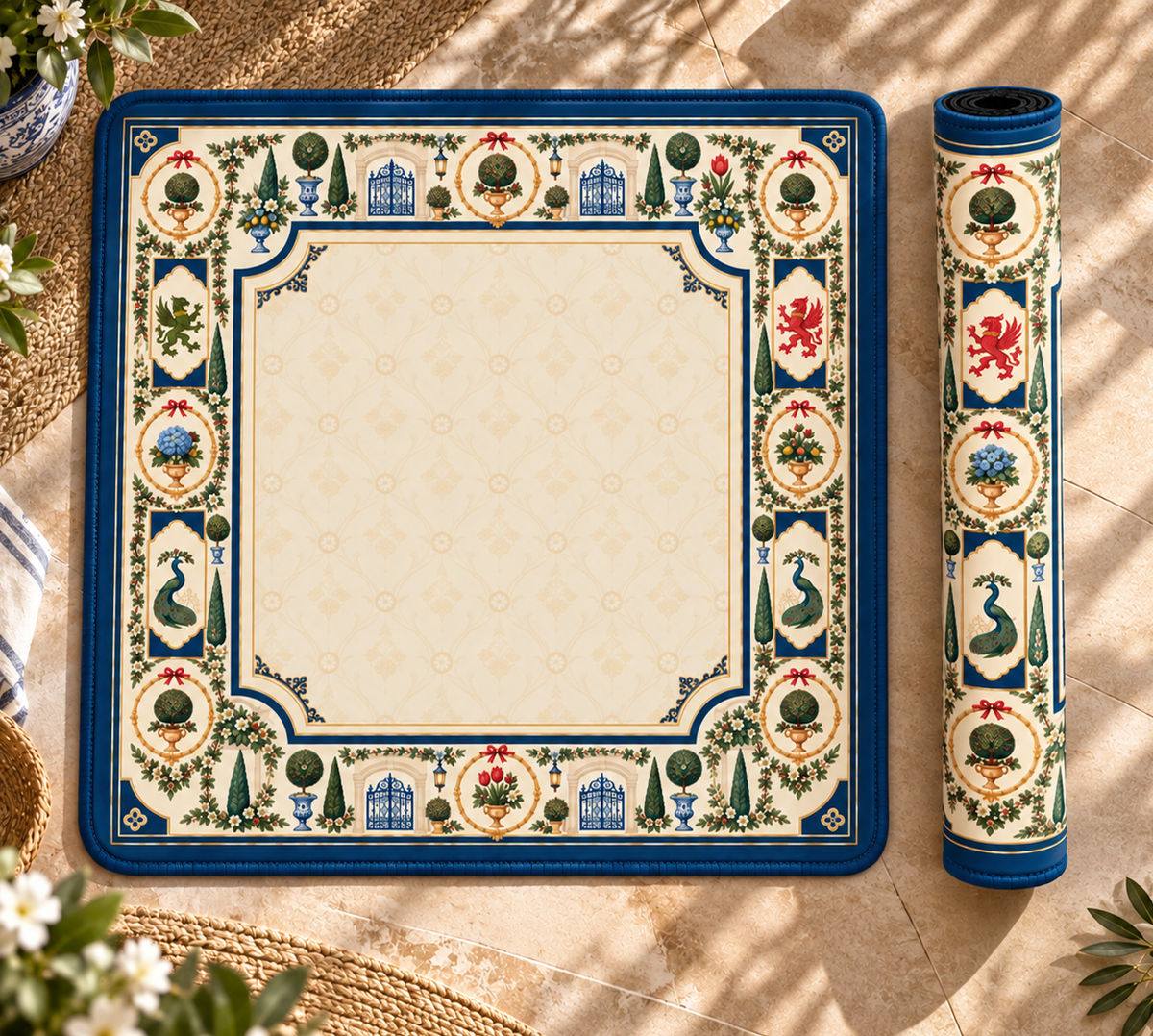
American mahjong needs about 36 by 36 inches of clear playing space for four players, racks, and tile flow. A standard dining table (typically 30 by 48 inches) works if you place the mat in the center and clear the perimeter. If your table is smaller or oddly shaped, measure before you order. A mat that's too small forces racks to overlap; one that's oversized wastes space but gives you breathing room for scoring pads and drinks. We recommend checking your table dimensions and comparing them to mat dimensions on our product pages before checkout.
Mat or table: which is right for your hosting style?
Use Case | Best For | Setup Time | Storage | Durability | Feel |
Weekly casual game, small space | Folding mat | 2 min | Closet-friendly | 3–5 years | Comfortable, flexible |
Regular hosting, shared dining space | Fitted mat on dining table | 5 min | Under bed or cabinet | 5–7 years | Familiar, practical |
Serious players, dedicated room | Permanent mahjong table | Install once | None | 10+ years | Premium, stable |
Travel or monthly games | Portable carrying case with mat | 3 min | Fits in car | 5+ years | Compact, lightweight |
A mat works best if you host in a space you share with family or rent. A table makes sense if you have a dedicated game room and play weekly with the same group. We've found that many players own both—a mat for casual games and a table when the space becomes available.
What surface material holds tiles best?
Felt or velvet-backed mats grip tiles without scratching them and muffle the clack that drives neighbors crazy. Rubber-backed mats stay put on any table surface. Bamboo or wooden tables are beautiful but can let tiles slide during animated draws. The mahjong mats we carry feature padded bases that prevent tile scatter and keep the sound level low—essential when you're playing in an apartment or a room near other household members.
Acrylic tiles (like our engraved American sets) glide slightly on felt but grip felt better than bone or plastic. Test a mat with tiles if you can borrow them before ordering. Many retailers offer returns, so you can try it with your actual set.
What features matter most when choosing?
Edge binding and padding prevent mat wear at corners and keep tiles from rolling off during play. Thickness (usually a quarter-inch to half-inch) matters: thinner mats are portable, but thicker ones reduce noise and give racks a secure foothold. Dimensions marked clearly help you buy the right size without guessing. Non-slip backing keeps the mat from sliding when players reach and pull. Washability is honest—most mats can be spot-cleaned, but check before ordering.
We recommend the best-selling mahjong sets alongside a quality mat: a complete, ready-to-play package arrives at once, and you can test fit and feel together. Many players order a mat and a new set at the same time to refresh their whole game.
🎁 See our most-loved mahjong sets & accessories →
What to check before you buy
Measure your actual table. Write down length, width, and any curves or edges. Compare to mat dimensions in the product description.
Count your players. Four players need roughly 36×36 inches. Two or three players (if you ever play that way) need less.
Check your floor. Hardwood, tile, or carpet all behave differently. A mat with strong non-slip backing works on all surfaces.
Test washability. Ask the seller what stains will come out. Wine, snacks, and tile dust happen.
Consider storage. Can the mat roll up or fold? Will it fit in your closet or under a bed?
Pair it with your set. If you own or are buying acrylic tiles, make sure the mat's felt surface won't scratch them. (Hint: it won't; felt is gentler than wood.)
✨ Find your Mahstead set — free US shipping →
How permanent tables compare
If you're serious about mahjong and have the space, a dedicated table changes the game. Most have a recessed cup well, built-in chip racks, a perimeter ledge to catch falling tiles, and solid legs that never shift. Prices vary widely depending on materials and craftsmanship. Many players buy a table after hosting the same group for a year or two—once you know you're committed. Temporary or rental situations make a table impractical; a portable mat in a carry case is smarter.
Other pieces that complete your setup
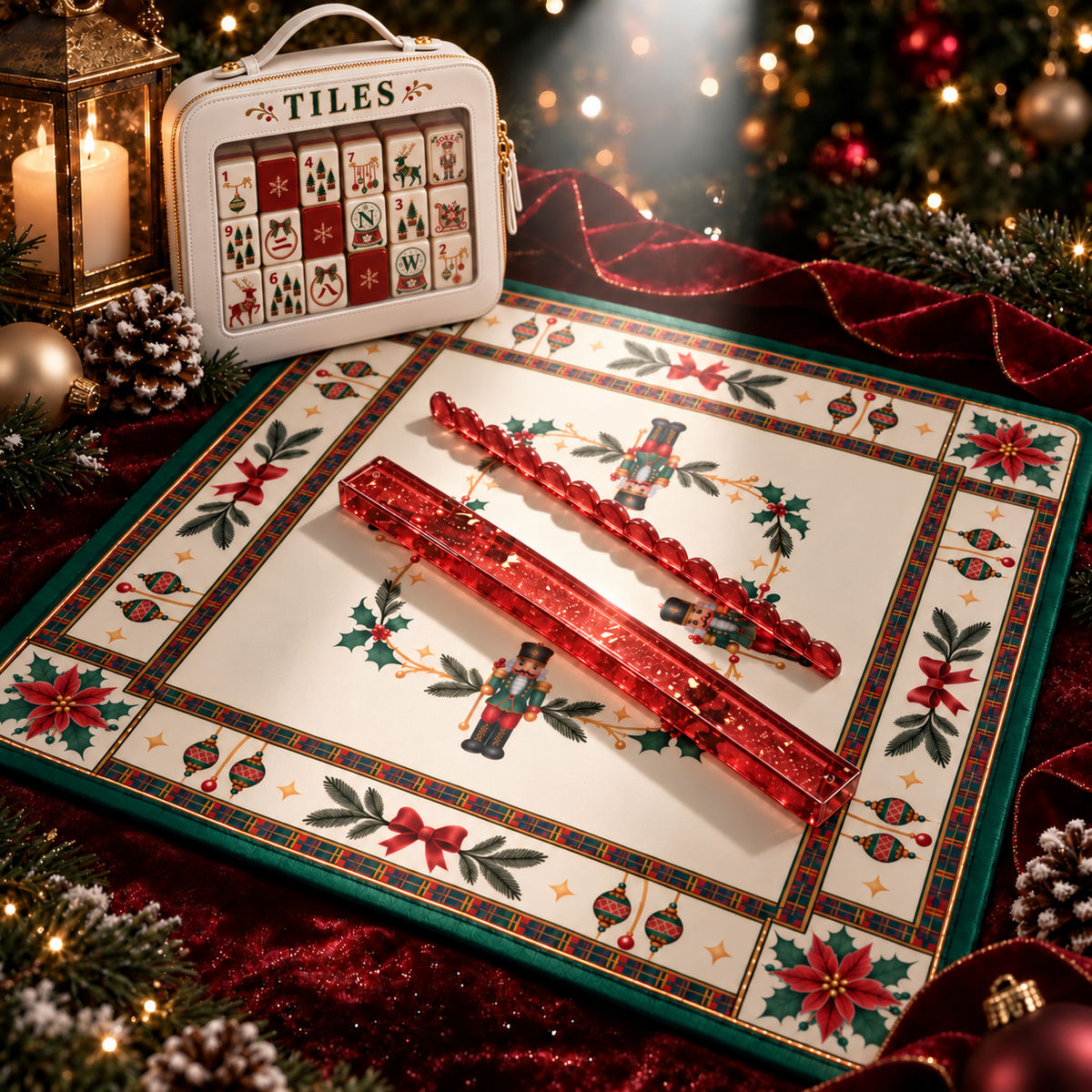
A mat is only part of the picture. You'll also want racks with pushers (four, one per player) to keep tiles organized and visible, and a quality mahjong set with enough jokers and backup tiles. Cushioned racks prevent tiles from sliding during play; pushers let you draw smoothly without fumbling. Together, a mat, four racks, a set, and a carrying bag create a complete hosting experience.
Many of us invest in a mat first, then upgrade racks and eventually a carrying case as we host more often. Start with what fits your space and budget, then add as the game grows.
FAQ
Can I play mahjong on a regular dining table without a mat?
Tiles will slide and clack loudly. A mat costs far less than refinishing your table and makes the game quieter and more playable. It's worth the investment after your first game.
What's the standard size for a mahjong mat?
Most mats are 27×27 to 36×36 inches. Check the product dimensions against your table before ordering to ensure a proper fit and enough space for racks and tile flow.
Do I need a table if I have a mat?
No. A quality mat on any sturdy table works perfectly for weekly games. A permanent table is a luxury for dedicated game rooms and serious players.
How long does a mahjong mat last?
A well-made mat lasts 5–7 years with normal use. Spot clean it, keep it dry, and store it flat or loosely rolled. Heavy daily use or outdoor exposure shortens its life.
Will a mat scratch my acrylic tiles?
No. Felt or velvet-backed mats are gentler than wood or bamboo. Acrylic tiles are more durable than bone and won't chip on a quality mat surface.
Can I take a mat to someone else's house for a game?
Yes. Most mats roll up or fold. If portability matters, look for a mat designed for travel or order one bundled with a carrying case.


View More
View More
View More
