
Cantonese Mahjong Special Hands: A Player's Guide to the Rules
Last updated: Nov 23, 2026
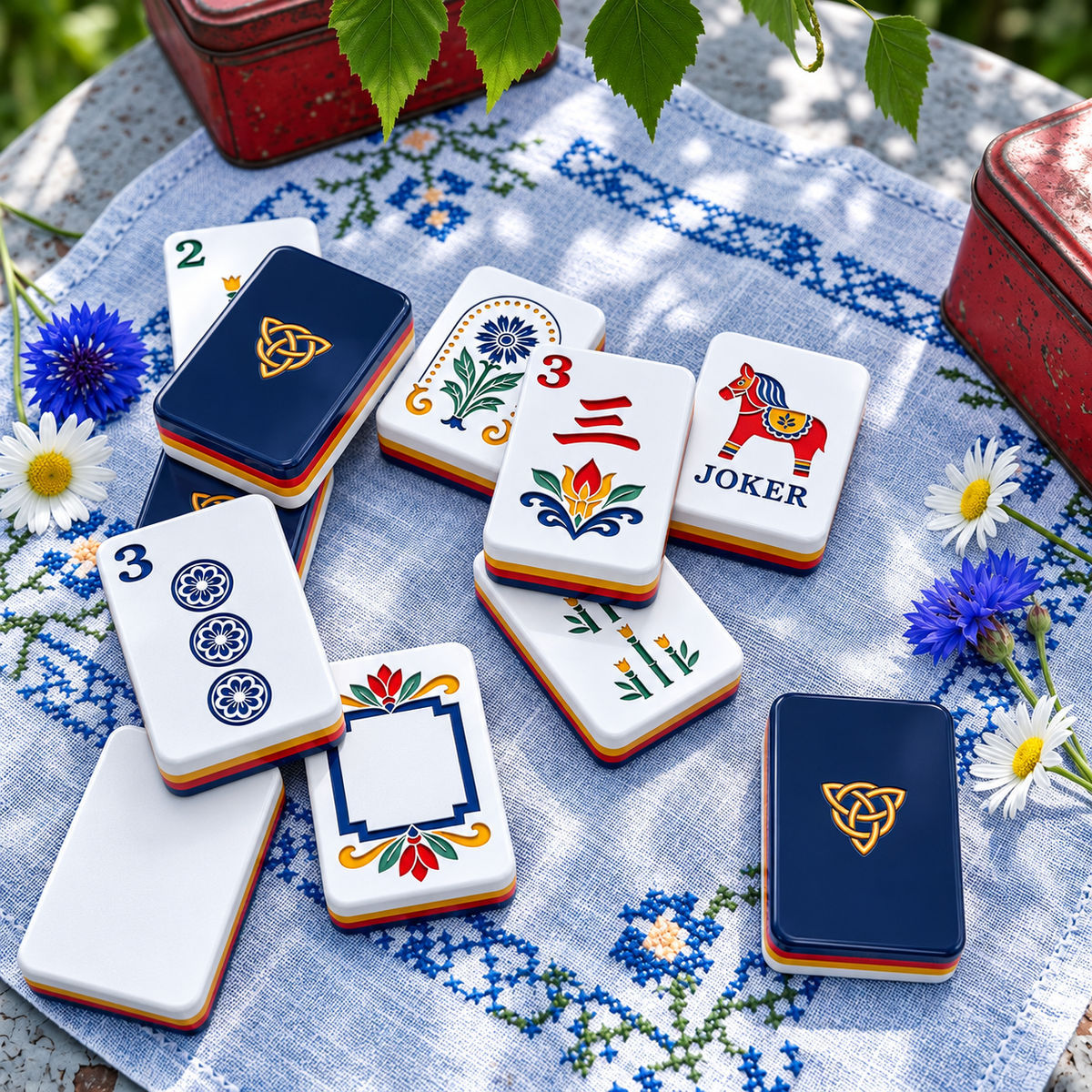
Cantonese mahjong special hands are winning tile combinations that earn bonus points beyond the base score. Played with 136 tiles (four 1–9 of each suit plus winds, dragons, and flowers), a standard win requires four melds and a pair—but special hands ignore or modify this rule. Examples include All Pung (four pung plus pair), All Simple (1–7 only, no terminals or honours), and Dragon Pung (three dragon pung plus pair). Unlike American mahjong, which uses a fixed yearly card, Cantonese play changes scoring rules seasonally and regionally; bonus hands vary widely by location. A winning hand scores points for melds, the pair, flowers, the winning tile's origin (drawing from wall or a discard), and any special pattern claimed. Jokers don't exist in standard Cantonese play. We recommend checking your local table's house rules and a current rulebook before assuming scoring, since Cantonese mahjong has no single governing body like the American game's National Mah Jongg League.
Cantonese mahjong and American mahjong share a name and tile suits, but their core rules diverge sharply. If you've played American mahjong—where hands come from a rigid card and exposure rules are strict—switching to Cantonese can feel like learning a new game.
We've hosted weekly tables long enough to see players stumble on this transition. The good news: Cantonese special hands follow consistent logic once you understand the foundation. The bad news: regional variation is real, so every new table will ask you to confirm its house rules first.
What counts as a special hand in Cantonese mahjong?
A special hand is any winning combination that either adds bonus points to a base score or bypasses the standard "four melds plus pair" rule entirely. Standard Cantonese winning hands require four sets (each a pung, kong, or chow of three consecutive tiles) plus a pair. Special hands either follow a unique pattern (all pungs, all honours, all terminals) or claim a bonus condition based on which player discarded the winning tile or when the tile was drawn. Unlike the American mahjong card, Cantonese scoring has no single fixed reference—tables adopt different bonus lists. Always confirm the house rulebook before sitting down.

What's the difference between Cantonese and American special hands?
American special hands come exclusively from that year's National Mah Jongg League card. You cannot win in American mahjong unless your four sets and pair exactly match a printed hand from the current card. Cantonese play inverts this: any hand that meets structural criteria—all simples, all honours, all one suit—automatically qualifies as a special hand and earns bonus points. No card exists; the pattern itself is the rule.
American mahjong forbids calling chows on a discard (you can only meld pung, kong, quint, or sextet); Cantonese mahjong actively requires chows and pungs in winning hands. American sets contain 152 tiles; Cantonese sets contain 136 tiles with no jokers. The psychological difference is huge: American players hunt for fixed patterns on a card; Cantonese players evaluate which melds and bonus conditions they can build as play unfolds.
Can a single winning hand count as multiple special hands?
Yes, and that's where Cantonese scoring explodes. A hand can claim multiple bonuses simultaneously. For example, if you draw the winning tile from the wall (rather than claiming a discard) and complete All Pung plus All Terminals (1 and 9 only), you score base points for the melds plus bonuses for the draw origin, for All Pung, and for All Terminals. Some regional rulesets stack these; others cap the total. This is where a house rulebook is essential. We've seen arguments erupt because one player assumed stacking and another assumed a cap—and both had played regularly in different cities. Write the bonus rules down before the first hand.
What are the most common Cantonese special hands you'll encounter?
All Pung (four pung, one pair): no chows allowed. One of the oldest and most common bonuses.
All Simple (tiles 2–8 only, no 1 or 9, no honours): creates a "clean" hand. Terminal tiles (1, 9) and any wind or dragon block this.
All Terminals (1 and 9 only, no mid-range): pairs with All Pung to form a double bonus.
All Honours (winds and dragons only, no number tiles): rare and difficult.
Dragon Pung (three dragon pung, any legal pair): any three of the four dragons as pungs.
Mixed One Suit (chows and pungs of one number suit plus honours): honours must be included; contrasts with "pure" one-suit hands.
Self-drawn vs. claim (winning from the wall rather than a discard): almost always worth bonus points.
Limit hand (maximum payout, often called a "limit" or "ceiling"): scoring so high that no multiplier applies—the payout stops at a set amount.
Regional tables add dozens more. Macau play, Hong Kong play, and Taiwanese variations each have unique special hands. Before you play, request the house list or watch a full hand to hear which bonuses are announced.
How do jokers affect Cantonese special hands?
They don't—standard Cantonese mahjong has no jokers. A 136-tile set is all flower and number tiles, no wildcards. This is a seismic difference from American mahjong, where jokers are essential. Some casual Cantonese players add jokers as house rules, but traditionalists forbid them: any joker in your winning hand voids the special-hand bonus and reduces your score to base only. If you're learning at a new table, always ask whether jokers are in play before assuming they're not.
Comparison Table: Cantonese vs. American Special Hands
Aspect | Cantonese | American |
Hand source | Player evaluates pattern logic; no fixed card | Current year's National Mah Jongg League card only |
Melds required | 4 sets (pung, kong, chow) + 1 pair; can vary | Exactly as card specifies (often 3–5 sets + pair) |
Chows allowed | Required in most hands | Never exposed; cannot be called |
Jokers | None in standard play | 8 jokers required; never in a single tile or pair |
Tile count | 136 tiles | 152 tiles + 8 jokers (160-tile set) |
Bonus stacking | Often yes, if regional rules allow | Single-hand, one payout per card match |
Scoring basis | Base + meld points + draw origin + special bonus | Base + melds + specific card multiplier |
Rule variation | High; regional and seasonal changes | Low; National League standardizes year-round |
🀄 Shop best-selling mahjong sets →

How to confirm the special hands before you play
Before you sit at a Cantonese table, follow this three-step check:
Ask for a written rulebook or bonus list. Many casual games use house rules passed verbally; a newcomer should ask for clarification. If no list exists, watch a full hand and listen for which bonuses are called. Write them down.
Confirm whether melds are exposed. In some regions, all melds are shown face-up during play (similar to American play). In others, melds are hidden until the hand is complete and all players verify the winning combination. This affects strategy and claim windows.
Verify the draw origin rules. Self-drawn (drawing your winning tile from the wall) versus claim (taking an opponent's discard) often carry different point values or bonus eligibility. Ask whether claiming a discard from a specific player (e.g., the discarder) earns a bonus.
Check whether jokers or blanks are added. Some casual groups add jokers to a standard 136-tile Cantonese set for fun; traditionalists forbid them. Confirm before shuffling.
What you'll need
If you're hosting a Cantonese game or learning from scratch, we recommend starting with a reliable best-selling set sized for comfortable play. Cantonese tiles are often smaller than American sets, so ensure your chosen set includes legible characters and a durable mat to protect the tiles and organize play. Racks with pushers help manage the smaller tiles and speed up play. A travel bag or case keeps your set safe between games, especially if you're rotating between multiple house tables.
Common mistakes when learning Cantonese special hands
Assuming all melds are equal: In Cantonese play, the pair is structurally crucial—it cannot be a pung or kong, only two identical tiles. Many American players accidentally treat the pair like any other meld.
Forgetting to confirm house bonuses: We've seen strong American players sit at a Cantonese table and claim a hand they thought was a "Pung" bonus, only to discover that local rules don't recognize it. Always ask before claiming.
Mixing Cantonese and American rule logic mid-game: If you play both variants regularly, write down which rules apply to tonight's game before the first hand. We've stopped games mid-play to clarify whether jokers are in play or whether a chow is allowed—small details that cascade.
Ignoring regional variation: Macau, Hong Kong, and Taiwanese Cantonese mahjong each have distinct bonus lists and scoring rules. If you travel or join online games, confirm the regional ruleset. An "All Honours" hand might be worth double in one city and not recognized in another.
🎁 See our most-loved mahjong sets & accessories →
When to study house rules vs. learning from a guide
A printed guide (or online rulebook specific to your region) teaches the game's logic and common bonuses. A house rulebook or confirmation from your table teaches tonight's exceptions and local variations. Both are necessary. We recommend asking your host for a house rules document before your first game, and keeping a summary printed or on your phone so you can reference it during play without slowing the table.
If no formal rulebook exists, ask your host to walk you through three hands before you join live play. Watch which melds are called special hands, which draw origins earn bonuses, and how disputes are resolved. This ten-minute investment saves misunderstandings and keeps the game friendly.
The honest truth about learning Cantonese special hands
Cantonese mahjong's flexibility is both its appeal and its hurdle. Unlike American mahjong, where the card is law and identical across all tables, Cantonese play evolves with your community. This makes it harder to study alone but rewarding to master locally. The logical patterns—All Pung, All Simple, All Terminals—repeat across regions, so once you internalize these core ideas, you can adapt to house variations quickly.
Our advice: start with a table where someone is willing to teach patiently. Bring a notebook. Confirm every bonus in writing before the hand. Within a few weeks of regular play, Cantonese special hands become intuitive, and you'll stop referring to the rulebook mid-game.
✨ Find your Mahstead set — free US shipping →

FAQ
Can you win a hand in Cantonese mahjong if it doesn't match any special hand pattern?
Yes. A standard win is four sets (any mix of pung, kong, chow) plus a pair; this scores base points with no bonus. Special hands add bonus points on top of base. You do not need a special hand to win; you only need a legal four-set-plus-pair combination.
Do regional Cantonese variations share the same special hands?
The core bonuses—All Pung, All Simple, All Terminals, Dragon Pung—appear across most regions. However, Macau, Hong Kong, and Taiwanese play each add local bonuses and modify scoring multipliers. Always confirm the regional ruleset before playing in a new area or joining an online game.
Why doesn't Cantonese mahjong use a card like American mahjong does?
American mahjong adopted a fixed card (issued annually by the National Mah Jongg League) to standardize play across clubs and tournaments. Cantonese mahjong evolved regionally in Asia without centralized governance, so house rules vary by city and community. No single authority publishes an annual card.
If I draw the winning tile from the wall instead of claiming a discard, does that always earn a bonus?
Usually, but not always. Most Cantonese rulesets award bonus points for self-drawn wins (called "kong" or "drawing" depending on region). However, house rules vary; some cap the total payout even with a self-drawn bonus. Confirm with your table's rulebook before play.
Can a hand be "blocked" from claiming a special bonus even if the pattern matches?
Yes, in some regional rules. For example, if a hand contains a joker (in tables that allow jokers), it may forfeit the special-hand bonus and score base only. Some bonuses also require that no wild tiles be present. Again, confirm the house rulebook—this is a common source of dispute.
How does the "limit hand" (maximum payout) work in Cantonese mahjong?
A limit hand reaches a scoring ceiling, meaning no further multipliers or bonuses are added beyond that point. For example, if a hand scores so high that it hits the "limit," the payout is capped at that amount, even if other bonuses would theoretically stack. Each table sets its own limit threshold; this is always written in the house rules.


View More
View More
View More
