
Can You Exchange a Joker From a Dead Hand in Mahjong?
Last updated: Nov 23, 2026
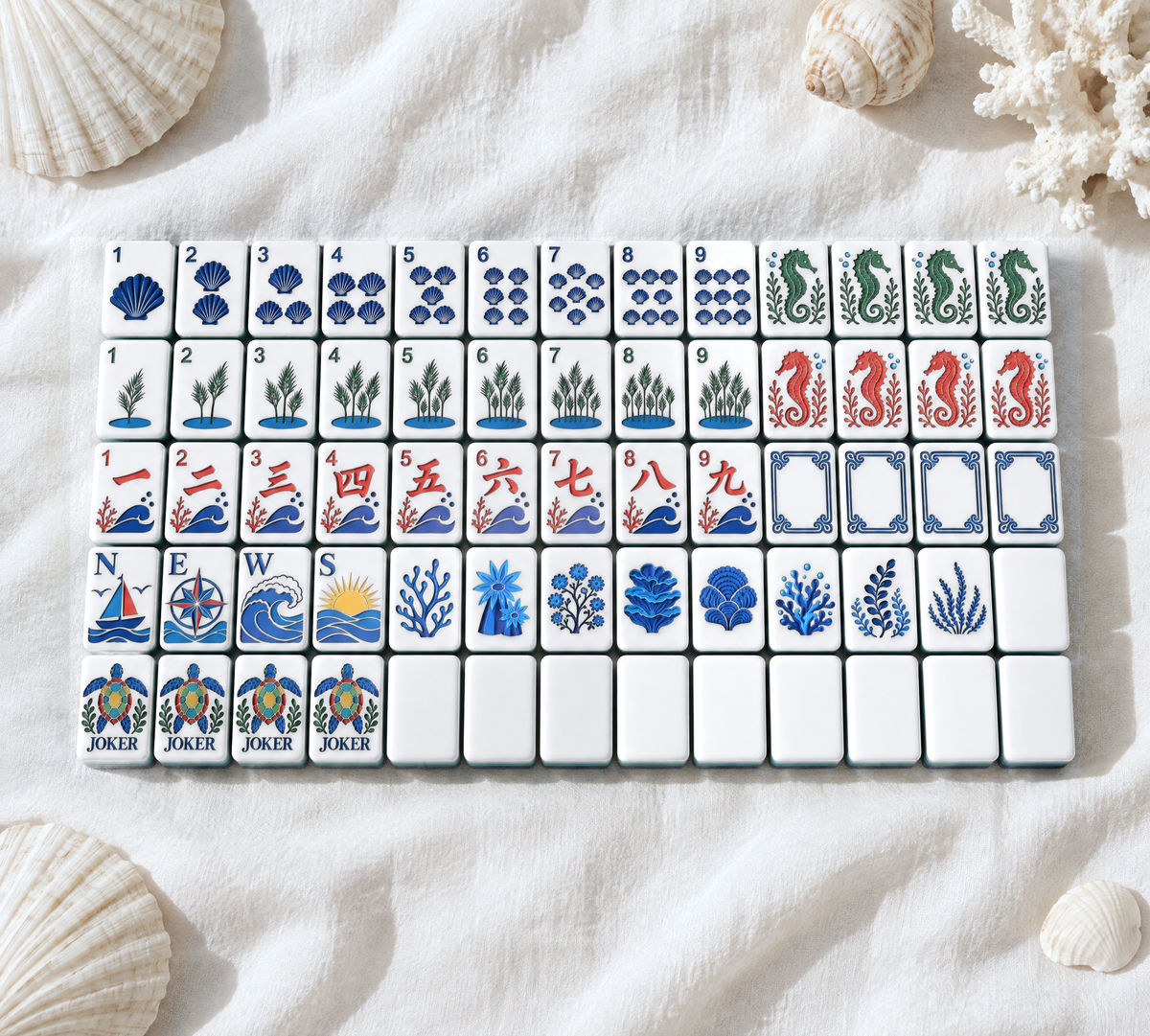
No. In American mahjong, when a hand is declared dead (either by the player or called by the table), every tile in that hand—jokers included—becomes locked and cannot be exchanged, moved, or played. A dead hand occurs when tiles on the rack don't match any legal hand on the current year's National Mah Jongg League card, or when the player has violated a play rule. The jokers you placed in exposed melds or on your closed hand are stuck there for the remainder of that hand. This is why understanding joker placement before calling or exposing tiles matters: commit a joker to a pung or kong only when you're confident your hand builds to a legal finish. If you're learning American mahjong rules, explore the fundamentals to avoid costly mistakes.
No—dead hands lock your jokers in place. Learn American mahjong rules, joker strategy, and why tile sets with plenty of spares save game nights.
What makes a hand "dead" in American mahjong?
A hand dies when its tiles fail to form a legal winning combination listed on that year's National Mah Jongg League card, or when you break a rule during play. The most common causes: you picked the wrong tile from the wall, you called too early before assembling a valid pattern, or your exposed melds don't align with any listed hand. Once the table agrees—or you realize yourself mid-game—the hand is locked. Every joker on your rack or in exposed melds becomes frozen in that position for the rest of the hand.

Why can't you retrieve jokers from a dead hand?
The lock exists to prevent gaming the system. If players could swap jokers back and forth when hands collapsed, the game would become chaos: players would place jokers speculatively, then yank them when a better play appeared. American mahjong enforces commitment. When you expose a pung, kong, or any meld containing a joker, or when you place a joker on your closed hand as a tile substitute, you've made a statement about your strategy. Once your hand is called dead, that statement stands. The rule reinforces table order and prevents collusion or endless second-guessing. Understanding how jokers work from the start helps you avoid dead hands altogether.
🀄 Shop best-selling mahjong sets →
How do you identify a dead hand before it's too late?
Study the current year's National Mah Jongg League card before picking or calling. As you draw tiles, mentally check: "Do my current tiles match any section of any listed hand?" If you're unsure, hold your tiles and ask for a moment to review the card. Don't call early just to speed up play. When exposing melds, verify that your remaining closed tiles can complete a legal pattern—ideally in multiple ways, so you stay flexible. Common dead-hand triggers: picking a tile that doesn't fit any hand you're building, or exposing a meld that locks you into a single pattern you can't finish. Learn to read the card carefully so your jokers never get stranded.
What's the difference between a dead hand and a dead wall?
A dead hand is the player's fault or bad luck—tiles don't match any legal combination. A dead wall, in contrast, is a table condition: if the wall runs out of tiles before anyone wins, the hand is declared a "dead wall draw," and play ends without a payout. Neither allows joker recovery. The distinction matters for scoring and for understanding when a hand truly ends. In both cases, once declared, the hand is over and tiles are set aside; the next hand begins with a new Charleston and a fresh set of tile draws.
🎁 See our most-loved mahjong sets & accessories →

How many spare jokers should your set have to avoid running out?
Most best-selling mahjong sets include extras beyond the standard eight jokers used in play. When you're hosting weekly games, having spare jokers and blank tiles means you're never caught short if a tile cracks, stains, or gets lost between hands. Our 160-tile sets come with additional spares so you can replace worn jokers without interrupting play. Check your set's contents before your first game night. If you're buying for a serious weekly group, extra jokers and backups aren't luxuries—they're table insurance.
Scenario | Impact on Jokers | How to Prevent |
Picked wrong tile during play | All jokers in that hand lock; can't retrieve them | Study the card; hold before calling |
Exposed a meld with a joker, hand dies | Joker stays in the meld; frozen for that hand | Verify your closed tiles match a full legal hand first |
Ran out of spare jokers mid-game | Can't replace cracked or stained tiles; game stalls | Buy a set with extra jokers; inspect before play |
Placed a joker as a tile substitute, then hand collapsed | Joker locked in that position; lost for that hand | Commit jokers only when confident in your pattern |
When should you actually use a joker, and when should you hold back?
Deploy a joker only when you're building toward a specific, confirmed hand on the card and need that tile to complete a meld or close your hand. If you're unsure which pattern you're chasing, resist the urge to use a joker early. Jokers are most valuable late in the hand, when you know exactly which tiles you need. Holding a joker on your rack without committing it is a legal strategy—it buys time and keeps your options open. Conversely, if you've exposed melds and your hand looks likely to die, don't burn a joker trying to save it; accept the loss and learn from the tile sequence. The best players use jokers sparingly and strategically, never speculatively.
✨ Find your Mahstead set — free US shipping →
What to check before you buy a mahjong set
Before hosting your first game—or upgrading an old set—verify that your mahjong set includes all 152 tiles plus extra jokers and spares. Count the jokers in your box. Inspect tiles for chips, cracks, or discoloration that could confuse players mid-hand. If you're using an older set, worn tiles might look like jokers or blanks to a tired eye; replace them before a game night. For travel or hosting, a mahjong mat keeps tiles organized and visible; racks with pushers help players manage hand layout cleanly. Having the right equipment reduces confusion, which in turn reduces rules disputes and dead hands caused by miscommunication.
FAQ
Q: If I call a hand and it's dead, do I pay a penalty or lose the jokers permanently?
A: You pay the agreed-upon penalty (usually based on the hand points you claimed). The jokers locked in your hand don't "belong" to anyone else; they stay in your rack for the rest of that hand, then return to the tile pool when the hand ends. You don't lose ownership of the set.
Q: Can the player to my left take a joker from my dead hand and put it in a chow or sequence?
A: No. In American mahjong, chows (sequences like 1–2–3) cannot be called or exposed at all—only pungs, kongs, quints, and sextets are legal exposed melds. Jokers cannot be used in a single tile or a pair, and once your hand is dead, no one touches your tiles.
Q: What if I pick a tile from the wall by accident and it's the wrong one—is my hand dead immediately?
A: Not immediately. You have a moment to realize the error. If you've already committed it to an exposed meld or declared your hand, yes, the hand is typically dead. If you catch it before exposing or calling, you may be able to return it to the wall (house rules vary). Always clarify house rules before the first hand.
Q: If I use all eight jokers in exposed melds and my hand dies, what do I play with for the next hand?
A: You use the spare jokers included in your set. Our 160-tile sets include extras for exactly this reason. If your set has no spares, you'd need to ask another player to borrow jokers or restart with fresh tiles—which is why having a complete set matters.
Q: Can I ask to look at another player's dead hand to learn from their mistake?
A: Yes—most casual games allow this. Reviewing a dead hand teaches everyone the rules and helps newer players spot patterns on the card. This is encouraged at weekly game nights; it builds skill across the table.

FAQ
If I call a hand and it's dead, do I pay a penalty or lose the jokers permanently?
You pay the agreed-upon penalty (usually based on the hand points you claimed). The jokers locked in your hand don't "belong" to anyone else; they stay in your rack for the rest of that hand, then return to the tile pool when the hand ends.
Can the player to my left take a joker from my dead hand and put it in a chow or sequence?
No. In American mahjong, chows (sequences) cannot be called or exposed at all—only pungs, kongs, quints, and sextets are legal exposed melds. Once your hand is dead, no one touches your tiles.
What if I pick a tile from the wall by accident—is my hand dead immediately?
Not immediately. If you catch it before exposing or calling, you may return it to the wall (house rules vary). Clarify house rules before the first hand to avoid disputes.
If I use all eight jokers in exposed melds and my hand dies, what do I play with next?
You use the spare jokers included in your set. Our 160-tile sets include extras for this reason. Without spares, you'd need to borrow jokers or pause play.
Can I ask to look at another player's dead hand to learn from their mistake?
Yes—most casual games allow this. Reviewing dead hands teaches the rules and helps newer players spot patterns on the card. This is encouraged and builds skill across the table.


View More
View More
View More
