
Breaking the Wall in Mahjong: Rule Explained
Last updated: Nov 23, 2026
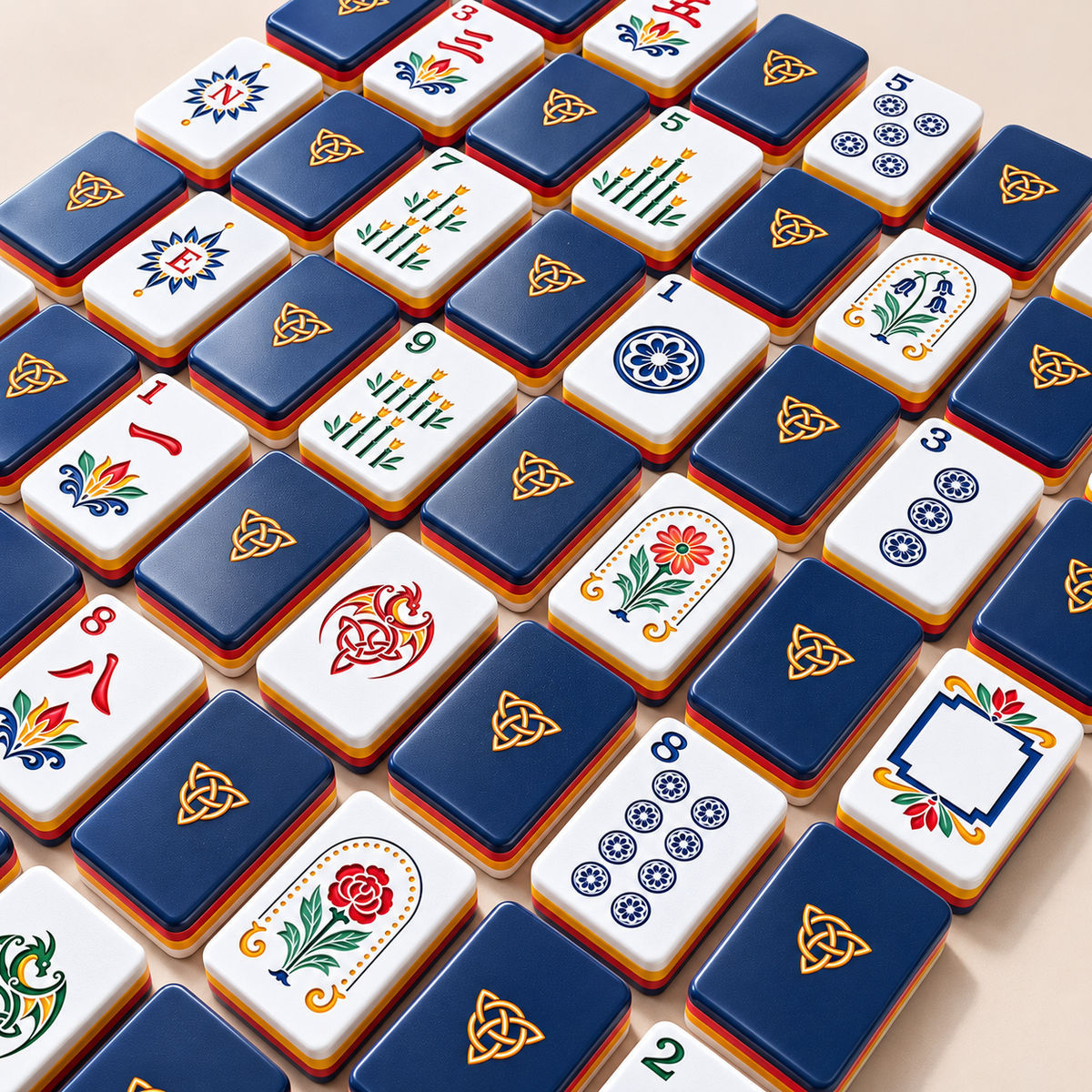
In American mahjong, breaking the wall is the dealer's first draw at the start of a game or hand. After the Charleston (tile-passing ritual), tiles are arranged into a wall of four stacks per player. The dealer counts off tiles according to the dice roll, then breaks at that point—drawing the next tile to begin play. This single action launches turn-taking: each player then draws one tile and discards one (or makes a meld), proceeding clockwise. Breaking the wall typically takes 2–3 seconds but sets the game's rhythm. It's purely procedural—no luck involved beyond the dice roll—and it applies the same way across all American mahjong circles. Best-selling mahjong sets include all 160 tiles and instructions on wall setup so you can learn this step correctly from the start.
How does the wall get built before breaking it?
Before a hand begins, players arrange tiles into a defensive barrier called the wall. Each of the four players stacks their 38 tiles (152 ÷ 4) into two rows facing inward, creating an 8-layer or 4-stack-deep square. Tiles are placed face-down in pairs, one atop the other. The 8 jokers are held in hand, not in the wall. Once the wall is complete, the dealer rolls two dice. The sum (2–12) determines where breaking begins: the dealer counts that many stacks clockwise from the right side of their own wall. That stack becomes the break point.

What happens the moment a player breaks the wall?
When the dealer breaks the wall, they draw the tile from the position the dice count indicated. The break spot is literal: if the dice show 7, count seven stacks clockwise from dealer-right, then draw the next tile at that position. The dealer places that tile in their hand face-up (or in a rack). After the break, the dealer draws a second tile and discards one tile face-up in the center of the table. Play then proceeds to the player on the dealer's right, who draws the next tile from the wall, evaluates their hand, and discards. This sequence—draw, assess, discard—repeats around the table until someone declares a winning hand or the wall runs empty. Understanding how to read the mahjong card helps you recognize winning combinations as soon as the wall breaks and play accelerates.
Why does the dice roll control the break point?
The dice roll randomizes where play begins and prevents manipulation or advantage-seeking. By rolling before breaking, no player can predict which tiles will come out first or engineer an early edge. The count is always 2–12, never higher—the two dice force variety. In social mahjong, this roll is part of the ritual: it slows the game slightly, builds anticipation, and keeps all players engaged before the first draw. If there were no roll, the dealer would have an unfair advantage by always breaking at the same position. The rule maintains fair play and tradition across American mahjong tables.
🎁 See our most-loved mahjong sets & accessories →
What mistakes do new players make when breaking the wall?
The most common errors:
Miscounting stacks: Players count left instead of right, or forget to go clockwise, landing on the wrong break point. Solution: always count from dealer-right and move clockwise; have a second player verify before drawing.
Drawing too early: A player draws before the break actually occurs, disrupting turn order. Solution: only the dealer draws on the break; everyone else waits for their turn.
Forgetting the second draw: The dealer must draw two tiles on their first turn (one from the break, one from the wall afterward). Solution: slow down, count aloud: "break, draw, then discard two."
Misplacing the break: After the dice roll, not everyone agrees where to break. Solution: designate one person to count; announce the number and direction before breaking.
Breaking at the wrong wall: Players sometimes break from their own wall instead of counting clockwise to find the dealer's wall first. Solution: the break always happens in the dealer's wall; count from dealer-right, never from your seat.
In live games, the dealer or a designated scorekeeper calls the count aloud so all four players confirm the break point before any tile is drawn. This transparent method prevents disputes and keeps the pace steady.

How does breaking the wall differ from other mahjong variants?
Variant | Breaking Method | Jokers Held | Wall Size | First Draw |
American | Dice roll; dealer breaks from their own wall | 8 in hand | 152 tiles; 38 per player | Dealer draws twice |
Chinese | Dealer's position varies; dice roll + further rules | Usually 0–2 | 136 tiles; 34 per player | Dealer draws first tile from wall |
Hong Kong | Dice roll; break in any player's wall | 0 | 136 tiles | Discard or chow before draw |
Riichi | East (dealer) position; no wall break roll | 0 | 136 tiles; complex draw/discard | Dealer draws 14; others draw 13 |
Taiwanese | Dice roll; modified wall rules | 2–4 | 144 tiles | Varies by local rule |
American mahjong's wall-breaking ritual is unusual because the dealer's wall is always the site of the break—other variants allow the break to happen at any player's wall. This keeps the dealer's role central and speeds recognition of who has priority if multiple players claim a tile near the break point. Learning the full rules of American mahjong clarifies why the dealer goes first and why turn order never shifts.
What is the practical strategy after you break the wall?
Breaking the wall has no inherent strategy—it's mechanical. However, experienced players watch three things immediately after:
The first discard: The dealer's first discard (after drawing their second tile) hints at their hand's direction. If they discard a high honor (a wind or dragon), they may need suit tiles; if they discard a terminal (1 or 9), they may be avoiding those tiles.
The wall's pace: Note how quickly tiles are drawn. If tiles vanish rapidly, melds are forming; if the pace slows, players are discarding freely. This affects your own draw timing.
Joker usage: Watch who plays jokers early. If jokers go into exposed melds quickly, fewer remain for strategic tiles later.
After the break, your job is observation—not action. The dealer has already drawn and discarded before you move. Most players spend the first two or three discards gauging the game's energy before committing to a specific winning hand from the current year's mahjong card.
✨ Find your Mahstead set — free US shipping →
What to check before you buy a mahjong set for home play
If you're hosting weekly games and want your home setup to run smoothly:
Tile count: Confirm the set contains 160 tiles (152 for play, plus spares). Mahstead engraved American mahjong sets and best-selling designs include the full 160-tile count needed to fill the wall correctly and practice wall-breaking drills.
Tile size and weight: Check that tiles stack easily without sliding. Acrylic tiles should feel substantial in hand and stack to a clean 8-layer height for the wall.
Clarity of symbols: Ensure all tile markings (Bams, Craks, Dots, winds, dragons, flowers, jokers) are legible at arm's length. During live play, you have seconds to read tiles.
Joker count: You need exactly 8 jokers in play. A 160-tile set includes extras, so you're never short.
Storage: Once you break the wall regularly, you'll disassemble it after each hand. A mahjong bag or case keeps tiles safe and organized between sessions.
#

FAQ
Can the wall break at the same place twice in a row?
Yes. The dice roll determines the break each hand independently. If you roll a 7 this hand and roll a 7 next hand, the wall breaks at the same point again. Probability makes this rare in practice.
What happens if the dealer miscounts and breaks at the wrong stack?
In casual play, recount aloud and correct it before drawing. In organized games, if a tile was already drawn, play continues and the error is noted for future hands. The wall break is purely procedural—it's reset if caught immediately.
Is "breaking the wall" the same as the Charleston?
No. The Charleston is the tile-passing ritual before the wall is built. Breaking the wall is the first draw after the wall is complete and the wall's position is set by dice roll. Charleston happens once per game; wall-breaking happens at the start of every hand.
Can you draw from the wall before the dealer breaks it?
No. Only the dealer breaks and draws first. All other players wait for their turn in clockwise order. Drawing out of turn is a foul and stops play.
If the wall breaks near the end, can you run out of tiles to draw?
Yes. If fewer than 14 tiles remain when all players have drawn, the hand ends in a dead hand (no winner). This is rare and happens maybe once every 20–30 hands in casual play.
Does breaking the wall affect which hands can be called?
No. The current year's mahjong card lists all valid hands. Breaking position doesn't change which hands are legal. However, breaking position influences when you can claim a discard—tiles drawn early may be discarded before you can meld. --- 🀄 Shop best-selling mahjong sets →


View More
View More
View More
