
Blue Mahjong Racks: Choose the Right Tile Holder for Your Game
Last updated: Nov 23, 2026

A blue mahjong rack is an acrylic or bamboo holder that stores and displays your 13 active tiles during American mahjong play. You place tiles into slots, and many racks come with matching pushers—small tools to nudge tiles forward as you draw new ones. Racks come in various shades of blue (from pale to deep), different slot counts for 13 or 14 tiles, and designs that range from minimalist to engraved with titles or flowers. Quality racks prevent tiles from tipping, keep your hand hidden from other players, and organize your draws at a glance. Mahstead sells acrylic racks with pushers in blue and other colors, with free shipping across the US. Cost varies by material, length, and engraving; see the current price on the product page. Most players find a 13-slot rack adequate; 14-slot versions offer a small advantage if you're holding a bonus tile during Kong or ready hands.
🀄 Shop best-selling mahjong sets →
Why do blue racks outsell other colors at the table?
Blue evokes calm and is gentler on eyes during long games—it doesn't glare like white or feel as heavy visually as black. Many players associate blue with water and balance in traditional mahjong symbolism. Practically, blue hides tile wear better than pale colors and photographs well for casual table documentation. It's also neutral enough to pair with any set design or mat, from ornate engraved American mahjong sets to minimalist monochrome tiles. Blue doesn't make a political or decorative statement the way themed colors do, so it suits mixed-experience groups and casual play. Simply put: blue is the safe, comfortable choice most weekly game hosts reach for.

How do acrylic and bamboo blue racks compare?
Feature | Acrylic | Bamboo |
Weight | Light, portable | Heavier, stable |
Grip feel | Smooth, cool | Warm, textured |
Sound when tile lands | Soft click | Slightly louder |
Durability | Resistant to scratches if handled carefully | Ages with use; develops patina |
Eco impact | Petroleum-based plastic | Renewable resource |
Engraving option | Yes; holds sharp detail | Yes; less crisp over time |
Best for | Travel, frequent movers | Home tables, players valuing longevity |
Price baseline | Lower | Moderate to higher |
Acrylic racks stay exactly as you buy them for years if stored well; bamboo develops character but may splinter at joints if neglected. Both hold 13 or 14 tiles equally well. Acrylic works best if you travel with your set or host in different locations. Bamboo suits a dedicated home game table where consistency and warmth matter more than convenience.
What rack size do you actually need?
Most American mahjong players use 13-slot racks—one slot per tile in your active hand, with one spare slot for visual breathing room. A 14-slot rack fits the same 13 tiles but leaves room to display a bonus tile (drawn during a Kong or flower replacement) without shifting the entire hand. Length varies by slot width: narrower slots suit players with good hand control; wider slots work for players with arthritis or preference for stability. Measure your table depth before ordering to ensure the rack doesn't consume more than a quarter of your play surface. Standard racks span roughly 12–16 inches; if your table is compact, choose the narrower end. If you host multiple players weekly, buy identical racks so everyone feels equally supported—consistency reduces table talk about fairness.
Should you buy a matched set (rack + mat + set)?
Buying a blue rack, matching blue mat, and tiles in one order simplifies setup and creates visual cohesion. If you host, a unified look signals professionalism and reduces friction during setup. However, many experienced players mix and match: a minimalist acrylic rack pairs perfectly with an ornate mat or vice versa. Mismatches aren't wrong—they reflect personal taste. Buy your rack first, then add a mat if your existing table covering is worn or if you're starting fresh. Racks are the least flexible item (you need one per player), so prioritize quality and comfort there, then coordinate other pieces as budget allows. If you're building a gift set, matching components work better; if you're outfitting a long-standing game, keep your existing favorites and upgrade the rack separately.
🎁 See our most-loved mahjong sets & accessories →
What features make a blue rack worth the price?
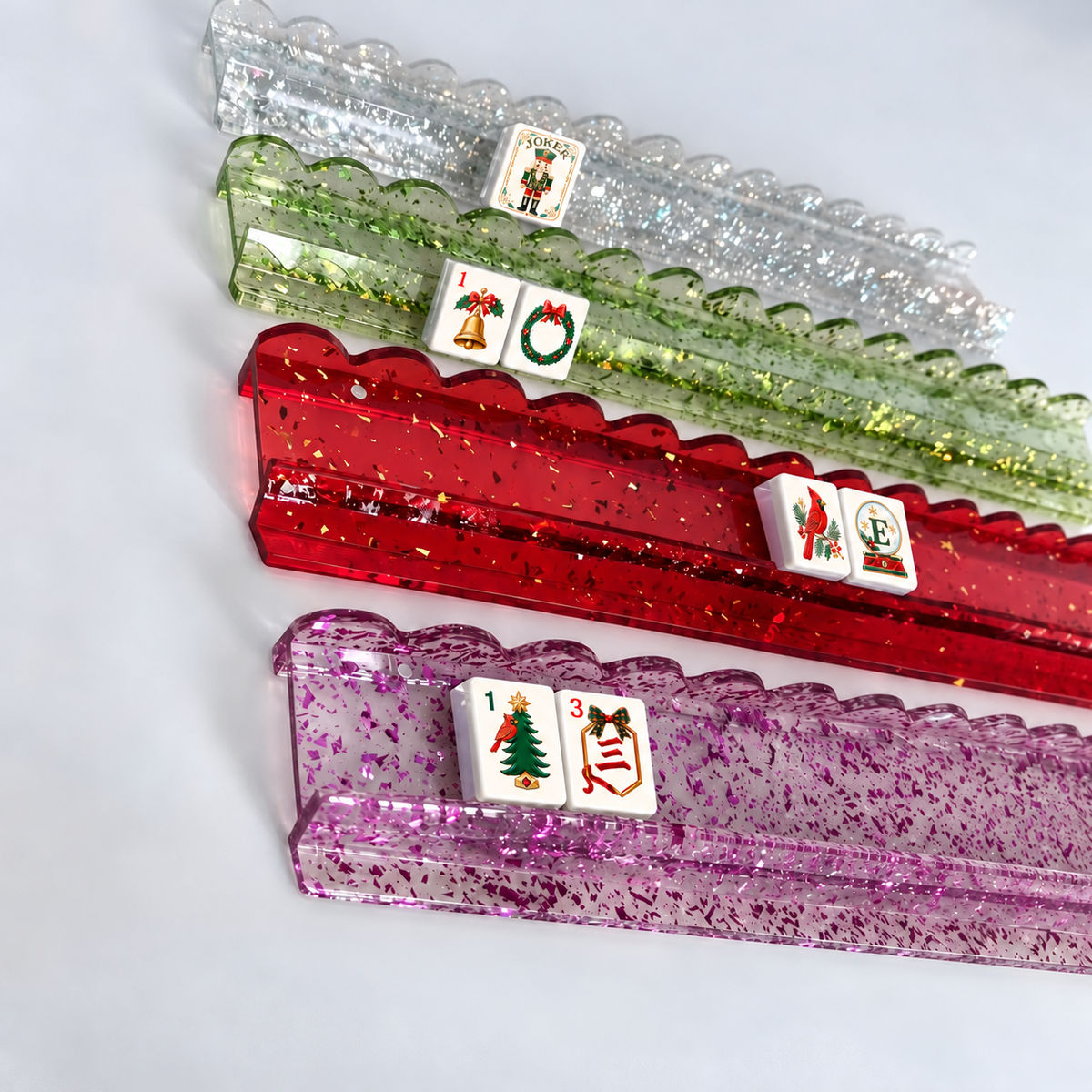
A pusher—the small stick accompanying quality racks—saves your hand and prevents tile-shifting mid-draw. Slots should be smooth and evenly spaced; rough edges wear tiles and frustrate players. Raised edges on the back prevent tiles from sliding out during transport. Engraving adds zero functional value but signals care and can commemorate a game name, host initials, or game date; it justifies a modest price premium and makes the rack a keepsake. Deep, clear color (not faded blue) looks professional and lasts visually longer. Weight matters: a 13-ounce acrylic rack stays put; a 6-ounce plastic knock-off slides across the table. Ask the seller if the pusher is included (it should be). If you play monthly or more, invest in a heavier rack; if you play three times yearly, a lighter option suffices. Test the tile fit: tiles should slot snugly without forcing. A rack you dread using will sit in storage.
What to check before you buy
Slot count: Count your active tiles (usually 13) and add one. Buy a 13- or 14-slot rack, not 12.
Rack depth: Measure the distance from the wall to table edge where you'll sit. Rack + tiles should leave at least 8 inches of play space.
Pusher inclusion: Confirm it's in the box. A pusher costs extra if purchased separately.
Tile compatibility: Bring a sample tile or check the slot width. Standard American tiles fit most racks; oversized decorative tiles may not.
Color match: If buying with a mat or set, confirm the blue shade online or request photos; monitor screens and printed samples differ.
Engraving timeline: Custom engraving adds processing time. Order early if you're hosting a tournament or gifting by a deadline.
Shipping & packaging: Racks ship with padding; check arrival for cracks, especially on corners. Report damage immediately.
✨ Find your Mahstead set — free US shipping →
Matching your blue rack to your playing style
A minimalist, unadorned blue rack suits players who prioritize function and speed—you're there to focus on melds and scoring, not aesthetics. An engraved blue rack with a game name or personal title appeals to hosts and collectors who see the table as a ritual space. If you rotate between a home game and travel tournaments, buy one sturdy acrylic rack for portability and a second bamboo or heavier acrylic for your regular table. Many of us own 4–5 racks in different colors, not for fashion but because life happens: a rack gets dented, you want backups, or you inherit a set that needs a new home. Starting with blue—the universal, low-risk choice—lets you expand confidence later. Blue racks from Mahstead are made from clear acrylic or sustainably sourced bamboo, held to the same quality standard as our best-selling mahjong sets, and shipped free across the US.

FAQ
Can I use a blue rack with tiles from a different set color?
Yes. Blue racks are neutral and pair with any tile color or design. Mix and match freely; the rack's job is to hold tiles, not to match aesthetically. Many long-time players have mono-color racks but multi-color tile collections.
How do I clean a blue acrylic rack without clouding it?
Use a soft microfiber cloth, slightly dampened with lukewarm water. Wipe gently and dry immediately. Avoid abrasive sponges, harsh chemicals, and dishwashers. Store away from direct sunlight to prevent yellowing or stress cracks over years.
Is a pusher essential, or just a nice-to-have?
A pusher is essential for smooth, fair play. It prevents your hand from shifting when you draw, keeps tiles aligned, and is standard equipment in formal and weekly games. If your rack doesn't include one, ask before ordering or buy a replacement.
What's the difference between a 13-tile and 14-tile rack?
A 13-slot rack holds your active hand (13 tiles). A 14-slot rack allows you to display a bonus tile separately if you draw during a Kong. Both are standard; 14-slot racks offer flexibility but take slightly more table space.
Will a blue rack work for 2 or 3 player mahjong?
Yes. The rack holds tiles the same way regardless of player count. However, in 2 or 3-player games, hand sizes and draw mechanics differ; check the rules for 2 and 3 player variants to confirm your rack's slot count fits your game.
Can I engrave my blue rack after buying it?
Some acrylic racks can be engraved post-purchase, but quality varies. Order engraving during your initial purchase for the sharpest, most durable result. Contact Mahstead directly if you need custom engraving on an existing rack.


View More
View More
View More
