
American Mahjong vs Taiwanese Mahjong: Key Rules & Differences
Last updated: Nov 23, 2026
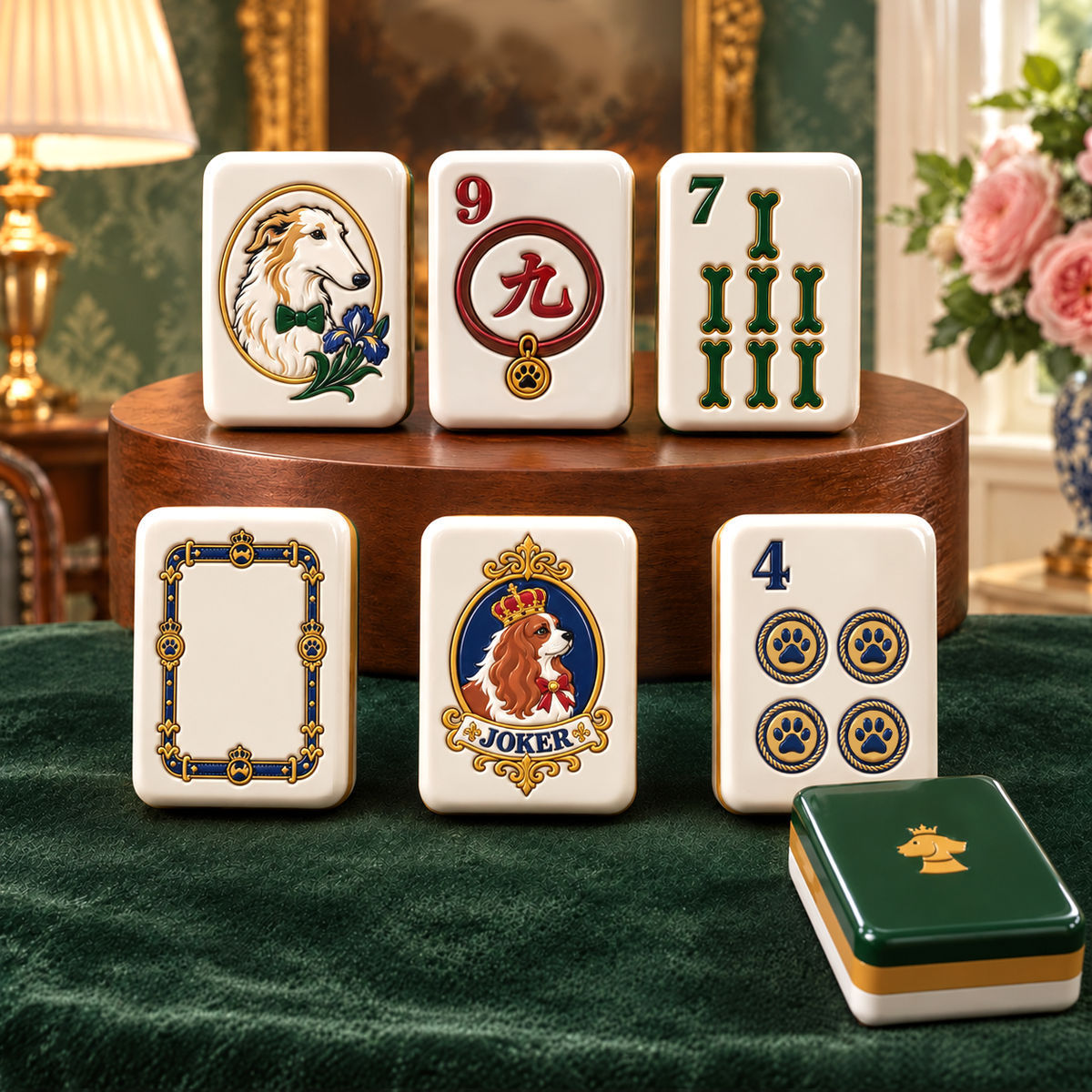
American mahjong uses 152 tiles (152-tile sets add spare jokers), plays exactly 4 players, draws hands exclusively from the current spring National Mah Jongg League card, and restricts exposed melds to pungs, kongs, quints, and sextets—no chows allowed. Taiwanese mahjong uses 144 tiles, permits chows (1-2-3 sequences), draws from a fixed tile wall on each turn, has different scoring, and is played across East Asia with regional variations. Both are rummy-like games of skill and memory; American is standardized and card-driven, while Taiwanese emphasizes wall-reading and classical patterns. Neither is "better"—your choice depends on whether you want the structure and novelty of American play or the flow and tradition of Taiwanese.
How many tiles does each variant use?
American mahjong plays with exactly 152 tiles: three suits (Bams, Craks, Dots) numbered 1–9 with four copies each (108 tiles), 16 winds (4 each), 12 dragons (4 each), 8 flowers, and 8 jokers. Taiwanese mahjong uses 144 tiles: the same three suits 1–9 with four copies each, 16 winds, 12 dragons—but no flowers or jokers. American sets sold as 160 tiles include spare jokers and blanks (never played, kept for replacements). This tile-count difference shapes everything: American's extra jokers and flowers open more hand possibilities, while Taiwanese's fixed 144 force tighter, more classical patterns.

What's the biggest rule difference—chows or melds?
American mahjong forbids chows (1-2-3 sequences) entirely; you can only expose pungs (three identical tiles), kongs (four identical), quints (five), and sextets (six). Taiwanese mahjong permits and requires chows—a hand typically contains 1–3 chows, 1–2 pungs, and a pair. This single rule rewires strategy: American players memorize hand patterns from a card and hunt jokers to fill gaps; Taiwanese players read the wall, track discards, and spot sequences in real time. American feels puzzle-like; Taiwanese flows more like hearts or rummy. Neither variant allows a single tile or pair to contain jokers—both guard that integrity fiercely.
How do jokers and wildcards work differently?
American mahjong includes 8 jokers that substitute for any tile in any exposed meld (pung, kong, quint, sextet) but can never be part of a pair or single tile. Taiwanese mahjong has no jokers—only the White Dragon ("Soap"), which serves as a zero and can appear as a regular tile in pungs or sequences. This absence forces Taiwanese players to be more precise: you cannot "joker your way out" of a bad draw. American's joker system rewards flexibility and risk-taking; Taiwanese rewards memory and pattern-spotting. If you love the puzzle aspect, American's jokers and 8 flowers create more hand variety; if you prefer classical elegance, Taiwanese's no-joker rule feels purer.
Where do hands come from—a card or tradition?
American mahjong hands come exclusively from the current spring National Mah Jongg League card, which lists hundreds of legal hand patterns for that year—you can only win with a hand on that card. Taiwanese mahjong has no official card; hands follow classical patterns (like standard "All Pungs," "Like Numbers," "All Dragons") that are regional and understood by custom. This means American play is standardized and identical worldwide—any American player can sit down in Texas or New York and play the same hands. Taiwanese play is more fluid but less standardized—clubs may have house rules or regional preferences. If you value consistency and novelty each spring, American's card system wins; if you value depth and tradition, Taiwanese's classical patterns reward study over seasons.

How does scoring differ between the two?
American mahjong scoring is tabulated entirely by the hand's pattern on the current year's card—each legal hand has a fixed base value (usually 2, 4, 6, or 8 points per tile drawn, called "doubling"), and bonus points are applied for going out, being the discarder, etc. Taiwanese mahjong scoring is cumulative and contextual: you earn points for every combination (chow, pung, kong, dragon, wind, flower), so the same hand structure can score differently depending on what tiles comprise it. A pung of 5 Dots scores the same; a pung of Red Dragons scores more. American's system is deterministic—know the hand, know the score; Taiwanese's system requires addition and judgment. For new players, American feels faster to learn because scoring is fixed; Taiwanese feels rewarding because every tile choice nudges your score.
Aspect | American Mahjong | Taiwanese Mahjong |
Tile Count | 152 (with spare jokers in 160-tile sets) | 144 (no jokers) |
Players | Exactly 4 | 4 (or 3 with rule tweaks) |
Sequences (Chows) | Forbidden | Required & permitted |
Hand Source | Current-year League card | Classical patterns & regional custom |
Exposed Melds | Pungs, kongs, quints, sextets only | Chows, pungs, kongs, quints, sextets |
Jokers | 8 jokers; can fill any exposed meld | None; White Dragon = zero |
Scoring | Fixed by hand pattern on card | Cumulative per tile combination |
Skill Focus | Memory, card-reading, luck | Wall-reading, discard tracking, pattern spotting |
🀄 Shop best-selling mahjong sets →
Which variant should your table choose?
Pick American mahjong if you want: standardized rules across all tables, a new hand card each spring, jokers to rescue bad draws, and a 4-player game that plays the same everywhere. Pick Taiwanese mahjong if you want: classical patterns you master over years, no crutch jokers, wall-reading and discard-chasing strategy, and a link to a tradition played across Asia. American is ideal for casual Western players—you buy one set and play with the current season's hand card. Taiwanese is ideal for players who want depth, cultural grounding, and less "luck" in tile draws. Both are deeply social; the choice is about what kind of puzzle appeals to your group.
Practically, switching between variants mid-year is hard—hands, tile arrangements, and scoring diverge too much. Choose one, commit to it, and build your collection around it. If you're starting fresh and want ease, structure, and a thriving North American community, American is your path. If you're learning from an Asian mentor or drawn to tradition, Taiwanese rewards the investment. Many players eventually learn both; they're like knowing chess and Go—different beautiful games.
🎁 See our most-loved mahjong sets & accessories →
What to check before you buy
If you're committing to American mahjong, confirm your group has access to the current-year League card—it's free online but you'll want a printed or laminated copy at the table. Buy a 160-tile set with engraved American mahjong tiles if your group plans to play weekly; the clarity matters over time. Pair it with a mat to protect your game and racks with pushers to keep hands organized—these are not luxuries but practical tools that prevent errors and speed play.
If you're learning Taiwanese mahjong, ask your mentor what regional rules they follow—"Taiwanese" varies by province. Check whether your set includes flower tiles (many do, some don't). Ensure your group agrees on one scoring method upfront; Taiwanese scoring has many regional tweaks, and confusion kills games.
For either variant, invest in a sturdy travel bag or case if you play in multiple homes. Loose tiles shift and crack; a good bag protects your investment and signals respect for the game.
✨ Find your Mahstead set — free US shipping →

FAQ
Can I play American mahjong with a Taiwanese 144-tile set?
No. American requires exactly 152 tiles (8 jokers are essential), and hands are drawn from the current year's League card, which lists only patterns valid for American rules. A Taiwanese set won't have jokers or all flowers. You'd also need the American hand card. Buy an American set to play American.
Which variant has more player strategy vs. luck?
Taiwanese rewards more pure strategy—wall-reading and discard-chasing are skills you control. American depends more on tile luck and joker draws, because your hand is fixed (only tiles from the card are legal), so jokers often determine whether you win. Both have skill; Taiwanese leans strategy, American leans puzzle-solving and luck.
Do I need special equipment for either variant?
Both benefit from a good mat, racks with pushers, and a travel bag if you play away from home. American players must have the current-year hand card (printed or laminated). Taiwanese players should confirm their group's regional scoring rules in writing. The tile set itself is the core investment; everything else adds comfort and clarity.
Is American mahjong played only in the US?
Mostly, yes. American mahjong is standardized by the National Mah Jongg League and dominates in North America, especially among Western players. Taiwanese mahjong is the standard across Asia, Australia, and among Asian diaspora communities. Some cities have both communities playing separately; many players learn American first because it's widely available and rule-consistent.
Can I learn both variants at the same time?
Possible but confusing for beginners. The rule differences (no chows in American, no jokers in Taiwanese, different scoring) will tangle in your brain for the first 20 games. Learn one variant fluently first (at least 30 games), then add the second after a break. Many experienced players know both and switch between groups; they say it takes 2–3 weeks to "reset" the brain each time.
If my group learns American, can we house-rule chows in?
Technically yes, but don't. American's no-chow rule unlocks the entire hand-card system and joker strategy—adding chows breaks the balance. You'd have to redesign scoring and hand patterns. If your group wants chows, play Taiwanese instead. Mixing rules confuses everyone and ruins future games with other groups.


View More
View More
View More
