
Mahjong Solitaire Terms and Glossary: Complete Reference
Last updated: Nov 23, 2026
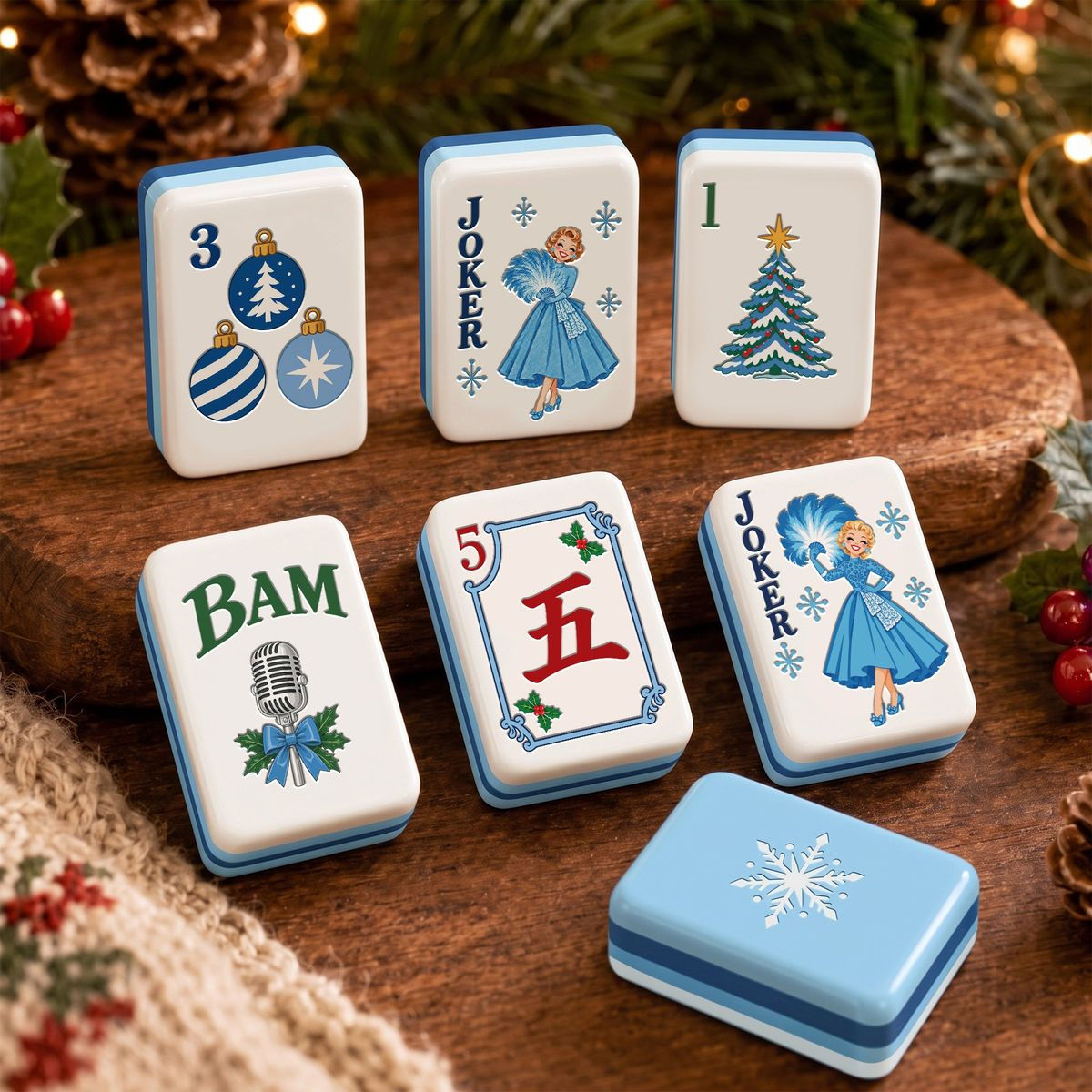
Mahjong solitaire is a one-player tile-matching puzzle where you remove pairs of identical free tiles until the board clears; it differs entirely from competitive mahjong, which uses hand-building, melds, and scoring. Mahjong solitaire uses a themed deck (often 144 tiles in eight ranks) and relies on speed and spatial reasoning, not strategy or luck. The term "solitaire" was coined in the 1980s for digital versions; board solitaire has existed far longer. Competitive American mahjong, by contrast, uses exactly 152 tiles plus 8 jokers, follows the National Mah Jongg League card, and is played four-handed with full scoring rules. Both games are rewarding but require completely different skill sets and equipment—knowing which you're learning matters before you invest in a set or practice time.
Mahjong terminology divides into two worlds: solitaire puzzle terms and competitive gameplay terms. Newcomers often conflate them. Solitaire is meditative solo play; competitive mahjong is a strategic partnership game with complex hand construction and scoring. This glossary covers both, so you can navigate conversations at the table, online forums, or mobile apps without confusion.
What's the difference between mahjong solitaire and competitive mahjong?
Mahjong solitaire is a single-player matching game; competitive mahjong is a four-player team-based strategy game with hands, scoring, and a turn structure. In solitaire, you win by clearing all tiles. In competitive American mahjong, you win by being first to complete a hand that matches the current year's National Mah Jongg League card. One requires no opponents or strategy; the other demands memory, tile reading, and risk assessment. The confusion arises because both use colorful tiles and traditional imagery—but they're entirely separate games with separate equipment needs.
🀄 Shop best-selling mahjong sets →

What terms appear only in solitaire play?
Solitaire has its own vocabulary: free tile (a tile with no neighbor blocking left or right edge), match (removing a pair of identical free tiles), board layout (the initial arrangement), dead move (a match that makes remaining tiles unmatchable), and power-up (a bonus tool like shuffle or hint in digital versions). Exposed in solitaire means visible and accessible—opposite to competitive mahjong, where exposed means placed on the table as a meld. Solitaire players also talk about cascade (a chain of tiles falling after removal) and hint systems (the game recommends moves). These terms never appear in competitive play.
What are the core competitive mahjong terms everyone needs to know?
Hand: the 13 or 14 tiles you hold, built toward a winning combination. Meld: a grouped set of 3, 4, 5, or 6 identical tiles (called a pung, kong, quint, or sextet respectively). Joker: a wild tile that substitutes for any tile in a meld; exactly 8 jokers are in play. Suit: Bam, Crak, or Dot (the three numbered suits). Honor: winds (North, East, South, West) or dragons (Red, Green, White). Pair: two identical tiles, always required to complete a hand. Discard: the tile you throw each turn; opponents can call it if they can use it. Dead wall: the tiles set aside at game start (not drawn during play). Winning tile: the tile that completes your hand and ends the round. American mahjong hands are always taken from how to read the mahjong card, which lists legal combinations only.
🎁 See our most-loved mahjong sets & accessories →
What's the difference between American and Asian mahjong terminology?
Term | American Mahjong | Chinese Mahjong | Hong Kong Mahjong |
Winning move | "Mahjong" (completing a hand from the card) | "Hu" or "Tsumo" (drawing own tile, or winning on discard) | "Tsumo" or "Hu" (player draw or discard) |
Set of 3 | Pung (3 identical tiles only) | Pung (3 identical) | Pung (same) |
Set of 3 sequential | Not legal (no chows in American play) | Chow (1-2-3 of same suit) | Chow (legal in some regions) |
Joker use | Can substitute in melds only; never alone or in pair | Jokers don't exist (use blank tile) | Jokers don't exist; use red tiles as wild |
Tile count | 152 tiles + 8 jokers in play | 136 or 144 tiles | 108, 136, or 144 tiles |
Hand source | National Mah Jongg League card (valid hands only) | Player-built combinations (many possible) | Player-built or card-based (region-dependent) |
Scoring | Points + premiums (fully standardized) | Points + doubling (complex calculation) | Points + conditions (varies by house rules) |
American mahjong is the most rigid: hands come only from the published card, sequences (chows) are never legal, and jokers can only fill gaps in melds—never appear solo. Asian variants allow player creativity and often permit more tile types and combinations. If you're learning American mahjong, this rigidity is a feature, not a bug—it levels the playing field and removes guesswork.

What do experienced players mean by these advanced terms?
Concealed hand: a winning hand you hold entirely in your hand without exposing melds; worth bonus points. Exposed melds: sets of 3, 4, 5, or 6 identical tiles placed on the table face-up during your turn; opponents can see them. Dead hand: a hand that can no longer win because necessary tiles are in the dead wall or have been discarded and called by others. Closed: a round where one player wins by drawing (not on a discard). Robbing the kong: a rare rule variant where you can claim a tile when another player adds to a pung to make a kong. Floor: the lowest-scoring hand for that year's card. Limit hand or premium hand: high-point hands with special conditions (often involving dragons, winds, flowers, or all tiles of one color). American mahjong scoring uses specific point values and bonuses that always apply the same way—no house rules. Tile reading: remembering which tiles have been discarded and called to infer what others hold. Discard pile or christen: the sequence of played tiles visible to all players. Safe tile: a tile you believe no one needs, so it's lower risk to play.
✨ Find your Mahstead set — free US shipping →
What mistakes do newcomers make with mahjong terminology?
Calling a pung a "set" without saying what type—be specific: pung (3), kong (4), quint (5), sextet (6). Confusing chows with pungs—American mahjong has no chows; all melds are identical tiles only. Assuming a joker can be a single tile or pair—it cannot; jokers only fill gaps in melds. Saying "I won" when you mean "I have a winning hand"—the hand must be first to finish and declared to count. Using "honor" to mean any high tile—honors are specifically winds and dragons, not flower tiles or terminals (1s and 9s). Forgetting that the NMJL card changes every spring—hands valid this year may not be valid next year; always check the current card. Thinking all four-player games follow American rules—Chinese, Hong Kong, and Riichi have different rule sets, tile counts, and hand structures entirely. Learning the right terms for your variant saves confusion at the table and online.
Which glossaries and resources are reliable for looking up terms?
The National Mah Jongg League card is the authoritative source for American hand names and terminology; it includes a glossary section. Riichi mahjong (Japanese) has its own standardized lexicon (tsumo, ron, dora, yaku) published by the Japan Mahjong Association. Chinese mahjong terms vary by region—Hong Kong, Cantonese, and Shanghai variants each have local vocabularies. Digital solitaire apps often include built-in glossaries tied to their specific rule set. Books like The Mahjong Player's Companion (for American play) or Mahjong from A to Z offer printed reference guides. Online forums and Discord servers for each variant gather community answers, but always cross-check with official rules. Starting with your local club's terminology ensures you speak the same language as your regular players.
What to check before you buy or download a mahjong game or set:
Rule variant: American, Chinese, Hong Kong, Riichi, or solitaire—each has different hand structures and scoring.
Tile count: American uses 152 tiles + 8 jokers; Asian variants use 108, 136, or 144; solitaire typically uses 144.
Glossary or tutorial: Does it define terms clearly, or will you need to learn from external sources?
Current-year card: If competitive American mahjong, confirm the set references the current NMJL card.
Material and durability: If buying a physical set, check if tiles are acrylic, bamboo, or plastic, and whether racks and a mat are included.
Player count: American mahjong is four-player only; solitaire is one-player; some Asian variants support two, three, or four.
Our best-selling mahjong sets are designed for American mahjong and come with clear guides and tile definitions. If you're exploring a different variant, verify that the glossary and rules in the game or set match your intended style of play.

FAQ
Is mahjong solitaire the same game as competitive mahjong?
No. Solitaire is a one-player tile-matching puzzle; competitive mahjong is a four-player strategy game with hands, scoring, and turn structure. Both use tiles but play entirely differently and require separate equipment.
What does "pung" mean, and how is it different from "chow"?
A pung is three identical tiles (e.g., three 5 Dots). A chow is a sequence of three different numbers in the same suit (e.g., 3-4-5 Bams). American mahjong allows only pungs; chows appear only in Chinese and some Hong Kong variants.
Can a joker be used as a single tile or a pair?
No. In American mahjong, jokers can only substitute for missing tiles within a meld of 3, 4, 5, or 6 tiles. A joker can never be a single tile, a pair, or appear outside a meld.
What is the "discard pile" or "christen"?
The christen is the sequence of tiles played face-up in the center of the table throughout the round. Experienced players memorize it to track which tiles are still in play and what others might be holding.
How do I know if a hand is legal in American mahjong?
Check the current year's National Mah Jongg League card. Only hands listed on the card are legal. The card is updated every spring and is the single authoritative source for winning combinations.
What's the difference between a "concealed hand" and an "exposed hand"?
A concealed hand is entirely held in your hand; you never place melds on the table until you win. An exposed hand includes melds placed face-up on the table during play. Concealed hands score bonus points.
Do all mahjong variants use the same tiles and scoring?
No. American, Chinese, Hong Kong, and Riichi mahjong each use different tile counts, hand structures, melds, and scoring systems. Always confirm the variant and rules before playing with a new group or set.


View More
View More
View More
