
Best British Mahjong App: Honest Picks for UK Players
Last updated: Nov 23, 2026
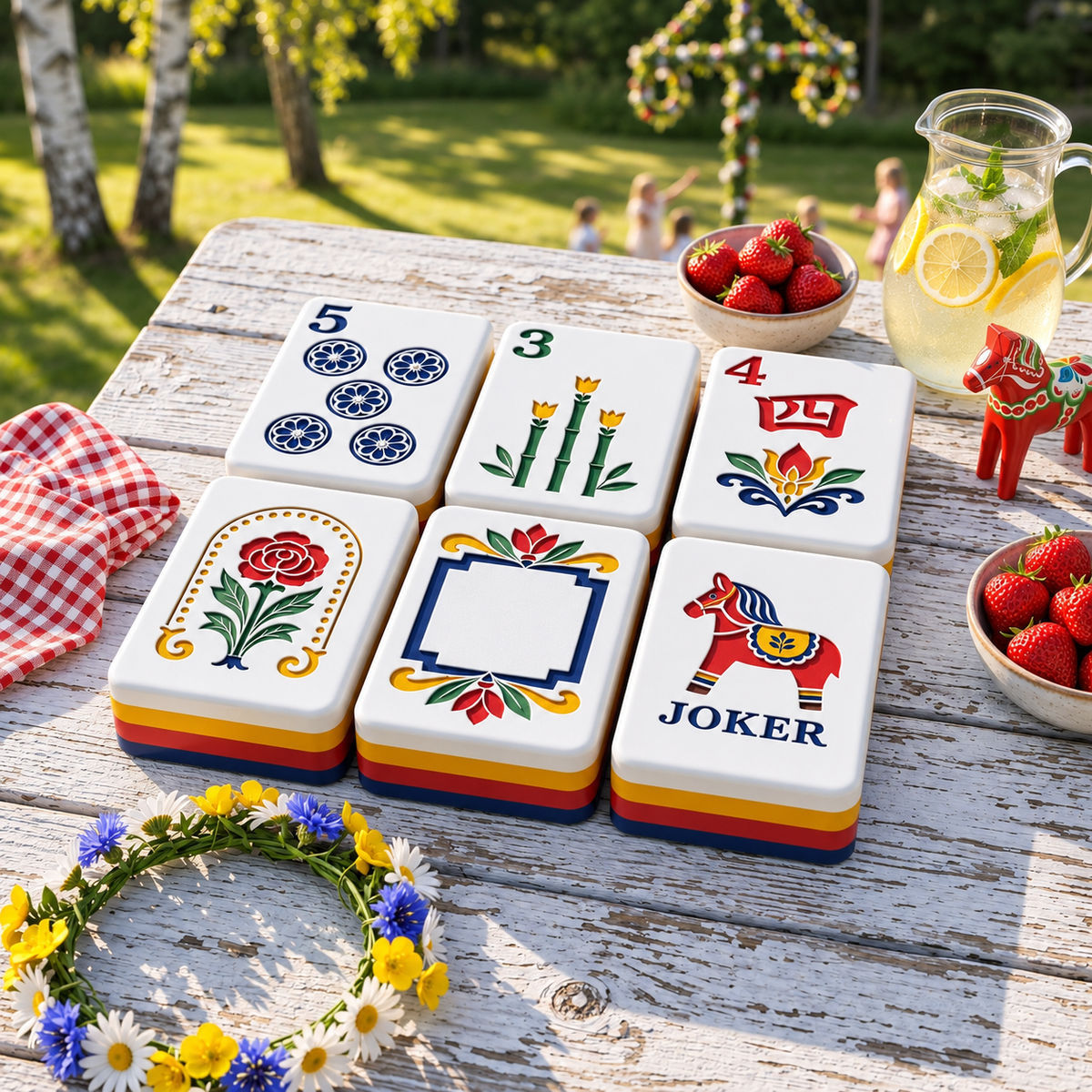
The best British mahjong app depends on your variant: Mahjong Ways and Mahjong Solitaire dominate casual play and mobile ranking charts, but American mahjong players typically use Mahjong Time (registered players worldwide, supports NMJL-style hands) or play-by-email options like Dragon's Gate. Riichi mahjong fans often prefer Mahjong Soul (Japanese-developed, ranked play, accessible UI). British club players frequently supplement apps with rotating physical sets—since no single app captures house rules, Charleston procedures, or the tactile authenticity of tiles.
Are British mahjong apps different from US ones?
Yes, but not always in app choice. British players historically favoured Chinese and Riichi variants before American mahjong gained traction among younger groups. Most UK players now straddle two worlds: casual mobile apps (Solitaire, Mahjongg) for solo play and specialist apps (Mahjong Time, Mahjong Soul) for competitive leagues. The key difference is that British clubs tend to mix rule sets at a single table—some nights American, others Riichi—so no single app serves everyone. UK-based app developers are sparse; most British players import apps designed for US, Asian or European audiences and adapt them mentally.

What makes Mahjong Time work for British American players?
Mahjong Time hosts live and asynchronous games, displays hands against the NMJL card structure, and connects British clubs to international player pools. It runs on desktop and has tablet support, crucial for players who project games on club screens. The interface isn't intuitive for total beginners, but once you understand the suit notation (Craks, Bams, Dots) and Charleston logic, it mirrors how physical American mahjong plays out. One drawback: no real-money tournaments in the UK (licensing), so British players use it for practice and socialising rather than ranked stakes. The learning curve for new players is steep; many British clubs run newcomer sessions on physical boards first, then move to Mahjong Time once hand-reading fluency is solid.
Why do British Riichi players prefer Mahjong Soul?
Mahjong Soul offers ranked play, daily tournaments, achievement systems and a growing British player base. The interface is responsive, graphics are sharp, and the AI levels scale from beginner to expert. Riichi rules are complex—hand bonuses (yaku), scoring thresholds, discard psychology—and Mahjong Soul's explanatory pop-ups help learners hold the system in mind. British Riichi communities (small but growing on Reddit and Discord) often post Mahjong Soul replays to discuss hand decisions, making the app a shared study tool. The catch: Riichi notation differs radically from American mahjong, so switching between apps mid-week can scramble your tile-reading reflexes. Most UK Riichi players stick to one app and one variant.
App | Best for | Physical tiles needed? | House-rule flexibility |
Mahjong Time | American, NMJL-aligned | No (but many clubs use sets for beginners) | Low—strictly NMJL hands |
Mahjong Soul | Riichi, ranked play | No | Low—Riichi rules only |
Mahjong Ways | Casual/solitaire, solo | No | N/A (solitaire) |
Dragon's Gate | American play-by-email | No | Medium—email-based, flexible rules |
Physical set + free online scoreboard | Mixed variants, live tables | Yes | High—your rules apply |

Can apps replace a full physical game night?
Partly—they're excellent for daily solo play, learning hand patterns, and connecting with geographically scattered friends. But they can't replicate the full experience: there's no Charleston (tile-passing), no physical "dead wall" to remind you of remaining tiles, no chance to watch opponents' discards pile up and read pressure. Apps hide information beautifully (your hand on your screen, opponents' seen by you or them alone), but many British players report losing seat-of-the-pants awareness that comes from watching physical racks and tiles move across a table. For serious learners, we recommend phasing in: app study alone → app play with friends → hybrid nights (practice hands on screens, then play one or two physical games when your set arrives). Many UK clubs now run both: a casual app league during winter (connecting players who can't travel weekly), and in-person tournaments spring through autumn with engraved American mahjong sets that bear club names or member anniversaries.
🀄 Shop best-selling mahjong sets →
Which app teaches American mahjong fastest for British beginners?
None—apps aren't ideal teaching tools because they automate hand-checking and tile arithmetic. Beginners need paper copies of the year's NMJL card and a mentor watching their choices. Apps are practice tools: once you grasp suit names, hand templates and the tile-drawing sequence, Mahjong Time's interface becomes intuitive. British mahjong schools and community centers often loan printed cards and host beginners' sessions on physical tiles before introducing apps. If you're self-teaching, follow up every app game with a paper analysis: check which hands were on the card, whether your drawn discard was truly unneeded, why an opponent called when they did. This hybrid method—app practice, physical reflection—cuts learning time by weeks according to players we know in London and Manchester. Consider how to read the mahjong card as your first read-through, then move to app tutorials.
What to check before you buy an app subscription
Offline play: Can you play solitaire without internet? (Mahjong Ways yes; Mahjong Time no.)
Rule clarity: Does the app display its hand definitions in-game? (Mahjong Soul does; some casual apps don't.)
Player count: Is the player pool active in your timezone? (Mahjong Time peaks in US evening; Mahjong Soul in Asia evening.)
Accessibility: Large font size, high contrast? (Test the trial or free tier first.)
In-app purchases: Hidden costs for extra tiles, faster play, or premium opponents? (Read reviews on your app store.)
House rules: Does your club's local ruleset exist in the app? (If not, you'll need a second app or physical backup.)
🎁 See our most-loved mahjong sets & accessories →
Many British players find the answer is a two-tier system: one app for daily solo skill-building (usually casual solitaire variants) and one for multiplayer league or social play (Mahjong Time or Mahjong Soul). For club nights, we still see British players prefer a best-selling mahjong set on a padded mat, because apps flatten the social and tactical depths that make mahjong addictive in person. The app teaches the rules; the table teaches the game.
✨ Find your Mahstead set — free US shipping →

FAQ
Is Mahjong Time legal to play in the UK?
Mahjong Time operates internationally and has no UK licensing restrictions. Casual play is unregulated; real-money tournaments are blocked by UK gambling law. Most British players use it socially or for NMJL-affiliated leagues without stakes.
Can I play British house rules on any of these apps?
Not reliably. Mahjong Time and Mahjong Soul enforce strict rule systems (NMJL and Riichi, respectively). Dragon's Gate and email-based play allow house rules because the app is minimal—you score manually. If your club has unique rules, apps are a supplement only.
Do I need a VPN to play these apps in the UK?
No. Mahjong Time, Mahjong Soul, Mahjong Ways and Dragon's Gate are all available and fully functional in the UK without VPN. Servers may have latency during peak US hours, but connection is unrestricted.
Which app has the friendliest beginner experience?
Mahjong Soul's tutorial is clearest for Riichi learners; Mahjong Time's for American rules. For absolute beginners unfamiliar with any variant, a physical set with a mentor beats any app. Apps assume tile notation literacy; physical play forces you to slow down and learn.
Can I play cross-variant—American and Riichi—in one app?
No. Each app enforces one ruleset. You'll need separate apps. Many British players keep two installed: one for American league nights, one for Riichi with online friends. The mental shift between notations takes 10–15 minutes per switch.


View More
View More
View More
