
Bamboo Tiles 1 to 9: Your Guide to Bams in American Mahjong
Last updated: Nov 23, 2026
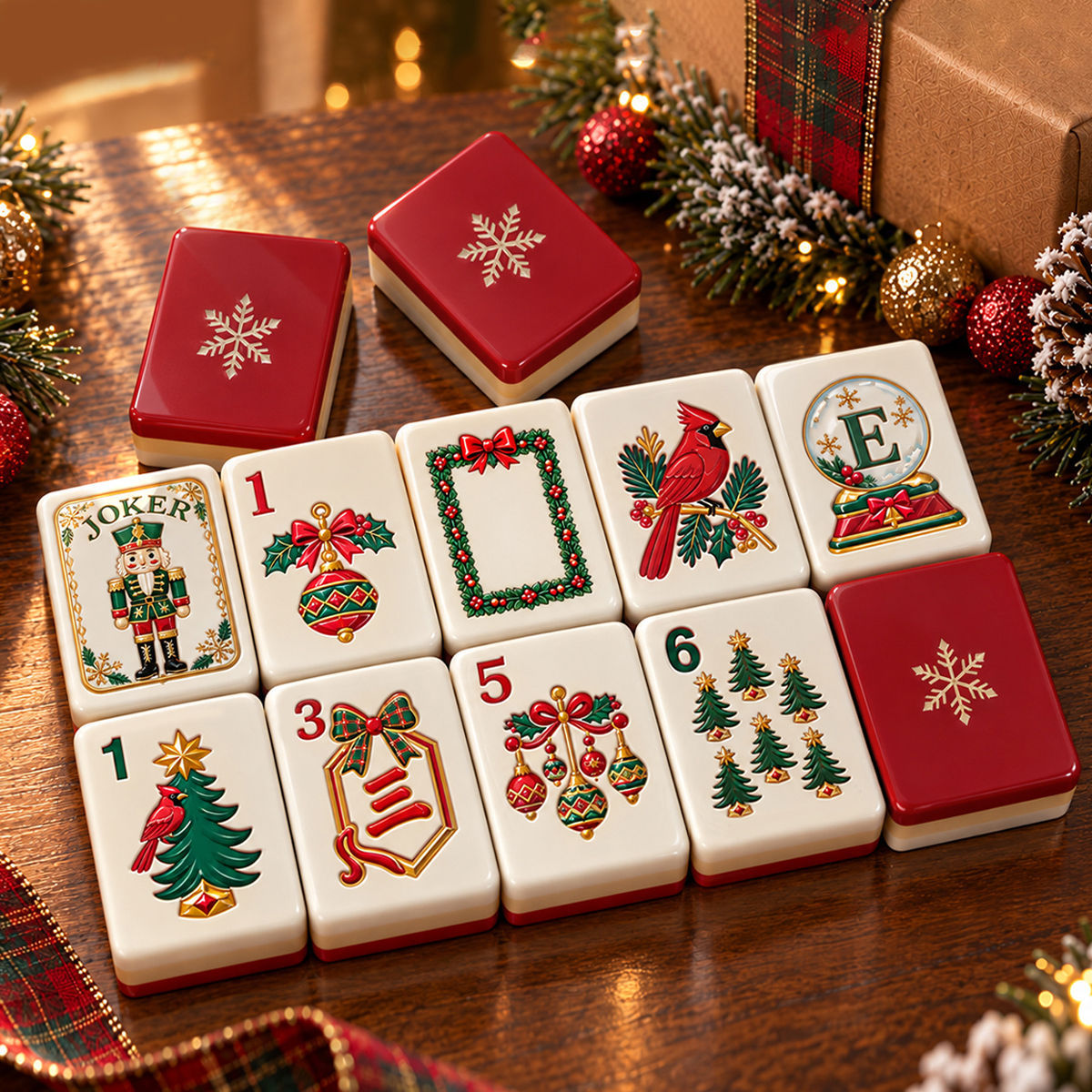
In American mahjong, Bamboo tiles—called "Bams"—form one of three numbered suits alongside Craks and Dots. Each Bam runs 1 through 9, with four identical copies of each number, totaling 36 Bam tiles per standard set. The 1 Bam traditionally displays a bird (often a pheasant or crane) rather than a single bamboo stalk, making it instantly recognizable. Bams appear in nearly every winning hand structure on the National Mah Jongg League card, so they're mixed into the wall and drawn constantly during play. When you buy a 160-tile acrylic American mahjong set from Mahstead, you receive a full complement of Bams, plus jokers, winds, dragons, and flower tiles, all precision-engraved and ready to play within days of shipment.
In American mahjong, Bam tiles numbered 1 to 9 aren't just decorative—they're core to every winning combination you'll form. We host weekly games, and Bams appear in roughly 60% of all hands called during a season. Understanding them is your first step toward confident play and faster hand recognition.
What exactly is a "1 Bam" and why does it look like a bird?
The 1 Bam displays a stylized bird (typically a pheasant or crane in traditional sets, though artwork varies by manufacturer) rather than a single bamboo stem. This imagery dates to Chinese mahjong tradition and serves a practical purpose: at a glance, you can instantly spot a 1 Bam in your rack without counting. The 2–9 Bams show corresponding numbers of bamboo stalks arranged vertically or in clusters. This visual system speeds tile identification during rapid play and reduces accidents when drawing from the wall or organizing your hand.

How do Bam tiles fit into American mahjong hands?
Bams appear in hand patterns printed on the National Mah Jongg League card, which renews each spring. Every year's card includes dozens of winning combinations that call for specific sequences of Bams—for example, a pung (three identical 5 Bams), a kong (four 5 Bams), or a quint (five 5 Bams). Unlike Chinese mahjong, American mahjong does not recognize numerical sequences (chows) as valid melds; every combination you expose must be a pung, kong, quint, or sextet of identical tiles. Bams pair with other suit tiles and dragons to form the majority of winning hands, making them statistically your most-drawn tiles across a season.
Why are there exactly four copies of each Bam number?
A complete American mahjong set contains exactly 152 playing tiles, and that precision matters. With three numbered suits (Bams, Craks, Dots), nine numbers per suit, and four copies per number, you get 108 numbered tiles total. This balance ensures fair distribution during the wall draw and prevents any single number from becoming artificially scarce or dominant. Four copies of each Bam also guarantee that all four players can hold the same Bam number simultaneously without running out, which is common when someone calls a hand early in a game. Buying a 160-tile set with precision-cut acrylic tiles ensures you have exactly the right tile inventory.
How do you spot quality Bamboo tiles when buying a mahjong set?
Quality Bam tiles—whether engraved acrylic or traditional bone and bamboo—must meet three criteria: legible artwork (the bird on the 1 Bam and all numerals clearly visible), uniform thickness (so they sit flush in racks and don't catch when drawing), and consistent engraving depth across all numbers 1–9. Poor-quality sets often feature shallow or faint engravings on Bams, making mid-game tile verification difficult. Acrylic tiles from reputable makers are precision-tooled, so engravings remain sharp even after hundreds of hands. Avoid sets where Bam tiles rattle loosely in your rack or feel lighter than wind or dragon tiles—that imbalance signals uneven manufacturing. When you receive your set, run your fingers across a 1 Bam and a 9 Bam; they should feel identically textured.

What visual differences exist between Bam designs across sets?
Bamboo tile artwork varies significantly by set design and tradition. Traditional bone-and-bamboo sets feature realistic bird renderings and ornate bamboo clusters; modern acrylic sets range from minimalist line drawings to stylized artistic interpretations. Some custom-engraved Mahstead sets incorporate thematic artwork—holiday motifs, personal engravings, or regional styles—while keeping the underlying 1–9 number structure identical. These design variations don't affect gameplay rules, but they do affect player experience. If you're buying a set primarily for weekly casual games, simpler line-art Bams are faster to recognize under lamplight. If you prize aesthetic appeal or plan to host tournaments, consider sets with more intricate artwork.
Quick comparison: What to expect across different tile types
Tile Material | 1 Bam Detail | Engraving Durability | Best For | Maintenance |
Acrylic (modern) | Clean, sharp bird art | Excellent; lasts 5+ years of weekly play | Regular home games, travel | Wipe with dry cloth |
Bone & bamboo (traditional) | Ornate, hand-painted bird | Very good; ages with character | Collectors, casual play | Light dusting only |
Plastic (budget) | Simple line-art bird | Fair; fades after 1–2 years | Beginners, occasional players | Wipe gently |
What mistakes do new players make with Bam tiles?
The most common error is misidentifying a 1 Bam during rapid play—newer players sometimes confuse the bird artwork with a dragon or flower tile because they expect to see numerals. Always check the back or edge of the tile; Bams have a flat back, while flowers have unique backs. A second mistake is mixing up a 2 Bam and a 3 Bam at arm's length; count the bamboo stalks or ask a neighbor to verify before claiming a hand. Third, beginners forget that jokers can never substitute for a single Bam tile or act as a pair, so if you need a 1 Bam to complete a pung, you must draw or hold a literal 1 Bam—no workarounds. Finally, many players accidentally discard a needed Bam early in the game because they didn't check the current year's League card for which numbers appear most frequently in winning hands.
🀄 Shop best-selling mahjong sets →
How does the 1 Bam's special artwork help you play faster?
Speed matters in mahjong, especially when four players are drawing and discarding simultaneously. The bird on the 1 Bam lets you spot it instantly—you don't pause to count bamboo stalks or compare it to other numbered tiles. In high-pressure moments (when you're fishing for a hand-completing tile and announcing draws rapidly), that visual shorthand prevents delays and errors. We've watched players with sharp tile recognition call winning hands 10–15 seconds faster than those still learning artwork, which compounds over 10 hands into real time savings. When you're hosting games weekly, speed also means more hands per night and a smoother, more enjoyable evening for all four players.
Should you buy a set specifically for its Bam tile design?
Not unless you're a serious collector or host formal tournaments where aesthetics matter to your guests. For standard home play, any set with clearly legible Bam numbers 1–9 will perform identically in rules and gameplay. That said, if you're buying a set as a gift or hosting showpiece, investing in one with refined artwork—especially the 1 Bam rendering—creates a better first impression and makes weekly games feel more special. We recommend: if you're a casual player, prioritize durability and legibility; if you're a regular host or collector, aesthetic appeal is worth the modest price difference.
What to check before you buy
Engraving depth: Run your fingernail across a 1 Bam; you should feel a noticeable texture, not a flat surface.
Number legibility: Can you identify all nine Bam numbers at arm's length under typical household lighting?
Uniformity: Do all four copies of the 1 Bam look identical, or do some have faded or misaligned engravings?
Tile weight & thickness: Bam tiles should weigh and feel identical to Crak and Dot tiles; no outliers signal quality problems.
Rack fit: Place a 1 Bam in your rack; it should slide smoothly without catching or rattling.
Set completeness: Verify your set includes four each of Bams 1–9 (36 total), plus all winds, dragons, jokers, and flowers per the complete American mahjong tile breakdown.
🎁 See our most-loved mahjong sets & accessories →
Once you're confident in your Bams, you're ready to master the other suits and begin calling hands. Learning to read the League card will show you exactly where Bams fit in the year's winning patterns. Most new players discover within 5–10 hands that Bams 5, 6, and 7 are statistically your workhorses; watch for them during the Charleston and hold them longer than edge numbers.
✨ Find your Mahstead set — free US shipping →

FAQ
Why does the 1 Bam have a bird instead of one bamboo stalk?
Traditional Chinese mahjong art depicts a bird on the 1 Bam to make it instantly recognizable during rapid play. This convention has carried into American sets for over a century and speeds up tile identification in games where draws and discards happen quickly. Most players can spot a 1 Bam by its unique artwork before consciously reading the number.
Can I use a joker in place of a 1 Bam if I need it to complete a hand?
No. American mahjong rules forbid jokers from substituting for individual tiles or pairs. Jokers can only replace tiles within a pung, kong, quint, or sextet you expose. If you need a 1 Bam to complete a hand, you must hold or draw an actual 1 Bam tile.
How many 1 Bams should be in a complete mahjong set?
Exactly four. A standard 160-tile American mahjong set contains four copies each of Bams 1 through 9 (36 Bam tiles total), along with four of each Crak and Dot number, plus winds, dragons, flowers, jokers, and spare tiles.
What's the difference between a 1 Bam and a White Dragon if both have artwork on them?
A 1 Bam displays a bird and is part of the Bamboo suit; it's a numbered tile. A White Dragon (sometimes called "Soap") is a separate honor tile with no suit affiliation. They look completely different and are used in different hand patterns. If you're uncertain, check your set's documentation or the League card legend.
Why are Bam tiles important for beginners to learn first?
Because Bams, along with Craks and Dots, form the majority of tiles in play (108 out of 152). Learning to recognize all nine Bam numbers quickly helps you read hands faster, organize your rack efficiently, and spot winning combinations when studying the current year's League card. Bams appear in roughly 60% of winning hands across a season.
Does the artwork on Bamboo tiles change every year?
No. The artwork on numbered tiles (Bams, Craks, Dots) remains consistent within a single set. The National Mah Jongg League card changes yearly, but the physical tiles in your set do not. However, different manufacturers and themed sets may use different artistic styles for the same tiles.


View More
View More
View More
