
American Mahjong Wall Game Strategy: Play Strong Defense & Win
Last updated: Nov 23, 2026
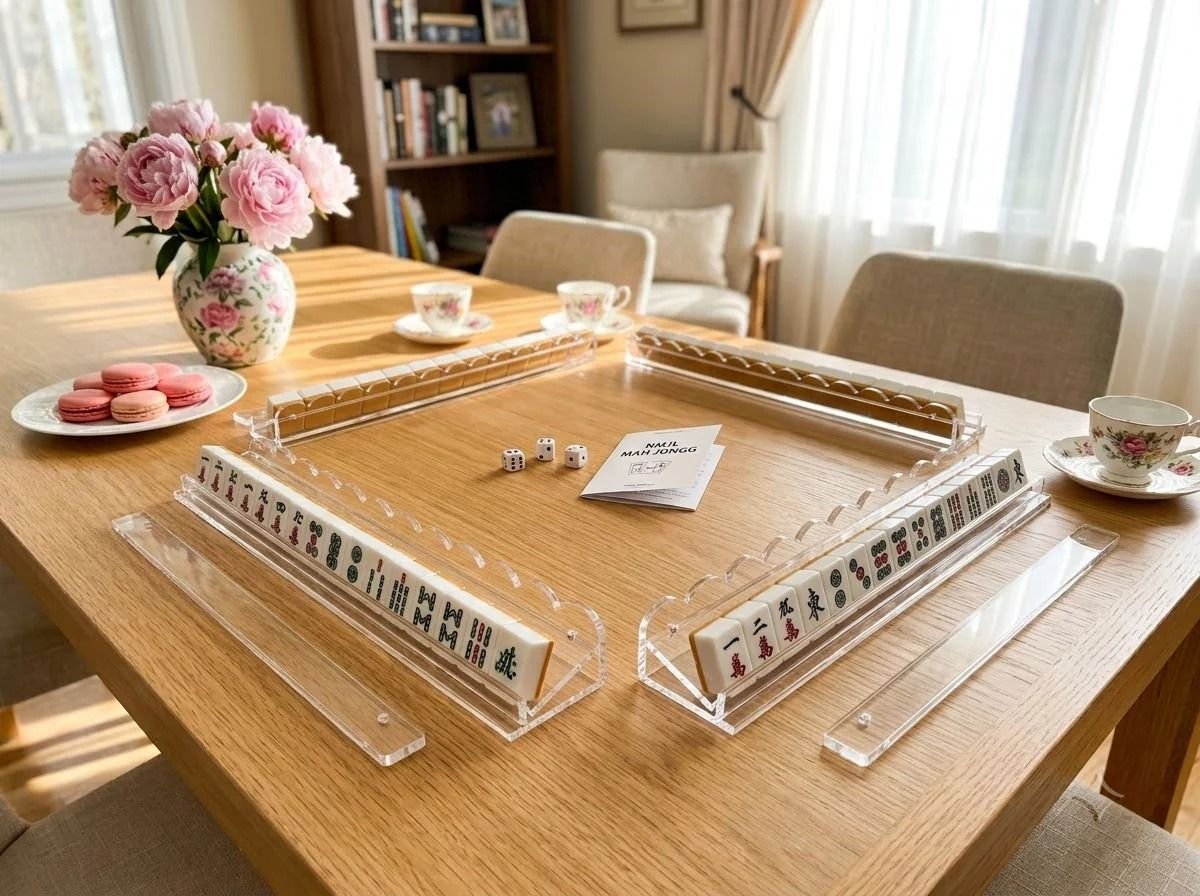
American mahjong wall strategy means knowing when to preserve your wall tiles, which discards invite danger, and how to read what your opponents need before they ask. The wall contains 108 undrawn tiles after the dealt 13-tile hand; skilled players memorize roughly how many of each tile remain in play, note which suits other players favor, and discard strategically to force them away from their target hand. The key tactic: early in the round, discard flowers and winds (they appear in fewer hands), watch who calls what, then pivot your hand away from the suits everyone else wants. Avoid the rookie mistake of discarding the same number in three suits in a row—you telegraph weakness and let opponents reset their draws. Wall strategy also means knowing when to pass on a self-drawn tile that tempts you; holding a weak hand too long costs you the game. We recommend our best-selling mahjong sets because their clear tile faces let you spot patterns faster, and their sturdy build keeps your rack stable while you practice these reads across dozens of rounds. 🀄 Shop best-selling mahjong sets →
How do you count the wall and estimate remaining tiles?
After the deal (52 tiles distributed to four players) and the Charleston (nine tiles exchanged between seats), 108 tiles remain in the wall. Mentally mark the wall's midpoint and estimate: if half is gone, roughly 54 tiles left. Count consumed or discarded tiles you see on the table—subtract from 108 to track the live wall accurately. Most players count by suit: if 14 Craks have been played and you started with 36, roughly 22 Craks remain. The wall count matters because it tells you whether an opponent can still draw their target tile or if they're chasing ghosts. Fast counting separates casual players from regulars.
What discard order protects your hand longest?
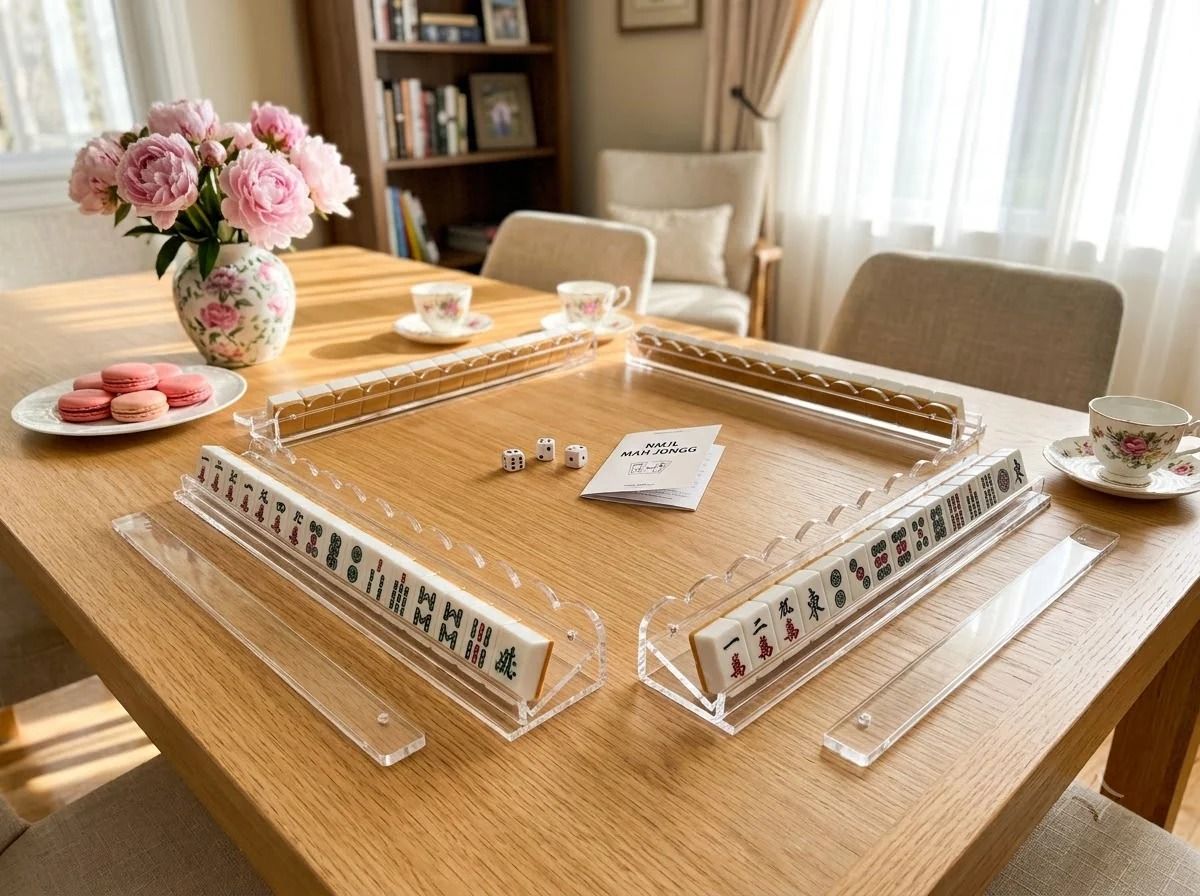
In the opening round, discard winds and flowers first—they appear in only a few hands on the current year's card, so the risk of feeding an opponent is low. Move next to isolated number tiles (a lone 1 or 9 with no nearby mates in your hand) because they're harder for you to build into sets anyway. Save pairs and near-complete pungs (two tiles of the same number) until mid-game when you know who's calling what. Never discard honors (winds, dragons) late in the hand—by then opponents have narrowed their searches and may snatch them. The correct order buys time to develop your own sets while giving away tiles nobody wants. One critical mistake: discarding the same number in different suits consecutively signals you have no pung-building strategy—opponents will circle that number to block you.
When should you avoid drawing from the wall?
Fold when three conditions align: (1) you've called or picked only two tiles in five turns, (2) at least two opponents are one or two tiles from meld, and (3) your hand has no visible path to any listed hand on the current year's card. Drawing from a dead wall wastes time and racks up scoring losses because other players will meld faster. Another fold signal: you hold 11 tiles after four rounds of draws and see no pung or kong forming. Melding mid-hand weakens your options—once you expose three tiles, opponents know your suit and can block aggressively. The paradox: sometimes not drawing is smarter than drawing. Winning players fold 15–20% of hands they pick up; recreational players fold almost never and lose more overall.
How do you read what opponents are hunting?
Watch the discard pile and call patterns, not faces. If Seat 2 has called twice on Bams and discarded two Winds early, they're chasing a Bam-heavy hand. If Seat 4 discards only high numbers (6–9) and holds back 1–3, they're likely building a number-sequence or honor-heavy hand. The real signal: what they don't discard. If an opponent hasn't thrown a single Green Dragon by turn seven, they either have two and are stalking a third, or they discarded all three early (rare). Notice who picks and who passes—pickers are building; passers are waiting for a perfect tile. Once you identify their suit, starve that suit from your hand and feed them the opposite. This reading skill takes 20–30 rounds of play to internalize, but it's the fastest path to consistent wins.
🎁 See our most-loved mahjong sets & accessories →
What happens when multiple players are close to melding?
Speed becomes everything. Discard the tile least likely to help any opponent: isolated honors and extreme numbers. If two opponents are one tile away and both seem to be chasing Craks, discard Dots or Bams—but only if you have them. Never draw from a wall where two players are about to call; your tile either feeds one of them or wastes a turn you don't have. The best wall strategy at this stage is already finished—you made your defensive choices in turns 1–6. Now you're executing endgame discipline: minimal discard hesitation, rapid reading of who called what, and accepting that luck (bad draws) will sometimes override your strategy. Experienced players call this the "red zone"—it lasts two to four turns and determines the winner.
Strategy Decision Framework
Situation | Discard Priority | Wall Action | Why It Works |
Opening round, no melds called | Winds, flowers, isolated numbers | Draw freely | Low-value tiles can't feed most hands |
Mid-game, one opponent close | Suit opposite to their calls | Draw cautiously; count wall | Starves them; preserves your options |
Two opponents calling | Extreme numbers (1, 9) or honors | Minimize draws; be ready to fold | Reduces surface area for both threats |
You're one tile from hand | Draw aggressively from wall | Any tile that's not on card | Speed beats defense when you're ahead |
Wall nearly depleted (<20 tiles left) | Whatever you haven't discarded | Stop drawing unless you're very close | Dead wall runs out fast; don't chase |

How to read the current year's card to spot wall patterns
The National Mah Jongg League's annual card groups hands by suit, structure, and special tiles. Study the card before play to internalize: How many hands need five or more Bams? How many require three dragons? This knowledge lets you estimate demand—if 40% of hands need Dots, Dot tiles disappear fast, so discarding Dots early looks safe but actually feeds many hands. Conversely, if only 12% of hands need a specific wind, that wind is a safer discard. Card literacy is the hidden advantage of serious players. Learn how to read the mahjong card in depth so you can anticipate suit saturation before the round even begins.
Jokers, kong tiles, and wall depletion
American mahjong includes eight jokers that can substitute for any tile in a pung, kong, quint, or sextet—never in a single tile or pair. A joker in the wall doesn't count as a "real" tile, so spotting joker usage is crucial. If someone melds a pung of 5 Dots with one joker, only two actual 5 Dots remain in play. This shrinks your odds of drawing that tile later. Kong tiles (four of the same) collapse the wall faster because melding a kong draws an extra tile to replace it, which accelerates the endgame. Understand how jokers work fully to avoid miscounting the wall and to spot when an opponent's "lucky" kong was actually drawing them closer to a hand they didn't have before.
What to check before you buy a set to practice wall strategy
Tile clarity: Faces must be crisp and large enough to spot patterns during rapid play. Acrylic tiles with sharp printing let you count suits at a glance, which speeds up wall reading.
Rack stability: A wobbly rack forces you to rearrange tiles constantly, breaking your focus on wall memory. Sturdy racks with pushers keep your hand organized so you can concentrate on opponent reads.
Tile weight and feel: Lightweight tiles or slippery surfaces slow your mental rhythm—you notice the manipulation instead of the strategy. Medium-weight acrylic tiles with a pleasant surface feel let your hands work on autopilot.
Joker visibility: If your set's jokers aren't clearly marked, you'll miscount the real wall and make wrong decisions. Ensure jokers stand out visually.
Mat with clear markings: A mat with visible discard zones and player positions helps new strategic players orient themselves faster, especially during high-speed endgame play.
Our best-selling sets tick all these boxes—they're designed by weekly players who know that clear, stable equipment is the foundation of strategic depth.
✨ Find your Mahstead set — free US shipping →
Common wall strategy mistakes to avoid
Mistake 1: Discarding by rote, not by read. Many players follow a fixed order (winds first, then numbers) regardless of what they see others calling. This is predictable and exploitable. Real strategy flexes based on the table.
Mistake 2: Counting tiles but not suit saturation. A player might know 20 tiles are gone but not realize that 19 of them are Bams. If you're chasing Bams, the wall is dead to you—fold earlier.
Mistake 3: Forgetting the Charleston shuffle. Nine tiles move between seats during the Charleston; those exchanged tiles are now in opponent hands and unknown to you. Don't assume you know their suit. Adjust your reads slowly over the first few draws.
Mistake 4: Melding too early for speed. Exposing tiles (pung, kong) tells opponents exactly what you want. Hold back until you're confident no one can block you, even if it costs a turn or two.
Mistake 5: Not folding when the wall is hot. If the wall is nearly depleted and you're still chasing, you're gambling, not strategizing. Discipline means accepting a loss to play the next hand fresh.
Practical checklist for wall strategy in your next game
[ ] Before first draw: mentally mark the wall midpoint and commit to counting drawn tiles.
[ ] Turns 1–4: discard winds and flowers; watch which suits opponents pass on.
[ ] Turn 5+: note who called what and count remaining tiles in that suit.
[ ] If two opponents are within two tiles: shift discards to honors and extremes; count wall remaining.
[ ] If wall has fewer than 20 tiles left and you're not close to hand: fold after your next draw.
[ ] Every fourth turn: update your mental suit-demand estimate based on the card and visible melds.
[ ] At decision point: choose draw or pass based on (1) wall depth, (2) opponent proximity, (3) your hand strength—in that order.

FAQ
How many tiles should I remember to count for wall strategy to work?
You don't need perfect memory. Track the three suits and honors roughly: estimate remaining tiles in the suit opponents are chasing, and update every two turns. Rough accuracy beats precise guessing.
If I see an opponent discard a tile immediately, does that mean they don't need it?
Not always. Some players discard high-risk tiles (flowers, winds) on reflex, even if they don't need them. Watch their second and third discard before concluding.
Should I practice wall strategy with a partner, or is it better to learn during live four-player games?
Both. Play with a partner to internalize discard logic without pressure. Then jump into live games where you'll face chaotic reads and real-time mistakes—that's where wall strategy earns wins.
Does wall strategy matter in online or speed mahjong?
Absolutely. Online play removes the physical ritual but keeps the core: counting, reading, and strategic discard timing. Speed mahjong compresses turns, making wall reads even more critical to success.
What's the fastest way to improve wall counting without slowing down the game?
Practice counting during the Charleston (tile exchange before play) and between rounds. Count only one suit per hand—this week, count Bams; next week, Craks. Narrow focus builds habit without overwhelming the table.


View More
View More
View More
