
Clear American Mahjong Sets: What to Know Before Buying
Last updated: Nov 23, 2026
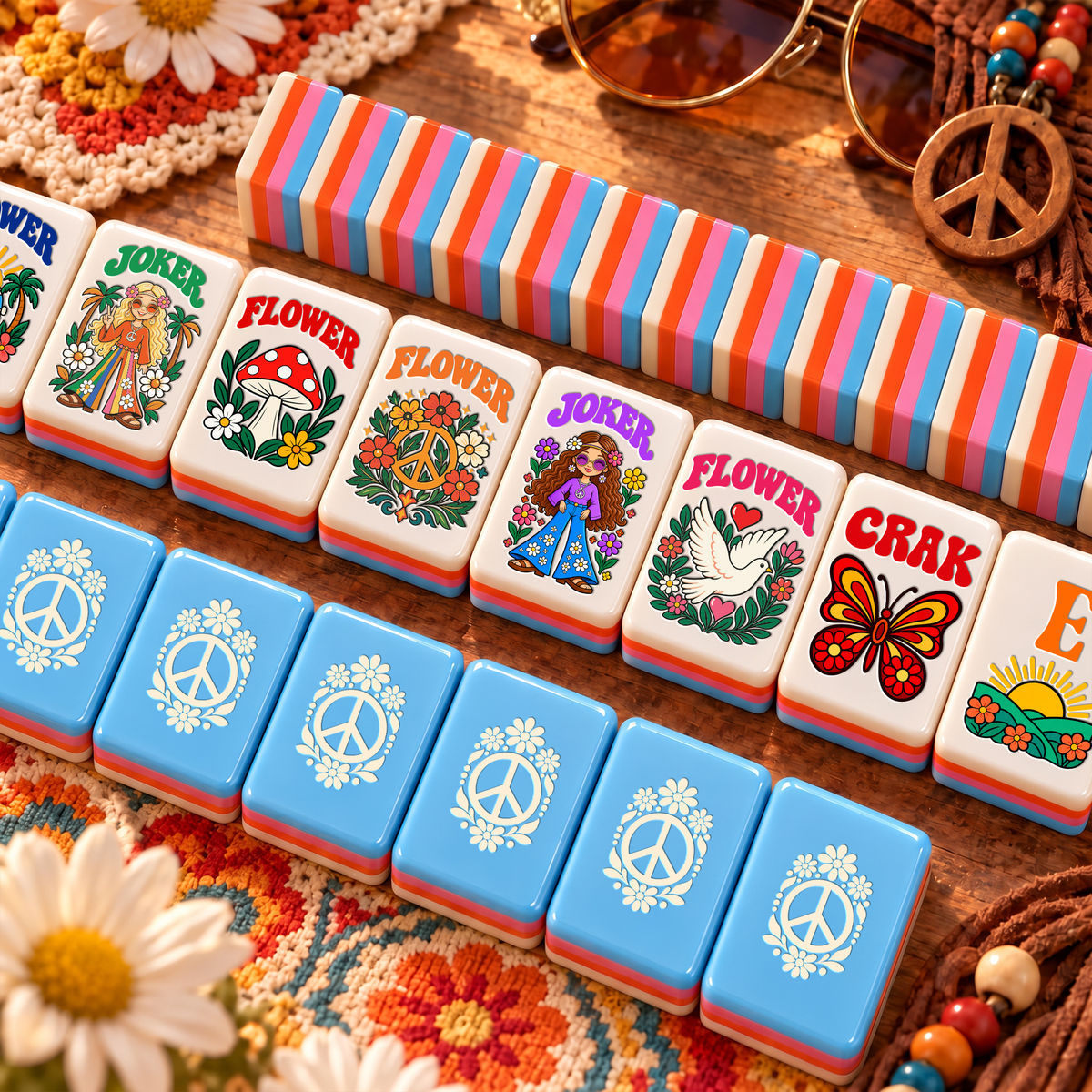
A clear American mahjong set uses transparent or frosted acrylic tiles instead of the traditional opaque bamboo look, so tiles are visible from multiple angles during play. "Clear" can mean fully transparent (glass-like) or semi-translucent (frosted); both styles sit in our best-selling collection alongside classic designs. Each set contains 152 playing tiles (three suits of 36, plus 16 winds, 12 dragons, 8 flowers, 8 jokers) plus spare tiles to reach 160 total. Clear sets work especially well for hosting when natural light is available—tiles don't glare in dim rooms the way shiny opaque ones do. The trade-off: some players find clear tiles harder to read at a glance because numerals lack the bold contrast of painted designs. Check your table lighting and whether your group values seeing the tile back or prefers fast recognition over aesthetics before committing.
What makes a clear set different from a painted set?
Opaque painted sets (bamboo-style, numbered with ink) offer instant visual contrast—3 Dots looks nothing like 3 Craks at arm's length. Clear acrylic relies on engraved or printed symbols visible through the tile body. You gain transparency but sacrifice split-second readability. A frosted clear set sits between both: light diffuses through the tile surface, reducing glare while keeping symbols legible from the side. In our weekly games, players who switch to clear sets usually need one session to adjust eye focus. After that, most say they prefer it because they can see what other players are holding when racks are stacked.

Which clear style—transparent or frosted—suits your table?
Transparent (glass-like): Maximum light penetration; numbers and suits readable head-on but can feel fragile if you're accustomed to solid tiles. Works best on tables with white or light backgrounds and consistent overhead lighting.
Frosted (semi-translucent): Softer light refraction, less glare, feels more durable underhand. Better for mixed lighting or players who prefer a sophisticated, modern look without the "plastic" feel.
Painted classic (for comparison): Opaque acrylic with printed designs; fastest to read but no transparency benefit. Neither choice is wrong—it's about your lighting and group preference. Try borrowing a clear set for one game before buying.
Clear tiles: visibility and playability table
Scenario | Clear Transparent | Frosted Clear | Painted Opaque |
Bright daylight play | Excellent light pass-through; can see tile backs clearly | Good—reduces glare while keeping symbols visible | Slight glare if sun hits directly |
Evening/indoor play | Needs overhead light to avoid shadows | Best in mixed lighting; no harsh reflections | Works in all light; quickest to read at a glance |
Tile readability speed | Slightly slower (focus through transparency) | Same as painted (most players) | Fastest (high contrast) |
Aesthetic appeal | Modern, elegant; "luxury" feel | Sophisticated; hides dust on tiles | Classic, tournament-standard look |
Who prefers it | Younger players; first-time hosts; social games | Serious players wanting modern + function | Competitive/traditional groups |
Price point | Mid-range | Mid-range | Budget to mid-range |
How does tile engraving differ from printing on clear sets?
Engraved symbols are carved into the acrylic surface before the tile is finished; printed symbols sit on the tile surface. Engraving holds up longer in heavy play (years of shuffling don't fade it), but costs more to produce. Printing is more affordable and offers bolder color contrast, though it can dull over hundreds of games. At Mahstead, our engraved American mahjong sets use precision engraving for durability. If you host weekly games, engraving is worth the investment; casual monthly players may not notice the difference over five years.
🀄 Shop best-selling mahjong sets →

What to check before you buy a clear set
1. Your table lighting. Test a borrowed clear set under your exact playing conditions (time of day, lamp placement). If you're squinting, move the light or choose frosted.
2. Group preference. Ask your regular players whether they'd rather see tile backs (transparency wins) or read numbers fastest (painted opaque wins). One vote against clear can derail a purchase.
3. Storage & travel. Clear tiles can look dusty or smudged indoors; a good mahjong bag or case protects appearance and function. Check the case's padding quality—clear tiles show scratches faster than opaque ones.
4. Tile weight & feel. Heavy acrylic tiles (15–18mm thick) feel more substantial and shuffle quietly. Lighter tiles can feel cheaper and click loudly. Handle both before ordering if possible.
5. Joker count & spares. A 160-tile set includes spare tiles beyond the 152 used in play. Confirm that spare jokers or blanks are included—they're essential for replacing lost or damaged tiles mid-season.
6. Tile size. Most American sets are 1.25 inches square; verify the dimensions on the product page match your existing racks with pushers or mats if you're mixing sets.
Clear tiles + accessories: building your complete setup
A clear set alone won't guarantee smooth play. Pair it with:
A padded mahjong mat to cushion tiles and keep them from sliding during shuffle. Clear tiles on a slippery surface multiply frustration.
Pushers & racks to organize tiles by suit and help keep hands tidy. Light-colored racks make clear tiles easier to spot.
Dice that complement your tile aesthetic; solid or translucent options both work with clear sets.
Travel case if you host at different homes. Clear tiles attract dust visibly—a protective bag is non-negotiable.
🎁 See our most-loved mahjong sets & accessories →
Common mistakes we see with clear set purchases
Buying without testing in your light. Players order frosted clear online, then discover their dining room is too dim. Test first, or choose painted opaque as a safer default.
Mixing tile sizes across sets. If you already own a standard set, measure before adding a clear set. Even small size differences (1.20" vs. 1.25") cause shuffling chaos.
Skipping the case. Clear tiles show every fingerprint and dust particle. A bag isn't optional—it's part of the investment.
Ignoring the engraving vs. print decision. If you play weekly year-round, engraved lasts longer. Casual players needn't pay the premium.
Forgetting to ask your group. Buying a clear set as a surprise for your regular Thursday game can backfire if players prefer opaque for speed. A five-minute poll saves regret.
Clear American mahjong sets aren't objectively "better"—they're a trade-off between aesthetics and utility. If your table gets good natural or overhead light, your group values the modern look, and you're willing to spend a moment adjusting your visual focus, clear is worth it. For competitive play under fluorescent lights or with players who prioritize speed over appearance, painted opaque remains the standard. Visit our best-selling collection to compare designs side by side, read real player feedback in product reviews, and choose the set that matches your table's rhythm and your hosting style.
✨ Find your Mahstead set — free US shipping →

FAQ
Do clear tiles crack or break more easily than painted tiles?
No. Both are acrylic; durability depends on thickness and material quality, not color. A 15mm clear tile is as robust as a 15mm painted tile. Engraved symbols resist fading better than printed ones over years of use.
Can I see other players' tiles through a clear set?
Not during closed play. Racks hide held tiles. You can see tile backs when they're stacked in the rack or on the wall—useful if you're learning to read hand patterns. You cannot see inside someone's rack or the draw pile.
Will my existing mahjong mat work with a clear set?
Yes, provided tile size matches (1.25" is standard). The mat doesn't care about tile color. A padded mat actually helps clear tiles stay put, since light acrylic can slide on bare wood.
How do I clean clear tiles without leaving streaks?
Wipe with a soft, dry microfiber cloth or a barely damp cloth (no water pooling). Avoid harsh chemicals. Store in a case to minimize dust. Most players clean tiles only once or twice per season, not after every game.
Are clear sets more expensive than painted ones?
Generally mid-range pricing applies to both. Engraved clear sets cost more than printed ones; printed clear costs about the same as painted opaque. See current prices on our product pages to compare exact options.
Can I use clear tiles with a standard American mahjong card?
Absolutely. Tile color doesn't affect game rules. The hand patterns on this year's National Mah Jongg League card work identically whether your tiles are clear, painted, or any other design.


View More
View More
View More
