
American Mahjong vs Siamese Mahjong: Key Differences
Last updated: Nov 23, 2026
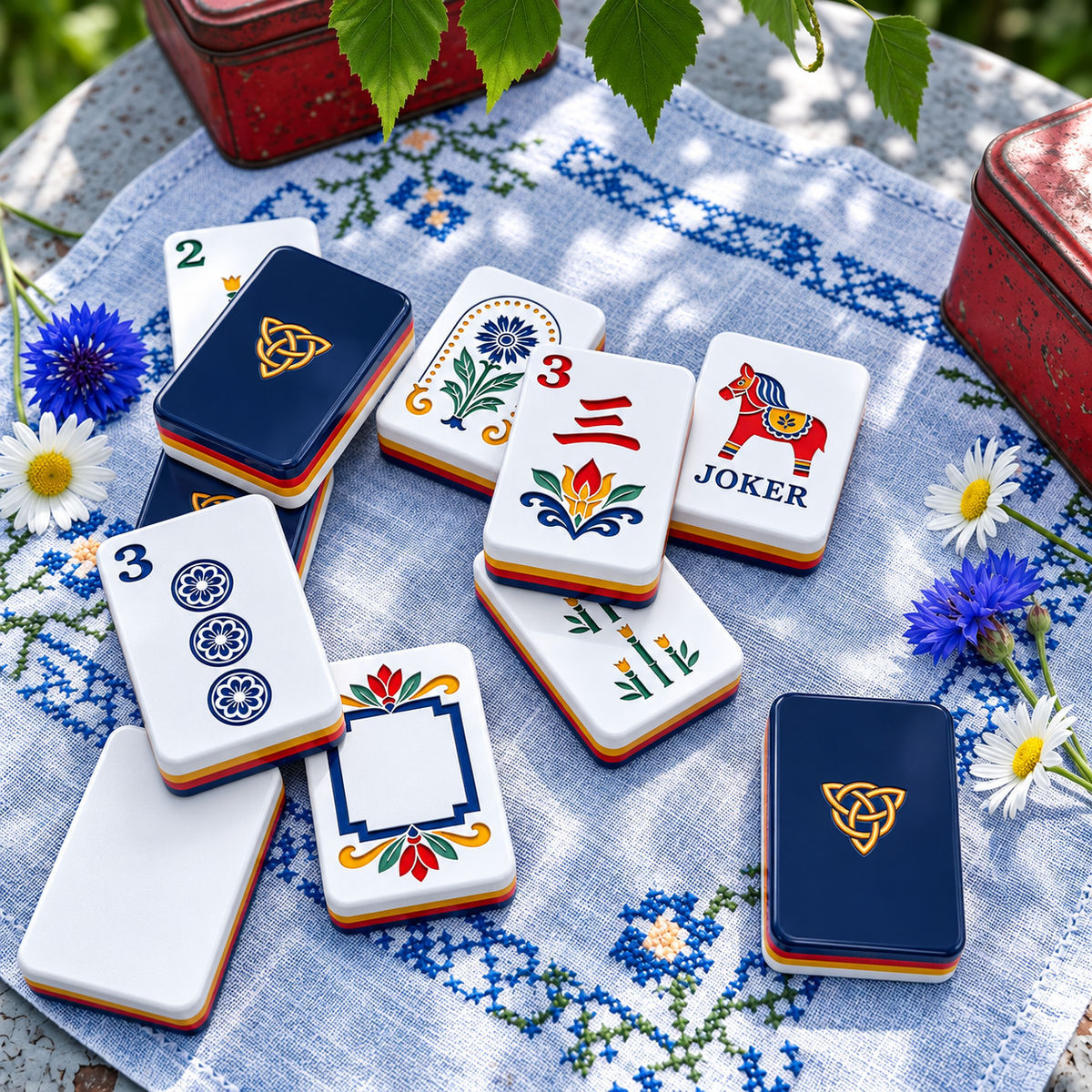
American mahjong uses 152 playing tiles (eight jokers separate) with hands drawn from the National Mah Jongg League card—no sequences allowed, only pungs, kongs, quints, and sextets. Siamese mahjong, played primarily in Thailand, uses 144 tiles and follows Chinese-influenced gameplay with chow sequences (1-2-3 runs), melds drawn from traditional patterns, and different scoring. American play centers on the yearly card and the Charleston tile pass; Siamese play is more standardized across regions without a published card. American mahjong has become mainstream in North America, while Siamese remains regionally specific. If you're setting up a game in the US, American mahjong sets are far more common and affordable. We stock best-selling American mahjong sets designed for American rules.
What is the core difference between American and Siamese tile counts?
American mahjong plays with exactly 152 tiles plus 8 jokers kept separate during play. Siamese mahjong uses 144 tiles with no jokers; the two extra flowers and four extra jokers in American sets are not part of Siamese games. This means an American set cannot be used for Siamese play without removing tiles, and a 144-tile Siamese set lacks the flowers and jokers needed for American rules. The tile count difference reflects centuries of divergent rule evolution.

Can you call sequences in American but not Siamese?
Siamese mahjong allows chow sequences (any three consecutive numbers in a suit—like 3-4-5 Bams). American mahjong does not: you can only expose pungs (three identical tiles), kongs (four identical), quints (five identical), and sextets (six identical) using the National Mah Jongg League card. Jokers in American play substitute only within an exposed meld, never alone or as a pair. This single rule makes American mahjong dramatically harder and more pattern-dependent than Siamese.
How do hand patterns differ between the two games?
American mahjong hands come exclusively from the current year's National Mah Jongg League card, issued each spring. Hands are sorted by section (e.g., all pairs, all like numbers, all simples) and players mark off matched patterns on their card. Siamese mahjong uses traditional Chinese-derived patterns: four melds plus a pair, with melds being pungs, chows, or kongs. American hands can include unusual combinations (2024 card innovations often featured color combinations or dragon sequences), while Siamese hands follow a fixed, standardized structure. Learning American hands requires memorizing or consulting the card; Siamese hands are learned as permanent patterns.
What role does the Charleston play in each game?
The Charleston is the tile-passing ritual unique to American mahjong: before play begins, each player passes three tiles right, then three center, then three left, allowing exchange of unwanted tiles. No equivalent ritual exists in Siamese mahjong. The Charleston is what makes American mahjong feel like a social and strategic opening phase—you can influence your starting hand before the game begins. Siamese play begins with the draw from the wall, eliminating this pre-game negotiation. New American players often struggle with the Charleston's rhythm; we explain it step-by-step in our guide to the Charleston.

Which game is easier for North American beginners?
Siamese mahjong is mechanically simpler: fixed hand patterns, chow sequences, and no yearly card to consult. However, finding Siamese players, rules documents, and sets in North America is difficult. American mahjong dominates US communities (suburban game groups, synagogues, senior centers, country clubs) and has abundant teaching resources online. Beginners in the US will find American mahjong more social and accessible, despite its higher rule complexity. Starting with American rules means joining an active regional community; Siamese is a niche choice requiring dedicated research or travel.
🀄 Shop best-selling mahjong sets →
How does scoring differ?
American mahjong scoring is points-based: each hand carries a point value printed on the card, and players score based on who paid and how (winner pays all, or each player shares). Siamese mahjong traditionally uses a fan/point system inherited from Chinese mahjong: each meld and pair type earns points, then multiplied by "fans" (limits based on hand strength). American scoring feels like a contract bridge scoresheet; Siamese scoring is closer to rummy or poker hand rankings. A player claiming a hand in American play must match the card exactly; in Siamese play, the calculator comes out to verify the fan total. American scoring is transparent (everyone sees the card value); Siamese scoring requires learned judgment.
Aspect | American Mahjong | Siamese Mahjong | Winner for US Beginners |
Tile count | 152 + 8 jokers | 144 (no jokers) | American (more common sets available) |
Sequences allowed | No chows; pungs/kongs/quints/sextets only | Yes, chows (1-2-3 runs) allowed | Siamese (fewer meld restrictions) |
Hand source | Annual National Mah Jongg League card | Traditional patterns (no published card) | American (more learning resources) |
Pre-game ritual | Charleston (tile pass) | No Charleston | American (adds social dimension) |
Scoring system | Card-based points | Fan/point multiplier system | American (simpler to teach) |
Regional availability | Mainstream US/Canada | Thailand, diaspora communities | American (vastly more clubs & groups) |
Set cost (general) | Moderate range | Harder to source locally | American (supply favors pricing) |
🎁 See our most-loved mahjong sets & accessories →
Where can you learn each game?
In North America, American mahjong teaching is available through community centers, senior centers, synagogues, libraries, country clubs, and online forums. The National Mah Jongg League publishes the annual card and rule updates; many regional clubs host beginner nights. Siamese mahjong has no equivalent standardized resource: you learn by finding a Thai community group, hiring a private teacher from Southeast Asia, or studying one of a few scattered online rule videos. American mahjong is documented, organized, and social; Siamese requires insider connection. If you're choosing between the two, American is the clear choice for North American players seeking an active game community and published instruction.
What to check before you buy
Game rules: Confirm whether your group plays American or Siamese—do not assume. Ask the organizer which card (or pattern set) they use.
Tile count: American games require 152 tiles + 8 jokers. If someone offers a 144-tile set for "American," politely decline.
Set quality: Look for clear tile markings, secure racks, and durable bags. Our engraved American mahjong sets are built for weekly play.
Joker handling: American rules state jokers cannot be used in a single tile or a pair. Confirm the set includes clearly marked jokers.
Card access: American players must have the current year's card at the table. Print a copy or keep it on your phone.
✨ Find your Mahstead set — free US shipping →

FAQ
Can I use an American mahjong set to play Siamese mahjong?
Not cleanly. American sets include extra jokers and flowers that Siamese play does not use. You'd have to remove tiles before each game, which is inconvenient. Buy a 144-tile set if Siamese is your primary game.
Is the Charleston part of Siamese mahjong?
No. The Charleston is unique to American mahjong. Siamese games begin with the draw from the wall, with no pre-game tile exchange.
Why is the American game card so important?
The card defines all legal hands for that year. Without it, you cannot verify a winning hand or teach the game. Siamese play uses memorized traditional patterns instead.
Is Siamese mahjong harder than American mahjong?
Mechanically, no—Siamese allows sequences and uses fixed patterns. But finding players, rules, and sets in North America is harder, making American the practical choice for most US beginners.
Can I learn both games at the same time?
Possible but confusing. The tile counts, rules, and hand-reading mechanics are different enough that learning one first, then the other months later, is clearer. We recommend starting with American if you're in North America.
Where do I find Siamese mahjong players in the US?
Look for Thai community centers, online forums dedicated to international mahjong, or private groups in large cities with Southeast Asian populations. Siamese remains a niche game here.


View More
View More
View More
