
Mahjong Lessons in Charleston: Where to Learn & What to Expect
Last updated: Nov 23, 2026
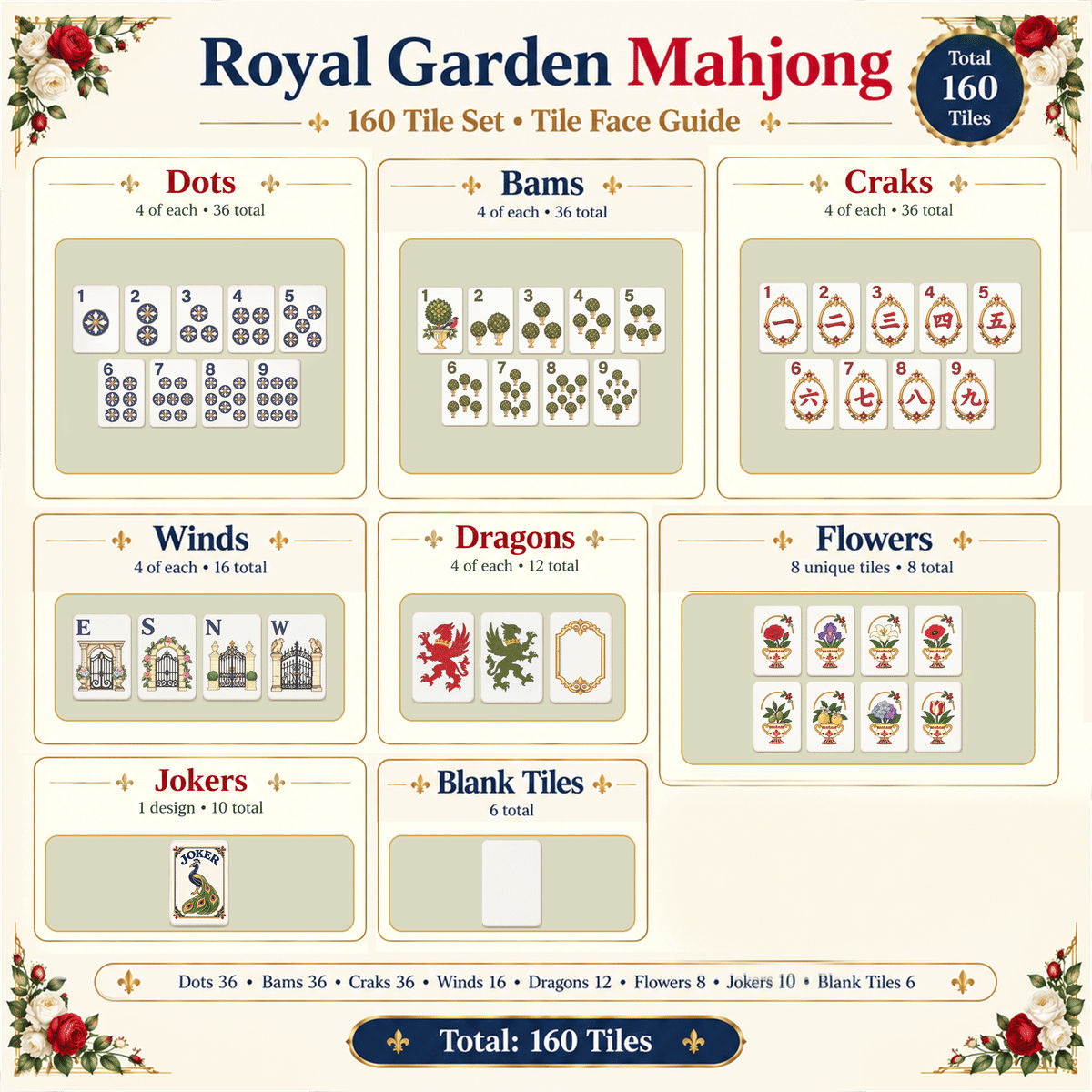
Mahjong lessons in Charleston are available through public libraries, community centers, country clubs, and private instructors—though availability and frequency vary by season. Most beginner classes meet weekly and cost between modest per-session rates or a flat class fee; check your local library website, community center bulletin boards, and Nextdoor or Meetup for current schedules. A typical 4–6 week beginner course teaches hand recognition, tile counting, the Charleston passing ritual, and basic play rules using the current National Mah Jongg League card. Before your first session, bring a notebook and arrive early; ask if the group provides tiles or if you should buy a set. Many groups appreciate newcomers who own a best-selling mahjong set so they can practice at home between lessons and keep up with the pace.
Where can you actually find mahjong lessons in Charleston?
Charleston's main lesson hubs are public libraries (especially branch locations with community rooms), municipal recreation departments, Jewish community centers and synagogues, country clubs with active game groups, and occasional community college continuing education catalogs. Start by calling or visiting your nearest public library and asking if they offer mahjong instruction or can recommend instructors; many librarians maintain lists of local game clubs and teachers. Search Meetup and Nextdoor for "mahjong Charleston" or "mahjong lessons near me" to find weekly player groups that accept newcomers—these often advertise open-table nights for learners. Private instructors advertise through word-of-mouth at game stores, community bulletin boards, and Facebook community pages for your neighborhood.
What happens in your first mahjong lesson?
Your first lesson usually covers tile recognition (learning the three suits—Bams, Craks, Dots—plus winds, dragons, flowers, and jokers), basic hand structure, and the Charleston, which is the formal tile-passing ceremony that begins every game. The instructor will walk you through a simple hand from the current year's card, show you how to call a pung or kong, and explain how jokers work—they substitute for any tile except pairs. Expect to handle real tiles (either from a communal set or yours), sit at a table in a playing position, and play at least one full hand, even if you make mistakes. Most instructors allow 90 minutes to two hours and keep the pace patient; you'll go home with a copy of the rule sheet or the League card and homework: study one section of the card each week.
🀄 Shop best-selling mahjong sets →

Do you need to own a mahjong set before lessons start?
No—most group lessons and community class instructors provide tiles for in-class play. However, owning a set before your second or third week is highly recommended so you can study hands at home, practice tile recognition between lessons, and build muscle memory for the faster play that happens once you join a regular game. A standard American set contains 152 playing tiles plus spare jokers and tiles; you'll use all 152 tiles in each game. If you're just starting, a practical approach is to attend your first lesson with borrowed or communal tiles, then buy a best-selling mahjong set after your instructor confirms you're ready to commit to regular play.
What is the difference between American mahjong and other versions?
American mahjong is the only major variant that relies on a printed hand guide card issued each spring by the National Mah Jongg League; the card shows every legal hand for that year. This means there are no "free" hands—you cannot win unless your tiles match one of the printed hands on the card. American mahjong also has no chows (sequences); you win by collecting pungs (three identical tiles), kongs (four identical), or higher combinations like quints and sextets, plus a pair. Chinese, Hong Kong, and Riichi mahjong use different tile sets, allow chows and melds not on a card, and score by point calculation rather than hand recognition. If your Charleston class teaches American rules, all lessons use the League card and the official 152-tile set. Ask your instructor which version the group plays before you enroll—most U.S. community lessons teach American mahjong because it's beginner-friendly and relies on the card rather than memory of every possible hand.
✨ Find your Mahstead set — free US shipping →
How much does a mahjong lesson course usually cost?
Community library and recreation department classes typically charge per-session or a flat 4–6 week course rate—ask the program coordinator for current pricing when you call. Country club and synagogue game groups may charge a small table fee per session for non-members, or require membership. Private instructors charge by the hour; rates vary widely. Rather than pricing, focus on format: a beginner course that meets weekly and builds on previous lessons is far better than a one-time workshop, because mahjong needs repetition to stick. Many experienced players recommend committing to at least six weeks of lessons before you join a regular competitive game.

How do you prepare before your first lesson?
Arrive 10–15 minutes early so you can introduce yourself, ask which hand patterns the lesson will cover, and learn where to sit. If you're bringing your own mahjong set, do a quick count to confirm you have all tiles (152 playing tiles, check the joker and dragon counts). Bring a small notebook and pen to jot down:
The three suit names and their symbols
How many of each tile type make a complete set
One simple hand pattern the instructor showed (copy it exactly)
Any rule questions you want to ask next week
Most importantly: ask the instructor or group leader whether they want you to bring your own set or if the class provides one, and what the group's preferred learning pace is. Some groups expect you to study the hand card at home; others teach purely through table play.
Lesson Type | Best For | Time Commitment | What to Bring |
Public library class | Beginners with no experience | Weekly 2 hours, 4–6 weeks | Notebook, pencil, your set (optional) |
Country club group | Players with some tile knowledge | Weekly 3 hours, ongoing | Your set, scratch paper for scoring |
Private instructor | Learners who want one-on-one pace | 1–2 hours/week, flexible | Your set, goals list |
Synagogue/community center | Social players, mixed skill | Weekly, open-ended | Your set, willingness to rotate in |
🎁 See our most-loved mahjong sets & accessories →
What mistakes do new mahjong students make—and how to avoid them?
The most common trap is memorizing individual hands instead of learning the hand card system. The card is organized by pattern, not by hand number; once you understand "concealed hand," "like number," or "consecutive like number," you can spot dozens of hands. Spend five minutes per week on one card section instead of trying to memorize all 88 hands at once.
Second mistake: not practicing tile recognition between lessons. If you can't instantly name a 5 Crak or a White dragon during class, you'll slow down the table and miss the flow of play. Buy a set and spend 10 minutes shuffling and naming tiles three times before week two.
Third: underestimating the importance of the Charleston. New players often skip the passing ritual or rush it; the Charleston determines your opening hand and sets the tone for the whole game. Ask your instructor to walk through it twice before you play your first hand.
Finally, don't assume one lesson is enough. Mahjong is not a game you learn once and forget; it's a skill that takes 6–8 weeks of regular play to become automatic. Commit to at least a full course before you decide if it's for you.
What should you check before you buy a mahjong set?
Once you decide to play regularly, invest in a quality set that will last through weekly games for years. Look for:
Tile clarity: Symbols should be printed or embossed clearly; avoid sets where the suit symbols are faint.
Rack and pusher included: You'll need a rack to hold and organize your tiles, plus pushers to draw tiles neatly from the wall.
Joker and dragon count: A standard set has 8 jokers, 12 dragons (4 of each color), 16 winds, and 108 numbered tiles—total 152. Don't buy a set with too few jokers or incorrect dragon colors.
Case or bag: If you'll travel to lessons or games, choose a set with a case or buy a mahjong bag separately so tiles stay organized and protected.
Acrylic or bone quality: Acrylic sets are durable and affordable; they resist moisture and last through hundreds of games without fading.
Check the product details on the collection page to confirm the set includes everything you need for an American game, then check that your chosen set ships with racks and pushers so you're ready to play on day one.

FAQ
How do I know if a Charleston-area lesson is for American mahjong or another version?
Call the instructor or group leader and ask directly: "Do your lessons use the National Mah Jongg League card and American rules?" If they say yes and mention "no chows" and "hand card," it's American. If they describe scoring points and melds, it's likely Chinese or Riichi mahjong—different game entirely.
Can I learn mahjong online instead of in-person in Charleston?
Yes—many instructors offer Zoom lessons, and online platforms host live games with chat instruction. However, online play lacks the tactile muscle memory of handling real tiles and feeling the rhythm of the Charleston and the wall draw. Most experienced players recommend learning in-person first, then moving online if scheduling demands it.
What if there are no mahjong lessons listed in my area?
Post on your neighborhood Nextdoor, Facebook community page, or Meetup asking "Does anyone play mahjong in Charleston?" You'll likely find existing players willing to teach newcomers at a regular game night. Many groups meet at members' homes and welcome learners; ask if you can observe for free your first week before joining.
Should I buy a fancy or ornate mahjong set as a beginner, or will a simple set work?
Start with a practical, clear set—acrylic or bone with printed symbols that are easy to read under lamp light during play. Ornate sets with hand-painted tiles or inlays look beautiful but slow down play and distract beginners. Once you're a regular player, you can upgrade to a display set or a vintage set for weekend games.
How do I know if I'm ready to join a regular game after lessons?
You're ready when you can: name all 152 tiles instantly, recognize at least 20 hands on the card by pattern (not hand number), complete the Charleston without prompting, and play a full hand without asking how many tiles to keep after the wall draw. Most instructors will tell you directly when they think you're ready.
Is there a best time of year to start mahjong lessons in Charleston?
Fall (September–November) and winter (January–March) are the most active seasons for classes because people want indoor social activities. Summer and early July are quieter; if you're serious, sign up in August for fall classes or in December for winter/spring sessions.


View More
View More
View More
