
American Mahjong Special Hands: Read the Card Like a Pro
Last updated: Nov 23, 2026
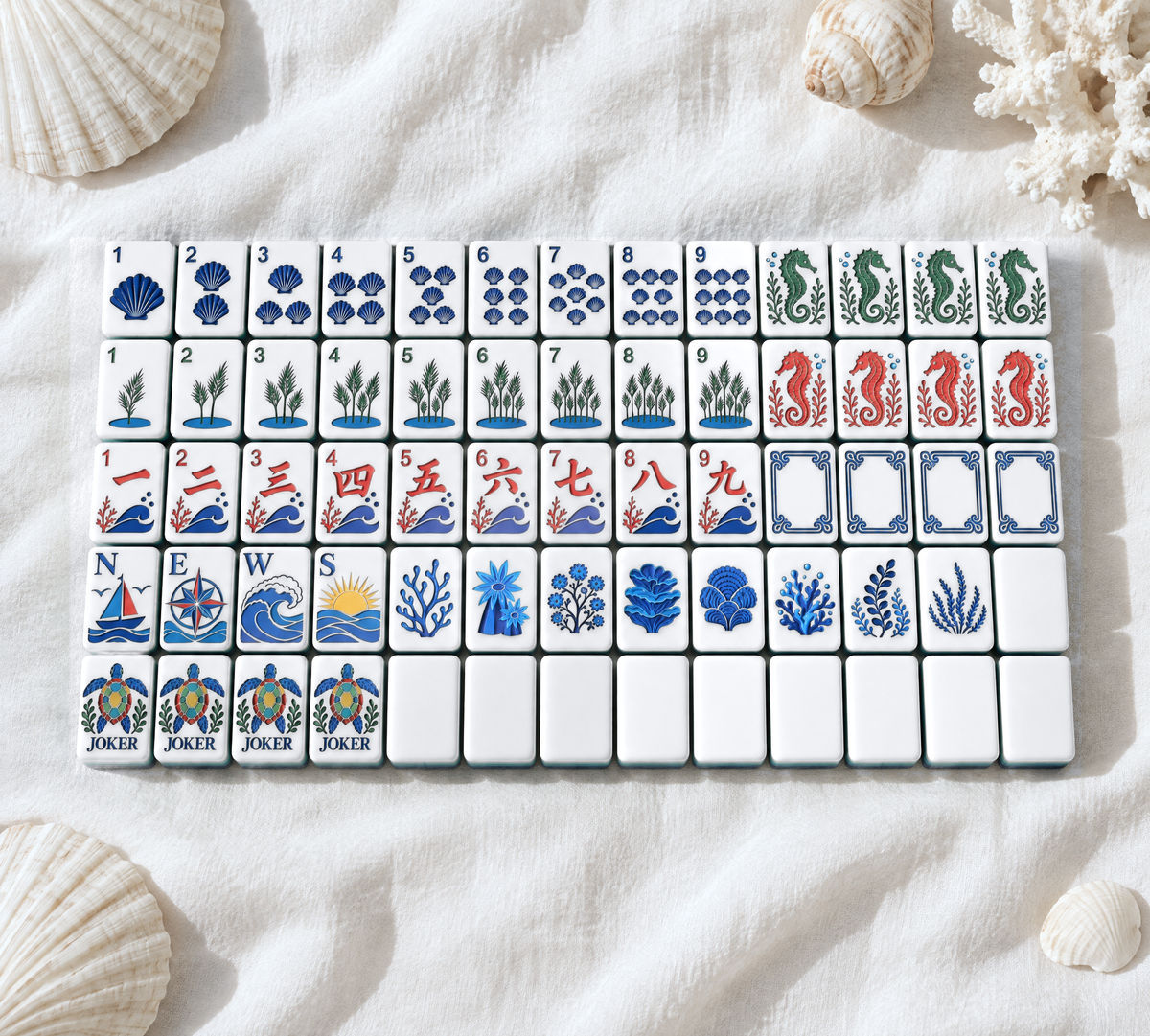
American mahjong special hands are predetermined winning patterns published each spring on the official National Mah Jongg League card. Unlike Chinese mahjong, where any 1-4-7, 2-5-8, or 3-6-9 sequence works, American hands are rigid: only combinations exactly as printed count. A hand consists of four melds (groups of 3–6 identical or patterned tiles) plus a pair, and jokers can substitute for any tile except in pairs or singles. The card is divided into sections—Like Numbers, Consecutive Numbers, Pungs, and combinations—to help you scan quickly. Jokers make hands achievable; without them, many patterns would be impossible. The card changes yearly, so your best-selling mahjong sets should come with the current year's printed card. Learning to read it under table pressure takes practice; most players keep a physical card visible during play.
Special hands in American mahjong are predetermined winning patterns published each spring on the official National Mah Jongg League card. Unlike Chinese mahjong, where any 1-4-7, 2-5-8, or 3-6-9 sequence works, American hands are rigid: only combinations exactly as printed count. A hand consists of four melds (groups of 3–6 identical or patterned tiles) plus a pair, and jokers can substitute for any tile except in pairs or singles. The card is divided into sections—Like Numbers, Consecutive Numbers, Pungs, and combinations—to help you scan quickly. Jokers make hands achievable; without them, many patterns would be impossible. The card changes yearly, so your best-selling mahjong sets should come with the current year's printed card. Learning to read it under table pressure takes practice; most players keep a physical card visible during play.
What exactly is a "special hand" on the card?
A special hand is a four-meld-plus-pair combination that appears as a single row or section on the National Mah Jongg League card. Each hand has a name (Like Numbers, Consecutive Pungs, Mixed) and a visual row showing the tile pattern you need. The card lists thousands of hands; you match your tiles to a printed row, and if they fit exactly, you've won. Jokers fill blanks to make patterns achievable.
🀄 Shop best-selling mahjong sets →

How do I read the card without slowing down the game?
The card is organized by pattern type and pung color. Scan vertically by meld structure (three 5s, three Dragons, four 2s, three 8s = Like Numbers), not randomly. Keep the card in front of you; asking "Is this hand on the card?" mid-play is normal. Mark or highlight rows you play often. Most players memorize 5–10 seasonal favorites within a month. Organize your tiles by suit and number as you pick them up so matching to the card takes seconds, not minutes.
What's the difference between pungs, kongs, and quints in a hand?
A pung is three identical tiles (e.g., three 5 Dots). A kong is four identical tiles. A quint is five identical tiles. A sextet is six identical tiles. American mahjong never uses sequences (1-2-3 of the same suit); only identical-tile groups and the special patterns on the card count. Jokers can substitute for any tile in a pung, kong, quint, or sextet—but never in a pair or single. For example: three 5 Dots (pung) + one joker standing in for a fourth 5 Dot (that's not a kong; it's a pung with a joker). Understanding this distinction saves you from claiming hands that don't exist on the card.
How do jokers work in special hands?
Jokers work as wild tiles—they substitute for any missing tile in a pung, kong, quint, or sextet. You can never use a joker as a pair or as a single tile. So if you need three 3 Craks and have only two, a joker fills the third. A hand with two jokers in separate melds is valid; a hand with all four melds using jokers is also valid. Some players get stuck thinking "I can't use that joker here because I already used one over there"—that's wrong. Jokers are independent within each meld. The real limit: you must have exactly eight jokers in play (the set standard), and you can't use a joker to replace a tile the player after you just discarded unless you win immediately. Study the hand closely before claiming; confusion here costs you.

What are the most common special hand types?
The card repeats several core patterns every year. Like Numbers (e.g., three 5s, three 5s, three 5s, three 5s, plus any pair) show four melds of the same number in different suits. Consecutive Numbers follow 1-2-3 or 2-3-4 within single suits (e.g., three 1 Dots, three 2 Dots, three 3 Dots, three 4 Dots, plus a pair). Pung hands are four identical-tile pungs plus a pair—the simplest to spot. Mixed hands blend pungs, kongs, and honors (Winds, Dragons). Quint and sextet hands use longer runs of five or six tiles. Learning these five categories and scanning the card section-by-section (not row-by-row) cuts your read time in half. Within a season, trends emerge: certain number combinations appear more often than others. Keep notes on hands you see frequently so you recognize them by shape, not by reading every tile.
Hand Type | Tiles Used | Joker Benefit | Card Section | Difficulty |
Like Numbers | Four melds of same number (5-5-5, 5-5-5, 5-5-5, 5-5-5 + pair) | High—hard to collect same number in all suits | Early rows | Low |
Consecutive Numbers | 1-2-3-4 or similar runs within one suit | Medium—one missing tile easy to joker | Middle rows | Medium |
Pungs | Four 3-tile identical groups + pair | Very high—replaces missing tiles instantly | Throughout | Low–Medium |
Mixed (Pungs + Kongs) | Blend of 3- and 4-tile identical groups | High—fills any gap | Later rows | Medium–High |
Quints/Sextets | Five or six identical tiles + extras | Low—harder to fill partial long runs | End rows | High |
🎁 See our most-loved mahjong sets & accessories →
How do I avoid the most common mistakes?
Mistake 1: Forgetting the pair rule. Your pair must be two identical tiles (not jokers). Many players accidentally claim hands with a joker as part of the pair—instant disqualification. Before you declare a win, point: "Pair is [tile]—here and here."
Mistake 2: Mixing up suit colors. Bams are marked with a bamboo symbol, Craks with circles, Dots with solid circles (or bamboo/plum depending on tile design). If your card shows "Like Numbers with Bams," you need four melds all in Bams, not a mix. Use a set with clear, large suit symbols to avoid this under pressure.
Mistake 3: Confusing jokers with blanks.What's in an American mahjong set: jokers are printed with a jester or flower and can substitute; blanks are spare tiles not used in play. Only jokers count toward your hand.
Mistake 4: Claiming a hand that's not on the current card. The card changes every spring. A hand that won last year might not be listed this year. Always verify against the current season's card before declaring. Organizing your tiles first (by suit and number) lets you scan faster.
Mistake 5: Exposing a hand too early. In American mahjong, you can't go out until you have a complete hand. If you expose three melds mid-game, the other players know what you're hunting and will block discards. Wait until you're ready to claim.
What to check before you buy a set to play special hands at home
A complete best-selling mahjong sets includes 152 playing tiles (36 Bams, 36 Craks, 36 Dots, 16 Winds, 12 Dragons, 8 Flowers) plus jokers and spare tiles. Before purchasing, confirm:
Printed card included: Does the set come with the current year's National Mah Jongg League card (or a way to access it online)?
Tile clarity: Are suit symbols (Bam, Crak, Dot), numbers, and Winds/Dragons large and legible?
Joker count: Standard sets include 8 jokers in play; verify this isn't a budget variant with fewer.
Material: Acrylic tiles are durable and easy to clean; resin is heavier and more premium. Both work for reading special hands equally well.
Racks and pushers:Racks with pushers help you organize tiles by suit and number—essential for fast card-reading.
✨ Find your Mahstead set — free US shipping →

FAQ
Can I use a joker as part of my pair to complete a hand?
No. A pair must be two identical tiles with no jokers. Using a joker as one half of a pair disqualifies your hand immediately.
What happens if I claim a hand that's not on the current card?
Your claim is invalid. You must draw a tile and play continues. Always cross-check the card row before declaring. This is why keeping the current card visible is vital.
If I'm missing one tile in a pung and use a joker, is that still a pung?
Yes. A pung is three identical tiles. If two are real and one is a joker standing in for the third, it's still a valid pung. The joker is transparent to the hand structure.
How many jokers can I use in a single hand?
You can use up to eight jokers in a hand (since the standard set has eight). However, if all four melds and the pair each require jokers, you'll use eight total—which is possible but rare.
Why does the card change every year?
The National Mah Jongg League updates the card each season to refresh gameplay and prevent stale strategy. Players must buy or access the new card to play in league games. Many casual home games also switch to the current card to stay in sync.
If I have two jokers left after completing a hand, can I use them elsewhere?
No. Once you declare a winning hand, play stops. Unused jokers remain in the tile pool. They only matter if another player challenges your hand's validity.


View More
View More
View More
