
American Mahjong Etiquette: Rules & Table Manners
Last updated: Nov 23, 2026
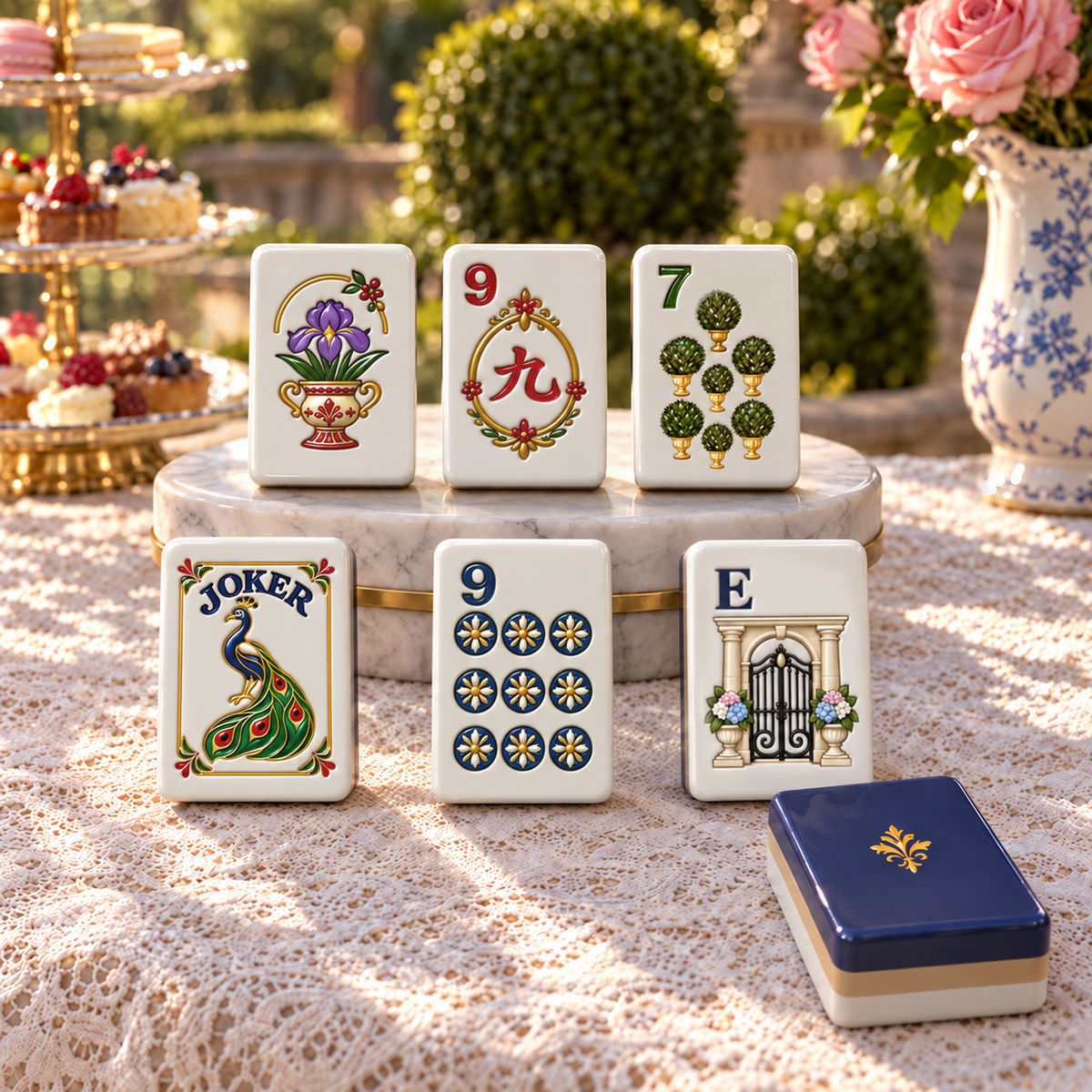
American mahjong etiquette covers three layers: table conduct (tile handling, pacing, confidentiality), calling protocol (when and how to claim tiles, voice clarity), and social norms (respecting the game's rhythm, managing emotions). These aren't optional—they're enforced by the National Mah Jongg League and every serious weekly game we host. Violations range from correcting a player's rack position to challenging a false win. Most etiquette serves one purpose: prevent accidental cheating and keep the game fair. You'll learn these fastest by watching experienced players, but the basics—never touch another player's hand, announce your calls clearly, keep discard order visible—apply everywhere from casual home games to tournaments.
What does proper tile handling look like in American mahjong?
Your hands stay off other players' tiles at all times. Organize your own rack cleanly; push tiles forward when you draw, pull them back when you discard. Never let your tiles fall face-down or mix with the wall—confusion becomes accusation. Keep discards in line and visible; some players number their position with fingers to prevent disputes. Jokers deserve extra care: they're irreplaceable mid-game, so many tables keep them face-up and separate. Handle tiles gently—loud or chaotic handling signals poor discipline and creates anxiety.
🀄 Shop best-selling mahjong sets →

How should you call tiles correctly?
Call loudly enough for all four players to hear. Say the tile name clearly: "2 Dot," "Green Dragon," "East Wind"—not "two," "the green one," or hand gestures. Call before your hand touches the tile. If you're claiming a discard, name it as you take it; if no one calls within a moment, the hand moves forward and you cannot retroactively claim. Never call a tile after you've drawn from the wall. If you call incorrectly—naming the wrong tile or calling a tile no one discarded—correct it immediately and apologize. Silent or mumbled calls breed resentment and table chaos.
Is it ever acceptable to show your tiles to another player?
No. Not mid-hand, not during the Charleston, not even to your teammate (American mahjong has no partnerships). The only exception: displaying your winning hand after declaring "Mahj" so all players can verify it on the card. Showing tiles to ask "is this legal?" is a call for a rules decision, not a confession—speak up. Some casual games allow kibitzers (non-players) to watch from behind a player, but kibitzers must never speak, signal, or advise.
What's the protocol when someone might have won illegally?
Stop play immediately. The player challenges the win by saying "No mahj" or "Check the card." All four players review the winning hand against the current year's National Mah Jongg League card—not old cards, not house rules, not memory. If the hand is legal, the challenger pays double penalty. If illegal, the winner takes no payment and play resumes. Never accuse quietly or let it slide; ambiguous wins wreck future trust. Document your house rules on paper before play starts so no dispute goes undecided.
How do you handle emotional reactions and pacing?
Celebrate wins quietly. Complain about luck silently or not at all. A sigh or head-shake is fine; name-calling, tile-slamming, or "you always draw lucky" poisons the table. Pace matters: play your turn within a minute or two, even if thinking hard. Slow play frustrates everyone and raises suspicion. If you're slow, say so upfront and don't play higher-stakes games. Never coach another player—"you should keep that tile" is advice, which is forbidden. If play stalls, the player whose turn it is decides the pace; everyone else waits.
The Etiquette Checklist for New Players
Behavior | ✓ Do This | ✗ Avoid This |
Tiles | Rack organized, pushers used, discards lined | Loose tiles, mixed with wall, face-down piles |
Calling | Name tile clearly, call before touching | Mumble, gesture, call late or silent |
Showing | Win only after mahj declared | Peek at others' hands, kibitz from seat |
Disputes | Stop play, check card, all four verify | Argue after play moves, use old cards |
Emotion | Neutral or quiet celebration | Complaining, slamming, coaching |
Pacing | Move within 1–2 minutes | Slow deliberation, rushing others |
🎁 See our most-loved mahjong sets & accessories →

How does the Charleston ritual set an etiquette tone?
The Charleston is tile-passing before any hand begins; it's governed by strict courtesy rules. Pass tiles without opening them, in rhythm, face-down, straight across the table. Never peek at what you're passing or receiving. If you're unsure which tiles to pass, ask before the Charleston starts—not mid-pass. Some tables use a timer (10–15 seconds per phase) to keep rhythm steady and prevent overthinking. Pass counterclockwise and clockwise as your table defines; stick to one rule all evening. If someone passes the wrong tiles or breaks rhythm, stop, reset, and begin again without blame. The Charleston sets the tone for all play: smooth, quiet, fair.
When is it okay to give rules advice during play?
Only when asked directly by a player or the table. If someone misreads the card or asks "can I build a pung with a joker?" answer briefly and neutrally—state the rule, don't hint at strategy. If a player makes an illegal move (tries to call a tile incorrectly, builds an exposed hand that doesn't match), anyone can speak up to prevent rule-breaking, but phrase it as a question: "Should that be three tiles?" not "You did it wrong." Never interrupt a turn to offer unsolicited tips; save coaching for between hands or after play ends.
What's your responsibility as a host when etiquette breaks down?
Address it calmly and privately if possible. If one player is rude or slow, ask them aside: "Let's speed up" or "Keep the tone lighter, please." If a player consistently shows tiles or makes false calls, give one clear warning, then ask them to sit out if it continues. Document infractions in writing if play is for money or tournament points. Before new players join, explain your table's rules and tone in 2–3 minutes—no surprises. If tension rises, take a 10-minute break, reset the mood, and move on. Etiquette is everyone's job, but the host sets it first.
✨ Find your Mahstead set — free US shipping →
What equipment helps enforce good etiquette?
A quality mat with clear tile sections keeps discards organized and prevents "lost" tiles. Mahjong racks with pushers ensure tiles stay upright, aligned, and secure—no accidents, no shortcuts. Built-in pushers mean tiles move the same way every time, reducing disputes over whose turn it is or whether a draw was clean. Sets with large, legible tiles reduce strain and miscalls. Acrylic or engraved sets hold up to years of weekly play without wear, so no ambiguous tiles or lost jokers mid-season. For groups that travel, bags and cases prevent tile loss and protect your investment—arriving at game night with all 152 tiles intact is a small etiquette win.
What to check before you buy a set for your group
Tile visibility: Can all players read faces clearly from their seat? Larger tiles, high contrast (like engraved designs), reduce squinting and misreads.
Joker durability: Jokers wear fastest because they're handled constantly. Check whether your set's jokers are easy to spot (color, shape) and won't fade.
Mat fit: Measure your table width and depth; choose a mat that leaves room for tiles, chips, and a drink without crowding.
Rack stability: If using racks, test them on your table first—cheap racks tip, spilling tiles and ending friendships.
Case or storage: If your group buys one shared set, a locked case prevents tiles from scattering between games and protects jokers from damage.

FAQ
What's the penalty if I call a tile incorrectly?
You lose your right to that tile and play moves forward. If you call the wrong tile name, correct it aloud immediately and apologize—no score penalty, but you forfeit the exchange. In tournament play, a false call may count as a violation.
Can I ask to see the winning hand before paying?
Yes. Any player can ask the winner to show their hand and verify it against the card. If the hand is legal, you pay as usual. Asking is not an accusation—it's a standard check.
Is it rude to play slowly if I'm new?
Not if you warn the table upfront. Say "I'm still learning, so I might think longer." Most experienced players are patient with newcomers. But chronic slow play during a money game or tournament is considered disrespectful and can get you asked to step out.
What if someone shows me their tiles by accident?
Do not acknowledge it. Don't look, don't react, don't tell them. If you accidentally saw another player's tiles, play as though you didn't. Reporting an accident to the table only creates tension and accusations.
Can I comment on another player's strategy or bad luck during play?
No. Avoid any remark about their choices, their draws, or their luck—good or bad. Wait until after the game ends. During play, focus on your hand and your manners. Coaching or commentary is forbidden in American mahjong.
What should I do if the table breaks a rule I've never heard before?
Stop play and ask: "I haven't seen this before—what's the rule?" Listen, don't argue, and apply it for the rest of that game. After play, ask your host or an experienced player for a full explanation so you understand it next time.


View More
View More
View More
