
How to Use the 5 Bam Tile in American Mahjong
Last updated: Nov 23, 2026
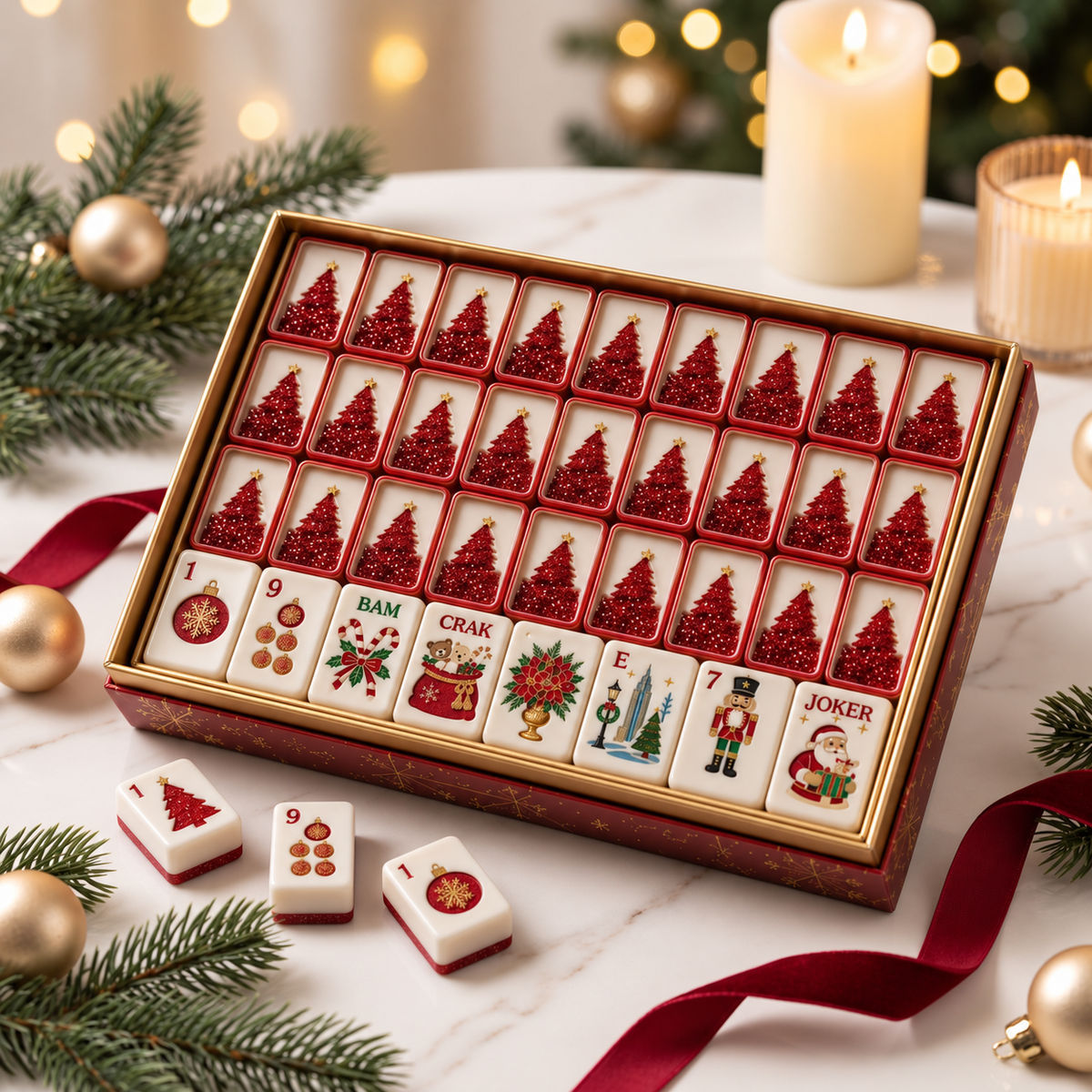
The 5 Bam is one of nine numbered Bam tiles (1–9) in your set; you hold four of them. On the current year's National Mah Jongg League card, it typically appears in patterns requiring Bam sequences and pung sections. Unlike Chinese mahjong, American mahjong has no called sequences—you can only expose pungs (three identical 5 Bams), kongs (four 5 Bams), or longer like-tile groups when they match a hand on the card exactly. The 5 Bam cannot stand as a single tile or a pair in American mahjong. You spot it by consulting the card's Bam-suit sections each round; if your hand needs a 5 Bam pung, you wait to draw or pick it from the discard. Beginners often confuse the 5 Bam with 5 Dot or 5 Crak—the suits are color-coded and symbol-distinct on the tile face. What's in an American mahjong set covers all tile names and how to identify them. 🀄 Shop best-selling mahjong sets →
What does the 5 Bam tile look like?
The 5 Bam shows five thin bamboo stalks on a light or contrasting background. The symbol is unmistakable once you handle a few tiles. In acrylic sets, the bamboo image is engraved or printed crisply so you can read it from across the table. The suit color is consistent—Bam tiles are typically green or another distinct hue, separate from the red Crak and white/cream Dot tiles. Count the stalks on your tile: if you see exactly five bamboos, it's a 5 Bam.

Where does the 5 Bam appear on the card?
The National Mah Jongg League card is organized by hand type—like Pung groups, Kong groups, or mixed sequences—and each section shows which suits and numbers work together. The 5 Bam appears in many Bam-suit sections, often paired with 4 Bams, 6 Bams, or in all-5 patterns (five of the same number across Bams, Craks, and Dots). Not every hand uses the 5 Bam; some hands call for 1–4 Bams only, or skip the Bam suit entirely. Your job each round is to scan the card, find which hands you can build, and note where the 5 Bam fits into your strategy. Players who study the card before play avoid discarding a 5 Bam carelessly.
Can you use the 5 Bam in a sequence or run?
No. American mahjong does not allow called sequences (chows). In Chinese or Hong Kong mahjong, a 4–5–6 sequence is valid; in American mahjong, it is not. You can only expose identical tiles: a pung of three 5 Bams, a kong of four 5 Bams, or a quint (five tiles) or sextet (six tiles) if they're all 5 Bams and match a hand on the card. This is a critical rule. If you hold a 4 Bam, 5 Bam, and 6 Bam, they are three separate tiles, not a group you can use together to go mah jongg. Many new players make this mistake because they learned a different variant first. Always consult the card to confirm the exact combination before claiming an exposure.
🎁 See our most-loved mahjong sets & accessories →
How do you distinguish the 5 Bam from 5 Crak and 5 Dot?
Each suit has its own symbol and color. The 5 Bam shows bamboo stalks. The 5 Crak shows five characters or marks (traditionally a "ten thousand" character repeated or modified). The 5 Dot shows five circular pips. In a well-made acrylic set, the colors are crisp and the engravings sharp enough to read even under casual lighting. However, if your tiles are worn, faded, or poorly printed, mix-ups happen—especially if you're tired or the tiles are jumbled face-down. A good practice: keep tiles organized by suit as you play, and always double-check a tile's symbol before you commit to a move. If you're hosting weekly games, make sure your engraved American mahjong sets are high-contrast and crisp. Worn or unclear tiles create friction and slow the game.

What are common mistakes involving the 5 Bam?
Mistake | Why it happens | How to avoid it |
Calling a 4–5–6 sequence | Confusing American with Chinese rules | Remind yourself: American = no sequences, only identical-tile groups |
Using 5 Bam as a single tile | The card says you need "5 Bam" but you misread the hand notation | Study the card format before play; a single tile must be a flower, wind, or dragon—never a number |
Mixing up 5 Bam, 5 Crak, 5 Dot | Tiles are unclear or you're playing too fast | Slow down, check the symbol and color every time; invest in a high-quality set |
Exposing a pung without the card | You think three 5 Bams must always be valid | They're only valid if they appear on the card in the current year's hand list |
Discarding a 5 Bam early | You assume it's less valuable than others | Study which hands use 5 Bam before the game starts; many hands need it |
How does the 5 Bam fit into your opening hand strategy?
In your opening hand of thirteen tiles, draw one more to make fourteen (melded into your rack). The Charleston—the tile-passing ritual—happens before play begins; during that exchange, you trade tiles with other players to try to move toward a matching hand on the card. If you have a 5 Bam early and you see it's needed for one of your target hands, keep it. If it's blocking you, pass it during the Charleston or plan to discard it early in play. Some rounds, the 5 Bam is hot—many players need it, and discarding one early draws dangerous attention. Other rounds, it's cold—no hands use it, so it sits safely in your hand. Before each game, scan the card for the season's patterns. This habit cuts hesitation in half.
✨ Find your Mahstead set — free US shipping →
What to check before you buy a mahjong set
Tile clarity: Can you see the 5 Bam bamboo stalks from two feet away? Engraved tiles last longer than printed ones.
Suit color separation: Are Bam, Crak, and Dot colors distinct? A good best-selling mahjong sets collection offers high-contrast designs.
Material quality: Acrylic tiles wear better than resin; check if the set is sold with a protective travel bag and matching mat.
Completeness: A 160-tile set includes the full 152 playing tiles plus spares. Count the Bams: you should have exactly four 5 Bams in play.
Racks and pushers: If you use racks with pushers, confirm they fit your tile size—typically 1-inch tiles work with standard racks.

FAQ
What does 5 Bam mean in American mahjong?
The 5 Bam is a numbered tile showing five bamboo stalks. It's one of nine numbered Bam tiles (1–9) in your set. You use it only in identical groups (pung, kong, or longer) that match the current year's National Mah Jongg League card—never as a single tile or in a sequence.
Can you use 4–5–6 Bams as a sequence in American mahjong?
No. American mahjong does not allow sequences (chows). You can only expose identical tiles—three or more of the exact same tile. A 4 Bam, 5 Bam, and 6 Bam together are three separate tiles with no value as a group.
How do you tell the 5 Bam apart from 5 Crak and 5 Dot?
The 5 Bam shows bamboo stalks. The 5 Crak shows characters or marks. The 5 Dot shows circular pips. Each suit also has a distinct color. A high-quality acrylic set with engraved symbols makes the difference obvious even under poor lighting.
Is the 5 Bam used in every hand on the card?
No. Many hands use the 5 Bam, but not all. Some hands call for 1–4 Bams only, or skip Bams entirely. Study the card before each game to see which hands include the 5 Bam and plan your discard strategy around it.
What happens if you expose a pung of 5 Bams when they're not on the card?
It's an illegal move. You can only expose groups (pung, kong, etc.) that match a hand printed on the current year's card. If the hand doesn't call for a 5 Bam pung, you cannot lay it down—you must keep those tiles in your rack.
Why do players sometimes mistake the 5 Bam for a 5 Crak?
Worn tiles, poor lighting, or fatigue can blur the symbols. The best defense is a clear, high-contrast set with crisp engravings, and the habit of double-checking every tile before you play it.


View More
View More
View More
