
American Mahjong Competition Rules vs. Casual Play
Last updated: Nov 23, 2026
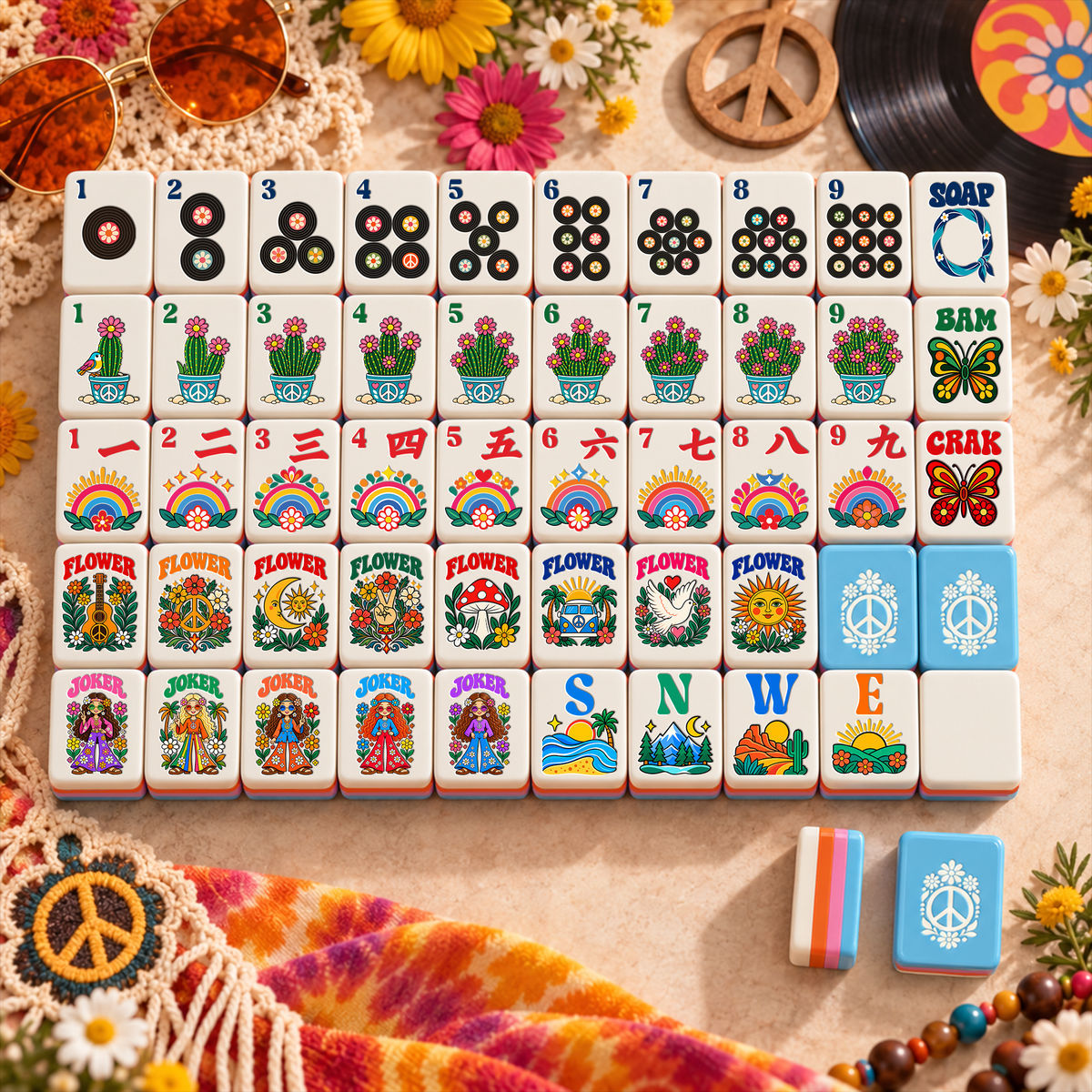
American mahjong competition rules enforce standardized hands from the current National Mah Jongg League card, strict tile call protocols, mandatory score verification, and disqualification for rule breaches—differences you won't see in casual home play where flexibility rules. Tournaments use exactly 152 tiles, eight jokers, and follow timed rounds; casual games often ignore timing, house-rule hand changes, and skip formal hand validation. Competition requires exposed pungs, kongs, and quints to be called immediately and remain locked; casual players sometimes revise strategy mid-hand. The biggest shock: in tournaments, an uncalled kong or pung is a dead hand if discovered before the next player's turn, while home tables often let it slide. Serious competitors join sanctioned clubs (check community centers, libraries, or synagogue networks locally) to learn tournament protocols before entering events. Mahstead's best-selling mahjong sets work for both settings, but tournament players add timers and score sheets we don't inventory—those come from leagues. #
How do competition hands differ from casual ones?
Tournament players must play hands listed only on the current year's National Mah Jongg League card. Casual home games often ignore the card entirely, inventing "fun" hands like all dragons or all honors. Competition disqualifies non-card hands immediately; home play treats them as house variants. The card changes every spring, forcing tournament players to relearn patterns yearly—a discipline home players skip. If your hand doesn't match the card exactly, including joker count and tile type order, you cannot declare a win in a sanctioned event. Home players negotiate: "Let's allow that one." This single rule creates the widest gap between casual and competitive play.

What happens when you call tiles in a tournament?
In tournament rules, when you declare a pung, kong, or quint from another player's discard, you must call it immediately—before the next discard hits the table. Once called, the exposure is permanent and locked for the entire hand; you cannot retrieve it or adjust strategy. Casual games often allow silent waits or let players reconsider: "Actually, I don't need that." Tournaments employ witnesses (often the scorekeeper or a neutral player) who confirm calls and sign off on exposures. If a player exposes a tile without calling it, or calls but then retracts, the hand may be dead. In home games, players tend to be looser: "Oh, I grabbed it by accident—nevermind." Tournaments record all calls on a scorecard visible to all four players. This accountability prevents collusion and disputes.
🀄 Shop best-selling mahjong sets →
Does scoring change in competition?
Tournament scoring strictly follows the National Mah Jongg League point table, which assigns fixed values to each hand pattern (e.g., a specific all-pung hand = 40 points, a specific quint pattern = 60 points). Casual games invent scoring systems: some play "one point per tile," others count by suit or joker use. Tournaments do not allow negotiation; the card table is law. Payment is standardized: winners collect from all three players at a uniform rate per point, losers pay equally. Casual games sometimes play "two pay to winner, dealer gets extra," or split payments unequally. Tournament scoring is posted in advance and dispute-free. A player who miscalculates their hand in a tournament may face a replay or penalty; in casual play, you just recalculate and move on.
What equipment and setup rules apply in tournaments?
Tournaments typically require racks with pushers (to prevent signaling through tile arrangement), mahjong mats that define discard areas clearly, and physical scorecards to log all plays. Many tournaments mandate a dice set and timer (usually 15–20 seconds per turn). Casual home play uses whatever works: no racks, a kitchen table, mental note-keeping. Tournaments ban superstitions like covering tiles, rearranging the wall mid-hand, or standing up during play. Casual games tolerate all of this. Tournament players are told in advance what tile set will be used; American mahjong sets with acrylic tiles and standard markings are standard. Blank tiles (spares in a 160-tile set) are never part of active play in either setting, but tournaments verify that no unmarked or ambiguous tiles are in the wall.
✨ Find your Mahstead set — free US shipping →

What are the biggest disqualification risks?
Pulling a tile before your turn: In tournaments, the wall is sacrosanct until the player's turn begins. Reaching early = disqualification. Casual play lets it slide.
Claiming a hand not on the current card: Tournament tables verify the hand against the card before payout; if it doesn't match, the hand is dead and you may owe payment to others for their play time. Home play often retroactively allows non-card hands.
Not calling an exposed tile immediately: If a player silently takes a pung or kong from the discard and a witness catches it uncalled, the hand is declared dead. Casual games sometimes overlook this.
Mixing jokers into a pair: American mahjong forbids jokers in single tiles or pairs. A tournament player caught doing this faces disqualification from the hand and possible removal from the event. Casual players sometimes allow it as a "novelty."
Failing to clear the wall: If a player draws but does not properly discard (e.g., leaves two tiles in hand), the error may trigger a re-deal or penalty. Casual play replays without penalty.
Comparison of common rule differences:
Rule Area | Tournament | Casual Home Play | Consequence |
Hand source | Current NMJL card only | Card optional; house hands allowed | Non-card hand = dead hand |
Tile call | Immediate & witnessed | Flexible, often unspoken | Uncalled exposure = dead hand |
Scoring | Fixed card values, uniform payment | Negotiated per game | Disputes halted by card reference |
Racks & mats | Required | Optional | Slow play or suspected signaling |
Timing | 15–20 seconds per turn | Unlimited | Stalls opponent or speed advantage |
Charleston | Mandatory, timed | Often skipped or relaxed | Slows setup but ensures fairness |
Jokers in pairs | Forbidden | Sometimes allowed | Disqualification vs. novelty |
What should you check before entering a tournament?
Verify the tournament's rule set. Ask organizers whether they follow strict National Mah Jongg League rules or local variants. Some sanctioned clubs allow house rules on tiebreakers or penalty reductions; others are rigid. Request a written rulebook in advance.
Bring the current year's card. Always have the official National Mah Jongg League card for the tournament year. Organizers usually provide one, but carrying your own prevents confusion.
Test your equipment at home first. If you're unfamiliar with racks with pushers or tournament mats, practice a few hands beforehand. Tournament speed is faster; hesitation marks you as unprepared.
Know your tiles. Casual players sometimes misread Bams, Craks, or Dots. In a tournament, a tile misread costs you time and credibility. Study the card's notation hard before game day.
Arrive early. Tournaments start on time. Late arrivals forfeit seats or face penalties. Bring a watch or phone timer if the venue doesn't provide one.
🎁 See our most-loved mahjong sets & accessories →
How do I transition from casual play to competition?
Step 1: Play only from the card at home. Set a house rule that all hands must match the current National Mah Jongg League card. This single change mimics 60% of tournament discipline.
Step 2: Enforce immediate tile calls. Agree with your home group that pungs, kongs, and quints must be called aloud before the next discard. Write them down.
Step 3: Use a timer. After three weeks of casual timed play (20 seconds per turn), tournament rhythm becomes natural. You'll discard faster and think tighter.
Step 4: Find a local tournament. Search your area's Jewish community centers, public libraries, and synagogues for mahjong clubs that host monthly or quarterly events. Smaller tournaments are less intimidating than regional ones.
Step 5: Observe before entering. Attend a tournament as a spectator first. Watch how experienced players call, score, and handle disputes. You'll spot the gaps between home and tournament protocol.
Step 6: Enter a beginner or social bracket. Many tournaments offer divisions by skill level. Start in the novice bracket to build confidence without risking large point swings.
Most home players report that the jump to tournament play takes two to four weeks of daily practice, not months. The card knowledge is the hardest part; the rules become instinct once you've played 10 tournament hands. Many clubs offer coached beginner sessions; check local community boards for offerings.
Frequently Asked Questions
Q: Can I play a hand I invented if everyone at the table agrees?
A: Not in a tournament. The hand must be on the current National Mah Jongg League card, even if all four players consent. Casual home games have no restrictions—agree among yourselves and play. Tournament rules exist to prevent collusion and ensure fairness across different tables competing simultaneously.
Q: What happens if I call a pung but realize I made a mistake?
A: In tournaments, once called, the exposure is locked. You cannot retract it. If you called incorrectly (e.g., thought you had three 5 Dots but you have only two), the hand is typically declared dead and you may forfeit payment. Home players can usually reconsider and self-correct without penalty.
Q: Do all American mahjong tournaments use the same scoring system?
A: Yes, all sanctioned tournaments use the National Mah Jongg League card and its point table. However, some tournaments may adjust payouts (e.g., play for half points or double points) based on the stakes agreed before play. The hand values themselves never change, only the dollar or chip conversion.
Q: Can I use blank tiles (spares) during play?
A: No. Blank tiles and extra jokers in a 160-tile set are spares kept off the table. A legal game uses exactly 152 tiles and eight jokers. Introducing a blank tile into the wall invalidates the game and is grounds for disqualification.
Q: How is the Charleston different in tournaments?
A: Tournament Charlestons are timed (usually 30–45 seconds for all three passes combined) and performed in silence or with minimal talk. Casual Charlestons are leisurely and chatty. The mechanics are identical; the discipline is stricter.
Q: What if I pull a tile from the wall before my turn in a tournament?
A: You are immediately disqualified from that hand. The discard wall is inviolate; reaching early is considered a breach of fair play. In casual games, players often laugh it off and reshuffle. Tournaments have no mercy on this infraction.
Q: Do tournament players use mahjong mats the same way as casual players?
A: Yes, the mat layout and function are identical. However, tournament tables enforce stricter discard pile organization so witnesses can verify calls. Casual players are more relaxed about pile neatness. A good mat with clear zones helps in both settings.
What You'll Need
If you're moving from casual play to tournaments, equip yourself properly. Best-selling Mahstead sets come in acrylic and work flawlessly in both casual and tournament settings. Add racks with pushers to speed up your hand management and eliminate tile-reading delays. A quality mahjong mat clarifies discard zones for witnesses. Keep a spare set of dice in your travel bag in case a tournament uses a backup set. Each of these tools is used in casual games too—they simply matter more when the pressure is on and money or rankings are at stake.
The biggest edge over casual players isn't rules knowledge; it's repetition. Practice at home under tournament conditions for two weeks, and you'll outpace players who show up cold.
#

FAQ
What is the National Mah Jongg League card and why does it matter in tournaments?
The card is an annual printed reference listing all legal hand patterns for that year, issued every spring by the National Mah Jongg League. Tournaments require players to win only hands shown on the card; casual play ignores it. Without the card, you cannot validate a tournament win.
Can a casual player enter a tournament without prior tournament experience?
Yes. Most tournaments offer beginner brackets. However, play three weeks of card-only, timed casual games at home first. You'll absorb the rule rhythm faster and avoid embarrassing delays during your first tournament.
Do tournaments penalize slow play?
Yes. If a player exceeds the turn timer repeatedly (usually 15–20 seconds), the scorekeeper may issue a warning, dock points, or remove the player from the event after multiple violations. Casual games have no time pressure, so practice timed play at home.
Is it legal to discuss strategy with my opponents during a hand in a tournament?
No. Tournament play requires silence or minimal table talk once play begins. Casual games allow table banter and strategy discussion. This adjustment surprises many players; practice silent play before entering an event.
How much does it cost to enter a typical American mahjong tournament?
Entry fees vary by region and tournament tier. Most community tournaments cost between a nominal fee and a modest amount depending on the organizer. Regional and larger tournaments may be higher. Ask the tournament organizer in advance; they'll provide a fee structure.
What equipment is required to play in a tournament—my own set or the venue's?
Most tournaments provide a standard acrylic American mahjong set. Confirm with the organizer whether you must bring your own or if they supply one. Bring your own card and optional scorekeeping notepad. Many venues appreciate players bringing racks with pushers if permitted by house rules.


View More
View More
View More
