
American Mah Jongg Dice & Wall Breaking: Setup & Rules
Last updated: Nov 23, 2026
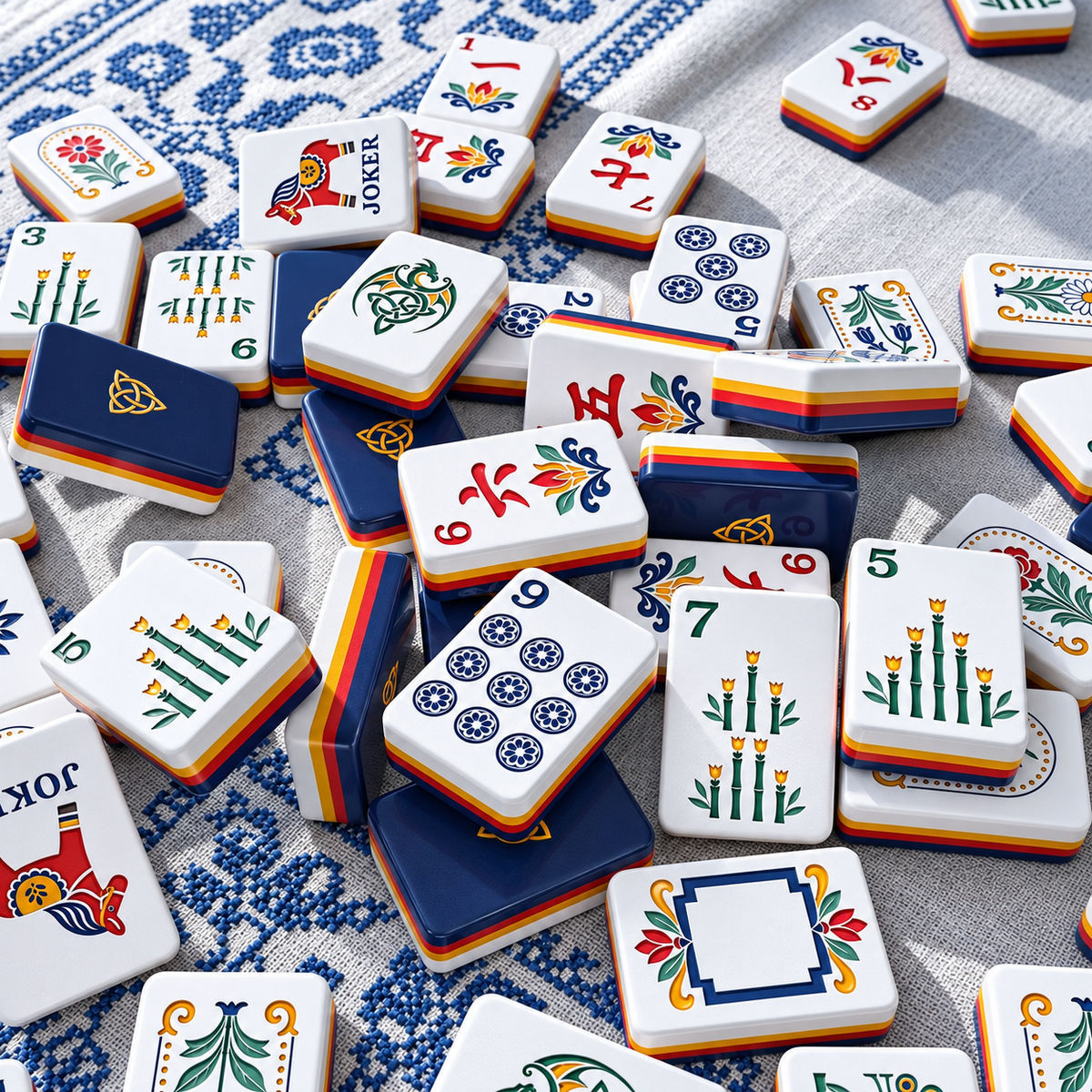
In American mahjong, dice determine seating order and which wall to break. The player with the highest roll sits as East; the second-highest rolls again to set the break point (1–16 tiles from the wall's right corner on the side East faces). The breaker pulls tiles in a counter-clockwise draw pattern: East takes the first and fourth tile, South the second and fifth, West the third and sixth, North the other pairs. Wall breaking begins the draw phase after the Charleston is complete. Most casual games use standard 6-sided dice; some groups prefer precision dice from their mahjong set to ensure fairness. Mistakes—rolling from the wrong position, breaking at the wrong tile, drawing out of turn—slow play and breed arguments. Using dedicated mahjong dice and understanding the ritual prevents confusion and keeps the table smooth.
In American mahjong, dice don't generate random hands—they determine who sits where and where the wall breaks open. Wall breaking is the formal start of tile draws after the Charleston. Get this wrong, and three other players spend the next hand wondering whose turn it is. We've hosted weekly games for years; here's exactly how it works, what trips people up, and how to run it like a pro.
Why do we use dice, and what exactly do they decide?
Dice establish two things: seating rotation and the break point. American mahjong uses seat position to define play order. East (the primary seat) starts the game; South, West, and North follow. Dice ensure fairness—no one picks their own spot. After dice rolls settle who sits where, a second roll determines which of the 16 wall stacks to open. This prevents favoritism and keeps the game's foundation honest.

Who rolls first, and in what order?
The player holding the wall before the game begins rolls first. They declare themselves a temporary seat (usually East for clarity). All four players roll one die each. Highest roll wins East; second-highest wins South; third-highest, West; lowest, North. If there's a tie for any position, tied players roll again for that seat alone. This takes 20 seconds and saves 20 hands of confusion later. Always roll from the same corner of the table and keep dice on the table surface—bounces and drops restart the roll.
How do you find and pull tiles from the broken wall?
East rolls once more to determine the break point. The sum (2–12 on two dice) tells East which tile stack to open. Count stacks counter-clockwise around the wall, starting from East's right edge: 1–4 is the first wall segment, 5–8 the next, 9–12 the third, 13–16 the fourth. If you roll a 16, count around again; if a 1, you're breaking the wall directly ahead. East reaches the counted stack, lifts the two tiles at the breaking point, and sets them aside (these remain undrawn until the wall shortage occurs—a rare event in casual play). East then draws four tiles, South draws four, West draws four, North draws four. The draw follows a strict pair-taking order: East takes stack tiles 1 and 3, South tiles 2 and 4, West tiles 5 and 7, North tiles 6 and 8. If no one can form a winning hand during play, the wall shortage ends the round.
What mistakes do we see at the table, and how do we avoid them?
Mistake | Why It Happens | Fix |
Rolling from the wrong edge | Player misunderstands "East's corner" | Always roll near the player facing East, not near you |
Counting the break point incorrectly | Losing track after 12 | Count aloud together the first time; mark the break with a bent tile |
Drawing tiles in the wrong order | New player doesn't memorize S-W-N after East | Write "E-S-W-N draws 1st, 2nd, 3rd, 4th" on a notepad at the table |
Using unmatched or worn dice | Dice from different sets roll differently | Use the same pair every game; dedicate them to your group |
Breaking too slowly or too fast | Rushing or overthinking the count | Practice once before the first hand; keep a printed one-page flowchart handy |
The most common wreck: someone rolls after tiles are already drawn. Agree before play starts: "We roll before the Charleston ends and before we break the wall." State it aloud. Write it in your rules sheet.
🎁 See our most-loved mahjong sets & accessories →
What kind of dice should you use for a fair game?
Standard 6-sided dice work, but they aren't all equal. Translucent plastic dice can be weighed or cloudy inside; cheap dice have edges that catch light and spin inconsistently. We recommend dice included with quality mahjong sets—they're engineered for balanced roll and are already calibrated to match your tiles. If you're bringing your own dice, buy a matched pair marketed as "precision" or "gaming grade" and use the same pair every session. Never rotate dice between sets unless you've tested them side by side. A tiny weight difference feels random across 40 hands. Dedicated mahjong dice are worth a few dollars—it buys you credibility when someone rolls a 12 three times in a row.

How does wall breaking change if you're playing 2 or 3 players?
In 2-player games, the wall is divided differently. East and South split the tile draw; the wall is prepared as if all four players exist, but West and North tiles stay on the wall and are never drawn. Count the break point the same way (sum of dice, 1–16), but East still draws first pair, South second pair, and the remaining tiles stay protected. With three players, North sits out, and their tile stacks remain on the wall—never drawn. Consult our 2 and 3 player mahjong rules for the full mechanics; wall breaking itself is unchanged, just the tile count after the break differs.
What happens after the wall is broken—is the game live immediately?
Not quite. After all four players draw their 13 tiles (52 total), East draws one more tile—the 14th—from the wall in turn order (East, then South, West, North repeat). This is the "live" draw phase. East's 14th tile may form a winning hand immediately; if not, East discards one tile face-up into the center, and play passes counter-clockwise to South. South may claim East's discard to complete a pung, kong, quint, sextet, or winning hand—or may pass and draw their own tile from the wall. Play continues until someone wins or the wall and discards run out. Understanding the journey from dice to live play helps you teach new players without repeating yourself four times a night.
How do you handle disputes over the break point or tile draw order?
Agree on a referee before the first game. The referee watches the break, counts aloud with the breaker, and approves the drawn tiles. For recurring groups, take a photo of the wall after the break and before any tiles are drawn—store it on your phone. If someone claims the break was miscounted, compare the photo to the current state. For draw order, have every player call their position aloud as they draw ("South takes two…"). Noise seems silly, but it prevents 10-minute rewinds. If no one remembers who drew fourth or whether the count was 7 or 8, stop, reset the wall, and recount. Losing two minutes to honesty is faster than playing a hand under suspicion.
✨ Find your Mahstead set — free US shipping →
What to check before you buy dice
Matching pair: Buy dice sold as a set with your mahjong tiles, or buy a precision-grade pair together from the same source.
Weight and balance: Roll each die at least five times on a hard, flat surface. Both should spin at least 3 seconds and land on each face equally over 20 rolls.
Storage: Keep dice in the same bag as your mahjong set or in a small pouch. Damaged or dented dice bias the roll.
Group consistency: If you host, use your own dice. Don't let guests supply their own—variance slows the game and fuels suspicion.
🀄 Shop best-selling mahjong sets →

FAQ
Can you use one die instead of two to set the break point?
No. One die gives you only 1–6; two dice give you 2–12, covering all 12 numbered stacks and requiring a recount for 13–16. Use two dice always.
What if someone rolls and the die falls off the table?
The roll doesn't count. Roll again in the same spot. If it happens twice with the same player, jokingly suspect their elbows—but rules say re-roll.
Do the dice stay in play, or are they put away after the break?
Dice stay on the table or nearby during the hand so anyone can verify the break point if questioned. Put them away only after everyone agrees the hand is fair and underway.
If East rolls a 2, does the wall break close to East or far away?
Close. Stacks 1–4 are East's wall segment, directly in front of East (on East's side of the table). Count counter-clockwise from East's right corner.
Can you re-roll if you don't like your seat assignment?
No. Dice rolls are binding. Rolling again is cheating and ends the game. If someone objects to the seating, they can sit out the hand—but rolling twice isn't a house rule.
What if two players roll the same highest number?
Both tie for East. They roll one die each to break the tie. Highest of the two tie-breaker rolls gets East.


View More
View More
View More
