
Retro Mahjong Bag: Vintage Style for Modern Players
Last updated: Nov 23, 2026
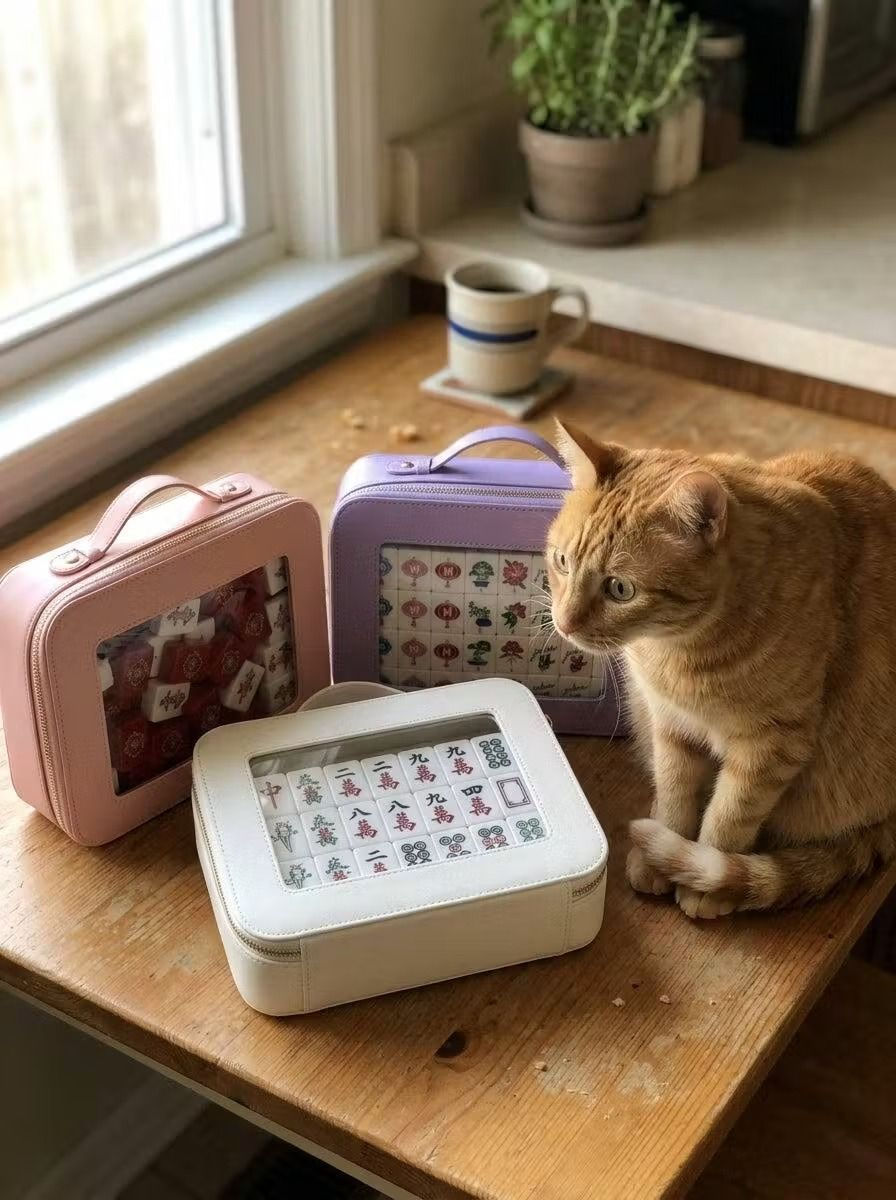
A retro mahjong bag blends nostalgic 1960s–1980s design with modern tile storage. Most retro bags hold a full 160-tile set, mat, racks, and dice in a compact canvas or faux-leather shell, measuring roughly 12–16 inches wide. They're designed for players who want their equipment to feel as good as it looks—durable enough for weekly games, light enough to carry to a friend's house or weekend trip. Retro styles typically cost more than plain nylon bags because the design work and materials reflect that vintage appeal. What matters most: check internal compartments (does it fit your mat rolled up?), handle durability, and whether the lining protects acrylic tiles from scratches. Mahstead offers retro-inspired designs in our travel bag collection, each built to carry a full American mahjong set with room for accessories.
What makes a mahjong bag "retro"?
Retro bags draw from mid-20th-century luggage: think soft canvas, faux leather, bold prints, or muted earth tones, often with brass or vintage-look hardware. The aesthetic says "I collected this in 1975" even if you bought it last month. Retro bags stand out at game night because they spark conversations—players remember when their grandmothers played from bags just like it. The styling doesn't change how the bag works, but it changes how you feel carrying it.
🀄 Shop best-selling mahjong sets →
How do you know if a retro bag will fit your set?
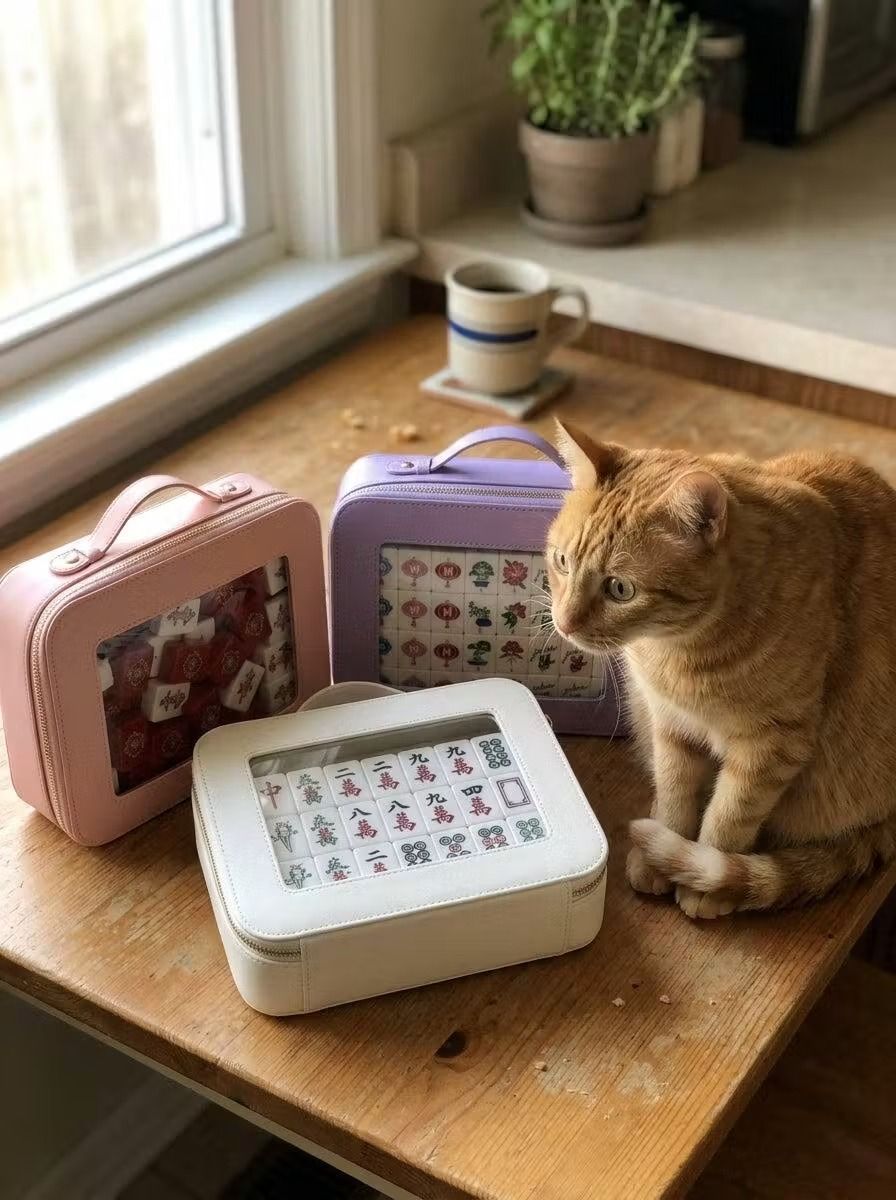
Before buying, measure your rolled mat (usually 12–14 inches long), your tile case or plastic drawers, and your racks. Most retro bags measure 12–16 inches wide, 8–10 inches deep, and 5–7 inches tall—enough for a standard 160-tile set if packed smart. Check the product listing for internal pocket count: you want at least three compartments so tiles, mat, and racks don't slide into each other. Canvas bags compress slightly; faux-leather bags are rigid and won't squish. If the lining is thin cotton, add a small divider or cloth to keep acrylic tiles from scratching. Measure before you order—a bag too small is frustrating; one too large is dead weight at the table.
Retro canvas vs. faux leather: which should you choose?
Material | Best for | Durability | Weight | Why pick it |
Canvas (cotton blend) | Players who value breathability and authentic vintage feel | 3–5 years with care; creases add character | Lighter; easier to carry weekly | Looks aged in; handles high humidity better |
Faux leather (polyurethane or PVC) | Players traveling or playing outdoors; protection priority | 4–6 years; shows scuffs and wear visibly | Heavier; more stable upright | Water-resistant; protects tiles from spills |
Canvas suits weekly home players who don't mind a lived-in look. Faux leather suits travelers or humid climates where moisture could warp a mat. Neither is "better"—choose based on your game routine and climate.
Should you buy a retro bag with a matching set?
Some players prefer a cohesive look: a retro bag paired with engraved tiles that match the era—say, bone or classic green acrylic. Others mix eras deliberately: a 1970s bag with modern neon tiles. There's no rule. What does matter: a retro bag adds visual weight, so clashing tile colors read as intentional, not mismatched. If you're starting fresh, buy the bag first, then choose tiles. If you already have tiles, scroll through designs and pick a bag that doesn't fight them. The bag is the frame; the tiles are the art.
🎁 See our most-loved mahjong sets & accessories →

Common retro bag mistakes to avoid
Overstuffing: A full set, two mats, and four racks will not fit a small retro bag. Be ruthless—one mat, one set of racks, dice. Store extras at home. Overstuffing stresses handles and zips.
Ignoring hardware weight: Brass or copper zippers and locks are beautiful but heavy. If you're carrying a bag weekly, the weight adds up. Synthetic zippers are lighter and just as durable.
Cheap lining: Thin cotton lining tears when acrylic tiles shift during transport. Check the product photo or description—lining should be at least 150-denier nylon or canvas-backed. Mahstead travel bags include durable linings designed to protect tiles.
Buying for looks alone: A gorgeous bag that doesn't open flat or has awkward pockets will frustrate you every game. Always prioritize access and compartment logic over aesthetics.
Not considering handle attachment: Retro bags often use vintage-style stitching for charm, but stitched handles fail faster than riveted ones. Check the listing for reinforced attachment points—they're barely visible but critical.
What to check before you buy
Measurement match: Confirm your mat rolls to fit the bag's depth. Most American mahjong mats roll to 12–14 inches; retro bags typically start at 12 inches wide.
Compartment count: At least three internal pockets prevent tiles from rattling against the mat.
Lining material: Synthetic or heavy cotton only—thin cloth will shred.
Handle reinforcement: Look for rivets, bar-tacks, or webbing reinforcement at handle seams.
Zip strength: Metal or sturdy plastic zippers—avoid tiny or loose ones.
Handle style: Handles should clear your wrist comfortably when carrying a full bag (roughly 2–3 inches above the bag top).
Pairing a retro bag with other accessories
Once you've picked a retro bag, complete the setup with practical gear. A quality mahjong mat protects your tiles and gives you consistent gameplay—retro mats in solid colors or classic patterns pair beautifully with vintage bags. Racks with pushers keep tiles tidy in your bag and at the table; wooden or natural-finish racks echo mid-century design. Don't skimp on a good mat just because your bag looks great—the mat is where tiles live during play, and wear there is inevitable.
✨ Find your Mahstead set — free US shipping →
Where do players actually buy retro bags?
Most retro mahjong bags come through specialty sellers who understand the equipment—Mahstead, for example, designs bags specifically for the American mahjong community, not generic fabric sellers. Avoid marketplace sites where descriptions are vague or photos are stock images. A real retro bag listing will show the bag packed with tiles, detail internal pockets, and list dimensions. Specialty sellers also ship faster because they know the quirks of mahjong gear: they pad corners, use sturdy boxes, and include packing tape so zippers don't jam in transit.

FAQ
Can I fit a 160-tile set, mat, racks, and dice in a small retro bag?
If the bag is at least 14 inches wide and 8 inches deep—yes, if packed carefully. Roll the mat tightly, stack racks vertically, put tiles in a case or plastic drawers. Measure before buying; there's no standard "small" size.
Do retro bags protect tiles from scratches?
Partially. A padded lining and separate tile compartments help, but tiles will scratch slightly over years of play—that's normal. Retro bags are durable carriers, not vaults. Tiles scratch most during play, not travel.
Is a retro bag worth more money than a plain nylon bag?
You're paying for design, lining quality, and hardware durability. Plain bags start lower; retro bags cost more because the materials and construction reflect the aesthetic. If you play weekly, a good retro bag lasts 4–6 years and justifies the spend.
What's the best retro color for hiding dust and wear?
Earth tones—tan, olive, burnt orange, deep brown. Light canvas shows dust; black faux leather shows scratches. Muted colors age gracefully and match most home décors.
Can I travel on an airplane with a retro mahjong bag?
Yes. A retro mahjong bag fits under a seat or in a carry-on if it meets airline size limits (usually 22×14×9 inches). Acrylic tiles are allowed. Check your airline's carry-on policy; most accept them with no issues.
How do I clean a retro canvas bag?
Spot-clean with a damp cloth and mild soap. For deep cleaning, use a soft brush and water, then air-dry flat. Never machine-wash or submerge—it weakens stitching. Faux leather wipes clean with a damp microfiber cloth.


View More
View More
View More
