
Mahjong Case for Beginners: What to Buy & How to Choose
Last updated: Nov 23, 2026
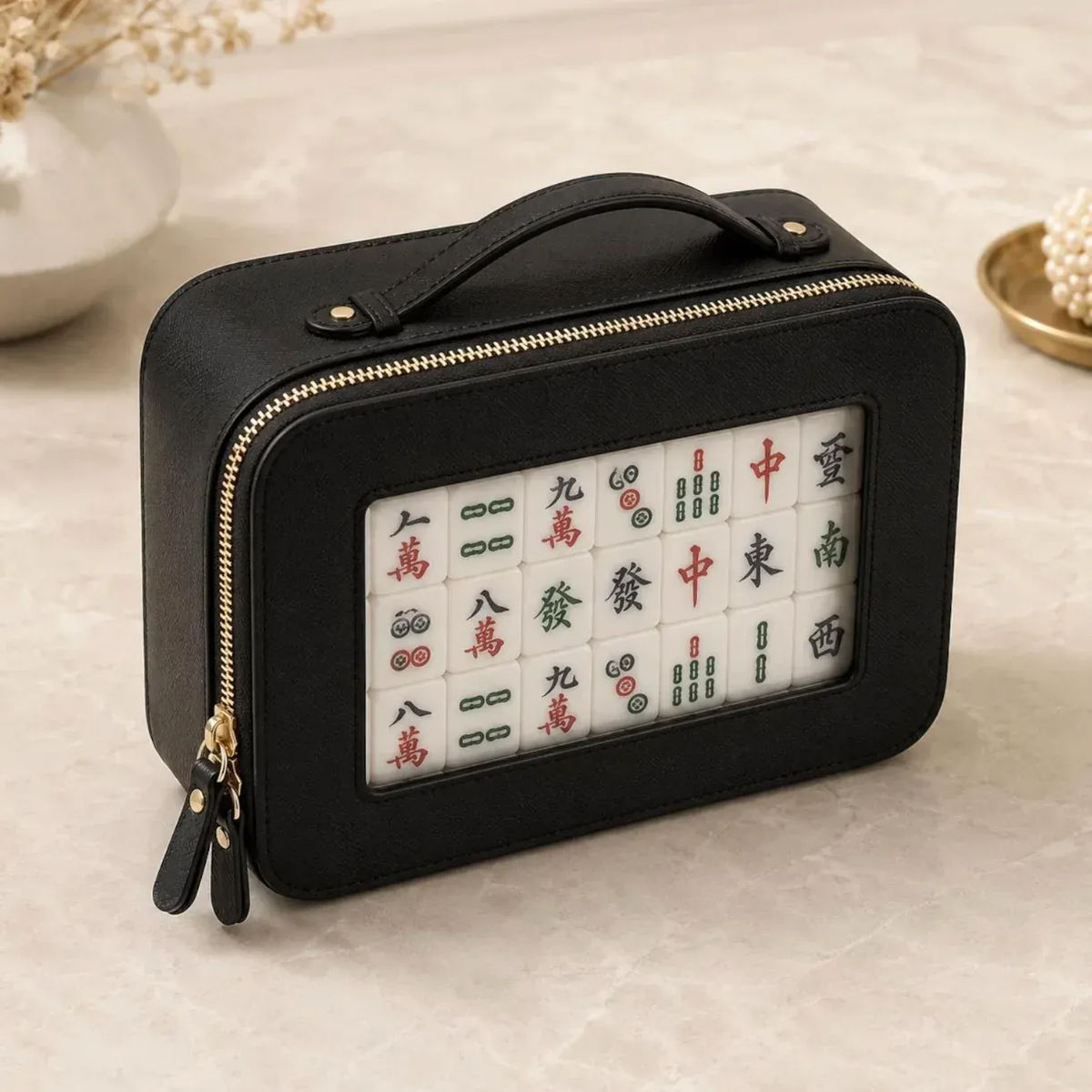
A mahjong case is a hard or soft container designed to protect your 160-tile set, mat, racks, and accessories during travel and storage. Most cases fall into two types: hard-shell boxes (durable, compact, stackable) and soft fabric bags (lightweight, easier to carry, more forgiving if overstuffed). Beginners should prioritize cases that fit a standard 152-playing-tile set plus spare jokers, measure roughly 10–14 inches long and 6–8 inches wide, and include dividers or compartments so tiles don't shift. Mahstead designs cases specifically for American mahjong sets, with interior layouts that match real tile volumes and game accessories. Hard cases typically cost more but last decades; soft bags cost less and fold flat when empty. The biggest beginner mistake is buying a case before owning a set—confirm your set's exact dimensions first, especially if you already own tiles. Check whether the case has a handle (essential for weekly games), padding (critical for acrylic or bone tiles), and whether it's meant to hold a mat roll too (many aren't, which surprises new buyers).
What size case do beginners actually need?
A standard American mahjong set—whether acrylic or engraved—takes up roughly the volume of a small shoebox when tiles are stacked in their original trays or in compartments. Most cases designed for American mahjong sit in the 10–14 inch length range. If you also plan to carry a mat, add 2–3 inches to your mental picture (rolled mats are long but thin). Measure your set's footprint in its current container before ordering—don't guess. Many beginners buy oversized cases "just in case" and end up storing a 14-inch case in a bedroom closet that could have fit a 12-inch case. Conversely, cramming a full set into a case designed for travel-size accessories forces tiles to rattle and lid corners to bulge. A well-sized case feels snug but not packed to the gum-line. If tiles slide or the lid closes with difficulty, the case is either too small or the tiles inside aren't organized vertically.
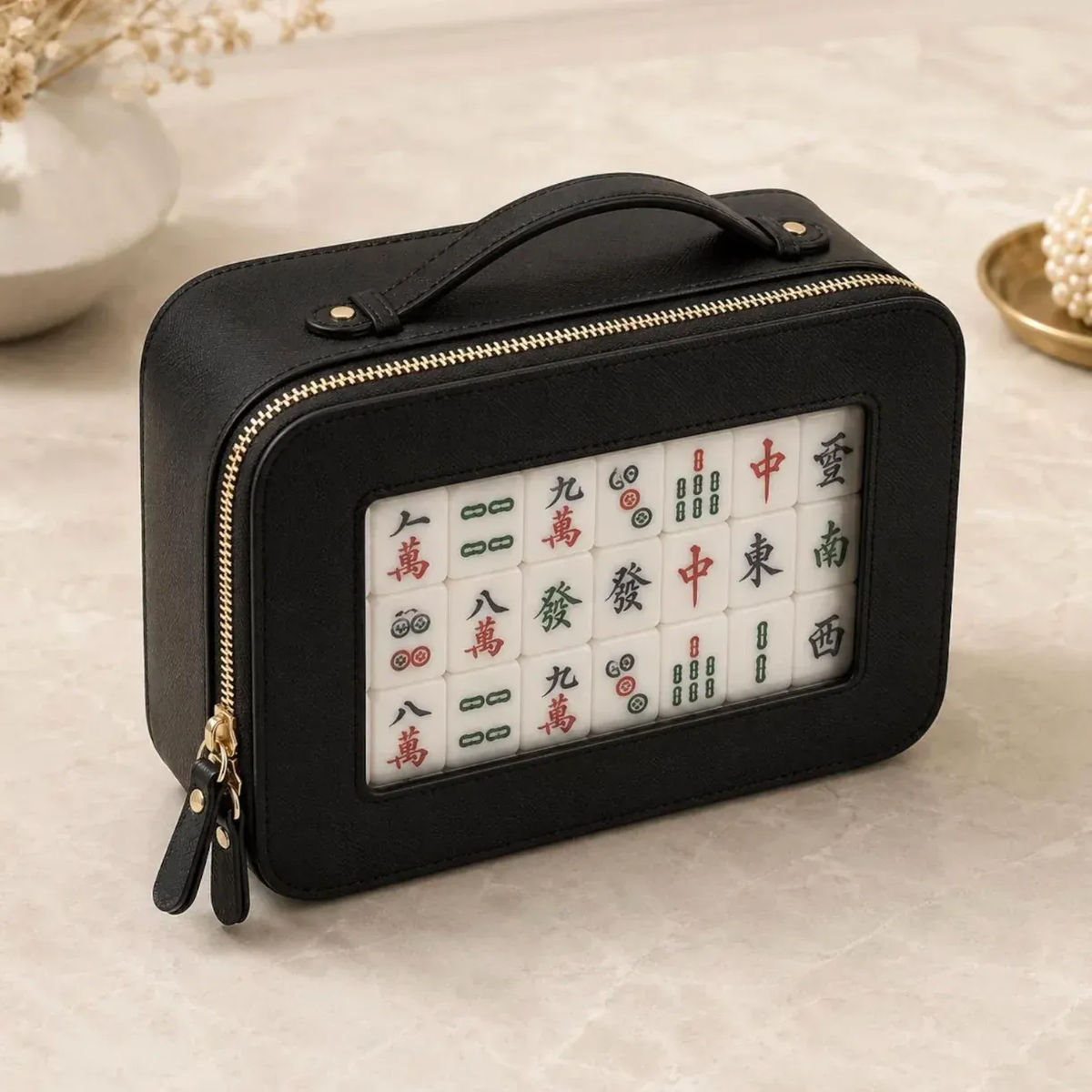
Hard case or soft bag: which is best for beginners?
Hard-shell cases (usually plastic or wood-reinforced) excel when you're moving sets weekly, storing them in car trunks, or traveling on public transit. They prevent crushing, resist spills, and stack neatly on shelves. Soft fabric bags (canvas, neoprene, or padded polyester) are ideal if you host games at home, stay in one location, and rarely transport tiles. Soft bags weigh less, fold flat when empty, and feel less institutional. Hard cases cost more upfront but absorb impacts your tiles might otherwise feel; soft bags are budget-friendly but offer zero crush protection if someone sits on them accidentally. Most beginners starting out at home should lean soft; beginners who ferry sets to weekly games or tournaments should invest in hard. One honest caveat: soft bags don't show tile organization as clearly—you'll reach in blind unless you label compartments or use internal dividers. Hard cases usually include molded sections so you see exactly what's stored. Choose hard if you're forgetful or disorganized; choose soft if you're meticulous and cost-conscious.
🀄 Shop best-selling mahjong sets →
Should your case hold the mat, or should they travel separately?
This is the single most common beginner question—and the answer depends on how often you move your set. If you play weekly at the same location and rarely pack, a case for tiles alone makes sense; the mat stays in a separate rolled bag or stays put at the venue. If you host rotating games or travel to tournaments, a combo case (tiles + mat + racks + dice) saves you carrying multiple bags. Combo cases are significantly larger (often 15–18 inches) and heavier, so they're not ideal for one-person carry. Mahstead offers cases and mats as separate items; you can pair a tile-focused case with a mat roll bag, or choose a larger case if you need everything in one container. Most serious players own two setups: a compact tile-only case for casual games and a larger combo bag for tournaments or long trips. Beginners rarely need both immediately, so start with tiles-only. If you later find yourself hauling a mat and four racks to each game, you'll know it's time to upgrade.
What materials protect tiles best without breaking the budget?
Acrylic tiles—the standard for American mahjong—are durable but can crack if dropped or crushed against sharp case edges. Hard cases with foam padding cost more initially but add essential shock absorption. Soft cases with neoprene or quilted interiors offer moderate protection at lower cost; they cushion minor bumps but won't save tiles from a hard fall. If your case is for daily car transport (trunk travel, coffee-table storage), invest in padding. If the case lives in a climate-controlled closet and travels once a month, basic compartmentalization is enough. Check whether the interior dividers are glued down (they stay put) or removable (easier to customize but rattle if loose). Avoid cases with thin plastic walls or no internal structure—tiles will shift, worn edges may chip. For beginners on a tight budget, a soft bag with modular compartments (dividers you can adjust) often outperforms a cheap hard case with no padding. Quality padding matters more than case material.

What's the honest checklist before you order?
Do this before checkout:
Measure your exact set (length, width, height in its current storage)
Count what you'll store: just 152 tiles? Tiles + spare jokers? Tiles + mat + racks?
Decide how often you'll move the set per month (weekly player = hard case; monthly player = soft bag)
Check case interior photos—can you see compartments or dividers clearly?
Confirm the handle style (top loop, side handles, both?)
Verify return policy in case the case doesn't fit your tiles when it arrives
Look for padding or interior material description (not just "protective")
Ask whether the mat compartment is separate or shares space with tiles (shared space = tiles may dent into mat fabric)
Beginners often skip the measurement step and order by photos alone. When the case arrives, they discover it's too small because their set's trays are wider than expected, or too large because they imagined a smaller footprint. Most cases cannot be returned if opened, so accuracy here is crucial. Take five minutes to measure; save yourself a return shipping fee.
🎁 See our most-loved mahjong sets & accessories →
Quick comparison: case types for different beginner scenarios
Your situation | Best case type | Why it works | Key feature to check |
Play weekly at one location | Soft tile-only bag | Lightweight, folds flat, cheap | Internal dividers or pockets |
Travel to 2–3 monthly games | Hard shell, tiles only | Protects tiles from car bumps; stacks easily | Foam padding, secure handle |
Host rotating games; move set often | Combo hard case (mat included) | One trip per game; organized transport | Mat section doesn't compress tiles |
Store at home, rarely move | Soft bag or storage box | Low cost; takes up minimal space when empty | Interior organization (doesn't matter much) |
Own multiple sets; take one to games | Hard cases, one per set | Prevents mixing tiles; easy to grab the right one | Label or color-code exterior |
What to check before you buy
Size verification — Measure your current set's footprint in inches; compare that exact number to the case interior dimensions listed on the product page. Round up, never down.
Interior layout — Look at close-up photos of the inside. Can you see how many compartments there are? Do dividers look removable or permanent? (Permanent is better for tile stability.)
Handle design — If you're carrying the case more than once a month, a sturdy handle is non-negotiable. Soft bags with side handles are easier to grip; hard cases with recessed top handles sometimes cut into palms during long carries.
Material description — Avoid vague terms like "durable" or "protective." Look for specific padding type (neoprene, foam, quilted) and shell material (polypropylene, wood-reinforced plastic, or canvas).
Return policy — Confirm whether an opened case can be returned. Most cannot, so accuracy before ordering is critical.
Weight when full — A hard case with tiles and accessories will weigh 8–12 pounds; if you're a solo carrier, test the weight in store or ask a friend to mimic it. Soft bags stay lighter but offer less protection.
Pairing your case with the right set
Beginners often choose a case without owning a set yet—a backward move. Buy or borrow a set first, measure it in its current container, then order a case that fits snugly. If you're shopping for a complete beginner kit, start with a best-selling American mahjong set (which ships in basic packaging), measure those dimensions, then order the case. This two-step approach saves returns and ensures a perfect fit. Some players prefer engraved or customized sets that display in their cases—beautiful on a shelf, but measure them too, as thicker tiles or special trays sometimes shift case dimensions.
✨ Find your Mahstead set — free US shipping →

FAQ
Can I use a jewelry box or small suitcase instead of a mahjong case?
You can, but it's not ideal. Jewelry boxes lack tile organization, so tiles mix and pieces get lost. Small suitcases are bulky and overkill for one set. A purpose-built mahjong case has dividers that keep your tiles sorted and safe—saves time at setup and reduces damage risk during travel.
How do I know if my case is too small?
If the lid bulges when closed, tiles shift inside when you move, or the handle strains under weight, it's too small. Try lifting the closed case; if it feels unbalanced or tiles slide audibly, downsize or choose a larger case before it arrives at your door.
Do I need a separate mat case or can my tiles go in with the mat?
A mat can share a case with tiles if the case is large enough and the mat section is separate or padded. If tiles and mat share tight space, the mat's moisture may dampen tiles over time, and mat wrinkles press into tile edges. Safer to use a separate mat roll bag and a tile-only case for weekly players.
What's the difference between a "mahjong case" and a "mahjong bag"?
Cases are typically hard-shell, structured containers; bags are soft fabric. Cases offer more protection and organization; bags are lighter and more portable. Both serve the same purpose—protecting your set—but suit different lifestyles.
Should I buy a case now or wait until I've played a few months?
Buy a case immediately if you're joining a weekly game or traveling to tournaments. Wait a few weeks if you're learning at home and rarely moving your set. Once you know your play frequency, investing in a good case extends your set's life by years.
Are waterproof cases necessary?
Not essential for beginners playing indoors, but helpful if you live in a humid climate or store your case near a kitchen or bathroom. Waterproof or water-resistant linings cost slightly more and prevent tile moisture warping over decades of storage.


View More
View More
View More
