
All-in-One Mahjong Racks: Choose Your Perfect Tile Holder
Last updated: Nov 20, 2026
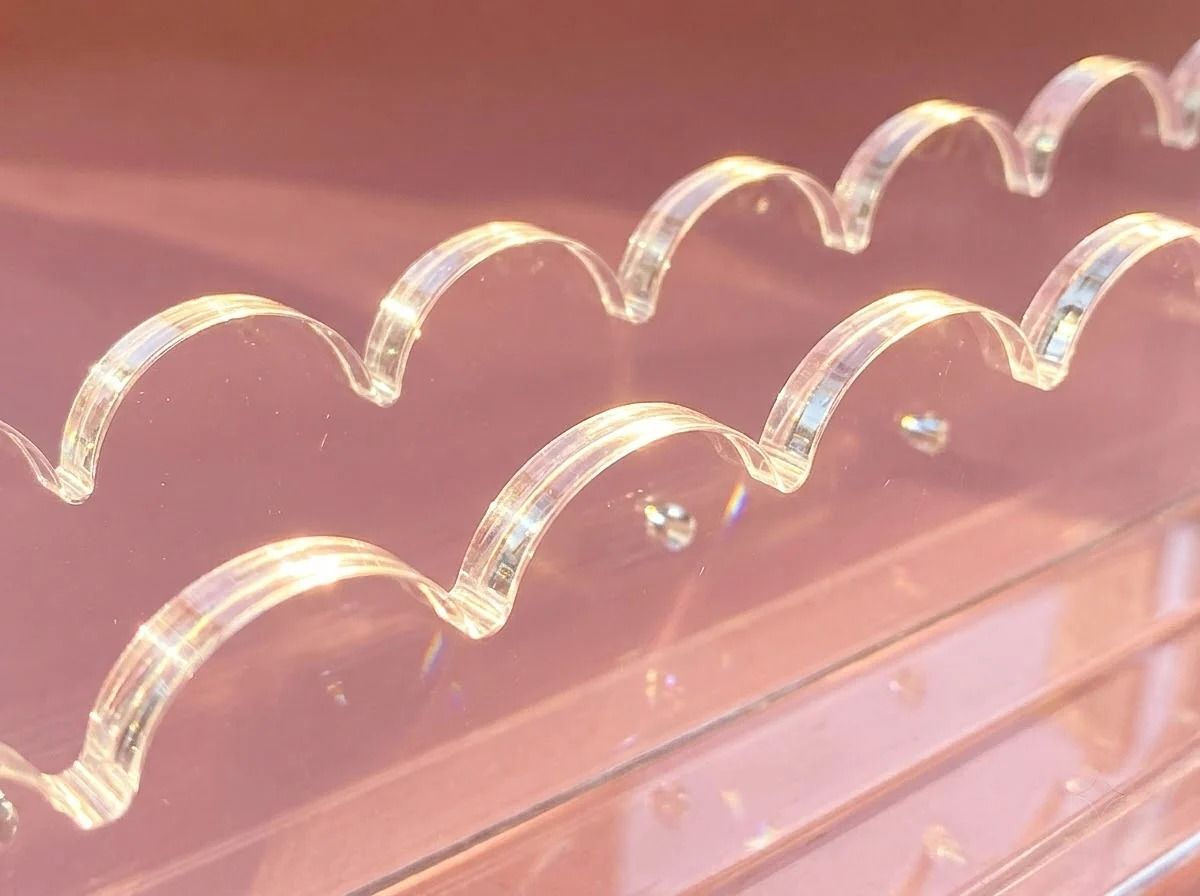
A mahjong rack is a long tile holder that sits in front of each player, displaying their 13 tiles upright so everyone sees only tile backs. Pushers—small sticks or levers attached to the rack—let you slide tiles left and right without lifting them, speeding play and reducing fumbling. American mahjong racks come in acrylic, bamboo, or plastic, ranging from basic single-rack designs to multi-piece sets with storage. Most fit standard American mahjong tiles (about 1 inch wide). Quality matters: flimsy racks tip over, separate from pushers mid-game, or crack under tile weight. Mahstead mahjong racks with pushers are engineered for durability and engraved with titles or custom art, so they stay organized and look beautiful for years. Before ordering, measure your table depth, count how many sets you'll need (one per player, typically four), and decide whether you want matching engraved designs or mixed styles.
What does a mahjong rack actually do during a hand?
Your rack holds exactly 13 tiles—the tiles you draw during how to play American mahjong. As you pick up new tiles and discard old ones, you slide them left or right using the pusher, then pull the completed tile forward to expose it to the other three players. This keeps your hand hidden, speeds tile management (no hunting for the right tile), and looks cleaner than a messy hand of loose tiles. A good pusher glides smoothly and doesn't jam; a bad one catches midway, breaking your rhythm. The rack also protects tiles from accidental nudges and keeps them organized so you spot patterns faster when matching against the League card. When you win and expose your hand, the rack displays it attractively for verification.
🀄 Shop best-selling mahjong sets →

How do pusher mechanisms work and which is easier to use?
Two main pusher styles exist: lever-and-groove and slide-stick. A lever-and-groove pusher is a small handle molded into the rack itself—you press it like a door handle to move tiles. A slide-stick is a separate rod that runs through or under the rack, and you push it side-to-side. Lever pushers are faster and more intuitive (your thumb naturally presses), while slide-stick pushers give finer control and feel less bulky. Acrylic racks typically use lever design because the material holds sharp detail; bamboo and wood racks often use slide-stick to avoid weight concentration on one stress point. Neither is objectively "better"—it comes down to hand size and personal preference. Try both styles before buying four sets. Mahstead's engraved racks with pushers are available in both types; check the product description to confirm which mechanism each design uses.
Should you buy one set of four matching racks or mix designs?
Setup | Best For | Why It Works | Drawback |
Four identical engraved racks | Formal clubs; long-term players; gift sets | Professional look; easy to locate yours; resale value | Higher cost; less personal choice |
Two matching + two plain | Budget-conscious; casual hosts | Balanced aesthetic; flexibility | Slight visual mismatch |
Four different designs | Individual players; mixed experience levels | Personal expression; everyone picks their own | Table looks fragmented; harder to store as a set |
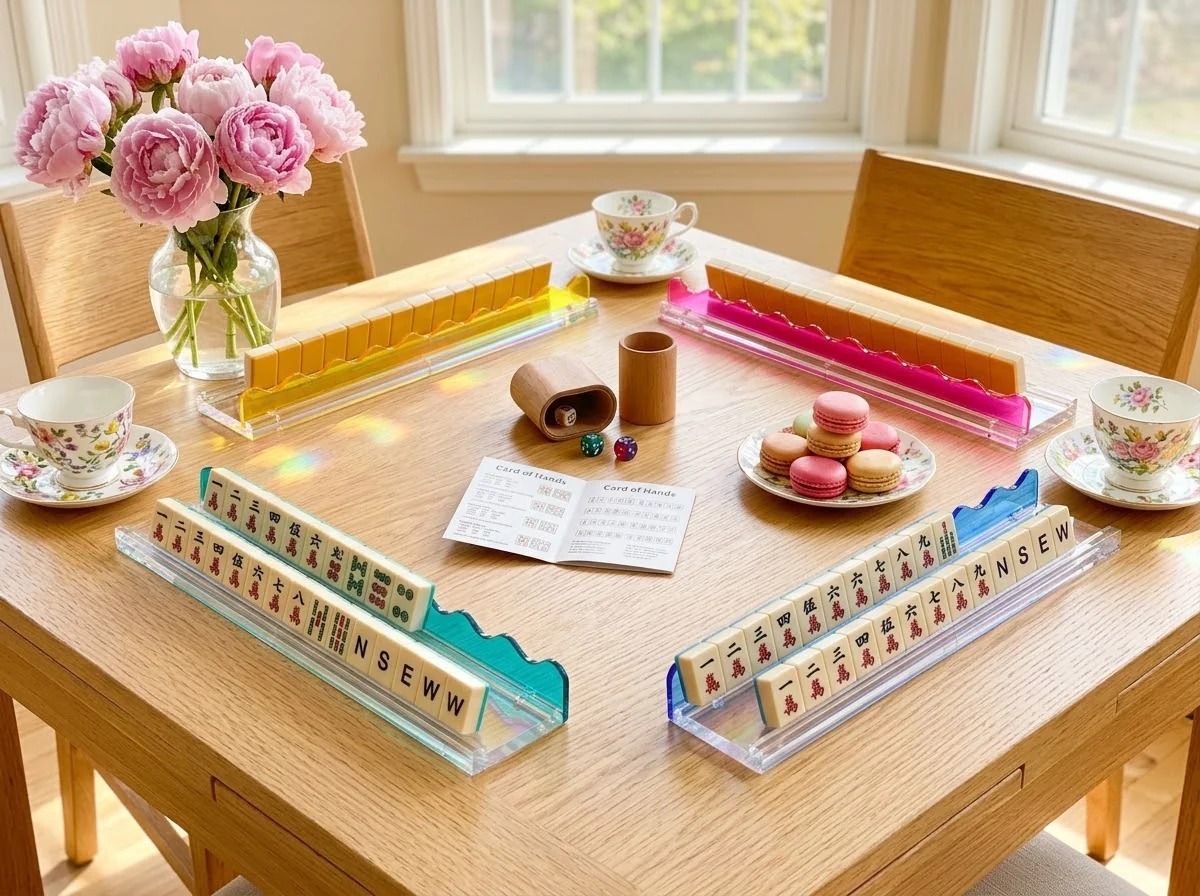
If you're buying for a permanent host position (weekly game at your home), four matching engraved American mahjong sets with coordinated racks elevate the whole experience and make you memorable. If you're a traveling player, buy one or two quality racks for yourself and let hosts provide the rest. For casual groups, two matching + two plain keeps cost reasonable while maintaining cohesion. Engraved racks also double as gifts, since players often keep their favorite racks years after the tiles wear out.
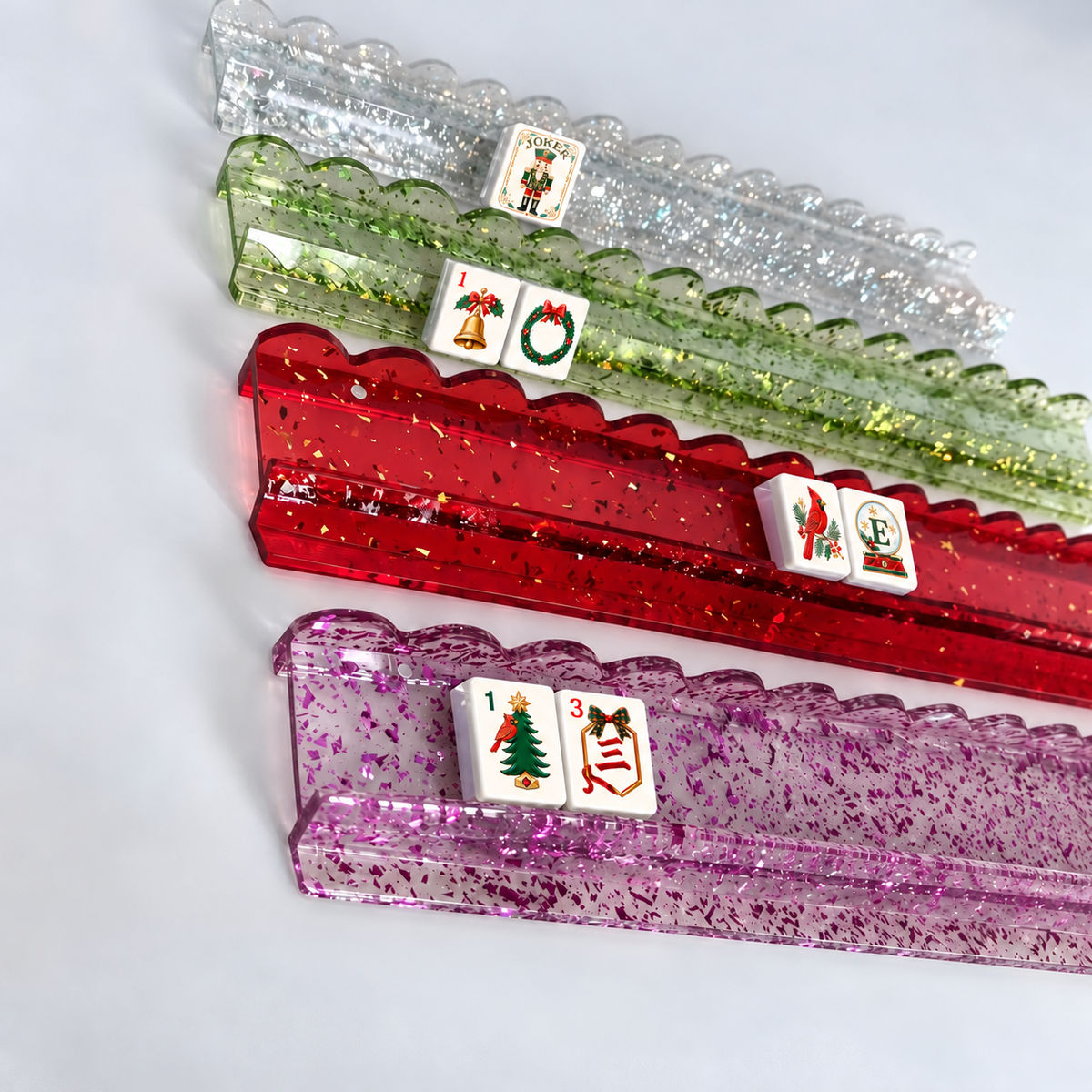
What are the main material differences and durability trade-offs?
Acrylic is the most popular choice for serious players. It's lightweight, transparent (you can see tile stacks without moving the rack), doesn't warp, and machines beautifully for engraving. Acrylic racks rarely crack unless dropped hard, and pushers stay smooth for decades. Downside: acrylic can feel slippery on certain tablecloths, and it doesn't muffle tile noise as well as wood. Cost is moderate.
Bamboo or wood looks warm and traditional. Wood racks dampen tile clatter, feel substantial in hand, and age gracefully. However, bamboo absorbs humidity and can warp if left near a window or damp basement. Pushers on wood sometimes stick if humidity swells the material. Wood racks also chip more easily than acrylic. Cost varies widely based on wood grade.
Plastic is budget-friendly and water-resistant, but pusher mechanisms often loosen after a few months of use, and the material yellows over time. Plastic racks are fine for learning or occasional play, but not for weekly games.
For weekly play, we recommend acrylic. It's the sweet spot between durability, performance, and reasonable cost. Mahstead's best-selling mahjong sets pair perfectly with acrylic racks because both are engineered for the same precision.
How many racks do you need and what size should you buy?
You need exactly one rack per player: four for a standard American game, three for a three-player variant (less common), and two for two-player learning. If you host weekly, buy four so guests never need to bring their own. If you play at different locations, two or three personal racks cover most scenarios.
Size depends on table depth and tile dimensions. Standard American mahjong tiles are roughly 1 inch wide and 0.75 inch tall. A typical rack holds 13 tiles in a single row and is 14 to 16 inches long. Measure your table's depth from edge to edge: a 48-inch-diameter round table leaves about 12 inches of depth per seat, which fits a standard rack with 2 to 3 inches of clearance. A 60-inch oval table gives you 15+ inches and lets you use larger racks or angle them. Cramped tables force players to angle racks, which crowds the center and slows draws.
Before ordering, confirm your racks fit the tile size in your set. Mahstead tiles are standard American dimensions, so any rack sold alongside them will fit. If you're combining tiles and racks from different sources, ask the vendor for exact measurements.
✨ Find your Mahstead set — free US shipping →
What common mistakes damage racks or ruin the play experience?
Stacking racks when stored. Acrylic cracks under weight; wood splinters. Store racks flat in a box or on a shelf, never stacked on their sides.
Using racks with worn or cracked pushers. A broken pusher tempts you to tilt the rack or grab tiles directly—unsafe and clumsy. Replace the pusher immediately or retire the rack.
Mixing tile sizes. If some tiles are thicker or wider than others (common when combining old and new sets), they jam in the rack or make the pusher stick. Sort your set first and test fit before play.
Placing racks too close to the discard pile. Nervous hands bump racks while reaching into the center. Leave at least 6 inches between the rack and the inner table edge.
Ignoring humidity. Wood racks swell in damp basements; acrylic doesn't, but metal pusher springs can rust. Store all racks in a climate-controlled closet, not a garage.
Buying racks without testing the pusher. If you order online, ask the vendor's return policy in case the pusher feel doesn't suit your hand. Mahstead ships mahjong racks with pushers nationwide with free US shipping, so you can order with confidence and test at home.
What to check before you buy
Tile fit: Does the rack's slot width match your tile size (ask the seller for specs)?
Pusher feel: Lever or slide-stick? Try a friend's rack or ask the vendor to describe the mechanism.
Table depth: Measure your table and confirm racks fit without crowding the discard center.
Material: Will acrylic, bamboo, or plastic work with your storage and play environment?
Quantity: Buy one per player plus one spare for the host.
Engraving: If ordering personalized racks, verify the design preview before purchase.
Return policy: Confirm you can exchange if the pusher doesn't feel right.
🎁 See our most-loved mahjong sets & accessories →
FAQ
Can you use a mahjong rack with tiles from any set?
Most American mahjong tiles are standard size (about 1 inch wide), so they fit in any standard rack. Confirm your tile dimensions match the rack's slot width before ordering. If you're mixing very old tiles with new ones, test fit first—vintage tiles sometimes vary slightly in thickness.
Do mahjong racks come with pushers or do you buy them separately?
Most racks sold as complete units include pushers built-in or attached. Some vintage or minimal sets sell the rack alone. Always check the product description. Mahstead racks ship complete and ready to use.
How do you clean and maintain a mahjong rack?
Wipe acrylic and plastic racks with a soft, dry microfiber cloth. For sticky pushers, rub the mechanism with a bit of graphite pencil lead (not oil—oil attracts dust). Wood racks should be dusted regularly but never soaked. Store all racks in a cool, dry place away from direct sunlight.
Can you find replacement pushers if one breaks?
Replacement pushers vary by rack design. Some vendors (including Mahstead) offer spare parts; others don't. When buying, ask if pushers can be replaced separately. If a pusher on an older rack breaks, you may need to retire that rack and buy a new one.
Are wooden racks worth the extra cost compared to acrylic?
Wooden racks feel luxurious and muffle noise, making them popular for formal games. However, they warp in humid climates and require careful storage. Acrylic racks are more durable long-term and easier to maintain. Choose based on your environment and aesthetic preference, not price alone.
How many racks should you buy if you only play occasionally at other people's homes?
Buy one or two personal racks so you always have one familiar to you. Most hosts provide racks for their games, so you don't need a full set of four unless you're hosting.


View More
View More
View More
