
8 Crak Mahjong Tile: Meaning & Play in American Mahjong
Last updated: Nov 20, 2026
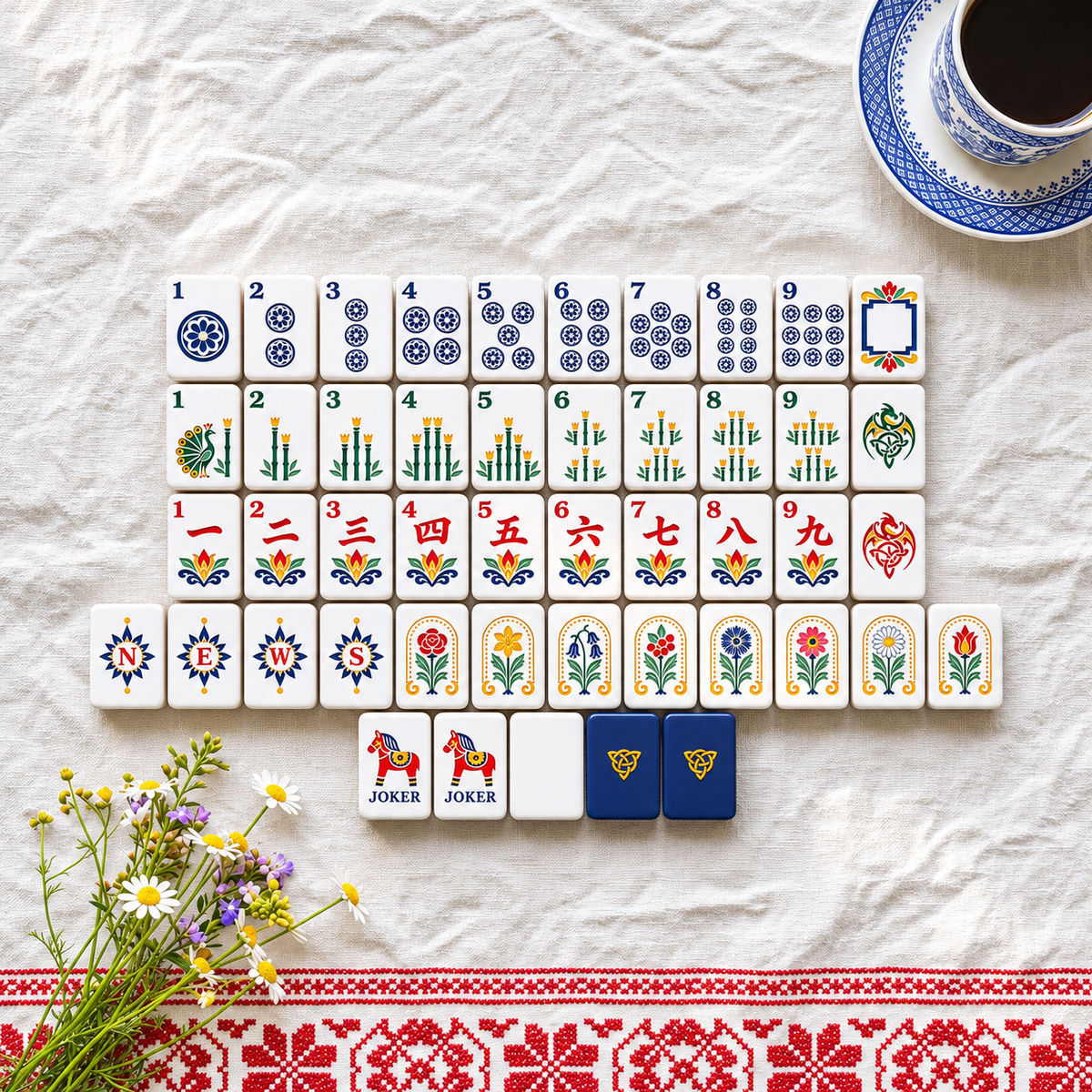
The 8 Crak is a tile from the Crak suit—one of three numbered suits in American mahjong alongside Bams and Dots. Each suit contains numbers 1 through 9, and you receive four identical copies of each number in a standard 152-tile set. The 8 Crak typically shows eight Chinese characters or a decorative symbol representing the number eight; its exact artwork varies by tile design and material. In American mahjong, the 8 Crak sits mid-range in the Crak sequence and can form pungs (three identical tiles), kongs (four identical), or be part of hand patterns drawn from the current year's National Mah Jongg League card. It has no inherent point value—scoring depends entirely on which winning hand pattern you complete. Unlike Chinese mahjong, American mahjong does not allow sequences or chows (1-2-3 runs), so the 8 Crak's value is contextual: it matters only when three or four 8 Craks are required by your chosen hand on the official card.
What does the tile image show on an 8 Crak?
The 8 Crak displays eight stylized Chinese characters or pictorial marks representing the number 8, depending on the tile set's design language. Traditional bone or bamboo sets use calligraphic characters; acrylic or modern sets often feature clean numerals with decorative borders. The Crak suit is also called the "character" suit and represents coins or currency in classical Chinese symbolism. When you unbox a new set, you'll see the 8 Crak design repeated four times—one copy for each player's potential need in a hand.
The visual clarity of the 8 Crak matters during fast play. If your set has faint or small numerals, you'll waste seconds verifying the tile during the discard. High-contrast, large-print designs reduce errors. Engraved or embossed 8 Craks are easier to read across a table than flat printed surfaces, especially under variable lighting. Many players prefer acrylic sets with crisp laser-engraved numbers over aging bone sets where ink fades.
Where does the 8 Crak rank among all Crak tiles?
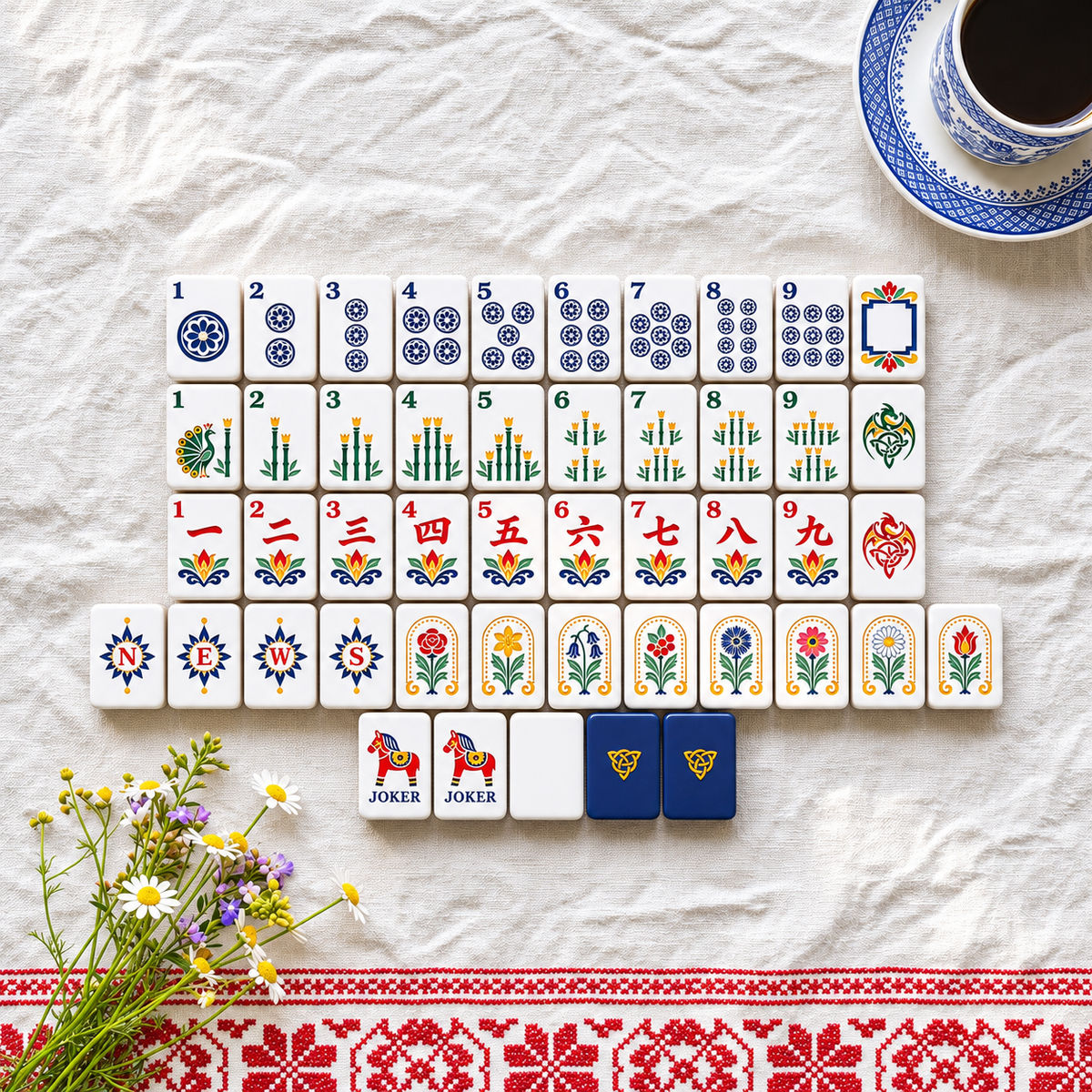
The 8 Crak is the second-highest numbered Crak, just below the 9 Crak and well above the 1 Crak (which shows a bird symbol on most sets). In hand-building sequences, you might need consecutive Craks—say, a 6-7-8 or 7-8-9—but American mahjong forbids chows (runs of different numbers), so the 8 Crak never forms a sequence with the 7 or 9 Crak. Instead, it pairs only with two other identical 8 Craks to make a pung, or with three more 8 Craks to form a kong. Its rank among all 36 Crak tiles (four of each: 1–9) positions it as mid-to-high value in hand-completion probability—lower numbers like 1–3 appear in more pattern types, while higher numbers like 8–9 are more specialized. Understanding this distribution helps you read your opponents' discards and predict what tiles they might hold.
How do you use an 8 Crak in winning hands?
To play the 8 Crak, you must first check the current year's National Mah Jongg League card to see which official hand patterns require it. A pattern might call for "3 of the same number Crak" or "a pung of 8 Craks plus other tile combinations." On the mahjong card, you scan rows and columns to match your tiles against printed hand types. Once you've matched a valid pattern—say, three 8 Craks, plus a pung of 3 Dots, plus a kong of Red Dragons, plus a pair of Winds—you call "mahjong" and win that round. The 8 Crak can never be a joker substitute; jokers replace any tile except pairs and singletons. If your hand requires an 8 Crak and you draw it from the wall or claim it from a discard, you keep it and move toward completion. If you discard an 8 Crak and another player claims it to complete their winning hand, you stop play and they take the win. Strategic timing matters: holding an 8 Crak late in a round increases the risk that an opponent will steal it.
Tile Role | Meaning | How It Works | When You Use It |
Pung | Three identical 8 Craks | Must stay concealed until you win, or expose it if you claim a discard | When a pattern calls for "3 of the same Crak" |
Kong | Four identical 8 Craks | Expose it on the table and draw a replacement tile from the back of the wall | Patterns requiring "a kong of 8 Craks" |
Discard | Unwanted 8 Crak | Place it face-up on the table; opponents may claim it | When you don't need it and need to reduce your hand |
Joker Substitute | Cannot use joker for 8 Crak | 8 Craks must always be drawn or claimed; jokers don't replace them | Never—not allowed in American mahjong |
What's the difference between 8 Crak and 8 Bam or 8 Dot?
The three numbered suits—Bams (sticks), Craks (characters), and Dots (circles)—are visually and functionally distinct. The 8 Bam shows eight bamboo sticks; the 8 Dot shows eight circles or dots; the 8 Crak shows eight characters. All three are separate tiles; you cannot substitute one for another. A pattern calling for "three 8 Craks" requires exactly that—not three 8 Bams or three 8 Dots. However, a hand pattern might require "a pung of 8s" without specifying suit, in which case you'd choose whichever 8 you can collect (three 8 Craks or three 8 Bams or three 8 Dots, but only one suit). This distinction is crucial during the Charleston tile-passing phase and while building your hand. Mistaking an 8 Crak for an 8 Bam or vice versa is one of the most common errors new players make, especially under poor lighting or with worn tiles. Investing in a clear, well-lit set eliminates this confusion.
Why would you discard the 8 Crak instead of keeping it?
You discard an 8 Crak when it doesn't fit any hand pattern you're pursuing on the current year's card, or when you've already collected enough Craks and need to free up space. American mahjong hands are rigid: the card dictates the exact tiles you need. If your target pattern calls for 8 Craks and two 1 Bams but you've drawn 8 Craks and several 5 Bams, the 5 Bams become dead weight—you must discard them to make room for 1 Bams you can claim or draw. Discarding the 8 Crak is also defensive: if you notice an opponent picking up every Crak you discard, you know they're hunting a Crak-heavy hand, so you'll stop throwing Craks their way. Strategic discard order protects you. Early in a round, many tiles are still in play, so discarding common numbers like 5–6–8 is safer than throwing a 1 or 9 (which appear in fewer hand types). Late in a round, when few tiles remain, every discard is risky—even an 8 Crak could win someone's hand. Beginners often discard high-numbered tiles thinking they're "safer," but experienced players know that mids like 5–6–7–8 appear in the most varied patterns.
🀄 Shop best-selling mahjong sets →
What type of mahjong set makes the 8 Crak easiest to read?
Acrylic sets with large, laser-engraved numerals are the clearest. The engraving creates tactile contrast—you can feel the raised or recessed "8" under your finger, and your eye catches the contrast instantly across a crowded table. Bone or wood sets with painted numerals fade over time, especially if sets are used weekly; re-painting is tedious. Vintage tiles sometimes have translucent surfaces, making numerals hard to distinguish under yellow lighting. Our best-selling collection features acrylic sets where each suit has its own color family—typically green for Bams, red/orange for Craks, white or blue for Dots—so you can even identify suits by hue before reading the exact numeral. Size matters too: tiles that are too small (under 1.25 inches per side) force players to lean in and slow play. Standard American mahjong tiles are between 1.25 and 1.5 inches, and anything smaller invites misreads. If you host weekly games or play in tournaments, prioritize a mat and set combo that lets you see all tiles from arm's length without squinting.
How does the 8 Crak connect to the full tile composition?
A complete 152-tile American mahjong set contains 36 Crak tiles: four each of the 1 Crak through 9 Crak. The 8 Crak is one of those 36—four copies total. The full set also includes 36 Bam tiles, 36 Dot tiles, 16 Wind tiles (four each: North, East, West, South), 12 Dragon tiles (four Red, four Green, four White), 8 Flower tiles (four of two types), and 8 Joker tiles. Every tile is part of a balanced ecosystem: remove one 8 Crak from play, and hand completion becomes impossible for any pattern requiring three or four 8 Craks that round. Understanding the full composition is essential for learning to read tiles on the official card and predicting which hands are still possible as the round progresses. Beginners often fixate on single tiles; experienced players track tile scarcity. If all four 8 Craks have been discarded or exposed early in a round, you know no one can build a hand containing that tile, so you adjust your strategy.
What to check before you buy or play with an 8 Crak tile set
Numeral clarity: Hold each 8 Crak at arm's length under your play lighting. Can you read the "8" instantly? If you hesitate, the set will slow your game.
Consistency across suits: The 8 Bam, 8 Crak, and 8 Dot should look distinctly different. If they look similar, you'll misread them under fatigue.
Tile thickness: Tiles should be uniform; a warped or thin 8 Crak might jam in your rack or flip during shuffles.
Joker count: A standard set plays with eight jokers. If yours has fewer or missing jokers, claim them from a complete spare set before play.
Lighting during play: Test your table's lamps with the set in place. Shadow zones hide tile numerals; add a clip-on lamp if needed.
🎁 See our most-loved mahjong sets & accessories →
FAQ
Can the 8 Crak be used as a wild card or joker?
No. In American mahjong, jokers can substitute for any tile except pairs and singletons. The 8 Crak must always be drawn or claimed from a discard; jokers never replace it. If a hand requires three 8 Craks and you only have two, you cannot fill the third spot with a joker.
How many 8 Craks are in a complete mahjong set?
Exactly four. A standard 152-tile American mahjong set contains four copies of each numbered tile from 1 to 9 across all three suits (Bams, Craks, Dots). Four 8 Craks is the baseline; no more, no less, ever.
If I discard the 8 Crak and someone else has been collecting Craks, can they win on my discard?
Yes, absolutely. If your opponent's winning hand pattern requires an 8 Crak and they claim your discard, they win that round immediately. This is why discard strategy matters—tracking which suits or numbers your opponents are collecting helps you avoid feeding them wins.
Does the 8 Crak have a higher point value than the 3 Crak?
No. In American mahjong, individual tile numbers don't carry inherent points. Your entire winning hand pattern determines your score based on the current year's National Mah Jongg League card. An 8 Crak is worth points only as part of a complete, valid hand.
What if my set is missing one of the four 8 Craks?
The set is unplayable as-is for standard four-player mahjong. You must source a replacement 8 Crak from a spare tile pack or another complete set before play. Never proceed with only three 8 Craks; it breaks the tile balance and makes some hands impossible to win.
Is the 8 Crak used differently in Chinese or Hong Kong mahjong versus American mahjong?
Yes. Chinese and Hong Kong mahjong allow sequences (chows) like 6-7-8, where the 8 would chain with adjacent numbers. American mahjong forbids chows entirely; the 8 Crak only appears in pungs, kongs, or patterns pulled from the official card. Joker and suit rules also differ significantly across variants. ✨ Find your Mahstead set — free US shipping →


View More
View More
View More
