
8 Bam Tile in Chinese Mahjong: Meaning & Role
Last updated: Nov 23, 2026
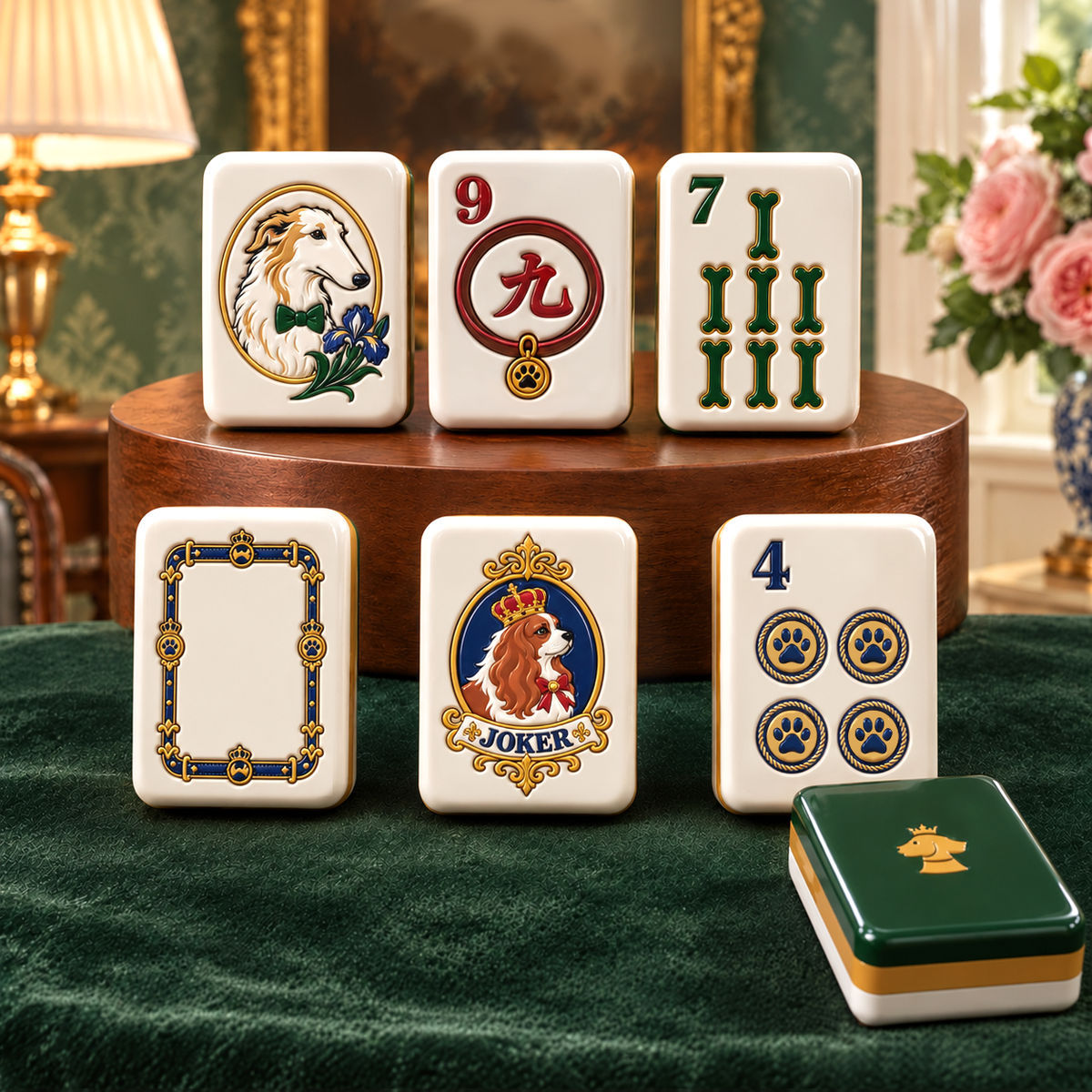
The 8 Bam (8 Bamboo) is one of nine number tiles in the Bam suit, displayed as eight bamboo stalks on the tile face. In American mahjong, it is a mid-value tile used in sequences and groups on the current year's official hand card, never called as a chow (sequences don't exist in American play). In traditional Chinese and Hong Kong mahjong, the 8 Bam can form chows with tiles 6 and 7, or 9, and carries specific point values depending on the variant. Each standard 160-tile American set contains four copies of the 8 Bam—one for each player—ensuring balanced gameplay. The tile's symbolism (eight bamboo stalks representing completeness and strength) carries cultural weight in Asian variants but has no scoring impact in American mahjong.
🀄 Shop best-selling mahjong sets →
What does the 8 Bam tile look like?
The 8 Bam shows eight parallel bamboo stalks arranged vertically or in two columns on a rectangular tile. Traditional sets use red or black ink; modern acrylic sets render stalks in contrasting colors for visibility at arm's length. The tile measures approximately 1 inch × ¾ inch in a standard American set, sized for easy shuffling and wall-building. Unlike the 1 Bam (which traditionally shows a bird perched on bamboo), the 8 Bam is purely numeric. Clarity matters: on a crowded table, you need to read the 8 Bam instantly while organizing your hand. Our engraved sets include custom fonts and high-contrast designs that eliminate squinting—critical if you play weekly or teach newcomers.

Why does the 8 Bam matter in American mahjong?
In American mahjong, the 8 Bam appears on the official National Mah Jongg League card as part of composite hands—pungs (three identical tiles), kongs (four), quints (five), or sextets (six). Because American mahjong forbids chows (runs of consecutive numbers), the 8 Bam cannot be grouped with the 7 or 9 Bam. However, it can pair with another 8 Bam as part of hand combinations like "Like Numbers" or mixed suit sequences using jokers to fill gaps. The 8 Bam's position in the middle numeric range (4–9) makes it a common mid-game tile, appearing frequently in the wall and discards. Understanding which hands require the 8 Bam—versus the 2 or 3 Bam—affects your draw strategy and discard choices during the game. For players studying the current hand card, recognizing suit tiles quickly prevents slow play and keeps tables moving.
How does the 8 Bam differ across mahjong variants?
Variant Comparison:
Variant | 8 Bam Role | Chows? | Point Value | Notes |
American | Mid-value composite tile | No | Depends on hand on card | Four copies per set; called/exposed only in complete hands |
Chinese (Cantonese) | Forms chow with 6, 7 or 7, 9 | Yes | 1–2 points base | Eight copies total (two sets of four); chows are called and exposed |
Hong Kong | Forms chow; terminal tile scoring | Yes | 2–4 points | Scoring varies by pattern; chows exposed |
Riichi (Japanese) | Forms sequence (shun); common tile | Yes | 1–2 fu | Melds can be open (called) or closed (hand-only) |
Taiwanese | High-scoring composite tile | Rarely | 4–8 points variant-dependent | Often part of "Heavenly Hand" or "Earthly Hand" bonuses |
The key difference: American mahjong treats 8 Bam as part of a fixed hand pattern (from the card only), never as part of a drawable sequence. Chinese and Hong Kong variants allow players to call and expose chows, meaning you can strategically claim a discarded 7 Bam or 9 Bam to build 6–7–8 or 8–9–1 runs. Riichi mahjong permits both open and closed sequences, rewarding hand concealment. Taiwanese play often assigns bonuses to certain numbered tiles in specific configurations. If you host mixed-variant games, clarify the rules before the first discard—misunderstanding 8 Bam functionality can stall a round.
🎁 See our most-loved mahjong sets & accessories →

How many 8 Bam tiles are in a standard set?
A standard American mahjong set contains exactly four 8 Bam tiles—one for each of the four players. This is part of the standard 152-tile American mahjong composition: each of the three suits (Bam, Crak, Dot) includes numbers 1 through 9, with four identical copies of each number, totaling 36 tiles per suit and 108 suit tiles overall. American sets sold as 160-tile packages include 152 playing tiles plus spare tiles (extra jokers or blanks) that never enter play. Chinese sets often come with eight 8 Bam tiles total—two full sets of four—to accommodate simultaneous games or hand-building without conflicts. When buying a set for American play, verify the package contents: 152 tiles plus spares is the rule. If you see claims of 144 or 166 as standard, the seller is describing a non-American variant or misrepresenting counts. Mahstead's 160-tile acrylic sets follow American standards exactly.
What mistakes do players make with the 8 Bam?
Common errors at the table:
Calling an 8 Bam in a chow-like sequence – In American mahjong, you cannot say "I'll take that 7 Bam to complete 6–7–8." Sequences must come from the card as complete pungs, kongs, or quints. Many players new to American rules try this and derail the hand.
Confusing the 8 Bam with the 8 Crak or 8 Dot – If your set uses poor contrast, players misread suits under table lighting. Engraved or high-contrast sets prevent this friction during fast play.
Not tracking discard frequency – Experienced players watch how often the 8 Bam appears in discards. If it's rare, someone's holding multiples for a likely hand. Novices overlook this strategic reading.
Misremembering hand card patterns – The 8 Bam might appear in only one hand type on this year's card. If you don't memorize or reference the card regularly, you'll miss dead hands and pass tiles you should keep.
Counting wrong during the Charleston – During the pre-game tile exchange, passing three 8 Bams by mistake when you needed one defeats your strategy before play begins. Slow down, count, and double-check.
The fix: Know the current card cold, verify suit tiles before passing during the Charleston, and use a set with clear tile faces so no one second-guesses what they're holding.
What to check before you buy a mahjong set
Criterion | Why It Matters | Check For |
Tile readability | Fast, error-free play over two hours | Suit symbols clear; numbers visible from 18 inches away; high contrast against tile color |
Count accuracy | American mahjong requires exactly 152 playing tiles | Verify "160-tile" includes 152 playables plus 8 spares, not a different standard |
Material durability | Weekly tables wear sets quickly | Acrylic resists scratches and water; bamboo/bone cracks under pressure |
Size consistency | Walls and racks must align | All tiles the same thickness and dimensions (≈1" × ¾"); inconsistency jams racks |
Suit differentiation | Red Craks, green Bams, white/beige Dots standard | Confirm color coding before purchase to avoid mid-game confusion |
Spare tiles included | Replacements for lost or damaged tiles | At least 8 extra jokers or blanks provided; check product listing |
Our best-selling mahjong sets are engineered to these specs: acrylic construction, clear engraving, 160-tile count (152 + 8 spares), and consistent sizing. If a set skimps on any criterion, slow play and frustration follow—especially with the 8 Bam, which players reference constantly during hand-checking.
✨ Find your Mahstead set — free US shipping →

FAQ
Can I use a Chinese mahjong set for American mahjong?
No. Chinese sets often contain eight of each tile (two full sets) and include tiles American sets lack (e.g., season/flower variants). Count and suit composition differ. Use a 160-tile American set only—exactly 152 playables plus 8 spares—to follow official rules and avoid hand errors.
What does the 8 Bam tile symbolize?
Eight bamboo stalks represent completeness, prosperity, and strength in Chinese culture. In American mahjong, symbolism has no game impact; the 8 Bam's value depends solely on whether it fits the current year's hand card. In Asian variants, cultural meaning sometimes influences hand-scoring bonuses.
Why is the 8 Bam hard to see on my tiles?
Poor contrast between tile color and ink, or small engravings, cause visibility issues. Acrylic sets with crisp printing display 8 Bams clearly from arm's length. If you squint frequently, upgrade to a set with high-contrast design—your table will thank you.
How do I know if I'm holding the 8 Bam or another number?
Count the vertical bamboo stalks carefully. Eight distinct stalks = 8 Bam. Confusing it with 7 or 9 Bam is common in dim light. Always use a well-lit table and a set with clear numerals and symbols to reduce errors.
Is the 8 Bam worth more points than the 1 Bam in American mahjong?
No. American mahjong assigns no inherent point value to individual tiles—only to completed hands on the card. A 1 Bam in a winning hand counts the same as an 8 Bam. Scoring depends on the hand type and any bonuses (like "Like Numbers"), not tile position.
Do all mahjong sets have the same number of 8 Bam tiles?
No. American sets have four; Chinese sets have eight; some travel sets have fewer. Always verify the product description before buying. A 160-tile Mahstead set contains exactly four 8 Bams as part of the standard American 152-tile composition.


View More
View More
View More
