
British Mahjong with 2 Players: Rules, Setups & How to Play
Last updated: Nov 23, 2026
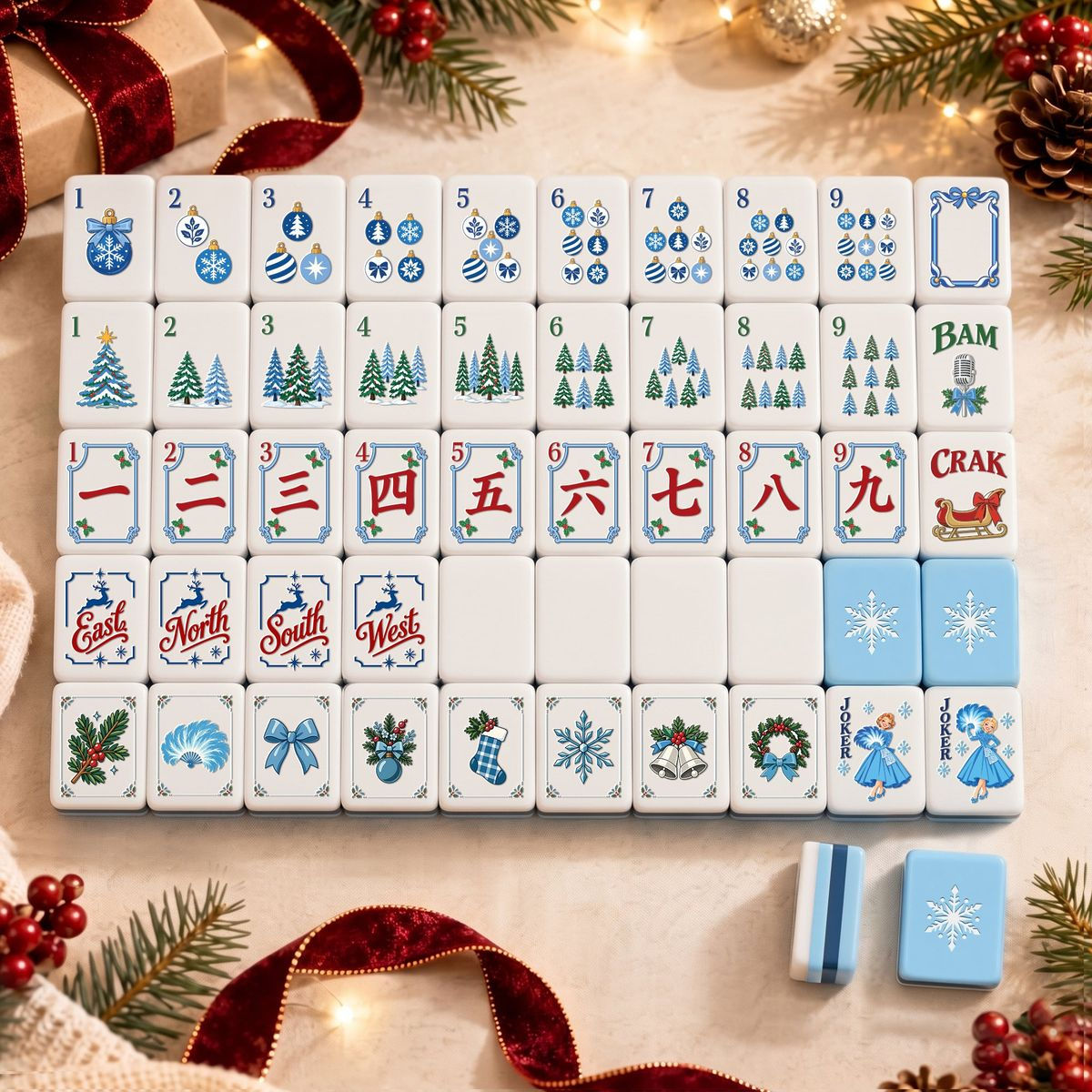
British two-player mahjong uses the American tile set (152 tiles plus 8 jokers) with significant rule adjustments to make the game playable between two people. The Charleston is either skipped or simplified—players often pass tiles directly in one round rather than three. Hands come from the current National Mah Jongg League card, but only hands with fewer than four sets (reducing the tiles drawn) are valid. Players draw and discard normally, and the hand ends when someone wins or the wall is exhausted. Setup takes 10–15 minutes; a game lasts 30–60 minutes depending on experience. Two-player mahjong is competitive and faster-paced than four-player, but hand complexity and strategic depth decrease. We at Mahstead see two-player games as a practical option for couples or learning partners, though British clubs traditionally favour four-player formats and Asian variants like Riichi.
Why is the Charleston skipped in 2-player British mahjong?
The Charleston—the pre-game tile-passing ritual—was designed for four players passing to three opponents. With two players, passing to one opponent becomes redundant and slows setup. Most British two-player rules eliminate it entirely or replace it with a single direct pass: each player discards three tiles face-down; the other takes them. This cuts dead time and keeps pacing tight, essential for keeping two-player games engaging over a full session.

What hands are legal in British two-player mahjong?
British rules restrict valid hands to those playable with fewer draws. The standard four-player hand requires 14 tiles: a winning player melds four sets (pungs, kongs, or quints) and one pair, drawn from a wall of 108 tiles. Two-player variants allow only hands with three sets and one pair (totalling 11 tiles) or fewer, reducing wall pressure and speeding the game. Consult your local British Mahjong Association ruleset or your group's house rules—they vary. Always agree on valid hands before play begins.
How do you set up a 2-player game of British mahjong?
Start with one acrylic American mahjong set: shuffle all 152 tiles face-down on a mat or table. Build a wall 38 tiles long and 2 rows high (standard wall, same as four-player). One player sits East (dealer); the other sits West. East rolls a die to determine who draws first. Skip the Charleston or do a single pass. East draws two tiles; West draws two. Continue alternating until each holds the agreed number (typically 6–8 tiles to start, depending on your hand list). Place the current year's National Mah Jongg card face-up so both can reference valid hands. East then plays.
How does winning differ in 2-player British mahjong?
Victory rules stay the same: reach your declared hand and win by calling "Mahjong!" when drawing a tile or winning a discard. In two-player, there is no chow (sequence) exposure, and jokers cannot be used as single tiles or in pairs—those rules hold as in four-player American mahjong. Scoring often shifts: two-player games may count each win as a single point rather than varying multipliers, keeping tallies simple. Agree on scoring before starting. Ties are rare; if the wall exhausts with no winner, draw is common. British clubs rarely play two-player for record-keeping, so house scores dominate.
What's the biggest mistake new 2-player players make?
New players treat two-player mahjong like four-player chess and discard valuable tiles too early, forgetting the wall is half as deep and the game faster. They also fail to memorize discard history—with only one opponent, tracking what West or East has thrown is critical. Another common trap: keeping hands too complicated. With fewer tiles in play, simple hands (e.g., two pairs of Dots and one pair of Dragons) win more often than ambitious multi-suit melds. Test your hand against the card before each play. Finally, many forget that British two-player rules may not match American four-player or Asian variants—clarify your ruleset in writing before game one.
Comparison: Two-Player British vs. Four-Player American Mahjong
Aspect | Two-Player British | Four-Player American |
Tile count | 152 + 8 jokers (same set) | 152 + 8 jokers (same set) |
Wall depth | 38 tiles × 2 rows | 54 tiles × 2 rows |
Hand sets | 3–4 sets + pair | 4 sets + pair |
Charleston | Skipped or one pass | Three full passes |
Game length | 30–60 min | 60–90 min |
Discard tracking | Critical | Important but shared |
Winning pace | Faster | Slower, more strategic |
Joker use | Never as single or pair | Never as single or pair |
🀄 Shop best-selling mahjong sets →

Choosing equipment for 2-player British mahjong
If you're playing regularly, invest in one quality set. An acrylic best-selling mahjong set is durable, lightweight, and built for frequent reshuffling—important in two-player, where tiles cycle faster. Pair it with a durable mahjong mat to protect your tiles and the surface and to keep your discard wall visible. If you play at different tables, a travel bag keeps your set safe during transport. You don't need racks for two-player—each player typically holds their tiles in hand—but if you prefer posture support, a lightweight pair of racks with pushers is useful. The bare essentials: one set, one mat, and the current year's National Mah Jongg League card.
House rules to agree on before play
Document these in writing to avoid disputes:
Hand selection: Which hands from the card are legal? (three-set, four-set, or all?)
Wall exhaustion: If no one wins, is it a draw or does play pass?
Scoring: Single point per win, or multipliers based on hand rarity?
Discard calling: Can either player call a discard, or only East?
Joker swaps: Are tile substitutions allowed, and under what terms?
Time limits: Are there turn time limits, or is play open-ended?
Ties: If two players declare the same hand simultaneously, who wins?
Post these rules where you play. New players should read them before sitting down.
🎁 See our most-loved mahjong sets & accessories →
Is 2-player mahjong recognised in Britain?
British Mahjong Association rules recognise two-player formats as a training tool and casual option, but tournament and league play remain firmly four-player. This reflects the tradition that American mahjong was designed for four, and two-player is primarily a workaround for small groups or couples learning the game. If you join a British club, you'll see four-player at tables and one or two Asian variants (Riichi, Cantonese) in side rooms, but two-player rarely appears in organised play. However, casual home games with two players are widespread and entirely valid.
What to check before you buy
Tile quality: Ensure acrylic tiles are smooth-edged and evenly weighted so they shuffle fairly.
Tile count: A full 160-tile set includes 152 playable tiles and spare tiles for replacing damaged ones—enough for two-player or four-player.
Mat size: Two-player games need less table space; a compact mat (around 27–31 inches on the short side) fits most home tables.
Card currency: Buy the current year's National Mah Jongg League card. Older cards have expired hands and create disputes.
Storage: If you travel, confirm your bag fits your set, mat, and card together.
✨ Find your Mahstead set — free US shipping →

FAQ
Can you play British mahjong with exactly two players using standard American rules?
No. Standard American mahjong requires four players to function: the tile draws, wall proportions, and hand complexity depend on four opponents. Two-player adaptations modify hand size, wall construction, and sometimes scoring to balance gameplay. Always use two-player-specific rules, not four-player rules with one empty seat.
Do I need special tiles for 2-player mahjong, or can I use a standard American set?
A standard 160-tile American mahjong set works perfectly for two-player. You only use 152 tiles in any game; the spares replace damaged tiles. No special tiles or set size is needed—one standard set handles all variants.
How do we pass tiles before play if there are only two players?
Most British two-player groups skip the Charleston entirely. Some do a single direct pass: each player discards three tiles face-down, and the opponent takes them. This is much faster than three full passes and avoids the redundancy of passing to one opponent.
What's the biggest advantage of 2-player British mahjong over four-player?
Speed and focus. Two-player games last 30–60 minutes and require intense discard tracking since every tile your opponent plays is critical. If you enjoy fast, tense head-to-head play and have limited time or partners, two-player excels.
If my friend and I want to learn mahjong, should we start with 2-player or 4-player rules?
Start with four-player American rules (via a beginner guide like how to play American mahjong), because they teach all concepts fully. Once you're fluent, two-player is an easy switch. Learning two-player first skips foundational ideas and makes four-player later feel alien.


View More
View More
View More
