
6 Bam Mahjong Tile: Meaning, Role & How to Spot It
Last updated: Nov 23, 2026
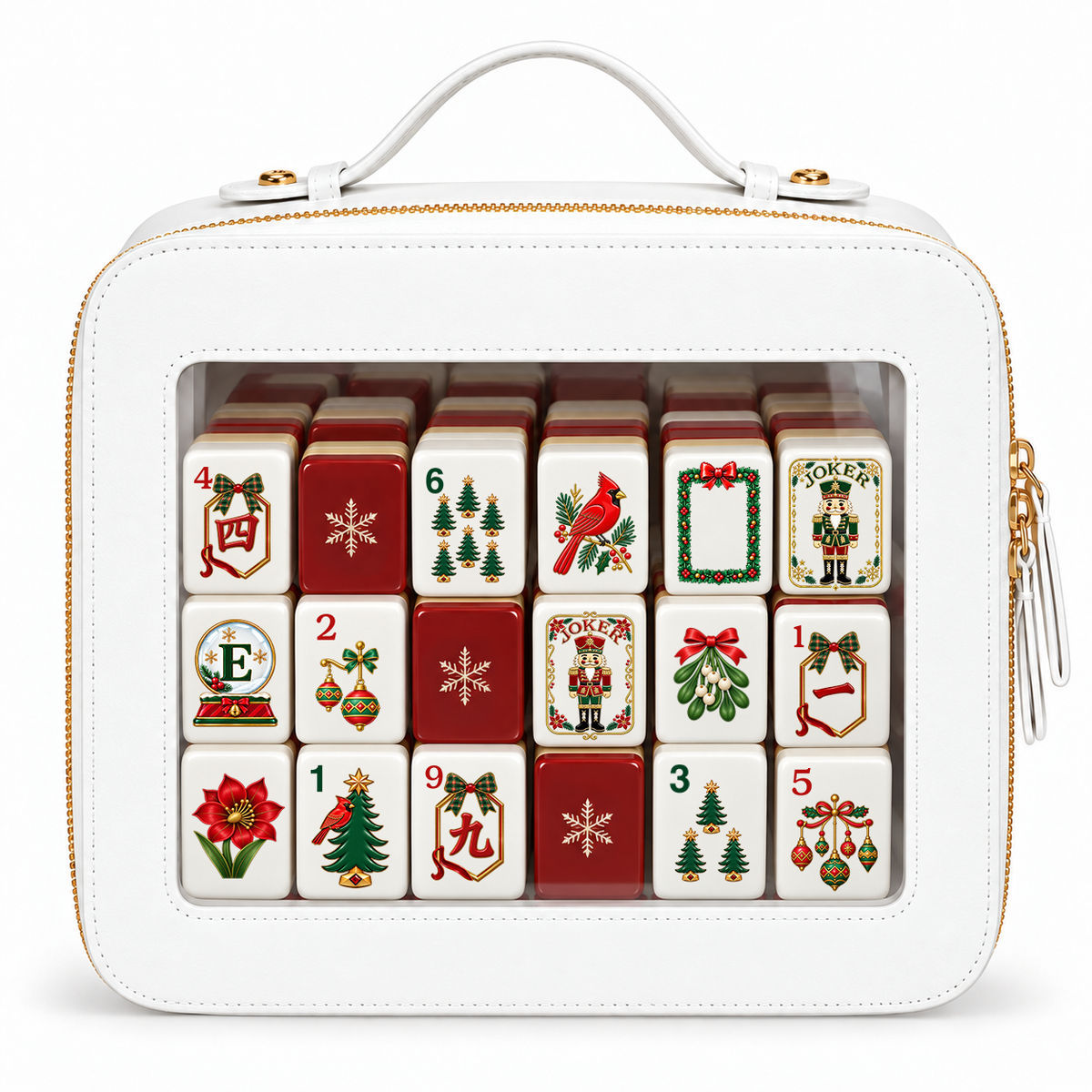
The 6 Bam is a number tile in the Bamboo (Bam) suit, one of three suits in American mahjong. It appears exactly four times in a standard 152-tile set, just like every other numbered tile. On the table, a 6 Bam looks like a small bamboo stalk symbol with the numeral 6 printed underneath—some custom sets feature artwork or humor engraved on the back or edges. In gameplay, it functions like any other number tile: you can use it to form pungs (three identical 6 Bams), kongs (four 6 Bams), or part of a hand pattern listed on the current National Mah Jongg League card. The 6 Bam holds no special magical or numerical power—its role is purely positional within tile combinations you're trying to match on your card. A quality set from our best-selling mahjong sets collection makes the 6 Bam easy to recognize under table lights. 🀄 Shop best-selling mahjong sets →
What makes the 6 Bam different from other number tiles?
The 6 Bam is not different from other number tiles in function—it's identical to the 2 Bam, 5 Bam, or 9 Bam except for its numeral. Every numbered tile (1–9) in each of three suits appears exactly four times in a complete set. The 6 Bam has no special scoring bonus, no restricted use, and no hidden rule. It behaves exactly the same way as the 3 Dot, 7 Crak, or any other numbered tile. The only visual distinction is that some artisan-engraved sets may add decorative details to tiles, but these are cosmetic and do not change play. If you've heard stories about certain numbers being "lucky" or "unlucky," that's cultural superstition, not an American mahjong rule.

Why do players sometimes focus on the 1 Bam specifically?
The 1 Bam typically displays a bird—historically a quail or crane—instead of a single bamboo stalk, making it instantly recognizable. This bird image is a traditional feature across nearly all mahjong sets. The visual distinctiveness helps players spot the 1 Bam quickly during fast-paced draws and discards. When the 1 Bam appears on the discard pile, players can immediately assess whether it opens up hands requiring Number 1 tiles. No rule gives the 1 Bam extra value or power; it simply looks different, so the bird becomes a memory anchor. Custom sets sometimes replace or enhance the bird with personalized engravings, which is why collectors and regular game hosts choose our engraved American mahjong sets for hosting weekly games.
How do you use a 6 Bam in an actual hand?
To play the 6 Bam, consult the current year's National Mah Jongg League card and find a pattern that includes "6 Bam" as one of its tile requirements. The card lists all legal hands for that season. Once you've identified a hand you're building, collect a 6 Bam as part of that combination—either as part of a pung (three 6 Bams together), a kong (four 6 Bams), or in a sextetet or quint if the card calls for those. You can also use a joker to represent a 6 Bam if you don't have the actual tile or want to replace it in a meld. After you've completed your hand and it matches a pattern exactly as printed on the card, you declare your win. Learning to read the card is essential—see our guide on how to read the mahjong card for a detailed walkthrough of the layout and notation.
What's the symbolism behind the Bam suit?
The Bam (Bamboo) suit represents growth, flexibility, and resilience in traditional Chinese symbolism. Bamboo bends but does not break, making it a metaphor for adaptability. The Bamboo suit is one of three number suits (Bams, Craks, Dots) in American mahjong and appears on the National Mah Jongg League card equally to the others. Each Bam tile is printed with stylized bamboo stalks corresponding to its number—1–9 stalks. Some cultural traditions also link Bamboo to spring and new beginnings. Understanding these symbolic roots can deepen your appreciation for the game's heritage, though gameplay itself relies purely on card patterns and tile matching, not symbolism. For a complete overview of all tile types and their roles, explore our pillar guide on what's in an American mahjong set.

How do you tell a quality 6 Bam tile from a poor one?
A quality 6 Bam tile should have crisp, legible numerals that don't fade after years of play. The numeral "6" and bamboo design must be printed or engraved clearly so you can read it under standard table lighting without squinting. Edges should be smooth and free of burrs or rough plastic that would catch on the discard pile. The tile weight should feel substantial but not so heavy that it's uncomfortable to hold in a rack for a full game—acrylic tiles from our best-selling mahjong sets strike this balance. Poor-quality tiles often have smudged numerals, cloudy acrylic that obscures the image, or uneven thickness that causes tiles to catch or bind in racks. If you host weekly games, investing in a durable set means your 6 Bams (and all 151 other tiles) remain readable and enjoyable for hundreds of plays. Check the product images and material description before purchasing—acrylic is more durable than resin for frequent play.
🎁 See our most-loved mahjong sets & accessories →
Comparison: How 6 Bam Differs Across Mahjong Variants
Variant | 6 Bam Role | Appearance | Special Rules |
American | Number tile in combos on card | Bamboo stalks + numeral | No special power; same as 2–9 Bams |
Chinese (classical) | Dragon-suit rank or bamboo count | Varies by regional style | May have scoring multiplier in some rules |
Hong Kong | Bamboo suit number | Similar to American | Forms sequences; can be called/exposed |
Riichi (Japanese) | Character suit or other rank | Differs by tile set | Restricted in certain melds per local rules |
Note: American mahjong uses only pungs, kongs, and quints for Bam tiles—never sequences like 4-5-6.
Common mistakes when playing with the 6 Bam
Confusing 6 Bam with 6 Crak or 6 Dot. Each suit has a distinct symbol: Bams show bamboo, Craks show cracks or wheels, Dots show circles. Learn the three suits' visual signatures before your first game. Assuming 6 Bam is a "high" tile. In American mahjong, numerical value does not determine difficulty or rarity—all numbered tiles (1–9) appear exactly four times each, so a 6 is as common as a 1 or 9. Forgetting the card is law. Only hands printed on the current National Mah Jongg League card are legal—a 6 Bam can only be played as part of one of those patterns, never as a freestyle combination. Mixing up joker substitution. A joker can stand in for a 6 Bam in a meld, but the joker itself cannot be the only tile in a pung or used in a pair. Clarify joker rules before play; see our guide on how jokers work for the complete ruleset.
What to check before you buy a new mahjong set with clear 6 Bams
Numeral and symbol clarity: Hold the tile under a lamp. The "6" and bamboo design must be sharp, not fuzzy or faded.
Acrylic vs. resin: Acrylic is more scratch-resistant and readable over 500+ plays; resin can dull faster.
Set completeness: Confirm the set contains 152 playing tiles plus spares. Missing tiles ruin a game mid-hand.
Tile thickness consistency: Pick up a few random tiles. They should stack evenly without wobbling.
Suit color differentiation: Bams, Craks, and Dots must be visually distinct—check product photos or samples in person if possible.
Engraving or personalization: If you host weekly games, consider custom engravings; see our mahjong titles collection for options.
✨ Find your Mahstead set — free US shipping →

FAQ
Is the 6 Bam considered a "lucky" number in mahjong?
No. In American mahjong, the 6 Bam has no special luck or power—it's purely a tile used to match patterns on the card. Cultural superstitions about numerology don't apply to American rules gameplay.
Can I use a 6 Bam as a pair to win a hand?
Only if the National Mah Jongg League card explicitly shows a hand pattern with "6 Bam" listed as the pair. You cannot create freestyle pairs; all hands must match the current card exactly.
What does the bamboo symbol on the 6 Bam represent?
Six bamboo stalks, representing the number six in traditional tile imagery. The bamboo suit symbolizes resilience and growth; however, this is cultural flavor, not a gameplay mechanic.
How many 6 Bams are in a complete 160-tile American mahjong set?
Four—the same as every other numbered tile. A standard American set has exactly four copies of each 1–9 tile in all three suits (Bams, Craks, Dots). The 160-tile count includes 152 playing tiles plus spare tiles.
Why is the 1 Bam the only tile with a bird instead of a stalk?
Tradition. The bird (usually a quail or crane) has appeared on the 1 Bam across centuries of mahjong sets. It makes the 1 Bam instantly recognizable and helps players spot it quickly during fast play.
Can I substitute a joker for a 6 Bam in a pung?
Yes. A joker can represent any tile in a pung, kong, quint, or sextet, including a 6 Bam. However, a joker cannot be used to form a pair or stand alone as a single tile.
How do I read which patterns use the 6 Bam on the mahjong card?
Scan the card for rows or sections labeled "6 Bam" or check patterns where Bam suit tiles are grouped. The card shows which tile combinations (often called "sections") include the 6 Bam. Our blog post on how to read the mahjong card walks through the full layout step-by-step.


View More
View More
View More
