
American Mahjong Playing With Fewer Jokers: House Rules That Work
Last updated: Nov 23, 2026
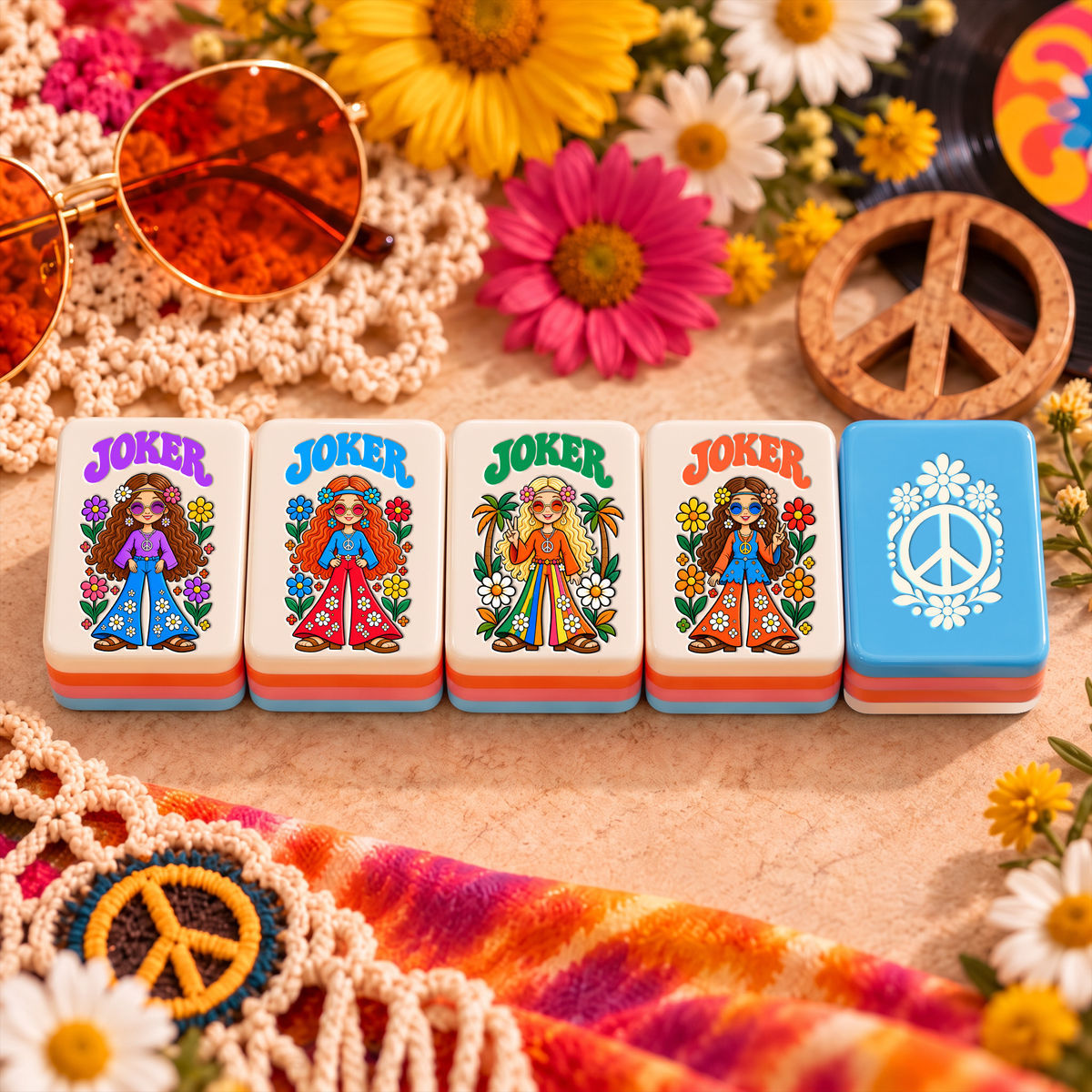
Standard American mahjong uses exactly 152 tiles and 8 jokers; the NMJL card is designed around this count. Playing with fewer jokers (typically 4–6) is possible but changes hand availability, difficulty, and pacing. Fewer jokers make hard hands nearly impossible to complete and speed up rounds because fewer tiles stay in play. Many casual home groups do it to even the odds for beginners or to test memory without wildcards. The real cost: hands on the card that rely on joker substitution become unplayable, rounds end earlier with more dead hands, and scoring shifts unpredictably. We recommend trying it in a single session first—keep a best-selling mahjong set handy with full joker count so you can revert if the table agrees it's not fun.
Playing with fewer jokers is a deliberate house rule, not a shortcut. It's not simpler—it's a different game. Here's what actually happens when you reduce joker count and how to make it work at your table.
What exactly happens when you remove jokers mid-game?
Jokers in American mahjong are wildcards that substitute for any single tile when exposed in a pung, kong, quint, or sextet. Removing jokers doesn't make hands easier; it makes specific hands impossible. If a hand on the card requires four jokers to complete and you're only playing with two, no one can win that hand that round. Players who draw hands heavy in joker-dependent patterns will keep dead hands longer, rounds stall, and frustration builds. The math is unforgiving: each missing joker removes roughly 8–12 viable hands per deal from the pool of 44 possible on any given NMJL card. Most players don't realize this until the third or fourth round of no wins.

Why would anyone choose to play with fewer jokers?
We see three genuine reasons at home tables. First, beginner-friendly nights: newer players often feel overwhelmed by joker flexibility—fewer wildcards force pattern recognition and memory. Second, skill leveling: experienced players sometimes offer it as a handicap against strong opponents. Third, accident: sets go missing, jokers get lost in storage, or someone forgets to count before the Charleston begins. The honest reason rarely voiced? Myth. Some players mistakenly think fewer jokers mean "easier to win," when the opposite is true. Before you adopt this rule, ask the table why—if the answer is "to make it simpler," you'll want to reframe expectations or reconsider.
🀄 Shop best-selling mahjong sets →
How do you adapt the NMJL card when playing with fewer jokers?
You don't adapt the card—you play the same card but accept that some hands won't be available. This is the critical honesty: the National Mah Jongg League card is locked and issued every spring for a reason. Changing the rules mid-season creates scoring disputes and makes comparison across game groups impossible. If you're playing casually (not in a league), you have three options. Option A: Play all hands, live with dead rounds. Accept that 8–12 hands per deal may never be called. Rounds will be longer and someone will likely pass without winning. Option B: Use a house card. Create or print a modified card that removes hands requiring three or more jokers. This takes prep work but preserves playability. Option C: Play a different variant. If jokers bother you, Chinese mahjong variants use no jokers at all and follow different rules entirely. Most home tables pick Option A because it requires no prep—just lowered expectations.
What's the actual impact on round length and scoring?
With 8 jokers (standard): average round is 12–18 draws before someone wins; dead hands occur maybe once per eight rounds. With 4 jokers (halved): average round stretches to 20–30 draws; dead hands occur once per three rounds. With 2 jokers (rare): many rounds end with wall pass and no winner at all. Scoring doesn't technically change—a pung is still worth its face value—but hands that would have scored 60 or 80 points with joker help now never hit the table. Players chasing high-scoring hands get frustrated faster. At one home table we played with 6 jokers and tracked it: 24 rounds played, 19 wins, 5 wall passes. Switch that to 4 jokers and the same group saw 24 rounds, 14 wins, 10 wall passes. Wall passes mean no one scores and the deal passes; that's not better play, it's more downtime.

When should you reject this house rule and stick to standard eight?
Stop and use full joker count if: (1) any player is in a league or plays competitively elsewhere—the muscle memory matters and switching creates errors; (2) someone is learning the game—they need to see how hands actually play, not a gimped version; (3) no one can articulate a reason beyond "it's different." If the table's goal is to make mahjong harder or slower, there are better tools: play a mat without a wall, skip the Charleston, use a hand reference card less often, or rotate the dealer role instead of letting one person hold it. These tweaks teach focus without breaking the game. If someone lost jokers and you need to play tonight, here's the real choice: either buy a replacement set with engraved American mahjong tiles or commit to playing a full game with a borrowed set next week. Fewer jokers is worth trying exactly once; if it doesn't spark joy, move on.
🎁 See our most-loved mahjong sets & accessories →
Practical setup: what you'll need to track and how to start
If your table votes to try fewer jokers, do this before the Charleston. First, decide on a target number: 4, 5, or 6 (never below 4; you'll see no winners). Second, count out that many jokers and set the rest aside in a cup or envelope so they can't sneak back in. Third, brief every player: "We're testing four jokers tonight. Expect slower rounds and dead hands. We'll play three rounds this way, then decide if we like it." Fourth, keep score by round—you'll spot the difference quickly. Fifth, have the standard-joker set ready in case someone says "this isn't fun." We run this demo at least twice a year when someone asks, and we've never had a group ask to keep fewer than 8 jokers past the first night. The table always reverts, sometimes laughing about how "boring" it felt. That's not a failure; it's data.
Joker Count | Best For | Round Length | Dead Hands Per 8 Rounds | Verdict |
8 (standard) | All skill levels, league play, casual home games | 12–18 draws | ~1 | ✓ Balanced, proven |
6 | Slight handicap, memory focus | 16–22 draws | ~2 | ✓ Playable, noticeable change |
4 | Extreme beginner aid (not recommended) | 22–30 draws | ~4–5 | ✗ Too slow, frustrating |
2 | Novelty only | 25+ draws or wall pass | ~5+ | ✗ Rarely fun |
Honest before-you-buy checklist
Before trying fewer jokers, ask yourself:
Do I own or have access to a standard 152-tile American mahjong set with all 8 jokers?
Has my table played standard American mahjong at least five times?
Does everyone at the table want to try this, or just one person?
Am I willing to switch back to 8 jokers if it doesn't work?
Do I have a printed NMJL card from the current year, not a house-modified version?
If you answered no to three or more, start with the beginner's guide instead. Fewer jokers is an advanced experiment, not a gateway rule.
✨ Find your Mahstead set — free US shipping →

FAQ
Can I permanently remove jokers from my home set so I don't accidentally grab them?
Yes—store them separately in a sealed bag labeled with the year and set name. We recommend storing spare tiles and jokers in a small pouch inside your case or bag so they travel with the set but stay distinct. Over time, jokers fade or crack; keeping extras is smart practice.
What if I lose two jokers and have only 6—can I use a blank tile as a joker?
Not in standard American mahjong. Blanks are not jokers and have no substitute value. If you're missing jokers, either replace them or play with 6 jokers deliberately. Never mix blanks and jokers in the same hand.
Do Chinese or Hong Kong mahjong use jokers at all?
Most classical Chinese variants use zero jokers; the game relies entirely on melds and honor suits. Hong Kong mahjong and some regional styles add one or two jokers, but rules differ vastly from American. If you want no jokers, learn Chinese mahjong instead of removing jokers from American rules.
How do I know if a hand needs jokers to work?
Hands with long runs of consecutive tiles (like 1–2–3–4–5–6–7–8–9 in one suit) or multiple high-value patterns often require jokers to fill gaps. The card doesn't always show this explicitly. The easiest test: try to build the hand without jokers first; if you can't close it, that hand needs wildcards.
If we play with 6 jokers instead of 8, do we change the scoring?
No. The scoring chart stays the same—a pung or kong pays its listed value whether you used one joker, zero jokers, or a straight tile match. What changes is which hands you can actually complete, not what they're worth.
Can I buy a mahjong set with fewer jokers built in?
Standard American mahjong sets contain 8 jokers by design. Mahstead and other manufacturers sell 160-tile sets (152 playing tiles plus spares) with the full joker count. If you want permanent fewer-joker sets, you'd need to buy and remove jokers yourself or commission a custom set—neither is common or recommended for casual play.


View More
View More
View More
