
4 Crak Mahjong Tile Meaning and Symbolism Explained
Last updated: Nov 20, 2026
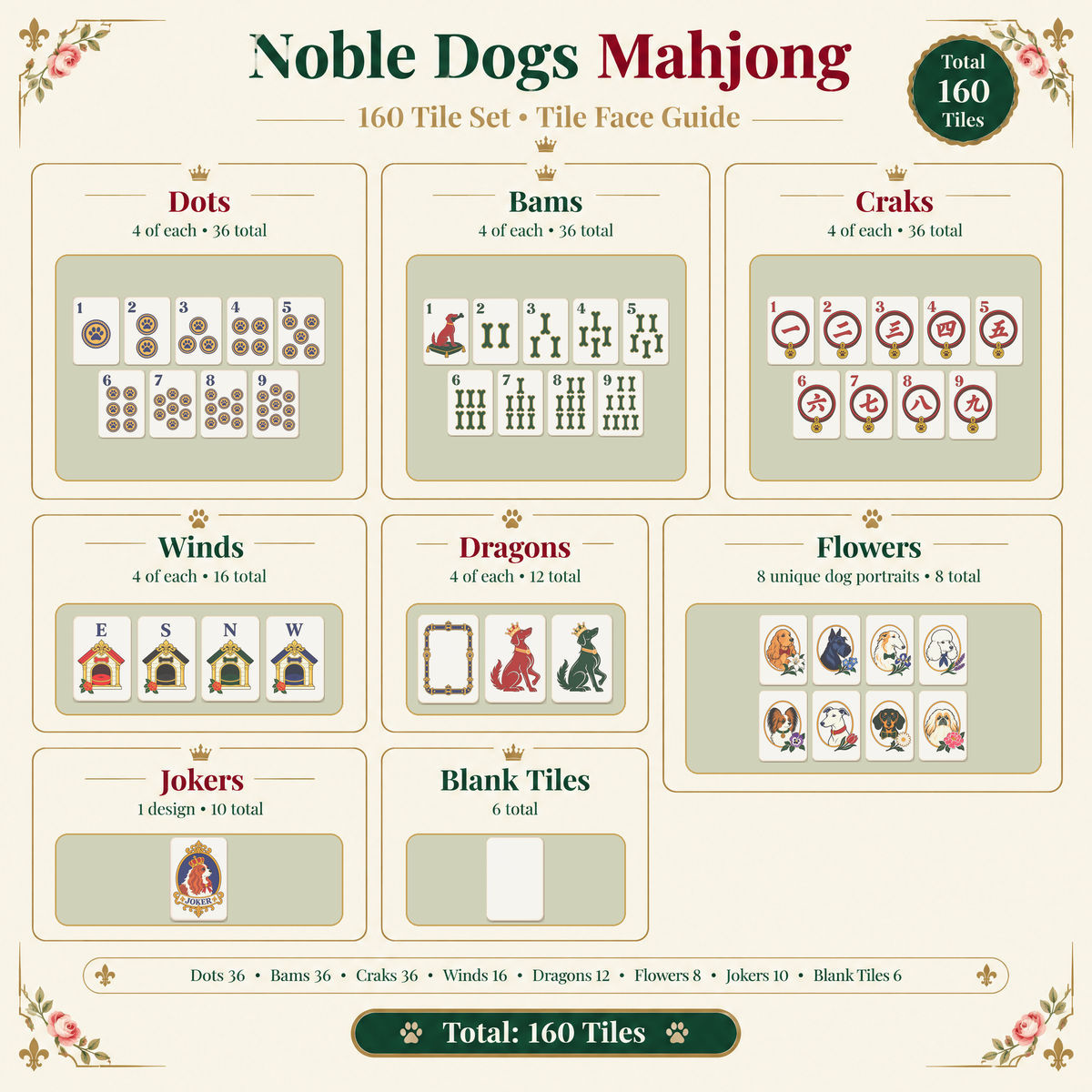
The 4 Crak is a number tile belonging to the Craks (Characters) suit, one of three number suits in American mahjong alongside Bams and Dots. In a standard 160-tile set, there are exactly four copies of the 4 Crak tile—one for each player's hand. The tile carries no inherent rank or power; its value depends entirely on which winning hand pattern from the current National Mah Jongg League card includes it. The Crak suit is traditionally linked to the Green Dragon in Chinese symbolism, and the 4 Crak often appears in mixed sequences and melded combinations across the card's patterns. It is neither a terminal tile (1 or 9) nor a wind or dragon, so it cannot be used as a pair on its own in most hands. When you encounter a 4 Crak in your rack, its usability hinges on the hand you are pursuing from the current year's card. Mahstead's engraved sets clearly mark each tile so new and returning players can quickly identify suits and numbers during play.
What tiles belong to the Craks suit?
The Craks (also called Characters or Wan) form one of three numbered suits in American mahjong. The suit runs from 1 to 9, with four identical copies of each number in a standard set. The 1 Crak traditionally bears a symbol of a scroll or banner, while 2–9 are marked with clear numeral indicators. All Crak tiles hold equal hierarchical weight; the 4 is neither "stronger" nor "weaker" than the 1, 7, or 9. Its role is dictated solely by the hand pattern you are building that game.
Where does the 4 Crak appear on the League card?
The National Mah Jongg League issues a new card every spring with hundreds of legal winning patterns. The 4 Crak appears in many of these—typically in sections requiring "quint" (five-of-a-kind) melds, "sextet" (six-of-a-kind) melds, or mixed combinations pairing number tiles with honors (winds, dragons, flowers). You cannot memorize exactly which hands include the 4 Crak without consulting the current year's card; however, middle-rank number tiles like 4, 5, and 6 are more flexible than terminals (1 or 9) and often fill supporting or "floater" roles in complex patterns. Always reference how to read the mahjong card when hunting for the 4 Crak in your strategy.
🀄 Shop best-selling mahjong sets →
Can the 4 Crak pair with any other Crak?
No. In American mahjong, a pair must consist of two identical tiles—both 4 Craks, both Red Dragons, or both East Winds, for example. You cannot pair a 4 Crak with a 3 or 5 Crak; this is a foundational rule that separates American mahjong from Chinese variants that allow "chows" (sequences like 3-4-5). The only tile that can substitute for the 4 Crak in a pair is a joker, though jokers are heavily restricted and cannot be used as a single tile or in a pair alone on the League card. If you need two 4 Craks for a winning hand and you have drawn only one, your hand cannot complete unless you pick up another 4 Crak or use a joker in a specific hand pattern where the card explicitly allows it.
How is the 4 Crak used in exposing melds?
When you have a pung (three of the same tile), kong (four of the same tile), or longer meld of 4 Craks, you may expose it face-up on the table. This signals to other players that you are working toward a hand that includes that pung or kong. Exposing a meld of 4 Craks is often a tactical move: it narrows your winning options (other players see what you need), but it also reserves those four tiles so no one else can draw them from the wall. In American mahjong, you can only expose pungs, kongs, quints, and sextets—never shorter groups or sequences. A pung of 4 Craks counts as three tiles; a kong counts as four; a quint (adding a joker) counts as five; and a sextet (adding two jokers or two real tiles if the card allows) counts as six.
What's the difference between Craks and the other suits?
Craks, Bams, and Dots are functionally identical in American mahjong—each runs 1 to 9, each has four copies of each number. The only distinction is visual: Craks bear a character or symbol, Bams display bamboo sticks (except the 1 Bam, which shows a bird), and Dots show circular pips. There is no rank hierarchy between suits; a 4 Crak is not "better" or "worse" than a 4 Bam or 4 Dot. Strategic value comes from the hand patterns on the current year's card, not from any inherent suit power. When learning the game, many beginners confuse suit preference with game strategy—in reality, all three suits are interchangeable tools for building winning patterns.

Quick Decision Table: When You Have a 4 Crak in Hand
Scenario | Action | Why It Matters |
You hold one 4 Crak and see no hand on the card requiring it. | Discard it early in the game. | Reduces dead weight; frees space for tiles that build viable hands. |
You have two 4 Craks and found a hand needing a pair. | Keep both; work toward that pattern. | Pairs are required; without both tiles (or a joker substitute), the hand is impossible. |
You've exposed a pung of 4 Craks; you draw the fourth (kong). | Declare "Kong" and draw a replacement. | Kongs are legal melds that signal progress; the replacement tile may complete your hand. |
You drew a 4 Crak but no hand on the card has appeared. | Look for hands requiring mixed melds or joker combinations. | Not every number tile works in every hand; context matters more than tile frequency. |
🎁 See our most-loved mahjong sets & accessories →
Why does symbolism matter if the 4 Crak has no rank?
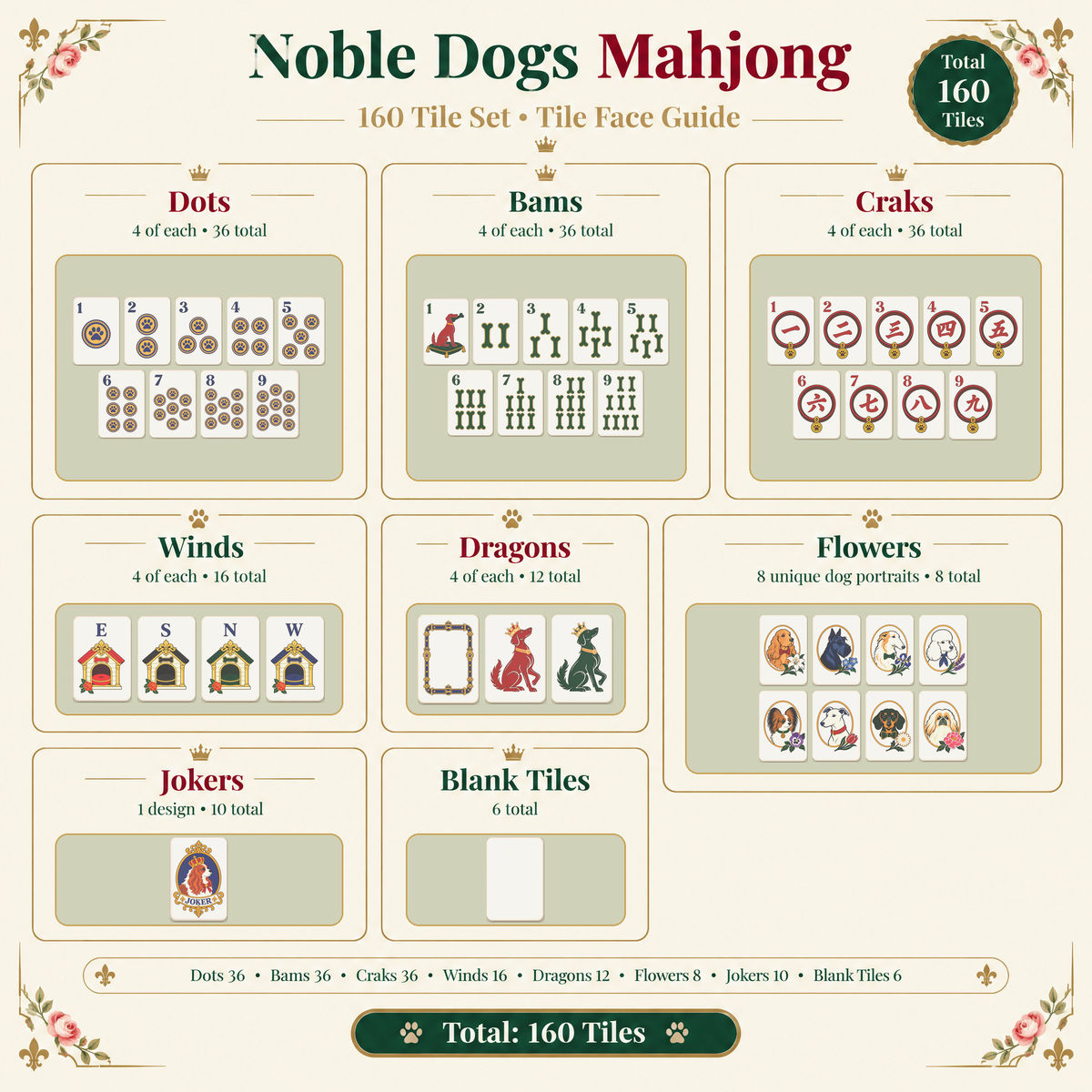
In modern American mahjong, tile symbolism is cultural heritage, not gameplay mechanic. The Craks suit descends from Chinese mahjong's Wan (ten-thousands), and the Green Dragon traditionally pairs with Craks in old systems. However, the League card makes no reference to this symbolism when defining legal hands; the 4 Crak is valued only by its position in the winning patterns printed each spring. Knowing the history helps you remember suit names and feel connected to the game's roots, but it will not improve your strategic play. Focus instead on what's in an American mahjong set and how each tile's 152 identical copies are distributed across all four players.
Common mistakes when handling the 4 Crak
Expecting it to behave like a Crak chow (1-2-3 or 3-4-5). American mahjong allows no sequences. The 4 Crak only works in pungs, kongs, or longer melds of identical tiles, never in a sequence.
Holding a 4 Crak too long hoping a hand appears. If you've checked the current card and found no viable hands for your tiles, discard the 4 Crak by turn four of the game. Dead tiles clog your hand.
Confusing a pung of 4 Craks with a pair. A pung is three identical tiles; you still need the pair elsewhere in your hand. Many new players try to use a pung as a pair and lose the hand.
Assuming all Craks rank equally in strategy. They do—but the card does not treat 1, 2, 3, 4, 5, 6, 7, 8, or 9 Craks identically across hands. A 1 Crak is terminal and often harder to use; a 4 Crak is versatile but only if a hand on the card includes it.
What to check before you buy a mahjong set
If you're starting out or upgrading, ensure your set has clearly marked Crak tiles (usually with a character symbol or number), four copies of each number 1–9 in each suit, and high-contrast tile faces so you can spot the 4 Crak in a crowded rack. Acrylic sets with engraved numerals reduce misreads compared to painted tiles, which can wear over time. A best-selling mahjong set pairs clearly marked tiles with matching racks and pushers so your 4 Craks (and all other tiles) stay upright and visible during play. Avoid sets with cramped numerals or unclear suit symbols; a few minutes of confusion per game adds up over a season.
✨ Find your Mahstead set — free US shipping →
FAQ
How many 4 Crak tiles are in a standard American mahjong set?
Exactly four—one for each player. A standard 160-tile set contains 152 playing tiles (four copies each of every number, wind, dragon, and flower) plus spare jokers and blanks. No set contains five or more of any tile.
Can I use a joker in place of a 4 Crak for a pair?
No. Jokers cannot be used as a single tile or in a pair. They may only substitute within melds (pungs, kongs, quints, sextets) where the current year's League card explicitly allows them, and only in groups of three or more tiles.
Does the Green Dragon symbol on a 4 Crak affect how I play it?
No. Symbolism is decorative heritage, not a gameplay rule. The 4 Crak's value depends entirely on which winning hand patterns from the current year's card include it. The Green Dragon is a separate honor tile with its own rules.
Is a 4 Crak easier or harder to use than a 1 or 9 Crak?
A 4 Crak is slightly more versatile. Terminal tiles (1 and 9) appear in fewer hand patterns and are often harder to place. Middle-rank tiles like 4, 5, and 6 fit into more mixed melds, but always check the current card—no hand is guaranteed.
What happens if I draw four 4 Craks and expose all of them?
You cannot expose a group larger than a sextet (six tiles). If you have four 4 Craks and no jokers, you expose a kong (all four). If you had five or six 4 Craks (via jokers), you'd expose a quint or sextet. After a kong, you draw a replacement tile from the wall—a standard American mahjong rule.
Can the 4 Crak connect to a 5 Crak in a row?
No. American mahjong has no sequences or chows. Tiles only form pungs, kongs, quints, sextets (identical tiles), or pairs. A 4 and 5 Crak together form no legal meld.


View More
View More
View More
