
3 Dot Mahjong Tile Meaning & Role in American Play
Last updated: Nov 23, 2026
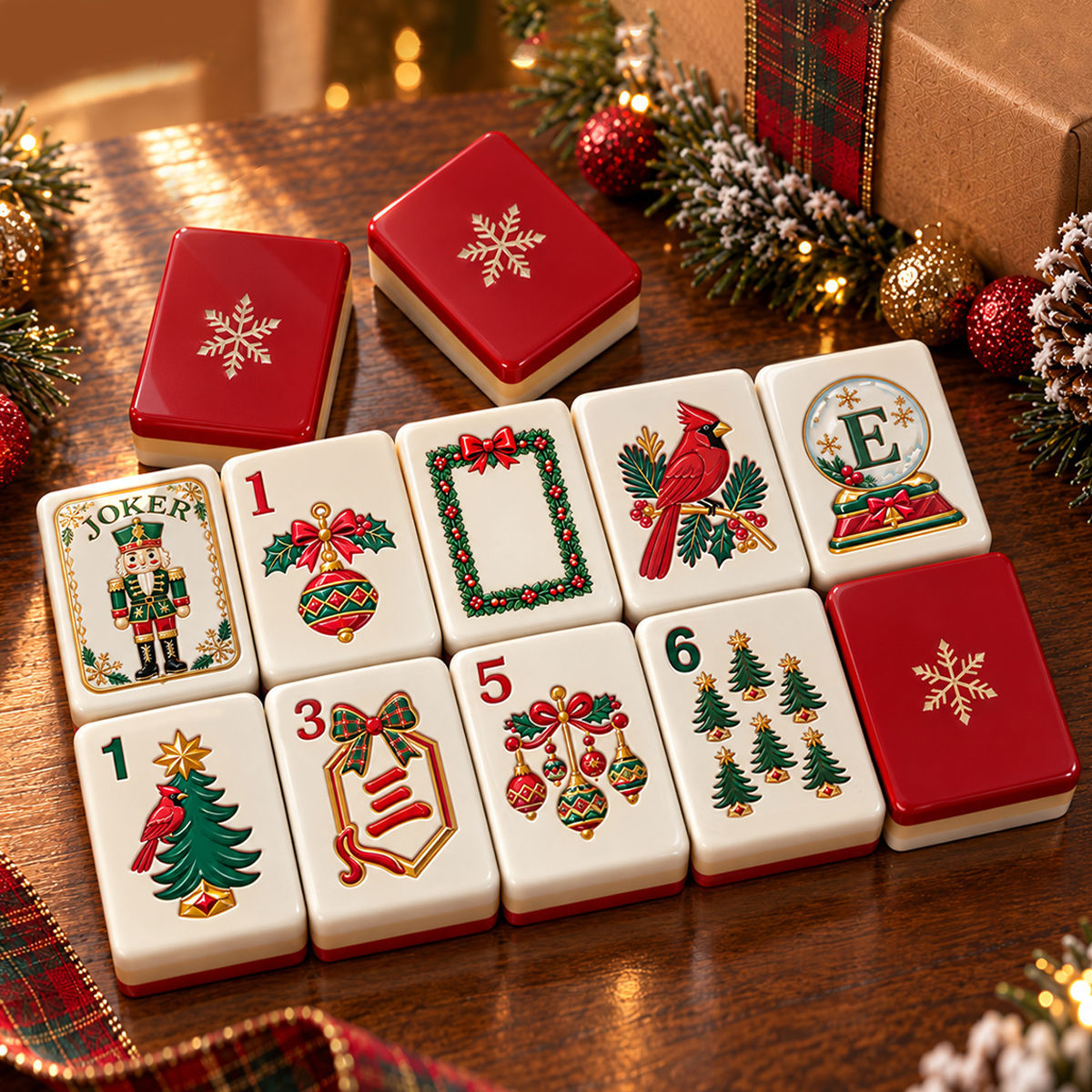
The 3 Dot is a basic number tile in the Dot suit, one of three suits in American mahjong alongside Bams and Craks. Like all numbered tiles, it appears exactly four times in a 152-tile set (the standard 160-tile set we play with includes spares). The Dot suit typically shows dot symbols on the face—the 3 Dot displays three small round marks. It has no magical meaning or bonus points; its value depends entirely on the hand pattern you're building from the current year's National Mah Jongg League card. A 3 Dot can form a pung (three identical 3 Dots), a kong (all four copies), or combine with other Dots in exposed sets or concealed tiles. New players often overthink individual tiles, but the 3 Dot works exactly like the 5 Dot or 8 Dot—it's just a piece of a larger hand strategy, not a standalone winner.
The 3 Dot is one of nine number tiles in the Dot suit, one of three suits in American mahjong alongside Bams and Craks. Like all numbered tiles, it appears exactly four times in a 152-tile set. The Dot suit typically shows dot symbols on the face—the 3 Dot displays three small round marks. It has no magical meaning or bonus points; its value depends entirely on the hand pattern you're building from the current year's National Mah Jongg League card. A 3 Dot can form a pung (three identical 3 Dots), a kong (all four copies), or combine with other Dots in exposed sets or concealed tiles. New players often overthink individual tiles, but the 3 Dot works exactly like the 5 Dot or 8 Dot—it's just a piece of a larger hand strategy, not a standalone winner.
🀄 Shop best-selling mahjong sets →
What does the 3 Dot symbol actually show?
The 3 Dot displays three small circular or dot-shaped marks arranged on the tile face, making it instantly recognizable at the table. Most traditional tile designs cluster these three dots in a triangular or diagonal pattern so players can count them quickly during the fast-paced game flow. Some modern sets use larger, bolder dots for accessibility; others keep them minimal and classic. The key is that if you count three separate marks and the tile is in the Dot suit (not Bams or Craks), you're holding a 3 Dot—no ambiguity.

How does the 3 Dot fit into an American mahjong hand?
The 3 Dot has no fixed rank or power; it exists only as a building block within the hand patterns printed on the current year's National Mah Jongg League card. You might use three 3 Dots as a pung (exposed or hidden), four 3 Dots as a kong, or leave it concealed while you pursue a hand that calls for "3-4-5 Dots" in a specific sequence on the card. Its role changes every hand—sometimes it's essential, sometimes you'll discard it in the first draw. Unlike the winds or dragons, which carry cultural or positional weight, the 3 Dot is a utility tile: valuable only in the context of the pattern you're chasing.
What's the difference between a 3 Dot and a 3 Bam or 3 Crak?
All three are the number 3, but they belong to different suits with distinct tile symbols. The 3 Bam shows three bamboo stalks (or stylized stick marks), the 3 Crak displays three cracked lines or abstract shapes, and the 3 Dot has three circular marks. They cannot be mixed in the same pung or kong—three 3 Dots is a valid set, but a 3 Dot, 3 Bam, and 3 Crak together do not form a legal combination. Understanding suit separation is critical: when you're reading the card, you must match not just the number but the suit to build a winning hand.
Why do new players get confused about the 3 Dot?
Beginners often assume individual tiles carry inherent meaning or luck—that the 3 Dot is somehow "less valuable" than, say, the 8 Dot or a dragon. In reality, every numbered tile is equally neutral. What matters is the hand you're trying to win: a hand pattern might call for a pung of 3 Dots, or it might require none at all. The 3 Dot only "matters" when the card tells you it does. Another source of confusion: new players sometimes mix suits or forget that you can't combine a 3 Dot with non-Dot tiles in a single exposed set. Keeping a clear mental image of suit symbols and reviewing what's in an American mahjong set before your first few games removes most of this friction.

How does the 3 Dot compare across mahjong variants?
In Chinese and Hong Kong mahjong, the 3 Dot (called 3 Dots or 3 Circles) serves a similar role as a numbered suit tile, though the overall hand-building rules differ significantly—Chinese mahjong uses chows (1-2-3 sequences), while American mahjong does not. In Riichi (Japanese) mahjong, numbered tiles are called "man" (1–9) and work within a more rigid system of sequences and sets; the cultural weight and scoring system are entirely different. In Taiwanese mahjong, the 3 Dot exists but appears in a game with wildly different point structures and tile usage. If you're learning American mahjong, think of the 3 Dot only as a piece of the American game—the card, the pung/kong exposure rules, and the absence of sequences all define how it functions here. Don't carry assumptions from other variants into the American table.
🎁 See our most-loved mahjong sets & accessories →
How to spot and organize your 3 Dots during play
At the table, your tiles sit on a rack or mat in front of you. When sorting your hand, group tiles by suit (all Dots together, all Bams together, all Craks together, then winds and dragons). Within the Dot suit, arrange by number 1–9 from left to right or in your preferred order. As you draw and discard, you'll quickly train your eye to recognize the 3 Dot's dot pattern without counting each one—it becomes muscle memory. If your set has engraved or printed suit symbols, the 3 Dot label or name will be written or etched on the tile, making sorting even faster during a fast game. Most of our best-selling sets use clear, high-contrast printing or engraving so players of all vision levels can spot a 3 Dot instantly.
Practical decision-making: when to keep or discard a 3 Dot
Early in a hand (after the Charleston and first few draws), you're still building toward a pattern on the card. If the 3 Dot doesn't fit any pattern you're chasing, discard it—it's just inventory taking up space. If it could fit multiple patterns, keep it a round or two while you wait for other tiles to clarify your direction. Mid-game, if you've committed to a hand that needs a 3 Dot pung or other 3-Dot combination, hold tight; if a hand no longer needs it, release it immediately so an opponent doesn't steal it. Late-game (players are calling), the 3 Dot becomes dangerous: every discard might let someone win. Never throw it unless you're certain no one is waiting for Dot tiles. A simple rule: the 3 Dot is safe to discard only if no player has called and you've verified the card has no active pattern using it.
✨ Find your Mahstead set — free US shipping →
Comparison: Tile Roles in American Mahjong
Tile Type | Symbol | Count | Role | In a Hand? |
3 Dot | Three circles | 4 per set | Numbered suit tile, builds pungs/kongs only | Only if card calls for it |
Wind (North, East, South, West) | Direction mark | 4 per direction | Bonus (East), or part of hand | If card specifies |
Dragon (Red, Green, White) | Character mark | 4 per dragon | Bonus (East), or part of hand | If card specifies |
Joker | Joker mark | 8 per set | Wild tile, substitutes for any other tile in exposed sets | Never in a pair or single tile |
1 Bam | Bird or bamboo | 4 per set | Numbered suit tile (same logic as 3 Dot) | If card calls for it |
What to check before you buy a mahjong set for learning the 3 Dot
Tile clarity: Can you clearly count three dots on a 3 Dot tile from 12 inches away? If not, you'll struggle during play.
Suit differentiation: Are Dot, Bam, and Crak symbols visually distinct? You should never confuse a 3 Dot with a 3 Bam at a glance.
Size: Standard tiles are roughly 1 inch × 1.5 inches. If they're too small, new players will misread them under table lighting.
Material durability: Acrylic tiles with engraved or printed symbols last years of weekly play without fading.
Complete set: Confirm you have all four copies of the 3 Dot (and every other numbered tile 1–9 in all three suits) before play begins—mismatches invalidate a hand.
Spare tiles included: A 160-tile set includes spares, which protects you if a tile ever cracks or is lost.
The role of the 3 Dot in strategic play
Once you understand that the 3 Dot is a neutral, utility number tile, you can deploy it strategically. Early-game, it's flexible; you're gathering information about which suits and numbers are flowing around the table. Mid-game, hold it if you're building a hand that calls for Dot sets; discard it fearlessly if you've pivoted to a different pattern. Late-game, be cautious: a discarded 3 Dot can gift an opponent a pung or finish a hand. The 3 Dot's "meaning" is entirely situational—it's powerful only in the context of the hand you're pursuing and the board state at that moment. Master this concept, and you've mastered how every numbered tile works in American mahjong.

FAQ
Is the 3 Dot considered a "lucky" or "unlucky" tile in American mahjong?
No. American mahjong has no superstition around individual tiles—only strategy. The 3 Dot is lucky if your hand needs it, unlucky if you're trying to discard it and an opponent wins. Its value is purely contextual, based on the card and the game state.
Can I use a 3 Dot in a chow or sequence like in Chinese mahjong?
No. American mahjong has no chows or sequences. The 3 Dot can only appear in exposed pungs (3 identical tiles), kongs (4 identical), or quints/sextets (5–6 identical), or hidden in your concealed hand.
How do I tell the 3 Dot apart from the 3 Bam if the lighting is bad?
The 3 Dot has three circles or dots; the 3 Bam has three bamboo stalks or stick marks. If you're still unsure, ask another player or consult the tile faces close to a light source before you discard. Clear, high-contrast tile designs eliminate this problem entirely.
What if my mahjong set is missing a 3 Dot or has only three copies instead of four?
The set is incomplete and invalid for play. You must have all four copies of every numbered tile (1–9 in each suit) to play a legal game. Buy a complete replacement set or use spare tiles from another set to fill the gap.
Do I count the 3 Dot the same way in two-player or three-player mahjong?
Yes. The 3 Dot retains its identity and symbol across all player counts. Rules for 2 and 3-player mahjong adjust hand-building and draw mechanics, but individual tiles like the 3 Dot remain constant.
Can a 3 Dot be used as a joker or wild tile?
No. Only joker tiles (marked with "Joker") can substitute for other tiles. The 3 Dot is always a 3 Dot and cannot replace another tile's role in a hand.


View More
View More
View More
