
Mahjong in Pop Culture: Why the Game Is Everywhere in 2026
Last updated: Nov 23, 2026
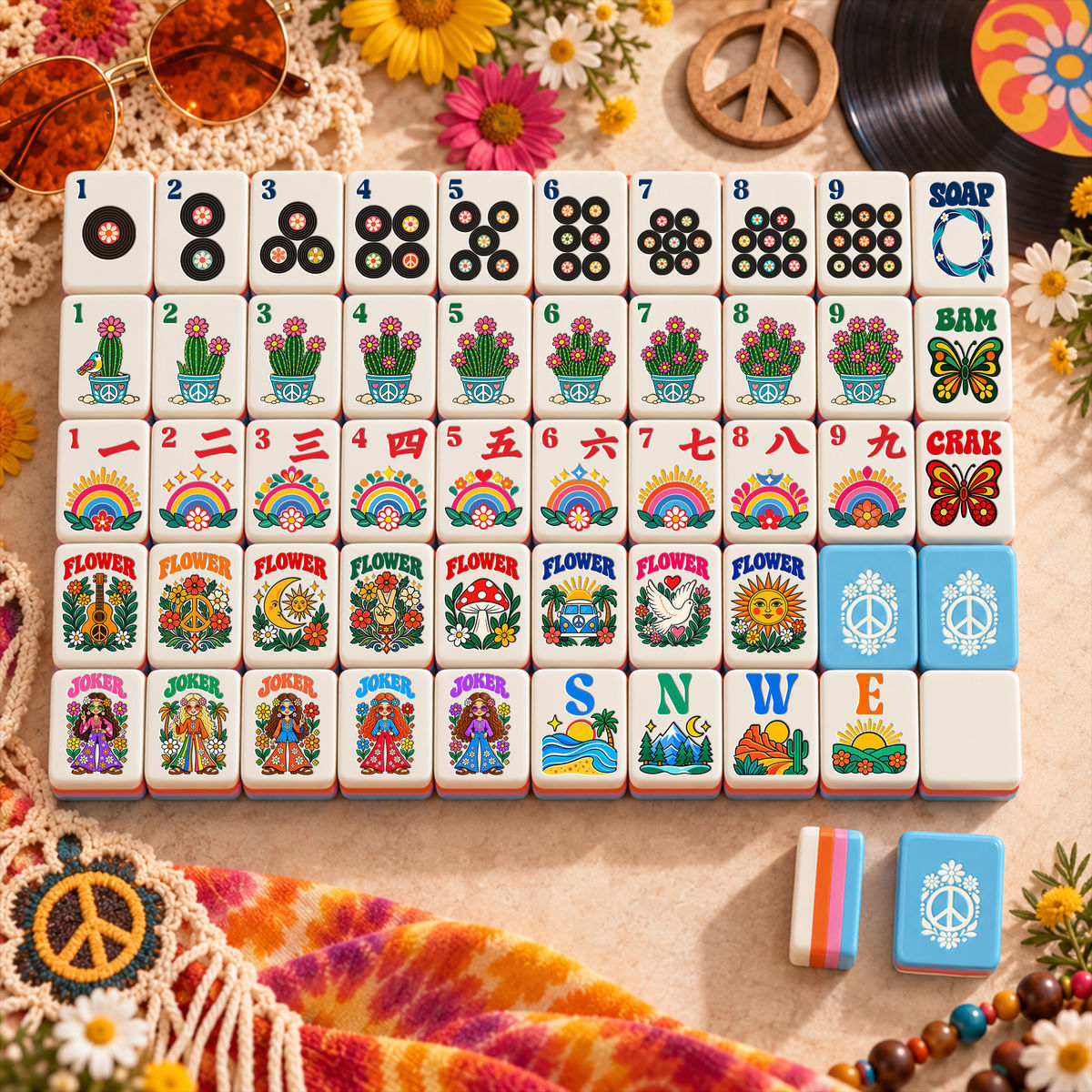
Mahjong's pop-culture explosion stems from three forces: Hollywood's discovery (especially the 2018 film Crazy Rich Asians and 2023's Mahjong), TikTok's algorithm amplifying tile-clacking ASMR, and Gen Z reclaiming their family heritage online. The game appears in Netflix shows, high-end fashion collaborations, celebrity poker nights, and luxury design. American mahjong remains the dominant format in the US and remains played with the current year's National Mah Jongg League card, 152 tiles, and exactly 8 jokers—making it instantly recognizable on screen. We're seeing best-selling mahjong sets fly off shelves and custom-engraved designs become gifts for friends discovering the game through pop culture rather than family tutorials.
How did Hollywood make mahjong cool?
Crazy Rich Asians (2018) wasn't the first film to feature mahjong, but it was the first to make the game the aesthetic center of a blockbuster narrative. The opening scene—a high-stakes Singapore mahjong game between wealthy women—instantly coded the game as glamorous, intelligent, and culturally significant. The tile sounds, the red silk, the tension. Every element signaled that mahjong wasn't your grandmother's hobby; it was power and legacy on display. Since then, Mahjong (2023), Tile (various productions), and recurring storylines in shows like The Marvelous Mrs. Maisel and international dramas have kept the game in rotation. Studios discovered that mahjong's visual rhythm—tiles clicking, walls building, discards piling—translates beautifully to film. The game became shorthand for family, belonging, and rebellion all at once.

Why is mahjong everywhere on TikTok?
TikTok's algorithm rewards ASMR content, and mahjong is pure ASMR gold: shuffling, wall-building, tile-drawing, and discarding produce satisfying acoustic moments that billions find oddly calming. "Mahjong content" now spans casual 15-second tile clips, full-game streams with commentary, "learn American mahjong" tutorials, and #MahjongTok communities numbering in the tens of millions of views. The platform has also become a teaching tool: beginners finding the National Mah Jongg League card confusing can watch real players break down hand-reading, the Charleston, and joker strategy in digestible segments. Creators have built subscriber bases purely on mahjong, some hosting weekly games on streams. TikTok democratized knowledge of the game and stripped away gatekeeping—anyone with a phone and a best-selling set can now teach or play publicly.
What's the generational shift in who plays?
For decades, American mahjong was predominantly played by older women in suburban living rooms and Jewish community centers—a game passed down as a cultural practice. Now Gen Z and younger millennials are discovering it through screens and seeking it out with friends. The shift is real: mahjong meetups in major cities now attract 20- and 30-somethings; university clubs have formed; college dorm rooms host games. The appeal differs from family tradition: younger players are drawn to the intellectual puzzle, the social ritual without phones, and the aesthetic—mahjong is now fashion. Engraved sets, designer mats, and luxury cases appeal to this audience differently than they do to traditional players. They're also playing variants beyond American rules: Chinese mahjong, Riichi (Japanese), and Hong Kong mahjong have gained followers who learn through YouTube and online communities. This generational bridge has created a market boom that's sustained and growing.
How is mahjong used in fashion and design?
High-end retailers and independent designers have embraced mahjong's visual language: dragon symbols, tile motifs, red-and-gold color palettes, and bamboo textures appear on everything from handbags to jewelry to home décor. Luxury brands have released mahjong-themed collections, and independent makers sell mahjong socks, pins, scarves, and phone cases. Interior designers use mahjong mats and racks as table-setting centerpieces. The tiles themselves—their geometry, their symbols, their weight—have become collectible art objects. Custom engraved American mahjong sets are now gifts for people who don't yet play but want the cultural cachet. Tableware, stationery, and home textiles featuring mahjong imagery sell briskly online. What began as a game has become a lifestyle signifier: owning a beautiful mahjong set signals taste, cultural awareness, and connection to heritage or aspiration.

Why are celebrity and influencer endorsements driving sales?
Celebrities don't typically endorse games formally, but their visibility while playing—on screen, at private events, or posted casually on social media—creates massive cultural permission. When a beloved actor appears in a film playing mahjong, or when a influencer posts a photo of their game night, it normalizes participation and converts curiosity into sales. Mahjong's presence in luxury settings amplifies this: if the game is played at high-stakes tables by wealthy characters, casual players feel invited into an aspirational world. Unlike games that require a gaming console or specific tech, mahjong is immediately accessible once someone sees it and decides to buy a set. This frictionless conversion—from pop-culture exposure to purchase—is driving the market. Players are also sharing their purchases online, creating social proof loops: someone sees a gorgeous engraved set on Instagram, buys one, posts unboxing photos, and the cycle continues.
Pop Culture's Impact on What Players Buy
Format | Why Pop Culture Drives It | Who Buys It | Cultural Signal |
Standard American sets | Recognizable from films; iconic tile imagery | New players, families | "I'm learning the real game" |
Luxury/custom sets | Aspirational; connects to character aesthetic | Collectors, gifts, designers | Status, taste, heritage |
Travel bags and mats | Seen on screen; enables public play | Gen Z, urban players | Mobile lifestyle, community |
Engraved titles | Personalization; gift-giving moment | Friend groups, milestone occasions | Inside jokes, belonging |
Novelty designs | Humor, fandom, trend-riding | Younger players, meme culture | Self-expression, irony |
What should you check before buying a pop-culture-inspired mahjong set?
Verify the tile count and playing configuration: A proper American mahjong set contains 152 playing tiles and 8 jokers—exactly. Some novelty sets skimp on jokers or include non-playing blanks; they may look great but won't work for real games. Check that the set includes all three suits (Bams, Craks, Dots), winds, dragons, and flowers.
Confirm the set matches your variant: If you're starting from pop-culture interest and haven't chosen a game style yet, begin with American mahjong (the US standard, played with the current year's National Mah Jongg League card). Chinese or Japanese mahjong require different tile sets entirely.
Test the feel and durability: Beautiful acrylic or bone tiles should feel substantial and not smell off-gassing plastic. Pushers and racks should be sturdy enough for weekly play, not decorative props.
Plan where you'll play: If you're hosting games at home, you'll want a sturdy mahjong mat and comfortable racks with pushers. If you're traveling to friend groups, invest in a durable travel bag or case.
🀄 Shop best-selling mahjong sets →
Where does pop culture go from here?
Mahjong's mainstream presence is not a fad; it's a structural shift rooted in demographic change, streaming's global reach, and the game's inherent social value. As Gen Z ages and more players enter the game through culture rather than family, the audience diversifies and the variants expand. We can expect more international versions to enter English-language media, more celebrity games, and continued ASMR content. The business of mahjong—from artisan tile-makers to custom-designed sets and accessories—is growing because real people are now playing, not just watching. What began in 2018 with a movie theater moment has become a lived community, and that community is buying, playing, and teaching others year-round.
🎁 See our most-loved mahjong sets & accessories →

FAQ
Did *Crazy Rich Asians* actually popularize mahjong, or was it already trending?
The film catalyzed mainstream awareness in 2018, but mahjong was already played by millions in the US, primarily among older women and Asian communities. Crazy Rich Asians broke the game's visibility ceiling—it moved mahjong from subculture to mainstream conversation. That opening alone changed how younger players discovered the game.
Is the mahjong played in movies the same as what I'd play at home?
Mostly yes for American mahjong; the tiles, the hand count, and the core rhythm are accurate. Filmmakers sometimes compress or dramatize for pacing, but the authenticity has improved as more consultants work on productions. Chinese and Japanese mahjong played on screen use different tile counts and rules entirely.
Can I buy the same set a celebrity used in a show?
Rarely by exact match, since film production often uses custom or one-of-a-kind sets. However, you can find beautiful engraved American mahjong sets with similar aesthetics—custom designs, luxury materials, and colors inspired by high-end storytelling.
Is pop culture making mahjong sets more expensive?
Demand has increased, but prices vary widely by quality and material. Standard American sets remain accessible, while luxury custom or engraved sets command premium pricing. We offer sets across a range of budgets; see current pricing on our collection pages.
Where do I start if I'm a complete beginner inspired by pop culture?
Buy a standard best-selling American mahjong set, get the current year's National Mah Jongg League card, find a local group (libraries, community centers, synagogues, country clubs often host games), and learn the Charleston and hand-reading fundamentals. One game night will clarify whether the pop-culture appeal matches your interest in the actual play.


View More
View More
View More
