
2026 Mahjong Card Hardest Sections Explained
Last updated: Nov 23, 2026
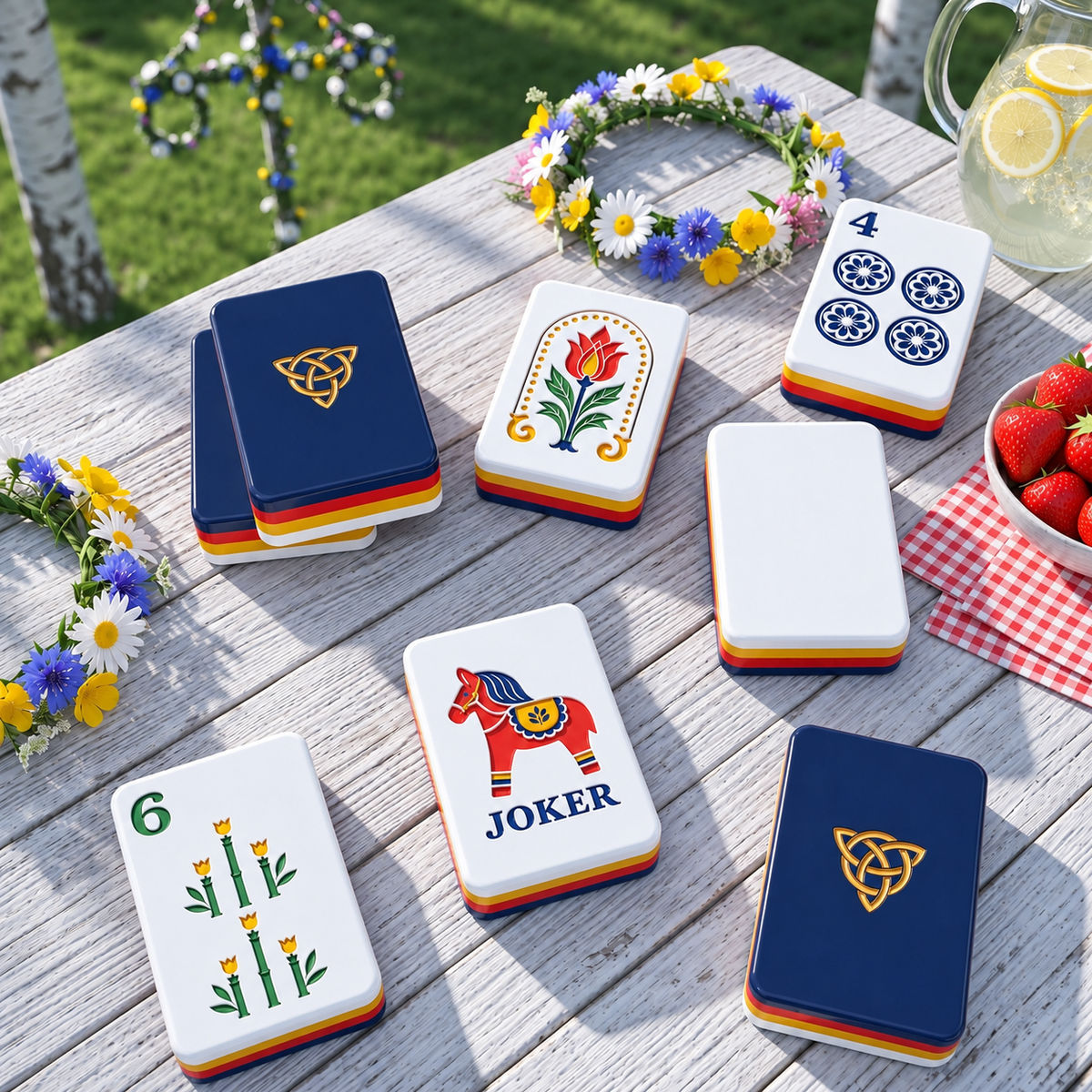
The hardest sections on the 2026 American mahjong card are typically those mixing Quint patterns (five identical tiles) with jokers, hands requiring consecutive numbered tiles that can't be called mid-game, and those heavy in single Pung (three-tile) exposures. These trip players because they demand exact tile counts, force long dead-hand calculations, and leave little room for the joker swaps most casual players rely on. Study one difficult section per week, write out examples on paper, and keep a card within arm's reach at your table—you're not alone if these sections feel obscure. We recommend playing with quality best-selling mahjong sets and a dedicated mat so your table stays clear enough to reference the card without fumbling.
Why Do Some Card Sections Feel Impossible to Play?
The National Mah Jongg League card shows dozens of hands, but not all are equal. Difficult sections combine three traps: hidden tile requirements (you need exact numbers from two or three suits), inflexible joker rules (some hands ban jokers in pairs or single tiles), and exposures that give away your direction before you're ready. Beginners often memorize the order of a hand but miss that a Quint section might forbid a joker in position four, or that a hand showing "1–9 Dots" only accepts consecutive tiles and no Craks. Understanding how to read the mahjong card as a map—not a grocery list—is the first skill that separates players who call hands regularly from those stuck in dead games for rounds.

What Makes Quint and Sextet Sections So Confusing?
Quints (five identical tiles) and Sextets (six identical tiles) require you to have either four copies of a tile (using one joker to make five) or five copies (impossible without a natural fifth copy plus a joker, since the deck has only four of each tile). This is where new players panic: they think they're close to a hand, draw a joker, then realize the card shows a Sextet requiring two jokers—and American mahjong rules forbid jokers in a pair. Sextets are rare on the card and always demand two separate exposures (like three tiles exposed, then three more) because you can't lay down six identical tiles as a single meld. Quints are more forgiving but still require exact planning; if you're hunting a hand with a Quint of 3 Bams, you must track whether your table discarded one already (reducing your odds) and whether you're prepared to expose first or wait for a living pair. The mistake: assuming a Quint is "easier" than a Pung. It's not—it's just rarer, so you'll bid it less often.
🀄 Shop best-selling mahjong sets →
How Do You Spot Hidden Tile Requirements Before Drawing?
Many hands hide suit restrictions or number ranges that don't jump off the card at first glance. A hand might show a Pung section with a mix of Bams and Craks—but the actual hand requires all numbers to stay within 1–6, which means a 7 Bam you're holding is useless. The card typically uses symbols (like a small dragon or suit icon) to signal these constraints, but the symbols are tiny and easy to skip if you're scanning the card in dim light or while nervous. Before you commit to a hand and start exposing, ask yourself: Does this hand tie me to one suit, or can I pull from multiple suits? Does it require consecutive numbers (which can only be hidden inside a Pung or Kong, never called)? Are the Jokers restricted to specific positions? Run your finger down the card's text and count out loud. If you're unsure, fold. A dead hand stings less than miscalling a hand you don't actually hold. How jokers work in American mahjong is critical here—some sections ban jokers entirely, some allow them anywhere, and some allow them only in exposures. Mixing these up is how players commit errors.
Which Sections Do Most Players Get Wrong?
Common mistake zones:
All Pung sections with mixed suits: New players assume they can grab any Pung in any order, then discover mid-hand that the card specifies "no Honors" (winds or dragons) or "Bams and Dots only."
Sections with Like Numbers: A hand calling for "1 and 1 and 1" (three separate Pungs of the number 1 across three different suits) trips players who grab two 1 Bams and a 1 Dot, forgetting the card said "1 Craks, 1 Bams, 1 Dots"—order and suit both matter.
Consecutive tile hands: The card might show "1–2–3 Dots, 4–5–6 Dots, 7–8–9 Dots" (three Pungs of consecutive tiles). Players confuse this with a sequence of numbers and mistakenly think they can expose 1–2–3 as a run, forgetting American mahjong bans exposed chows. The hand is three separate Pungs of fixed numbers.
Mixed Honor sections: A hand asking for "two winds and a dragon" forces exact tile matches; grabbing a White dragon and two random winds looks close but won't match the card's specified dragons and winds.
To dodge these, we've found the best practice is to read the card three times before you bid: once for the overall shape, once for suit restrictions, and once for any written notes or symbols. Keep a quality set with clearly legible tiles and a good mat with adequate light so you're not squinting at small text.
🎁 See our most-loved mahjong sets & accessories →

How Should You Practice Difficult Sections?
The fastest way to master hard sections is to isolate them and play "closed fist" drills offline: pick one tough section, lay out the exact tiles required on a flat surface, and physically arrange them three or four times. This muscle memory—seeing the tiles and moving them—embeds the pattern far faster than staring at the card. Next, shuffle your full set and try to hunt that hand during a solo practice round. Give yourself five draws; if you don't win, note which tiles you were missing and why. Repeat with a fresh shuffle. After ten rounds of one section, move to another. Over two weeks, you'll have drilled five sections; over two months, the whole card feels less alien.
Section Type | Why It's Hard | Key Check Before Bidding | When to Skip It |
Quint + mixed suits | Joker rules + tile scarcity | Do you have 4 of the base tile? Is the joker allowed? | Fewer than 4 of the required tile in your hand |
All Pungs (no honors) | Easy to misread suit rules | Confirm suits match the card exactly | Any Honor (wind or dragon) in your hand for that section |
Consecutive numbers | Mistaken for chow-like runs | Remember: each number is a separate Pung, not a sequence | Mid-game, if you can't form all three Pungs by mid-round |
Mixed honors (2 winds + 1 dragon) | Exact tile matching | The card specifies which winds and which dragon | You're missing even one of the three tiles by mid-round |
Sextet hands | Two jokers, two exposures | Do you have two jokers left? Is pairing allowed? | You've already used a joker elsewhere or exposed once |
The table above shows us which sections most often lead to dead hands or miscalls in our weekly games. Notice that nearly every trap comes from assuming the card is "looser" than it actually is—assuming jokers work everywhere, assuming numbers are flexible, assuming suits don't matter. The card is strict; that's why it's a game.
What Setup Helps You Read the Card Faster?
The right table layout matters more than most players admit. A good mahjong mat with the card printed or mounted nearby keeps your reference in your sightline. Tilting the physical 2026 card toward good overhead light (not fluorescent glare, which makes small text blur) cuts reading errors in half. We also recommend mahjong racks with pushers because they let you see your entire hand in a compact vertical line—no more hunting for a tile you forgot you drew, no more delay in spotting whether a hand is still viable. If you're traveling or playing at a venue without a dedicated mat, a high-contrast card holder (often included with quality sets) clips to your arm or the table edge. Keep a notebook beside the play surface; jot down the hand you're chasing so you don't second-guess yourself mid-round. Finally, play with a set using clear, well-spaced tile faces—engraved tiles with high contrast are worth the investment because misreading a 3 for an 8 mid-hand costs games. We know from years of hosting that players using poor-quality sets or dim tables lose confidence in tricky sections and abandon them altogether. Better tools = more hands attempted = faster learning curve.
✨ Find your Mahstead set — free US shipping →
What to Check Before You Buy Your Next Set
If you're serious about mastering hard card sections, your tiles and playing surface matter. Look for:
Tile clarity: Can you instantly tell a 3 Bam from an 8 Crak under table light? If not, upgrade.
A mat with a card slot or cord: Keeps the 2026 card visible and readable without holding it.
Racks tall enough to see all 14 tiles at once: A compact, vertical rack cuts the time you spend scanning your hand for that one tile you need.
Good light coverage: Either a mat with reflective edges or a clip-on light if your game happens indoors at night.
A complete set designed for serious play (including mahjong racks, a quality mat, and a strong carrying case) is an investment, but it pays back in confidence and speed. Casual sets work fine for beginners, but once you're tackling difficult card sections, the tools support the skill.

FAQ
What's the difference between a Pung section and a Quint section on the card?
A Pung section requires exactly three identical tiles (e.g., three 5 Bams). A Quint requires five identical tiles, typically made with four natural tiles plus one joker. Quints are rarer and demand you have the base tile in abundance and a joker free to use. Pungs are simpler but trickier to spot if the card mixes suits or numbers.
Can I use a joker in any position of a Quint hand?
No. The card specifies where jokers are allowed in each hand pattern. Some hands allow jokers anywhere; others restrict them to specific positions or forbid them in pairs. Always read the card's notation carefully—a misplaced joker means you don't have a valid hand.
Why do consecutive-number sections trip me up?
Because they look like sequences (chows), but American mahjong forbids calling exposed chows. A hand showing "1–2–3 Dots" as one section means a single Pung of that tile group, not three separate tiles played in a run. Every numbered group on the card is a distinct Pung, Kong, Quint, or Sextet—never a called sequence.
How do I know if a hand allows Honors (winds and dragons)?
Check the card's text and symbols. Hands marked "No Honors" exclude all winds and dragons. Others specify exact Honors (e.g., "East wind, South wind, Red dragon"). If the card doesn't mention Honors, assume they're allowed—but verify by reading the full hand pattern, not just scanning for symbols.
What should I do if I'm halfway through a hand and realize the card forbids a joker in my position?
Fold immediately. Call "dead hand" and discard. Using a joker illegally violates the hand's validity, and calling a dead hand early saves time and frustration for the whole table. Better to discard one hand than commit an error and lose respect.
Is it worth buying a new set just to practice card sections?
Not necessarily for practice—you can drill with any complete set offline. But if your current set has unclear tiles or you're playing in poor light, upgrading to a set with high-contrast, engraved tiles and pairing it with a quality mat makes reading the card faster and more reliable. Over weeks of play, that speed and confidence pays dividends.


View More
View More
View More
