
Thai Mahjong Scoring: Points, Hands & Rules Explained
Last updated: Nov 23, 2026
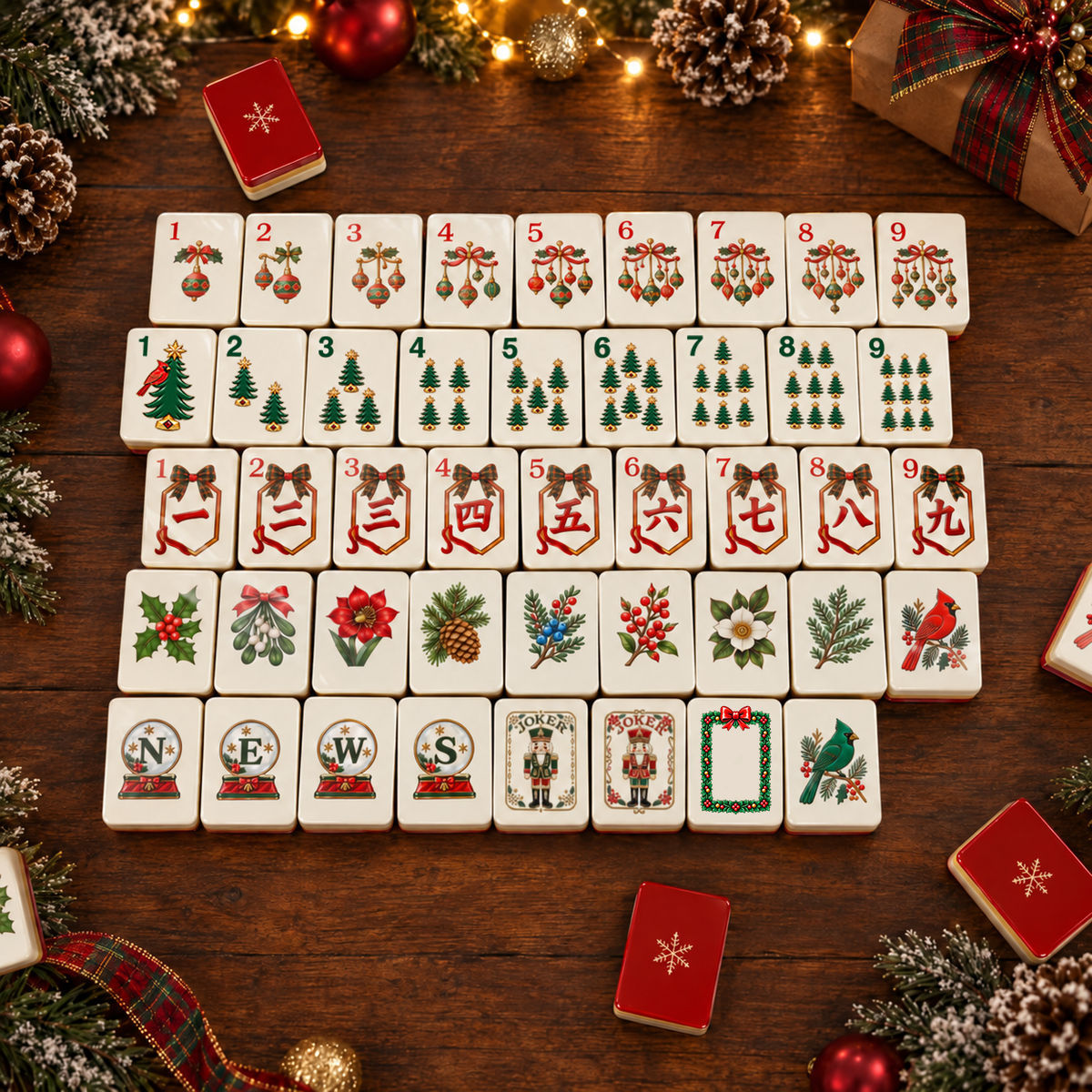
Thai mahjong scoring awards points based on the hand's base value, multiplied by factors like melds (pungs, kongs), terminals, honors, and self-drawn wins. Base scores range from 2 to 8 points per hand, then doubled repeatedly for each qualifying condition—a hand with four pungs and a pair might earn 8 base points, then double for "all pungs," then double again if drawn from the wall, reaching 32+ points. Unlike American mahjong (which uses a fixed yearly card and jokers), Thai mahjong relies on traditional hand rankings and live calculation at the table. Most casual games settle accounts per hand; tournament play uses cumulative scoring across rounds. A typical 4-player game lasts 4 rounds (each player as dealer once), and players track running totals. Scoring works fastest when one player learns the point table and announces values—no complicated card lookup required, though new players often undercount doubles or miss honor tile premiums.
Thai mahjong awards points based on the hand's base value, multiplied by factors like melds (pungs, kongs), terminals, honors, and self-drawn wins. Base scores range from 2 to 8 points per hand, then doubled repeatedly for each qualifying condition—a hand with four pungs and a pair might earn 8 base points, then double for "all pungs," then double again if drawn from the wall, reaching 32+ points. Unlike American mahjong scoring, which uses a fixed yearly card and jokers, Thai mahjong relies on traditional hand rankings and live calculation at the table. Most casual games settle accounts per hand; tournament play uses cumulative scoring across rounds. A typical 4-player game lasts 4 rounds (each player as dealer once), and players track running totals. Scoring works fastest when one player learns the point table and announces values—no complicated card lookup required, though new players often undercount doubles or miss honor tile premiums.
What are the base point values in Thai mahjong?
Thai mahjong starts with a base score of 2, 4, 6, or 8 points depending on whether you hold a simple hand (no special conditions) or qualify for higher tiers. A 2-point hand uses only simple tiles (2–8 in each suit, no terminals or honors); a 4-point hand includes one honor tile or terminal; a 6-point hand has two or more; and an 8-point hand is rare without additional doubling. Base value depends entirely on your melds and the terminal/honor content of your winning combination. Once you've determined base points, you then multiply by all applicable doubles—the final payment is base × 2 × 2 × 2 (etc.). Many regional variants differ slightly; some use a base of 1 point and more aggressive doubling.

How do doubles (multiples) work in Thai scoring?
Each qualifying condition doubles your base score: "all pungs" (no chows), "all terminals and honors," "self-drawn win," "winning on a Kong," "all chows," "dragon triple," "wind triple," and others. A hand earning two doubles (e.g., all pungs + self-drawn) multiplies base × 2 × 2 = base × 4. A hand with three doubles (all pungs + self-drawn + winning on Kong) becomes base × 8. Most casual games cap doubles at 3 or 4; tournaments may allow 5+. If base is 4 and you stack three doubles, non-winners each pay 4 × 8 = 32 points to the winner. This escalation means a complex hand can shift the entire game. The dealer's win often counts as an extra double or pays differently (dealer collects from all three opponents; losers may split the dealer's liability).
What is the dealer bonus and how does it affect scoring?
In Thai mahjong, the player in the "East" (dealer) seat enjoys a one-time advantage: usually, non-winners all pay the winner equally for a normal hand, but the dealer's win is often scored differently. Some versions award the dealer an extra double if they win, or the non-dealer winner collects double from the dealer. Other rules state the dealer re-rolls after winning (no dealer change), so holding the seat yields repeated opportunities. The dealer typically rolls dice to determine which player discards first in the next hand, or the discard order rotates fixed. If the dealer is the loser (someone else wins), the dealer role passes to the player clockwise. Dealer scoring variants are house-dependent—confirm your group's rule before playing, as miscounting dealer bonuses causes table disputes.

How do penalties and payment distribution work?
When a player wins, typically all three non-winners pay them equally. If the winner earned 16 points, each non-winner pays 16 (winner collects 48 total). However, if a player discarded the winning tile (the "discarder"), some rules require that player to pay double or triple while the other two pay single amounts—confirming discarding penalties before play avoids conflict. In dealer-wins scenarios, non-winners often pay the dealer alone; in dealer-loses, the winner collects only from the dealer (not the entire table). Self-drawn wins (drawing from the wall instead of calling a discard) can also trigger different payment: the winner collects full amounts, or the dealer pays double. Tournament rules often impose a maximum payment per hand (e.g., no hand scores more than 512 points) to prevent runaway scores. Track payments on paper or with a scoring app to reconcile totals at game's end.
How does Thai scoring compare to American mahjong?
American mahjong uses a yearly National Mah Jongg League card with fixed hand patterns, jokers (which Thai mahjong does not use), and a flat point system: every winning hand is worth a set number of points based solely on its pattern name (1 double, 2 double, etc.), not calculated live. Thai mahjong, by contrast, calculates points at the table using base values and multipliers; the same hand shape can score differently depending on how it was won (self-drawn vs. called). American sets contain 152 tiles; traditional Thai sets typically use 108 tiles (1–9 in each suit, 4 copies, plus winds and dragons). American mahjong scoring requires all four players to reference the card mid-game; Thai scoring is memorized or announced verbally by an experienced player. American games almost always follow the standard card released each spring; Thai games are highly regional and house-rule dependent. If you're switching between variants, expect a learning curve—the mindset shifts from "pattern matching" to "live arithmetic."
Aspect | American Mahjong | Thai Mahjong |
Tile count | 152 (3 suits, winds, dragons, flowers, jokers) | 108 (3 suits, winds, dragons) |
Scoring method | Fixed card patterns, set points | Live base + multiplier calculation |
Doubles source | Card pattern name | Hand composition, win method |
Jokers | 8 per set, critical for play | None (not used) |
Game reference | Must consult yearly card | Memorized hand ranks |
Difficulty | Pattern recognition | Arithmetic + hand knowledge |
Regional variance | Low (League card standard) | High (house rules vary widely) |
What should you check before scoring your first Thai game?
Before sitting down, ask your group three questions: (1) What base point system are you using (1, 2, 4, 8 base)? (2) What counts as a double in your house (list examples: all pungs, self-drawn, Kong win, etc.)? (3) Does the discarder pay extra, and does the dealer have a bonus? Write the answers on a card and place it at the table so no one forgets mid-game. Have one experienced player calculate the first few winning hands aloud; new players then understand the rhythm. If playing Thai mahjong casually at home, investing in a quality set with clear tile faces and an organized travel bag makes setup and tile distribution faster, reducing scoring delays. If a hand generates dispute ("Did you count that Kong double?"), pause, recount together, and document the result. Keep a running tally sheet so players can verify their final balance at the end of the session.
🀄 Shop best-selling mahjong sets →
Many Thai mahjong players eventually invest in an engraved set or a dedicated mat to elevate the experience. If you're hosting weekly games, a quality mat protects tiles and speeds cleanup, while racks with pushers help newer players organize their hand without accidentally exposing tiles. For travel or storage, a mahjong bag or case keeps your set protected and tiles organized by suit. These aren't required—Thai players have played on bare tables for generations—but they reduce setup time and prevent tile scatter when scoring disputes arise.
🎁 See our most-loved mahjong sets & accessories →
Thai mahjong scoring may feel chaotic at first, but once your group settles on one rule set and sticks to it, the math becomes automatic. The key is transparency: agree on base values and doubles before the first hand is played, assign one player to call scores, and write edge cases down. Unlike American mahjong, where the card is law, Thai mahjong thrives on consistency within your own game—not perfection against a global standard. Play several practice rounds penalty-free, then move money only once scoring is second nature. Most groups find the rhythm within two or three sessions.
✨ Find your Mahstead set — free US shipping →

FAQ
Can you score Thai mahjong without memorizing all the doubles?
Yes. One designated player learns the common doubles (all pungs, all chows, all terminals/honors, self-drawn, Kong win, dragon/wind triple) and announces scores verbally; others verify. Write them on a card taped to the table for the first month or two. After 5–10 games, most players internalize the list naturally.
If I discard the winning tile, do I always pay double?
Not always—it depends on house rules. Some groups impose no discard penalty; others make the discarder pay 1.5× or 2×. Confirm before the game starts. In tournaments, discarders typically pay the full non-winner share plus the winner's share, making that position costly.
How is dealer scoring different from player scoring?
Dealer typically collects from all three opponents (instead of one shared pot) or wins an extra double bonus. Some houses rule the dealer re-rolls after winning (no seat change) for multiple rounds. Ask your group whether dealer losses are paid by the winner alone or split three ways.
What's the fastest way to teach Thai mahjong scoring to beginners?
Play the first hand together with no money. Calculate the base, count each double aloud ("That's all pungs—one double. Self-drawn—two doubles. Times four."), and announce the final total. Then play a second hand the same way. By hand three, most players can follow or call out errors before payment.
Does Thai mahjong have a yearly card like American mahjong?
No. Thai mahjong relies on traditional hand rankings and regional house rules, not a published card. This means Thai games vary widely by region and friend group. American mahjong uses the National Mah Jongg League card (updated each spring) so the game is standardized globally.
Can you play Thai mahjong with an American mahjong set?
Technically yes, since both use the same 34 unique tile types (1–9 Bams, Craks, Dots, plus winds, dragons). However, American sets often include flowers and jokers (not used in Thai mahjong), and the tile distribution differs. A traditional Thai set contains exactly 4 of each tile type; American sets have 8 jokers. Either works in casual play, but a Thai set is cheaper and contains no unused jokers cluttering the table.


View More
View More
View More
