
2 Crak Tile in Chinese Mahjong: Rules, Variants & Spotting It
Last updated: Nov 23, 2026
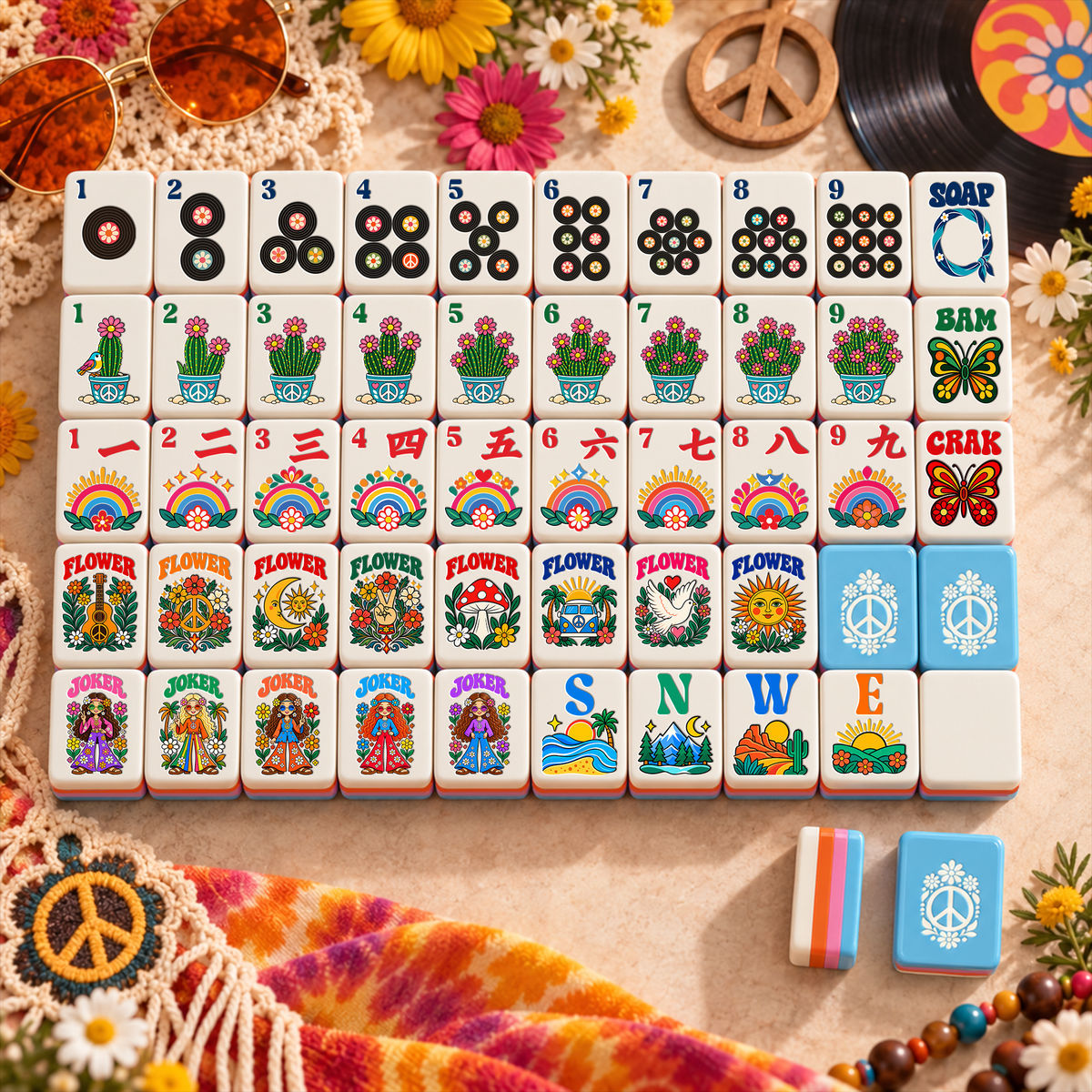
The 2 Crak (or 2 Character) is one of 36 Crak tiles numbered 1–9, four copies each, in any standard mahjong set. In American mahjong, 2 Craks form pungs, kongs, or sequences (chows in Chinese variants only); it has no special rank or honor status. In Chinese, Hong Kong, and Riichi mahjong, the 2 Crak does hold rank value—it's a "2"—and can be the low end of a chow (sequence) like 1–2–3 Craks, a critical difference from American rules. On the tile, Craks display interlocking coins or circular designs; the 2 Crak shows two distinct coin symbols. In all variants, what's in an American mahjong set governs whether your deck contains enough copies and how the layout works. Spotting it matters because misreading suit or number derails hand assembly and calling.
🀄 Shop best-selling mahjong sets →
How do I recognize a 2 Crak on the tile?
The Crak suit displays a pattern of interlocking coins or circles—often rendered as a square frame divided into sections. The 2 Crak shows exactly two distinct coin symbols arranged vertically or in a pair. Each coin is usually outlined and may contain a small detail (cross, dot, or solid center). Compare it to the 1 Crak (single coin) and 3 Crak (three coins) to confirm. In best-selling mahjong sets with high-contrast designs, the coin count is immediately clear even under table lighting. On aged or hand-painted tiles, wear can blur symbols—tilt the tile to catch the outline and count the distinct sections carefully.

What role does the 2 Crak play in American mahjong rules?
In American mahjong, the 2 Crak holds no special status: it's a regular number tile in the Crak suit. You cannot form a sequence (chow) like 1–2–3 Craks; American rules permit only exposed pungs (three identical tiles), kongs (four identical), quints (five identical), or sextets (six identical). All sequences must remain concealed in your hand. The 2 Crak's value depends solely on which patterns appear on the current year's National Mah Jongg League card—a hand might require four 2 Craks, or none at all. Unlike winds or dragons, the 2 Crak cannot score bonus points simply for being a "pair" or "honor." Its sole use is matching other 2 Craks (and jokers, which can substitute) to build the tile groups the card calls for.
How does the 2 Crak differ in Chinese, Hong Kong, and Riichi mahjong?
In Chinese, Hong Kong, and Riichi variants, the 2 Crak is a numerical rank tile with special rule power: it can form chows (sequences). A chow is a set of three consecutive tiles—1–2–3, 2–3–4, or 3–4–5 Craks—and can be called and exposed when another player discards the tile you need. Chinese mahjong also assigns the 2 Crak a monetary tile value during settling; in Riichi, 2 Craks factor into hand scoring calculations. Sequences cannot exist in American mahjong, so a 2 Crak cannot "link" with a 1 and 3 Crak to score. This is the most common mistake when players from different variants sit at the same table. Always confirm the game type before dealing; if playing American, use the current year's card as your sole reference.

Why do beginners confuse the 2 Crak with other tiles?
New players often mix the 2 Crak with the 2 Dot or 2 Bam because the coin/circle pattern on Craks can resemble dots or bamboo sticks when viewed at an angle. The key difference: Craks show coins (square or circular frames with inner divisions); Dots are solid circles (no internal structure); Bams are bamboo stems or lines (five or more vertical sticks). Under poor lighting or on smaller tiles, these suits blur together. A second trap: confusing the number rank with an honor tile status—the 2 Crak is not an honor (winds and dragons are honors in American play). How to read the mahjong card teaches suit and rank recognition step-by-step and eliminates this error within one study session.
Mistake | Why It Happens | How to Prevent It |
Calling a chow with 1–2–3 Craks (American) | Confusion with Chinese rules | Confirm game type; use current year's card only |
Confusing 2 Crak with 2 Dot or 2 Bam | Similar circular patterns under poor light | Study each suit's symbol: coins (Crak), solid circles (Dot), sticks (Bam) |
Treating 2 Crak as an honor tile | Misunderstanding tile hierarchy | Remember: 1–9 numbered tiles are all regular; only winds/dragons are honors in American mahjong |
Miscounting a pung of 2 Craks | Fatigue or aging tiles with worn symbols | Count coins carefully; use jokers if uncertain; rotate tile to see outline |
🎁 See our most-loved mahjong sets & accessories →
What tile set design makes the 2 Crak easiest to spot?
High-contrast acrylic sets with raised or engraved symbols make the 2 Crak unmistakable. Each coin on the Crak tile stands out visually, and the number sits clearly alongside. Hand-painted tiles on bone or bamboo can develop wear that softens the coin count over years of play; newer sets retain crisp detail. Engraved American mahjong sets with custom titles or team names often feature bolder font and relief work, making suit and rank legible at a glance. Matte finishes reduce glare and improve readability compared to high-gloss tiles. If you host regular games, invest in a set where every tile's suit and number are legible within one second of picking it up—saves time, prevents disputes, and keeps the table moving.
What to check before you buy
Tile size & legibility: Pick up a sample or watch a close-up photo. Can you read the number and suit without tilting or squinting? Smaller tiles suit travel; larger tiles suit players with vision challenges.
Suit symbol clarity: Confirm Craks show distinct coin outlines, Dots are solid circles, and Bams show clear stick patterns. Compare a 2 Crak image against a 1 and 3 to be sure you can distinguish them.
Material & finish: Acrylic with engraved details holds detail longer than painted bone. Matte finishes reduce table glare and eye strain during four-hour games.
Joker count: Standard American mahjong uses 8 jokers (152 playing tiles). Verify your set includes exactly 152 tiles for play; spare jokers and blanks are extras, not counted in the deck.
Guides included: Request or download a suit-spotting guide. Many players keep a reference card on the table during their first ten games with a new set.
✨ Find your Mahstead set — free US shipping →

FAQ
Is the 2 Crak considered a "high" or "low" tile in American mahjong?
No—American mahjong has no rank hierarchy for number tiles (1–9 in each suit). The 2 Crak is neither high nor low; its value depends only on which hands the current year's National Mah Jongg League card includes it in. Winds and dragons are the only honors with special scoring status.
Can I use a joker to replace a 2 Crak in American mahjong?
Yes, jokers are wild and can stand in for any tile in any group (pung, kong, quint, sextet). However, jokers cannot form a pair alone, and you can only use as many jokers as the pattern on the card allows for that hand.
What happens if I miscall a 2 Crak as a different suit at the table?
If you expose a tile group containing a misidentified 2 Crak (e.g., claiming it's a 2 Dot), the error must be corrected immediately. Return the tile and replay the hand, or follow your house rules—most groups require immediate clarification and no penalty, but discuss this before dealing.
How many 2 Craks are in a standard 160-tile mahjong set?
Four copies of the 2 Crak appear in every 160-tile set (152 playing tiles plus spares). The Crak suit contains 36 tiles total: four copies each of 1–9 Craks.
Do Chinese mahjong rules allow me to win with only 2 Craks?
In Chinese variants, yes—if your winning hand requires four 2 Craks and one honor tile (or another legal combination), you can win with that hand. American mahjong requires the full hand pattern to match the card; you cannot win with a subset.


View More
View More
View More
