
Mahjong Solitaire Special Hands: Patterns and Strategies
Last updated: Nov 23, 2026
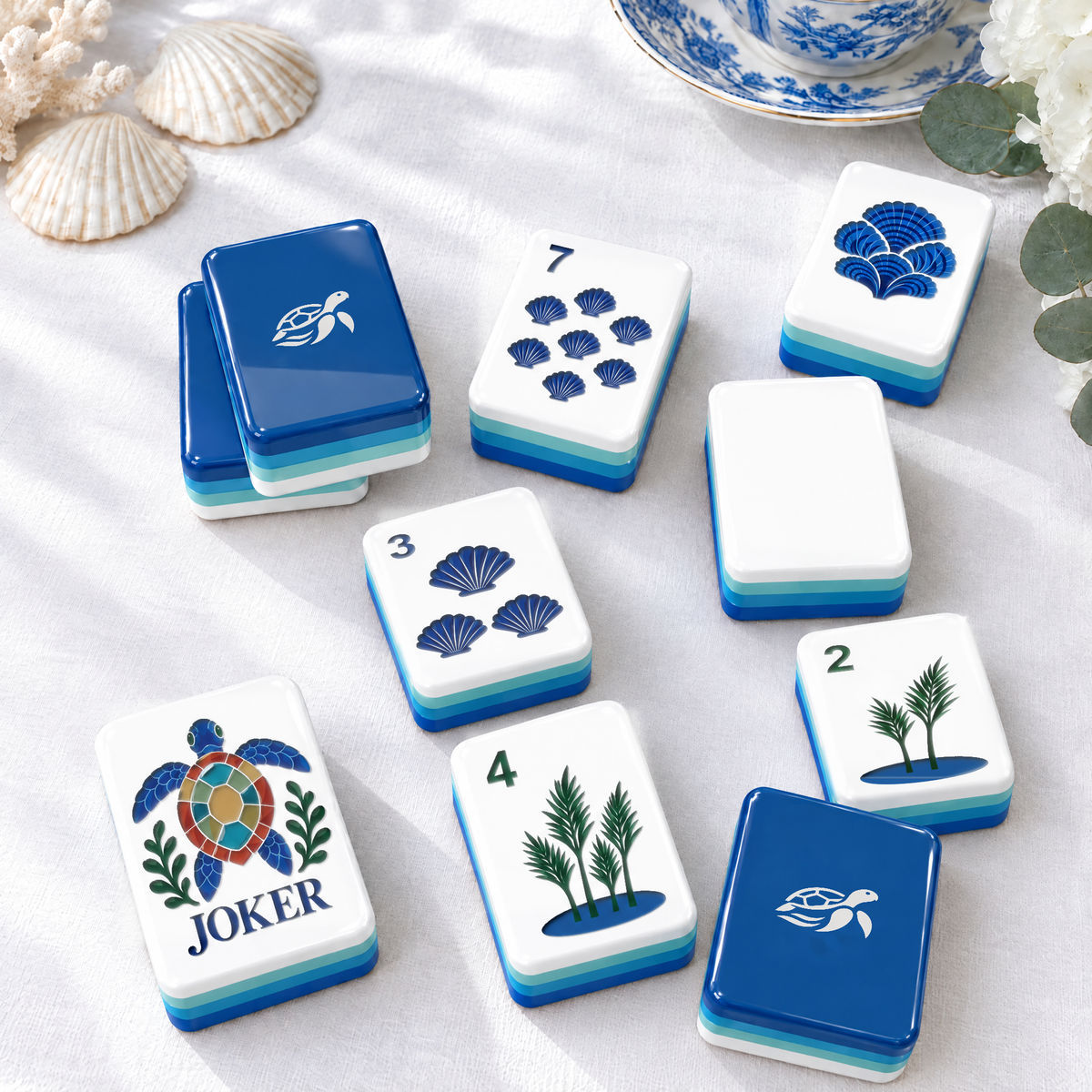
Mahjong solitaire special hands aren't the same as American four-player hands—they're one-player puzzles where you match and remove pairs from a shuffled tile layout, usually played on a computer or physical tile board. Unlike American mahjong—which requires four players and follows the current year's National Mah Jongg League card—solitaire hands follow simpler rule sets: match pairs, clear columns or edges, and reach the final tile. Traditional solitaire uses "special hands" to mean particular removal sequences or tile arrangements that score bonus points or unlock new levels; these vary by digital platform or rulebook.
What counts as a "special hand" in mahjong solitaire?
A special hand in solitaire is any win achieved by following a specific removal pattern or clearing the board within a time limit or move constraint. Most games award bonus points for clearing all tiles in the fewest moves, removing matching pairs in a row without breaking sequence, or completing the board within seconds. Some platforms recognize "perfect hands" (no undo, no mistakes) or "cascade clears" (three or more tiles removed in one motion). The rules depend entirely on the solitaire version you play—there's no governing league like the NMJL in competitive four-player American mahjong.

How do solitaire hands differ from American mahjong winning hands?
American mahjong winning hands require four players, a current-year NMJL card, and tiles arranged into melds (pungs, kongs, quints, sextets) and a pair—you can't go mah-jongg without all four elements and a legal combination on the card. Solitaire hands involve one player, no card reference, and simple pair-matching: you win by removing every tile. American hands follow strict rules: no chows (sequences), jokers never count as single tiles or pairs, and you must declare before drawing. Solitaire has no draws, no calling, no opponent interaction—you're solving a puzzle, not competing. American players often keep physical tile sets to study hand patterns; learning how to read the mahjong card first clarifies why solitaire feels so different.
Which tile layouts are considered "easier" or "harder" special hands?
Easier solitaire hands have accessible pairs: one or two tiles exposed on every rank, few buried tiles, and clear "edges" where you can start matching. Harder hands stack tiles in pyramids or tight grids, bury high-value pairs (dragons, flowers, winds), and force you to unlock layers by removing surface tiles first. Some digital versions add "cascade boards" where removing one pair drops other tiles down; these feel harder because you can't preview all matches. Physical tile solitaire—where you lay out all 152 tiles face-up in a grid—eliminates luck; your win depends purely on finding a valid removal order. Our best-selling collections include full 160-tile acrylic sets ideal for physical solitaire experiments: the tiles are durable and hold their color through hundreds of shuffles.
🀄 Shop best-selling mahjong sets →
How do you score or rank special hands?
Scoring varies wildly by platform. Digital games often award points for speed (bonus if cleared in under two minutes), move efficiency (fewer clicks = higher score), or pattern recognition (matching consecutive pairs in same suit multiplies points). Some apps give points per tile (10 points each = 1,520 max) and add multipliers for streaks. Physical solitaire rarely scores—you either clear the board or you don't—though house rules can reward "perfect clears" (no stuck tiles). Tournament solitaire variants (rare but real) award rankings based on completion time or move count. The key: define your scoring rule before you start, or compare your time and move count to your own previous bests.

What strategies help you solve difficult special hands?
Start from the edges: exposed tiles are always accessible; prioritize matching tiles visible on the board's perimeter or corners.
Look for buried pairs early: if you spot a critical pair (like both White Dragons) stuck under three layers, plan your removal route backward from that point.
Save high-value pairs for last: flowers, seasons, and dragons are rare; don't waste them on early matches if common Dots or Craks still clutter the board.
Track removed tiles mentally: remember which suits you've matched heavily; if you've cleared five Bams and only two Craks, future Crak pairs are likely still hidden.
Avoid dead ends: before removing a tile, ask: "Will this leave two unmatched singletons?" If yes, pick a different pair.
Use undo wisely: if your platform allows it, undo one move at a time and try an alternate path rather than restarting.
Practice with physical tiles: shuffle a full 160-tile acrylic set and lay all tiles face-up; no memory tricks, no luck—pure logic and pattern recognition.
How do solitaire hands relate to learning American mahjong strategy?
Solitaire teaches you tile recognition, probability thinking, and the "look ahead" skill that wins competitive games. When you study American mahjong for beginners, you learn that melds matter: solitaire teaches you to see which tiles cluster together and which sit alone. Experienced solitaire players develop spatial memory—they can picture the full board layout without looking—which translates directly to remembering what's been played and what's likely in the wall. However, solitaire never teaches you hand reading from the NMJL card, the Charleston passing ritual, or the four-player dynamic where you must block opponents while building your own hand. Think of solitaire as a tile-literacy bootcamp; American mahjong is the team sport that comes after.
Comparison: Solitaire vs. American Mahjong Hands
Aspect | Solitaire Hand | American Mahjong Hand |
Players | 1 (solo) | 4 (team + opponents) |
Winning condition | Remove all tiles | Declare four melds + one pair from current-year card |
Card reference | None; platform rules only | Must match National Mah Jongg League card exactly |
Time pressure | Often yes (speed = bonus) | No; play at table pace |
Luck factor | Tile layout shuffle; otherwise pure logic | Luck: wall draw, Charleston, discards |
Undo allowed | Often yes (digital); house rules (physical) | No; plays are permanent |
Joker rules | Rarely specified; game-dependent | Jokers are wildcards; never single tiles or pairs |
Scoring | Points, speed, move count; varies by platform | Points per hand; scoring card required |
🎁 See our most-loved mahjong sets & accessories →
Can you practice American mahjong hands as a solo player?
Yes. Lay out your tiles face-up, pick a hand from your reference card, and build it using your own tiles—no draw, no opponents, just assembly and recognition practice. This drills your ability to spot melds and pairs without pressure. You can also shuffle and deal tiles to yourself as if you were four players; draw from the wall and practice discarding logic. Solo practice doesn't replace live games—it won't teach you blocking, reading opponents, or hand speed—but it's invaluable for beginners who need to build confidence with tile names and meld shapes before joining a table.
What if I want to play solitaire-style games with actual American mahjong tiles?
Use a full 160-tile set and create your own solitaire rules: shuffle all tiles, lay them in a 4×19 or 8×19 grid face-down, flip two at a time, and match pairs. Or buy an extra mahjong set for practice and use one copy of the traditional Shanghai solitaire layout (a pyramid or cross). Many players use engraved or themed American mahjong sets for solitaire because the tile faces and symbols are clearer and more durable than generic Asian tiles. Pair your tiles with a quality mat to protect your table and keep tiles from shifting during long solo sessions.
What to check before you buy a solitaire set
Tile clarity: can you read Bam, Crak, Dot symbols and honor tiles clearly from six feet away?
Weight and surface: do tiles slide smoothly on your mat, or do they stick?
Completeness: does your set include all 152 playing tiles (or 160 with spares) and 8 jokers?
Durability: are tiles acrylic (washable, chip-resistant) or plastic (prone to yellowing)?
Storage: does your set come with a bag or case for safe shuffling and transport?
✨ Find your Mahstead set — free US shipping →

FAQ
Can I play mahjong solitaire with a standard American mahjong set?
Yes. A 160-tile acrylic set includes all symbols and suits needed for any solitaire layout. Shuffle, deal face-down, and flip pairs to match—no special equipment required. The clarity of engraved tiles makes solitaire easier and more satisfying to play repeatedly.
What's the fastest way to clear all tiles in a solitaire game?
Start by matching exposed pairs on the board's edges and perimeter, then work inward. Track which suits you've cleared heavily to predict where remaining pairs likely hide. Move count matters more than speed; rushing causes missed matches and dead ends.
Are mahjong solitaire hands used in any tournaments?
Very few. Solitaire tournaments exist in some regions but aren't standardized like American four-player mahjong. Most digital solitaire games have leaderboards and timed events, but they're informal. Competitive mahjong is almost always four-player.
Do solitaire strategies help me win at American mahjong?
Partially. Solitaire teaches tile recognition and spatial memory, which improve your reading speed at the American table. However, American mahjong also requires blocking, discarding strategy, and hand prediction—skills solitaire cannot teach. Treat solitaire as prep, not full training.
Which mahjong variant uses the most similar hand rules to solitaire?
Chinese mahjong and Hong Kong mahjong both emphasize pattern matching over card reference, but they still require opponents and calling rules. True solitaire (one player, no opponents, pair removal) doesn't exist in standard competitive mahjong—only in digital or house-rule games.
Can I use printed or digital solitaire as a warm-up before an American mahjong game?
Absolutely. Five minutes of digital solitaire sharpens your tile recognition and hand-spotting reflexes before you sit down to play American mahjong competitively. It's a low-pressure way to activate your pattern-matching brain.


View More
View More
View More
