
1 Dot Mahjong Tile Symbol Explained
Last updated: Nov 23, 2026
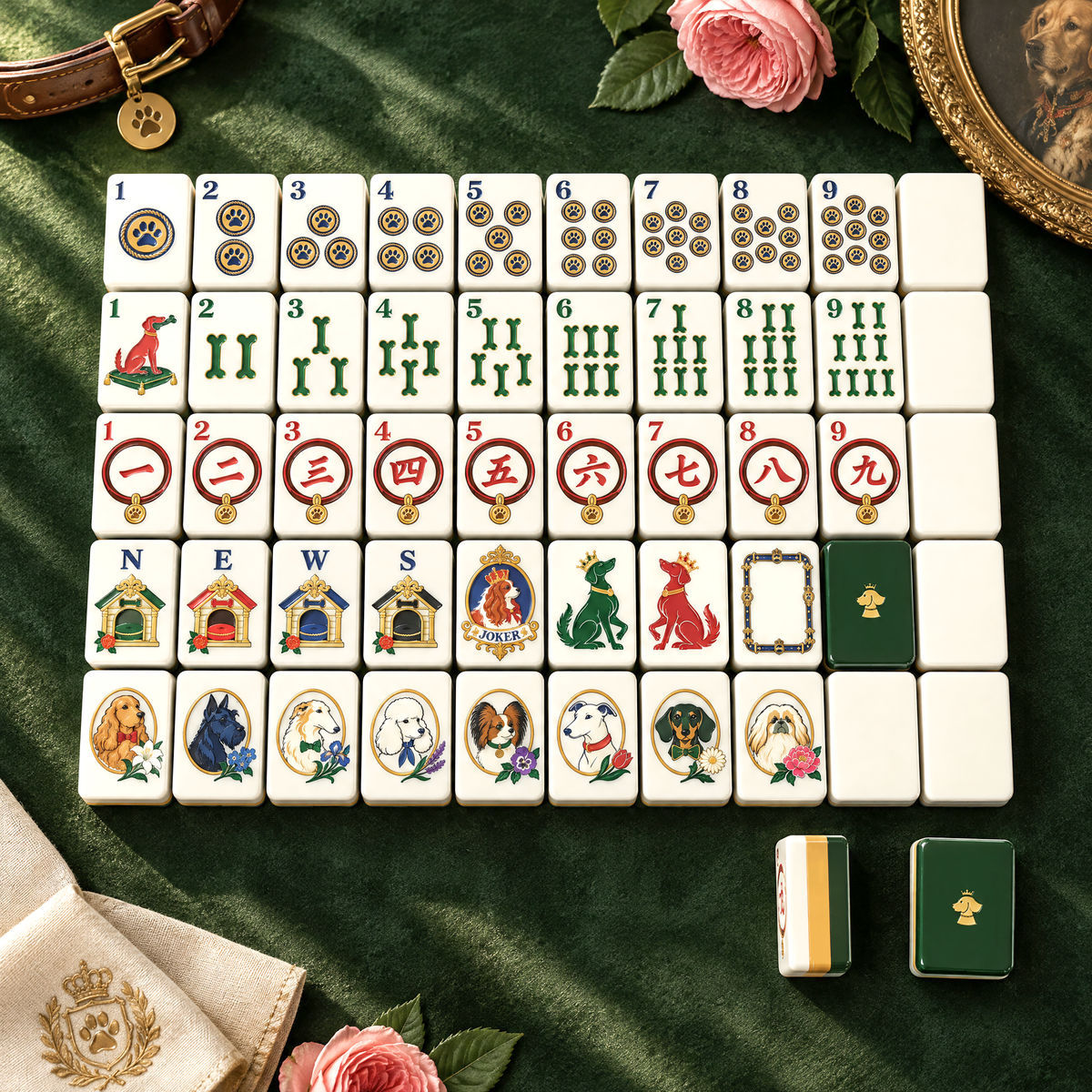
The 1 Dot tile displays a stylized bird (often resembling a peacock or plum sparrow in traditional designs) rather than a single pip, making it instantly recognizable at the table. It's part of the Dots suit—one of three numbered suits in American mahjong—and ranks as the lowest-value Dot (1–9). In a standard 160-tile best-selling mahjong set, you'll find four copies of the 1 Dot, matching the four copies of every other number and suit combination. The bird symbol serves both practical and historical reasons: it speeds recognition during play, and the design echoes centuries of Asian tile tradition. The 1 Dot cannot stand alone as a single tile in a hand; it must appear as a pung (three identical tiles), kong (four), quint (five), or sextet (six), or within a pair. Jokers can never substitute for a single 1 Dot tile.
The 1 Dot is one of 108 tiles that form the core of American mahjong play. The bird symbol distinguishes it from the 1 Bam (which also shows a bird but belongs to the Bams suit) and the 1 Crak (circles within a bamboo frame). Understanding this tile's identity, role, and restrictions is essential for reading the current year's League card and avoiding costly mistakes during a hand.
Why does the 1 Dot show a bird instead of a dot?
The bird symbol predates modern standardized mahjong tiles by centuries. Traditional Chinese games used artistic symbols to aid rapid recognition in crowded rooms and poor light. The 1 Dot's bird (historically associated with plum blossom art) became a convention so strong that every major tile manufacturer worldwide replicates it today—including Mahstead's engraved American mahjong sets. The symbol acts as a visual anchor: your eye spots the bird instantly, whereas counting a single pip could cause hesitation or error during fast play. At the weekly games we host, newer players often double-check the 1 Dot the first few times they see it, but the bird design sticks in memory faster than any numerical label would.

Where does the 1 Dot appear in an American mahjong set?
A standard American mahjong set contains 152 active tiles plus 8 jokers. The Dots suit represents one third of those 152 tiles—36 Dots in total (numbers 1 through 9, four copies each). The 1 Dot occupies a fixed position in what's in an American mahjong set: physically, it's one of the first Dot tiles you'll encounter when sorting your rack. The other two numbered suits—Bams and Craks—follow the same structure (1–9, four each). Together, these three suits form the backbone of every hand on the current year's National Mah Jongg League card. Wind and Dragon tiles complete the set, but they're never called "1 Wind" or "1 Dragon," so the 1 Dot's position remains unambiguous.
How do you use the 1 Dot in a hand?
The 1 Dot cannot appear alone in a winning hand—a critical rule that catches beginners off guard. American mahjong forbids "single tiles" and "pairs of single tiles" as elements; instead, every tile must be part of a group of at least three. Valid combinations for the 1 Dot include: a pung (three 1 Dots), a kong (four 1 Dots), a quint (five 1 Dots, using one joker), or a sextet (six 1 Dots, using two jokers). If your hand requires a 1 Dot pair, you must use it in a larger structure—never as a two-tile terminal. The 1 Dot is also a "terminal" tile (alongside the 9 Dot), which affects how many hands on the League card can include it; many hands exclude terminals entirely. Jokers can substitute for missing 1 Dots in a pung, kong, quint, or sextet, but never for the first or last tile of a pair.
🀄 Shop best-selling mahjong sets →
What mistakes do players make with the 1 Dot?
New players frequently confuse the 1 Dot with the 1 Bam because both display birds. The 1 Bam typically shows a different bird style or plumage, and sits in the Bams suit rather than Dots—a tiny but crucial distinction when sorting your hand quickly. Another common error: declaring a winning hand that includes the 1 Dot as a lone tile (not grouped with two or three copies). Always verify against the current League card before calling mahjong; the card specifies exactly which tiles go into each hand, and a hand with an ungrouped 1 Dot will not match any valid entry. A third mistake involves joker placement: some players assume a joker can stand in for a single 1 Dot tile in a pair, but it cannot—jokers only substitute within groups of three or more. Double-check your hand configuration against the card section that lists the hand code; if the 1 Dot appears in the hand, trace which group it belongs to.

How do you spot the 1 Dot quickly during play?
Speed and accuracy separate smooth games from frustrating slowdowns. When sorting your hand into suits and numbers, scan for the bird symbol in the Dots section before looking at numbers 2–9. The bird's distinct shape makes it pop visually, so you'll locate it faster than you would a solid circle. Many experienced players organize their racks left-to-right (1–9 Dots, 1–9 Bams, 1–9 Craks, then Winds and Dragons), placing the 1 Dot immediately after empty space or a special tile. If you're using a mahjong mat with pushed and rack guides, the physical slots help you keep the 1 Dot in its logical home. During the Charleston (the pre-game tile exchange), don't pass your 1 Dots blindly; know which hand types on the current card include 1 Dot terminals, and protect them if they fit your strategy. At our weekly games, players who pre-sort their tiles and use rack separators rarely misplace or miss-call a 1 Dot.
Comparison Table: 1 Dot in Context
Feature | 1 Dot | 1 Bam | 1 Crak |
Suit | Dots | Bams | Craks |
Symbol | Bird (plum sparrow style) | Bird (alternate style) | Bamboo circle |
Minimum group size | 3 (pung) | 3 (pung) | 3 (pung) |
Can be a pair? | No | No | No |
Can jokers substitute? | Yes, in groups of 3+ | Yes, in groups of 3+ | Yes, in groups of 3+ |
Terminal tile? | Yes | No | No |
Frequency in hands | Fewer than 2–5 Dots | Similar to other Bams | Similar to other Craks |
What to check before you buy a set with clear tile visibility
If you're shopping for your first American mahjong set, ensure the manufacturer's design clearly distinguishes the bird on the 1 Dot from the solid pips on the 2–9 Dots. Acrylic tiles with crisp engraving show the bird detail better than painted or faded designs; over time, painted symbols wear or chip, making the 1 Dot harder to spot. Check product photos or descriptions to confirm the 1 Dot and 1 Bam are visually distinct, not identical in color or size. If you play on a mahjong mat, good lighting over the play area ensures the bird symbol stays visible under glare or fatigue. Mahstead's engraved sets use permanent acrylic marking, so the 1 Dot symbol remains crisp across thousands of games.
🎁 See our most-loved mahjong sets & accessories →
Real-world example: reading a hand with the 1 Dot
Imagine the current League card includes a hand coded "1 Dot pung + 5 Bam kong + 7 Crak quint + pair of Red Dragons." You draw tiles and find four 1 Dots. You immediately recognize the bird symbol and know you have a pung (three 1 Dots) with one extra—perfect for a kong if you draw or pick a fourth copy later. You mentally note the hand structure: 1 Dot pung (three tiles, no joker needed), 5 Bam kong (four 5 Bams or three 5 Bams plus a joker), 7 Crak quint (five 7 Craks or four 7 Craks plus one joker), and Red Dragon pair (exactly two Red Dragons, no jokers allowed). By the time you've sorted your hand and checked the card, you know whether the 1 Dot pung is your anchor or whether you need to pivot to a different hand. This speed comes from instantly recognizing the 1 Dot's bird and matching it to the hand structure on paper.
✨ Find your Mahstead set — free US shipping →

FAQ
Can the 1 Dot appear as a single tile in a hand?
No. American mahjong requires every tile to be part of a group of three or more. The 1 Dot must be in a pung, kong, quint, or sextet—never alone.
How many 1 Dot tiles are in a standard set?
Four. American mahjong includes four copies of every number in every suit, so four 1 Dots appear in every 160-tile set.
Is the 1 Dot a terminal or honor tile?
Terminal. The 1 and 9 of each numbered suit (Dots, Bams, Craks) are terminals. Many hands on the League card exclude terminals, so not every hand uses the 1 Dot.
What's the difference between the 1 Dot and 1 Bam symbols?
Both show birds, but in different artistic styles and from different suit traditions. The 1 Bam bird is typically rendered differently, and they're clearly separate tiles in any quality set.
Can a joker replace the 1 Dot in a pair?
No. Jokers only substitute for tiles within groups of three or more (pung, kong, quint, sextet). Pairs must always use real tiles.
What happens if I accidentally use the 1 Dot as a single tile in a hand?
Your hand is not valid and does not match the League card. Always verify your hand structure against the card before calling mahjong; an official scorekeeper will check it before points are awarded.


View More
View More
View More
