
1 Crak Mahjong Tile: Symbol, History & Why It Matters
Last updated: Nov 23, 2026
The 1 Crak (also called 1 Character) shows a stylized drawing of a person or figure—often illustrated as a seated human, scholar, or abstract representation depending on the set's design tradition. On a tile, it sits in the Crak suit alongside 2–9 Craks and occupies one of 36 tiles in that suit across a 152-tile American mahjong set. Unlike 2–9 Craks, which display numeric symbols or dots, the 1 Crak's pictorial mark makes it instantly recognizable and helps newer players distinguish suits quickly. All three suits (Bams, Craks, Dots) follow this pattern: the 1 tile carries a distinct image rather than a numeral. When building a hand, the 1 Crak functions exactly like any other numbered tile—it can form pungs (three identical 1 Craks), kongs (four), or be used in sequences according to the current year's National Mah Jongg League card.
Why Does the 1 Crak Have a Picture Instead of the Number 1?
The 1 Crak's image—not a numeral—stems from classical Chinese mahjong tradition, where the suits originated centuries ago. The Crak suit represents civil ranks, scholars, and human achievement; its 1 tile honored the highest rank or wisest scholar. When American mahjong standardized the game in the 1920s–1930s, players kept this symbolic design to preserve the game's cultural roots and make the 1 Crak visually distinct. The same principle applies to the 1 Bam (usually a bird) and 1 Dot (often a simple motif). This pictorial convention helps players scan their rack faster—your eye catches the unique image before it registers the number label.

What Does the 1 Crak Picture Actually Show?
Designs vary by manufacturer and regional style. Common representations include a seated official, a scholar with brush or scroll, a stylized human figure, or an abstract emblem symbolizing authority. Some modern acrylic sets adopt simpler line drawings; traditional bone or bamboo sets may show more ornate or classical artwork. The tile's label always reads "1 Crak" (or "1 Character" in older terminology), so even if the picture feels abstract, the text confirms its identity. When you open a new best-selling mahjong set, examine the 1 Crak closely—its unique look becomes your visual anchor the moment you start learning the suits.
How to Spot the 1 Crak Quickly During Play
Speed matters when you're drawing tiles or scanning your rack for a pung. Here's a practical three-step approach:
Train your eye by color and corner. Craks are often printed in one color (commonly red or blue), separate from Bams and Dots. The 1 Crak's distinctive image jumps out once you know what to expect.
Use the text label as backup. If the picture feels ambiguous, glance at the printed "1" and "Crak" label on the tile.
Practice during the Charleston. Before each game, as tiles pass around the table, call out suits aloud: "1 Crak, 2 Crak, 3 Crak…" Your brain anchors the image to the name.
Most players develop near-instant recognition within two or three games. If you're still hesitant, there's no shame in double-checking the label—speed comes with time.
🀄 Shop best-selling mahjong sets →
How the 1 Crak Fits Into Standard American Hands
In American mahjong, hands are built from the current year's National Mah Jongg League card. The 1 Crak appears in many legal patterns:
Pungs of 1 Craks (three identical 1 Craks plus other matched or suited tiles)
Kongs of 1 Craks (four identical 1 Craks, often with a joker standing in during play)
Suited runs (e.g., 1–2–3 Craks as part of a larger hand, depending on the card's current legal combinations)
Because American mahjong allows only melds of identical tiles (pungs, kongs, quints, sextets), the 1 Crak never stands alone in an exposed meld—it always appears as part of a matched group. Jokers can substitute for missing tiles in a pung or kong but are never used as a single tile or pair. Study the card before each game to confirm which 1 Crak combinations are playable that year.

Comparing 1 Crak, 1 Bam & 1 Dot: What Sets Them Apart
Tile | Suit Color | Symbol | Function | Suit Role |
1 Crak | Often red/blue | Scholar, official, or figure | Identical to numbered Craks 2–9 | Civil ranks, honors |
1 Bam | Often green | Bird (bamboo reference) | Identical to numbered Bams 2–9 | Bamboo, nature, growth |
1 Dot | Often yellow | Simple motif or circle | Identical to numbered Dots 2–9 | Coins, money, abundance |
All three 1-tiles follow the same rule: they behave like any other numbered tile in their suit. The picture is cultural flavor, not a gameplay difference. Beginners often ask whether a pung of 1 Craks plays differently than a pung of 5 Craks—the answer is no. What changes is whether that pung fits into a winning hand on this year's card. Choose a set with clear, consistent imagery on all 1-tiles so your brain locks in the pattern faster.
🎁 See our most-loved mahjong sets & accessories →
Common Mistakes: Confusing the 1 Crak or Mixing It with Other Suits
New players sometimes hesitate because the 1 Crak's picture is unfamiliar compared to numbered tiles. Here's what actually trips people up—and how to avoid it:
Mistake 1: Forgetting which suit is which. If you haven't played in a week, your brain forgets whether Craks are red or green. Fix: Before the first hand, lay out one 1 Bam, 1 Crak, and 1 Dot in front of you. Repeat their names aloud three times.
Mistake 2: Confusing a worn or low-contrast tile. On older or lower-quality sets, the 1 Crak's image fades or bleeds. The tile becomes hard to read during fast play. Fix: Play on a bright, even surface (a mat helps). Rotate your rack so tiles sit upright, not at steep angles.
Mistake 3: Calling "1 Crak" when you mean a different tile. Speed play or poor lighting causes slip-ups. Fix: Use the text label every time you're unsure. There is no penalty for checking; there is a penalty for declaring the wrong tile.
Mistake 4: Not knowing the 1 Crak is a separate image on purpose. Some beginners think the picture is a printing error or regional quirk. Understanding the tradition helps you relax and trust the design.
What to Check Before You Buy a New Set
Check | Why It Matters | What to Do |
Tile contrast | Faded or low-contrast tiles slow you down during play. | Hold tiles up to bright light. 1 Craks should stand out clearly from the background. |
Image clarity | A blurry 1 Crak picture defeats the purpose of the symbol. | Look at sample photos or ask about printing method (engraving, screen print, vinyl). |
Suit color consistency | If Craks vary in shade across the four 1-tiles, confusion spreads. | Compare all four 1 Craks side by side (most sets come with four of each tile). |
Text labeling | A clear "1 Crak" label backs up the picture during uncertain moments. | Confirm the label is printed, engraved, or inlaid—not handwritten or faint. |
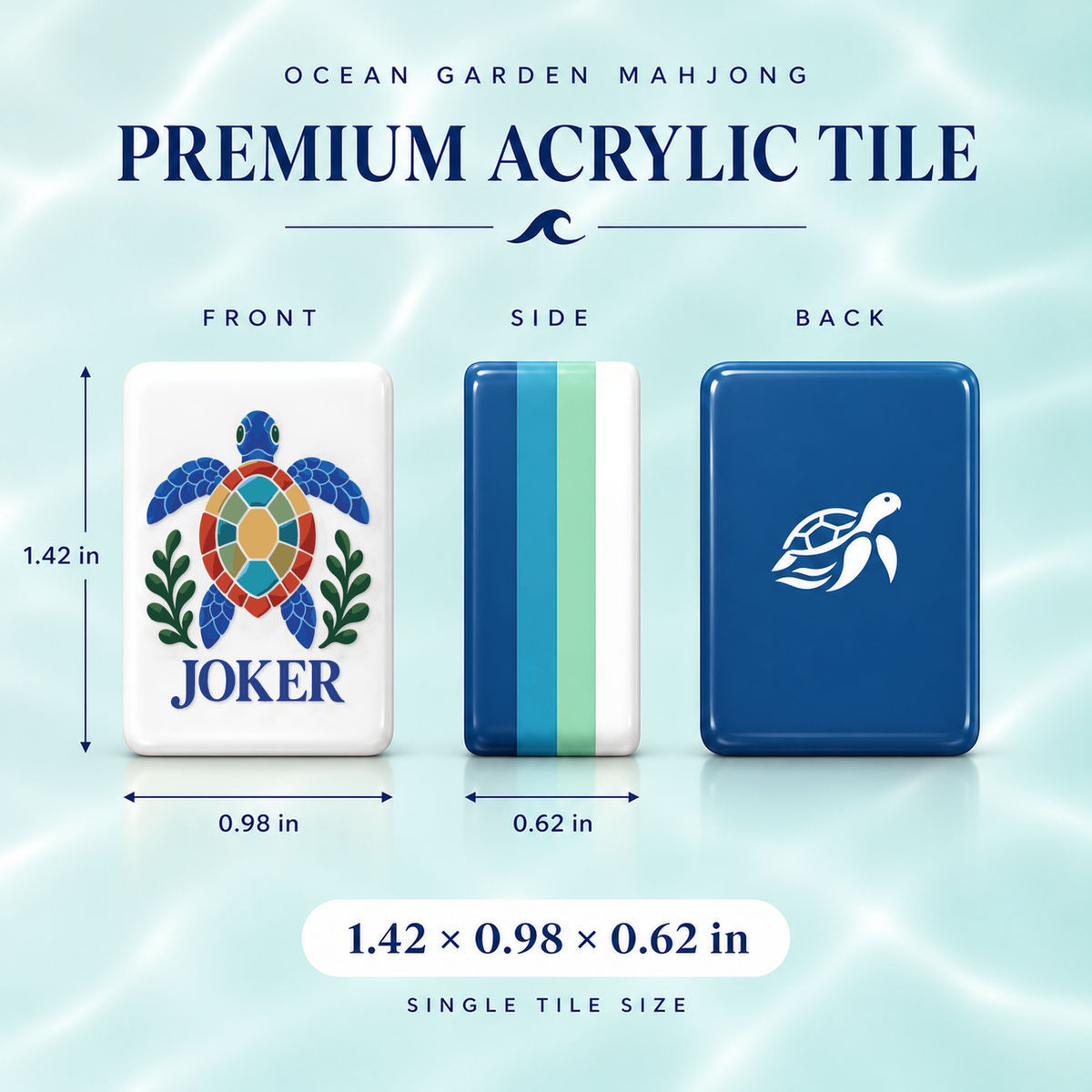
Tile size | Larger tiles = easier to see and grip. Smaller ones = harder to distinguish. | Standard American mahjong tiles measure around 1 inch. Check the product description. |
Quality acrylic sets offer the sharpest images and most durable printing. Engraved American mahjong sets provide a luxury alternative if you play weekly and want tiles that won't fade. Vinyl or screen-printed tiles are budget-friendly but may wear over years of play.
How the 1 Crak Connects to Broader Mahjong Strategy
Knowing the 1 Crak at a glance is more than just recognition—it's your foundation for faster decision-making during play. When you scan your rack for a winning hand, slow visual processing costs you. You might miss a pung of 1 Craks you could have exposed, or fail to spot a joker replacement opportunity. Experienced players move their eyes across the rack in a single sweep, cataloging by suit image first, then number. The 1 Crak's distinctive picture is the suit's "anchor"—once you lock it in, 2–9 follow automatically. This is why new players benefit from repetition during the Charleston and early hands. Your brain will wire the image to the name within a few games.
✨ Find your Mahstead set — free US shipping →

FAQ
Is the 1 Crak the same in Chinese and American mahjong?
The 1 Crak shows the same pictorial symbol in both games, honoring the classical Chinese tradition. However, American mahjong uses only 152 tiles and melds of identical tiles, while Chinese mahjong uses 144 tiles and allows sequences. The image is identical; the gameplay rules differ.
Why does the 1 Crak matter if I'm just learning?
The 1 Crak's unique picture helps you learn suit recognition 30% faster than staring at numbers alone. Fast visual identification is crucial because you'll scan your rack hundreds of times during a game. The symbol is a teaching tool baked into the tile itself.
Can I play without knowing what the 1 Crak picture represents?
Absolutely. You only need to recognize it as "1 Crak" and distinguish it from other tiles. The historical origin and artistic meaning add flavor but don't affect gameplay. If it looks like a person and says "1 Crak," that's all you need.
Do all mahjong sets show the same 1 Crak design?
No. Regional styles, manufacturer preference, and cultural traditions vary. Some show a scholar, others a figure or emblem. The label always reads "1 Crak," so the picture is secondary. Quality sets print images clearly enough that even unfamiliar designs stay distinct.
What happens if I confuse the 1 Crak with another tile during play?
If you call a wrong tile, experienced players will catch it before you commit. If you declare a hand with an error, the hand is invalid and play passes to the next player. Always use the text label if the image is unclear. There's no shame in double-checking.
Should I buy a set with large or detailed 1 Crak images?
Yes. Larger, clearer images mean faster recognition and fewer squinting moments during play. If you play on a mat or under standard home lighting, enhanced contrast and engraving (over vinyl printing) reduce eye strain and help you spot tiles faster, especially during speed rounds.


View More
View More
View More
