
West Wind Mahjong Tile Symbol Explained
Last updated: Nov 23, 2026
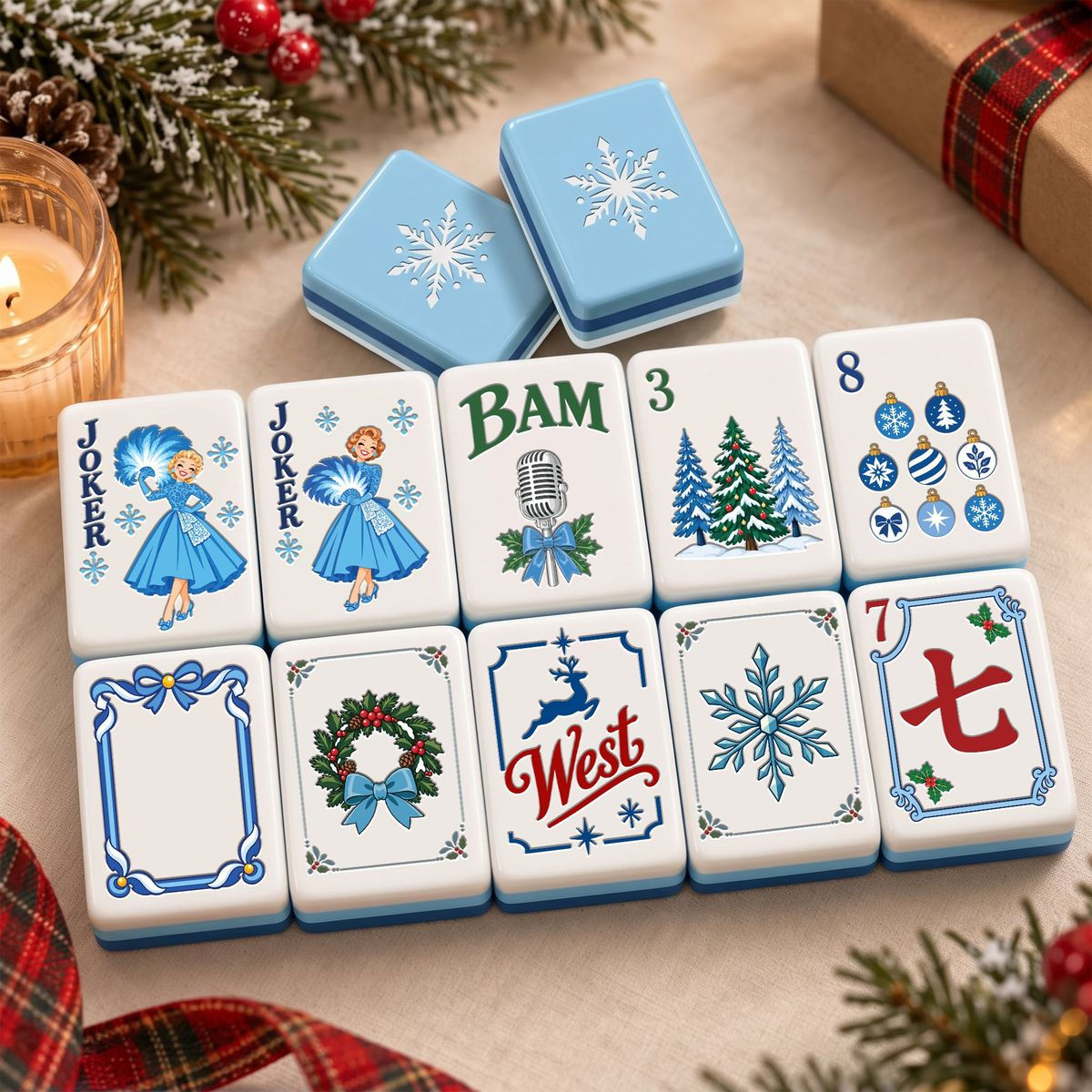
The West Wind tile is a blank tile printed with the character for "West" (西) and is one of 16 directional tiles (four each of North, East, South, West) in a standard 152-tile American mahjong set. It has no numeric value and cannot be paired with numbers or other suits—it only forms sets with identical West Wind tiles (three for a pung, four for a kong) or jokers. West Wind tiles appear on the current year's National Mah Jongg League card in specific hand patterns, usually in honor or flower hands, and their seating position at the table determines which player is "West"—a role that rotates each round. A full mahjong set includes all four winds, which weigh and feel identical to number tiles and are made from the same acrylic or bone material as the rest of your tiles.
The West Wind is one of four directional tiles in American mahjong, marked with a Chinese character and is one of 16 directional tiles (four each of North, East, South, West) in a standard 152-tile American mahjong set. It has no numeric value and cannot be paired with numbers or other suits—it only forms sets with identical West Wind tiles (three for a pung, four for a kong) or jokers. West Wind tiles appear on the current year's National Mah Jongg League card in specific hand patterns, usually in honor or flower hands, and their seating position at the table determines which player is "West"—a role that rotates each round. A full mahjong set includes all four winds, which weigh and feel identical to number tiles and are made from the same acrylic or bone material as the rest of your tiles.
What does the West Wind tile look like on your set?
West Wind tiles display the Chinese character 西 (xī) printed or engraved on their face. Most American mahjong sets render this character in a consistent font across all four winds for clarity and symmetry. The tile itself is opaque, typically sized 1¼ inch square to match all other tiles in your set. Unlike numbered Bams, Craks, and Dots, wind tiles carry no pips or small repeated symbols—just the single character centered on a solid-colored face. Quality acrylic sets (like those from our best-selling mahjong sets collection) maintain crisp, legible characters through hundreds of games because engraving into the material prevents wear and fading.

How does West Wind rank among the four winds?
The four winds in American mahjong follow a strict hierarchy based on seating: East (highest honor), South, West, and North (lowest honor). This ranking matters for determining who deals first and how bonus payments flow in some rule variants. At your table, "West" refers to the player sitting west of the dealer, and that role rotates clockwise after each hand. West is the third-ranking wind—higher than North but lower than East and South—so a hand using West tiles may score differently than one using North tiles on your mahjong card. The winds appear as honor tiles, meaning they never form sequences (chows); they can only combine with identical tiles or jokers to create exposed pungs, kongs, or special hand patterns printed on the yearly card.
🀄 Shop best-selling mahjong sets →
Can you use West Wind in any hand pattern?
Not every hand on the current year's mahjong card includes West Wind tiles. Only specific patterns—usually those in the "honor" or "special" sections of the card—call for winds mixed with flowers, dragons, or all-honor combinations. When West Wind does appear in a hand pattern, it must appear as a full pung (three identical West Wind tiles), a kong (four West Wind tiles), or alongside jokers that substitute for missing tiles. You cannot use West Wind in a pair, a single exposure, or a chow (sequence). Many newer players mistake winds for number tiles and try to create sequences like "North–West–South" as if they were 1-2-3, but American mahjong forbids this; winds only pair with themselves or wildcards. Checking your current year's card before each hand prevents costly errors and keeps the game flowing.
How do you spot a hand using West Wind on your mahjong card?
The National Mah Jongg League card organizes hands by type: Like Hands (numbered sets), Like Numbers, Flowers and Seasons, All Honors, Consecutive Runs, and Others. Hands featuring West Wind typically fall into the All Honors section or special mixed patterns late in the card. To find them, scan for the wind symbols (often printed in a distinctive color or clustered in a separate section) and note which winds appear alongside flowers, dragons, or other honors. A hand might read "2 like pungs + 1 like pung (honors)" and list specific winds—your set must contain exactly those tiles plus jokers as printed. Study the card layout at the start of your game session; marking or highlighting wind-heavy hands helps you recognize them during play. If you're new to reading the card, our guide on how to read a mahjong card walks you through each section step-by-step.

What's the difference between West Wind and other honor tiles?
West Wind is an honor tile alongside the other three winds (North, East, South), the three dragons (Red, Green, White), and—in some rule variations—flowers and seasons. Each of these tile types stands alone and never forms a numeric sequence. However, winds differ from dragons in one key way: dragons appear in three variants (Red with Craks, Green with Bams, White/"Soap" with Dots), whereas winds are just four identical copies of each direction. Dragons sometimes carry a pip or symbol to match their suit; winds carry only their character symbol. Both winds and dragons appear frequently on honor-heavy hands, especially in the back sections of the card. When building a hand, you must recognize the tile type instantly—confusing a West Wind with a White Dragon or misidentifying a North Wind as a South Wind can collapse your entire meld, so handle and name tiles carefully during play.
🎁 See our most-loved mahjong sets & accessories →
Why does the West Wind position matter at the table?
In American mahjong, seating determines wind assignment: the player directly west of the current dealer is "West," the player north of the dealer is "North," and so on. This seating rotates clockwise after each hand, so every player cycles through all four wind positions during a session. The wind position affects discard order, who picks from the wall first after the Charleston, and—in some games—bonus scoring for special hands. Understanding "I'm West this round" helps you track whose turn it is and follow the National Mah Jongg League rules correctly. West Wind tiles themselves have no inherent value; they're only useful when the mahjong card calls for them in a specific hand pattern. Knowing your seat and the wind roles prevents confusion during play and keeps the game moving at a comfortable pace for all four players.
Your quick reference: Winds vs. Dragons vs. Numbers
Category | Tiles per type | Forms sets how | Appears on card | Pairs allowed? |
Winds (West, North, East, South) | 4 of each | Pung, kong with identical tiles only | Honor hands, mixed patterns | No—only with jokers |
Dragons (Red, Green, White) | 4 of each | Pung, kong with identical tiles only | Honor hands, dragon hands | No—only with jokers |
Number tiles (Bams, Craks, Dots, 1–9) | 4 of each per number | Pung, kong, quint, sextet, or chow | Most hands on card | Yes—pairs required in winning hand |
What to check before you buy a new set
When shopping for a complete American mahjong set, confirm that all four winds (North, East, South, West) are clearly marked with their Chinese characters. Verify the characters match in size and legibility across the set. Test that the tiles feel uniform in weight and texture—winds should not feel lighter or thinner than numbered tiles. If buying acrylic, check that the character engraving is crisp and won't fade after a season of weekly play. Count your winds: you need exactly four of each (16 winds total in a 152-tile set). If any wind tile is missing, cracked, or illegible, contact the seller before starting your first game. Store your set in a protective case or bag to prevent character wear and tile loss over time.
✨ Find your Mahstead set — free US shipping →

FAQ
Can West Wind tiles be used in a pair or as a single tile in a winning hand?
No. West Wind tiles can only appear as a pung (three identical tiles), kong (four identical tiles), or with jokers substituting for one or more tiles. American mahjong does not allow unpaired honor tiles or single honors in the final winning hand.
How do I know if a hand on this year's mahjong card includes West Wind?
Check the All Honors or special mixed-hand sections of the National Mah Jongg League card. Look for the wind symbol (西 for West) listed alongside other tiles in the pattern. If West Wind is printed in the pattern, you must include exactly that number of West Wind tiles in your meld.
Is West Wind higher or lower than North Wind in rank?
West ranks third among the four winds: East (highest), South, West, North (lowest). This hierarchy determines dealer rotation and bonus payments in some rule variants, but both tiles function identically during play—each forms pungs and kongs only with identical tiles.
What's the difference between West Wind and a dragon like the Green Dragon?
Both are honor tiles that cannot form sequences. West Wind has one variant (the 西 character); dragons come in three suits (Red, Green, White) matched to Craks, Bams, and Dots respectively. On the card, wind hands and dragon hands are separate pattern families.
If I'm sitting west of the dealer, do I get special tiles called West Wind?
No. Your position as "West player" determines turn order and role, but it doesn't change which tiles are in the set or give you more West Wind tiles. All four copies of West Wind are shuffled into the wall like any other tile and appear in the draw based on luck and the Charleston.
Can I use West Wind in any year's mahjong card, or only some years?
Wind tiles appear on every year's National Mah Jongg League card, but only specific hand patterns call for them. Some years may have more wind-heavy patterns than others; always check the current year's card before each session to see which winds are valid in which hands.


View More
View More
View More
