
Zung Jung Mahjong Tile Set: American Play, Chinese Roots
Last updated: Nov 23, 2026
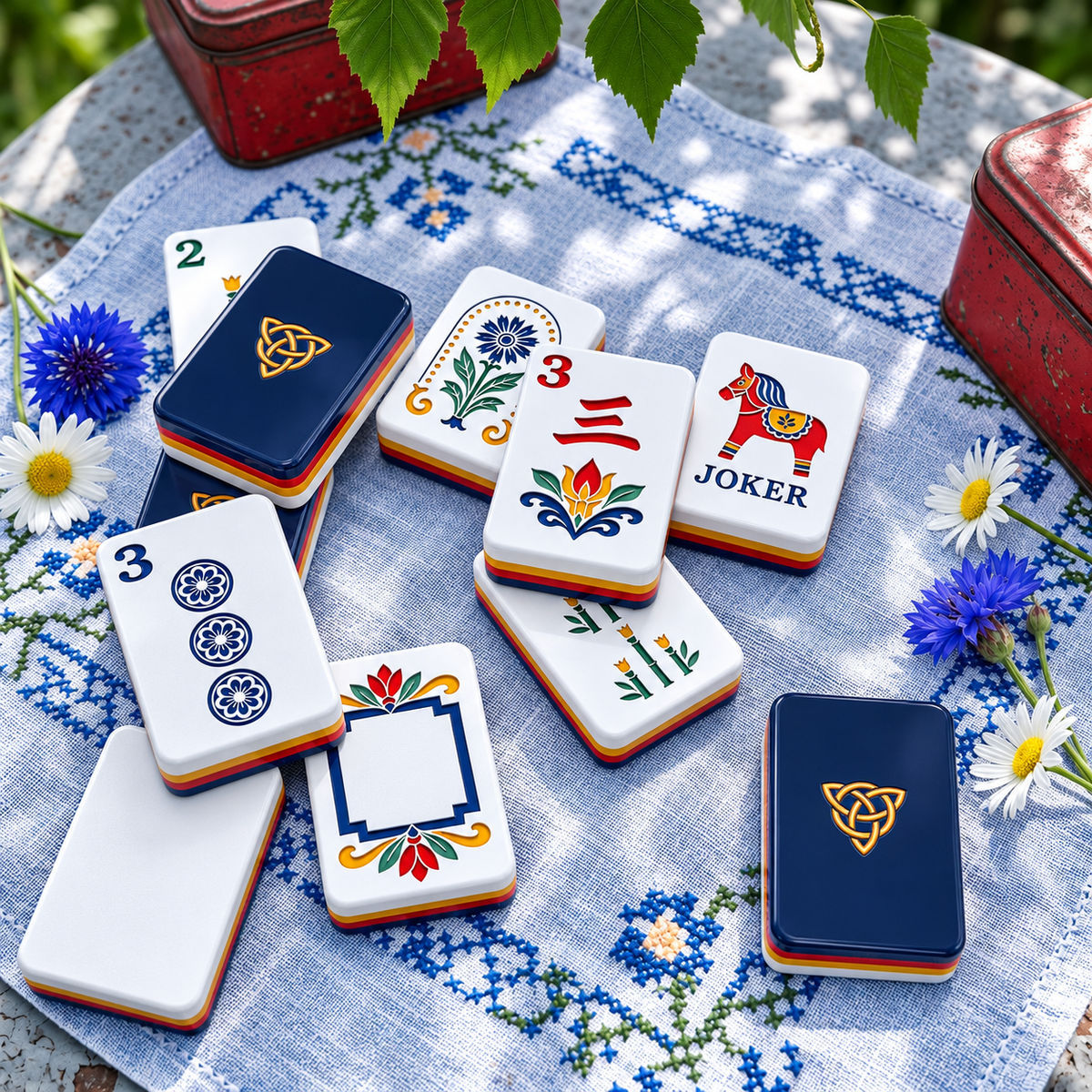
Zung Jung mahjong sets combine Chinese imagery and tile naming (Zung = center/middle, Jung = general) with the 152-tile American game structure and National Mah Jongg League card play. Unlike pure Hong Kong or Chinese variants that use sequences and entirely different hand charts, Zung Jung sets use the American ruleset: pungs, kongs, quints, sextets, and the yearly League card, but often feature traditional Chinese decorative elements on the tiles themselves. A standard American set contains 108 suit tiles (three suits × nine ranks × four copies), 16 winds, 12 dragons, 8 flowers, and 8 jokers—the same count regardless of aesthetic. Most players choose Zung Jung for the cultural connection while keeping American play mechanics, hand-reading, and scoring familiar. Sets range widely in material (acrylic, bone, bamboo) and design. Mahstead's best-selling American mahjong sets include designs that honor this hybrid heritage while meeting league standards. Check tile size (typically 1¼ inches), weight, and joker count before ordering; some sets substitute blanks for jokers, which changes gameplay. 🀄 Shop best-selling mahjong sets →
Why Choose Zung Jung Over Pure American or Chinese Sets?
Zung Jung appeals to players who grew up watching family games in Chinese-speaking households but now play American mahjong with friends stateside. You get the visual and cultural language you recognize—suits named Bams (Bamboo), Craks (Circles), Dots (Numbers) in Chinese tradition—while following American rules: no sequences, only pungs and kongs, and hands drawn exclusively from the current year's League card. Pure Chinese or Hong Kong sets require learning entirely different hand structures, melds, and scoring; Zung Jung eliminates that friction. If you're teaching younger or mixed-background players, Zung Jung signals "this is the game you know" while honoring heritage.

What's Inside a Standard Zung Jung Set?
A complete Zung Jung set for American play contains exactly 152 tiles: 36 Bam tiles (1–9, four of each), 36 Crak tiles, 36 Dot tiles, 16 wind tiles (4 each: North, East, West, South), 12 dragon tiles (4 Red, 4 Green, 4 White), 8 flower tiles, and 8 jokers. The 1 Bam typically displays a bird—a consistent marker across both American and Zung Jung sets. White (Soap) dragons double as zeros and pair with Dot suits. Jokers are never used in singles or pairs; they can only substitute within a pung, kong, quint, or sextet. A 160-tile Zung Jung set adds spare jokers or blanks beyond the 152 playing tiles; these extras never enter play and exist only for replacement if tiles wear or go missing. Before buying, confirm the set specifies 152 playing tiles plus spares—not a different total.
🎁 See our most-loved mahjong sets & accessories →
How Zung Jung Rules Differ from Hong Kong or Taiwanese Variants
American mahjong—including Zung Jung aesthetics—uses the National Mah Jongg League card issued yearly (always spring). Hands are fixed patterns on that card; you cannot invent hands, and you cannot make sequences (chows). Hong Kong and Taiwanese mahjong allow sequences (1-2-3, 4-5-6, etc.), do not require a card, and use hand patterns developed over centuries of regional play. Scoring systems diverge sharply: American uses point multipliers based on hand rarity and tile count; Hong Kong tallies closed/open melds and winning conditions differently. Taiwanese mahjong introduces additional tiles (e.g., extra flowers for "lucky sevens"). Riichi (Japanese) mahjong is a separate ruleset entirely, with wall-drawing and chi/pon/kan mechanics. If you're learning American play for the first time, a Zung Jung set does not change the rules—only the cultural styling and tile artwork. Always confirm your set adheres to the 152-tile American standard before joining an established game.
How to Choose Between Zung Jung Designs and Materials
Design/Material | Who It's For | What to Check | Best Use |
Acrylic (engraved, contemporary) | Casual home players, weekly groups | Weight per tile, tile size consistency | Travel, modern aesthetic, durability |
Bone/bamboo traditional | Heritage players, collectors, tournament | Seal markings, wind/dragon clarity | Display, serious play, authenticity |
Zung Jung-specific artwork | Mixed-background households, teaching | Tile contrast (red/green/white clarity) | Intergenerational games, cultural pride |
Mixed materials (plastic racks, acrylic tiles) | Budget-conscious groups | Joker vs. blank tile count, rack fit | Beginners, affordable entry |
Tile material affects weight, noise, and longevity. Acrylic tiles are consistent, lightweight, and survive travel; they won't crack or yellow. Traditional bone or bamboo tiles offer authentic feel and appearance but require careful handling and storage. Mahstead offers engraved American mahjong sets with contemporary Zung Jung-inspired designs that balance aesthetic appeal with practical durability. Tile size should match your hands and racks—most American sets use 1¼-inch tiles; if you use older or specialized racks, measure before ordering.

What to Check Before You Buy
Tile count & spares: Confirm the set contains 152 playing tiles (no more, no fewer for American play) plus spare jokers or blanks listed separately. Never add extras to the game.
Joker specification: Ensure the set includes at least 8 jokers for play. If the listing says "blanks instead," confirm that works for your game; some casual players swap them, but League tournaments do not.
Tile clarity: Can you immediately distinguish Red dragons from Green, White from both? Can you read Bam/Crak/Dot suits and number ranks at arm's length in normal room light? Zung Jung sets with ornate designs sometimes sacrifice readability.
Rack compatibility: If you already own racks or pushers, verify tile height and width fit. Mismatched tiles jam or topple.
Material & storage: Will the set live in a climate-controlled home or travel weekly? Acrylic tolerates heat and humidity better than bone; if traveling, inspect our mahjong bags and cases to protect tiles in transit.
Seal or marking: Legitimate American mahjong sets often carry a maker's mark or seal. Counterfeit sets skip this detail.
✨ Find your Mahstead set — free US shipping →
Zung Jung Sets vs. New-Player Kits
Many retailers bundle a Zung Jung set with a mat, racks, pushers, and a beginner's guide under one price. These kits ease entry but sometimes skimp on tile quality or mat durability. A standalone Zung Jung set from our best-selling collection pairs better with a separate, high-quality mat and racks that you can upgrade independently. If you're a first-time player, a kit is convenient; if you've played before or are joining an established group, buy the set alone and match it to your existing equipment or handpick accessories that fit your space and style.
How to Care for Your Zung Jung Set
Acrylic tiles resist staining and require only a soft, dry cloth to dust. Bone or bamboo tiles should never be soaked; wipe with a barely damp cloth and air-dry immediately. Store sets in a cool, dry place—avoid direct sunlight, which fades designs on bone—and keep them away from extreme humidity (which swells bamboo) and heat (which can warp or discolor some acrylic resins). If jokers wear or crack, many Zung Jung sets allow you to purchase replacement jokers; confirm the set maker offers this service before buying. A dedicated mahjong bag or case extends tile life by protecting them from dust, spills, and pressure during transport.

FAQ
Can I use a Zung Jung set for Hong Kong or Taiwanese mahjong?
No. Zung Jung sets follow the 152-tile American structure and are designed for League card play. Hong Kong and Taiwanese games require different tile counts, sequences, and hand patterns. Using an American set for those variants will confuse melds and scoring.
What's the difference between Zung Jung and standard American mahjong tiles?
Zung Jung tiles carry traditional Chinese artwork, naming, and aesthetic; standard American sets use Western or simplified designs. The rules and tile count are identical. Zung Jung is purely a visual and cultural choice, not a rule change.
Do I need a special mat or rack for a Zung Jung set?
No. Any American mahjong mat, rack, or pusher designed for 1¼-inch tiles works with Zung Jung sets. Before buying accessories, measure your tiles to ensure compatibility.
How many jokers come in a Zung Jung set?
A complete American-standard set includes 8 jokers for play. Sets listed as 160 tiles contain 8 jokers plus spares (blanks or extra jokers); confirm the product description specifies which.
Can I teach someone American mahjong using a Zung Jung set?
Yes. Zung Jung sets follow American League rules, so all hand patterns, the Charleston, scoring, and card-reading are identical. The cultural imagery may even help players connect emotionally to the game.
Where can I find a Zung Jung set near me?
Zung Jung sets are sold online by specialty mahjong retailers and, occasionally, at Asian cultural centers, community centers, or libraries in areas with large Chinese-American populations. Mahstead ships free across the US and designs sets with Zung Jung-inspired engraving.


View More
View More
View More
