
How to Play Hangzhou Mahjong: Rules, Gameplay & Setup
Last updated: Nov 23, 2026
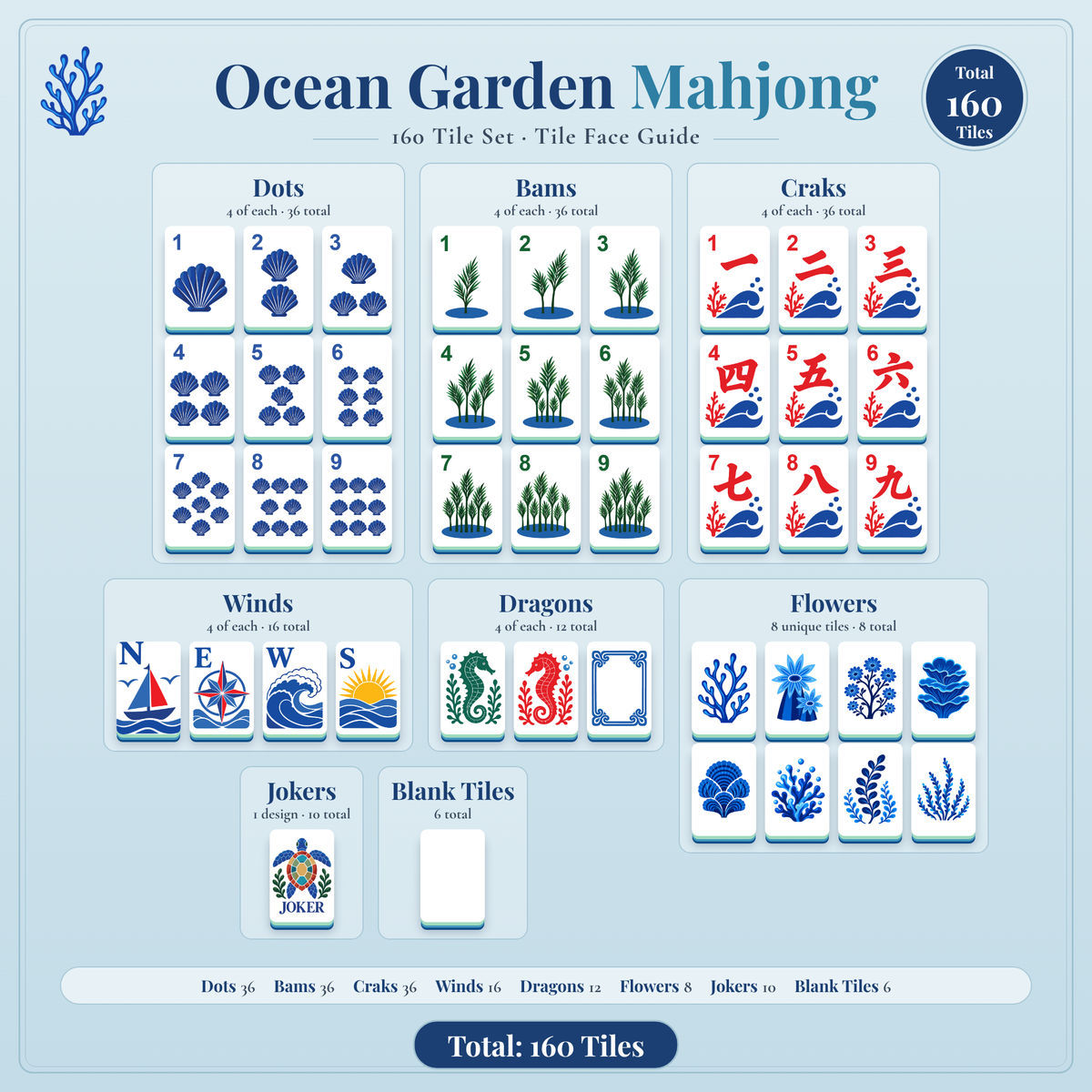
Hangzhou mahjong is a Chinese regional game played with 136 standard tiles (three suits Bams, Craks, Dots numbered 1–9, four winds, three dragons, plus flowers and jokers in some variants) across four players. Gameplay revolves around forming melds—pungs (three identical tiles), kongs (four identical), chows (three consecutive numbers in one suit)—and a winning hand combining these melds plus a pair. A typical round lasts 30–60 minutes. Unlike American mahjong, Hangzhou uses chow sequences as legitimate exposed melds, allows many discard-and-draw mechanisms, and scores by base points multiplied by multipliers rather than fixed hand values. You win by completing your hand first or claiming a discard that completes it. The game emphasizes speed, observation, and risk management; beginners should focus on basic hand patterns before advanced scoring or defense tactics.
What are the core rules of Hangzhou mahjong?
Hangzhou mahjong uses 136 tiles: Bams, Craks, and Dots (1–9 each, four copies per number), four winds (North, East, South, West), three dragons (Red, Green, White), and eight flowers (sometimes eight bonus tiles). Four players sit around a table; winds determine seating and rotation. Each player draws 13 tiles, then takes one more during play—drawing and discarding until someone forms a winning hand or the wall depletes. Unlike American mahjong's rigid National Mah Jongg League card constraints, Hangzhou hands follow simpler patterns: any four melds plus a pair wins. A pung is three identical tiles. A kong is four identical. A chow is three consecutive numbers in the same suit—a key difference from American play, where chows cannot be exposed or called by other players.
When you discard, other players can claim that tile if it completes a pung, kong, or chow. If multiple players want it, the person closest to winning (or furthest in turn order) has priority. Drawing from the wall follows a strict rotation. If no one completes a winning hand and the wall exhausts, the round is a draw. Play is rapid; experienced groups finish four rounds (each player as the dealer once) in 90 minutes. The atmosphere is social but competitive—reading opponents' discard patterns and tile safety is half the game.
🀄 Shop best-selling mahjong sets →

How do melds and winning hands work?
In Hangzhou, a winning hand consists of four melds plus one pair. A meld is either a pung (three of the same tile), kong (four of the same), or chow (1-2-3, 2-3-4, etc. in one suit). The pair is two identical tiles. For example: a pung of 5 Dots, a chow of 3-4-5 Bams, a kong of East winds, a pung of Red dragons, plus a pair of 8 Craks. That's four melds, one pair—you win.
When you draw a tile and complete a meld or win, you declare it immediately. If you draw and complete a winning hand, you announce "win" and show all tiles. If another player discards a tile that completes your hand, you claim it (called "hu" or "win on discard"), expose your hand, and receive payment from the discarder and sometimes from other players, depending on local rules. Chows, unique to Hangzhou versus American mahjong, make hand combinations more flexible; you're not locked into a fixed card like in American play. This openness is why Hangzhou feels faster and more improvised—players adapt mid-hand rather than committing to one pattern at game start.
What are the key differences from American mahjong?
American mahjong and Hangzhou mahjong are fundamentally different games, even though both use four players and similar tiles. American mahjong is hand-pattern driven: players pre-select one hand pattern from that year's National Mah Jongg League card before the Charleston (tile-passing phase), then spend 13 discards and draws trying to complete only that hand. Exposed melds are limited to pungs, kongs, quints, and sextets; chows are not exposed or called. Jokers can substitute in most melds but never in a single tile or pair.
Hangzhou has no pre-selected card; you adapt your hand as tiles come. Chows are fair game—anyone can call a discard to complete a chow. Scoring is multiplicative (points × multipliers) rather than flat (American's fixed values per hand). American uses eight jokers and no blanks in a standard 152-tile game; Hangzhou typically uses a simpler joker arrangement and often plays with 136 tiles straight. An American game requires a mat and rack; Hangzhou thrives on a bare table. If you know American mahjong and want to try Hangzhou, treat it as learning a new sport: the tiles look familiar, but the rules, pace, and strategy are distinct.
🎁 See our most-loved mahjong sets & accessories →
What's the step-by-step setup and turn sequence?
Setup:
Four players sit at cardinal positions (North, East, South, West).
Shuffle tiles and build a wall: two-high stacks of two-tile widths, typically 18 stacks per side.
Determine dealer (often East); dealer draws first.
Each player draws tiles from the wall in turn: dealer draws 14, other three draw 13 each.
Dealer discards one tile face-up in the center.
Turn sequence:
Next player draws one tile from the wall.
They can claim the previous player's discard if it completes a pung, kong, or chow (called claiming or pong).
If they claim a tile, they expose the meld and discard one tile.
If no one claims, they draw from the wall and discard.
Repeat around the table until someone completes a winning hand or the wall runs dry.
Winning:
If you draw a tile completing a hand (four melds + pair), declare "win" and collect payment.
If someone discards a tile you need, claim it, complete your hand, declare "win."
Payment varies by local rule: often from the discarder (double payment) or split among all players.
This cycle feels natural after two or three practice rounds; the key is staying alert to others' discards and building mental maps of their safe vs. risky tiles.

How do you handle discards, claims, and payment?
Discarding is the most expressive part of Hangzhou. When you discard, place the tile clearly in the center, slightly separated. Other players have a second or two to claim it. If multiple players want the same discard, the player closest to winning (or highest in turn order, by local rules) gets it.
If you claim a discard for a pung or kong, retrieve it, expose the meld with the claimed tile on top, add it to your hand, and discard one tile. If you claim a discard to complete a winning hand, you don't discard—you win immediately and show all tiles. If no one claims, the next player draws from the wall.
Scenario | Action | Outcome |
You draw tile completing a meld but not a win | Discard one tile; keep the meld hidden or expose it (local rule) | Play continues |
You draw tile completing a win | Declare "win"; show all tiles | Round ends; you collect payment |
Opponent discards a tile you need for pung | Claim it; expose pung; discard one tile | Play continues |
Opponent discards a tile completing your win | Claim it; declare "win"; show tiles | Round ends; you collect payment (often double from discarder) |
No one claims a discard after 2 seconds | Next player draws from wall | Play continues |
Payment methods vary by region and group. Common rules: winner takes from discarder (if on discard win) or from all players equally (if on draw win). Some groups use base points (e.g., 1 point per round) multiplied by scoring factors (melds of honors, all same suit, etc.). Track points across four rounds and settle at the end.
What are the most common beginner mistakes?
Mistake 1: Holding onto high-value tiles too long. Beginners often hoard dragons, winds, or terminal tiles (1s and 9s) hoping to use them later. In reality, keeping unpaired honor tiles dead-hands you—they clog your draw. Discard them early unless you already have two toward a pung.
Mistake 2: Ignoring the discard line. Experienced players read every discard to infer opponents' strategy. If an opponent discards two 5 Craks, they're likely not building a chow with Craks. If they discard two 1 Bams, they're probably not chasing a terminal pung. Beginners play obliviously and lose safety information.
Mistake 3: Claiming every available tile. Claiming a pung when you're far from winning broadcasts your hand and wastes a draw that might have advanced your win. Claim only when you're genuinely close or when blocking an opponent's near-win.
Mistake 4: Chasing a new pattern mid-hand. You started with one meld strategy, then drew a tile pointing to another. Changing course mid-game scatters your focus. Commit to your most advanced pattern and discard dead tiles around it.
Mistake 5: Discarding from your visible melds. If you've exposed a pung, keeping the fourth copy is obvious—opponents know you're fishing for a pung elsewhere. Discard from hidden melds instead, where your intent stays unclear.
Mistake 6: Playing too slowly. Hangzhou rewards decisiveness. Slow players telegraph indecision, give opponents time to analyze you, and lose the game's inherent pace advantage. Decide within two seconds; discard smoothly.
After five rounds, you'll sense the rhythm. The learning curve is gentle—within two hours, a new player can hold their own.
✨ Find your Mahstead set — free US shipping →
What you'll need to play Hangzhou mahjong at home
You'll need a standard mahjong tile set (136 or 144 tiles; a full 152-tile American set works too, though you'll use fewer tiles). A smooth table surface or a mahjong mat speeds play—tiles slide cleanly, and the wall stays organized. If you prefer to keep tiles off the table between rounds, a mahjong bag protects them during storage and transport.
For casual home play, one of our best-selling sets in durable acrylic will serve years of weekly games. If your group plays competitively or you're gifting a set, engraved tiles with custom designs or holiday themes add personality without changing gameplay. A scorepad is optional but helpful for tracking multi-round tallies; pen and paper work fine.
What to check before you buy:
Tile size: confirm they fit your hand and table comfortably (most standard sets are 1–1.2 inches).
Material: acrylic tiles are durable, lightweight, and quiet; bamboo and bone are heavier and more luxe but require care.
Completeness: a set should have all 136 (or 144/152) tiles plus spares; confirm the tile count in the product description.
Ease of shuffling: tiles should slide smoothly; matte finishes grip better than glossy ones on a bare table.

FAQ
Can I play Hangzhou mahjong with an American mahjong set?
Yes. A 152-tile American set contains all the Hangzhou tiles you need (Bams, Craks, Dots, winds, dragons, flowers). Simply use 136 tiles for a standard game and set the rest aside. American sets include eight jokers; most Hangzhou games don't use jokers, but some local variants do. Confirm with your group before you play.
Is Hangzhou mahjong the same as Shanghai or Cantonese mahjong?
No. Shanghai, Cantonese, and Hangzhou are three distinct Chinese regional variants with different hand patterns, scoring rules, and gameplay mechanics. Hangzhou emphasizes simpler melds and faster play. Cantonese is more complex and popular in Hong Kong. Shanghai has unique scoring multipliers. Before joining a group, confirm which variant they play—rules are not interchangeable.
How long does a full game take?
A single round (one player as dealer) takes 15–30 minutes depending on group experience and speed. A full session is typically four rounds (all players deal once), totaling 60–120 minutes. Casual groups often play multiple sessions in an evening. Competitive groups with detailed scoring or strategy discussions may stretch to 2+ hours.
What's the best strategy for beginners?
Focus on completing one simple pattern first: a pair plus four melds of tiles you already hold or can draw easily. Avoid honor tiles and terminals (1s and 9s) unless they're part of your core hand. Discard aggressively from the edges of your hand—never from a completed pung. Watch opponents' discards and notice patterns. Speed and simplicity beat greedy complexity every time.
Can you explain the payment system?
Variants exist by region. Most common: if you win on a draw (from the wall), each other player pays you an agreed-upon base amount. If you win on a discard, the discarder pays you double and others pay once. Some groups use multipliers (e.g., 2× if all your melds are honors, 4× if all tiles are one suit). Agree on your house rules before the first hand. A typical base might be one point per round, settled at the end of the session.
Is Hangzhou mahjong harder than American mahjong?
Different, not harder. Hangzhou is more fluid and reactive; American is more rule-bound and card-dependent. A seasoned American player might feel Hangzhou's openness chaotic at first, but the core concepts (melds, patterns, observation) are identical. Most people pick up Hangzhou rules within two to three rounds and develop strategy after five to ten games.


View More
View More
View More
